The Silk Road's Impact On Tang Dynasty Hanfu Garments
The Silk Road: A Highway of Textile Innovation
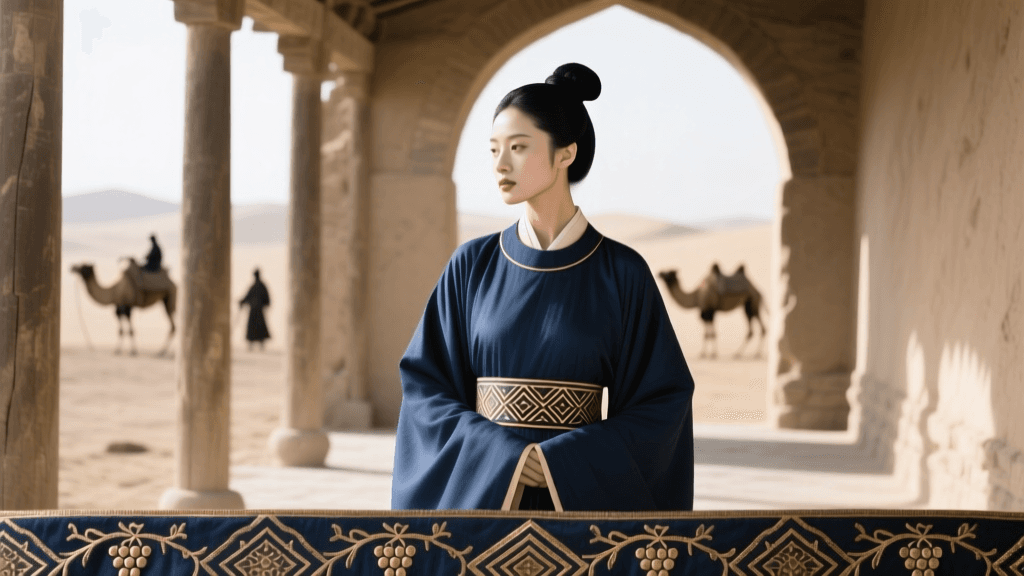
When we think of the historical Silk Road, we often envision caravans carrying raw silk, spices, and jade across the treacherous Taklamakan Desert. However, the most profound legacy of these ancient trade routes was not merely the exchange of raw materials, but the cross-pollination of fashion, weaving techniques, and cultural aesthetics. During the Tang Dynasty (618–907 CE), the capital city of Chang'an (modern-day Xi'an) was the most cosmopolitan metropolis in the world. Here, traditional Han Chinese clothing, collectively referred to today as Hanfu, underwent a radical transformation driven by the influx of foreign merchants, diplomats, and artisans.
According to the UNESCO Silk Roads Programme, the exchange of textiles along these routes fundamentally altered the sartorial landscape of East Asia. Garments became canvases for cross-cultural storytelling, integrating Central Asian, Persian, and Hellenistic motifs into traditional Chinese silhouettes. For modern enthusiasts, historians, and tailors, understanding this era provides a masterclass in how global trade shapes local identity.
Sogdian and Persian Motifs in Tang Dynasty Hanfu
The Sogdians, an Eastern Iranian people who dominated the Central Asian trade networks, were the primary cultural intermediaries of the Silk Road. Their influence on Tang Dynasty textiles is most visibly preserved in the zhuquan, or "pearl roundel" motif. This design features a circular border of pearls enclosing stylized animals such as boars, winged horses, or peacocks—motifs heavily inspired by Sassanian Persian metalwork and royal hunting scenes.
"The Sogdians were not just traders; they were cultural conduits. Their distinctive textiles, characterized by vibrant weft-faced compound twills and pearl roundels, were highly prized by the Tang elite and rapidly integrated into Chinese court dress." — The Metropolitan Museum of Art
Before the Tang Dynasty, Chinese silk weaving was predominantly warp-faced (where the longitudinal threads dictate the pattern and color). The introduction of Sogdian and Persian weavers brought the weft-faced compound twill technique (weijin) to China. This allowed for much more complex, colorful, and large-scale geometric and figural patterns, revolutionizing Chinese brocade (zhijin) production.
The Yuanlingpao: A Cross-Cultural Wardrobe Staple
No garment exemplifies the Silk Road's impact on Chinese fashion better than the yuanlingpao (round-collar robe). While modern Hanfu revivalists often associate the round collar strictly with Tang officialdom, its origins are deeply rooted in the nomadic and semi-nomadic cultures of the Northern steppes, including the Xianbei and Turkic peoples. The circular neckline and side closures were originally designed for horseback riding, offering greater mobility than the traditional wide-sleeved, cross-collared Hanfu robes of the preceding Han and Wei-Jin periods.
By the mid-Tang era, the yuanlingpao had been fully assimilated into the Han Chinese wardrobe, worn by both men and women. Women of the Tang court famously adopted male attire, including the round-collar robe paired with leather riding boots, reflecting a society that celebrated equestrian sports and polo—games imported directly from Persia via the Silk Road. The World History Encyclopedia notes that this fluidity in gendered fashion and the adoption of foreign silhouettes was a hallmark of the Tang dynasty's unprecedented openness to external influences.
Sourcing Authentic Tang-Style Brocades Today
For those looking to commission or purchase historically accurate Tang-style Hanfu, selecting the right fabric is paramount. The market is flooded with cheap synthetics, but true cross-cultural Tang aesthetics require specific weaves and motifs. Below is a practical comparison chart to guide your sourcing:
| Fabric Type | Historical Accuracy | Average Cost (Per Yard) | Best Use Case | Care Instructions |
|---|---|---|---|---|
| Mulberry Silk Zhijin (Brocade) | High (Weft-faced twill) | $60 - $120 USD | Formal Yuanlingpao, Outerwear | Dry clean only, store flat |
| Silk-Linen Blend Ling (Twill) | Medium-High | $35 - $50 USD | Everyday Tang Hanfu, Summer wear | Hand wash cold, iron low |
| Jacquard Polyester Replica | Low (Modern synthetic) | $8 - $15 USD | Cosplay, Budget stage costumes | Machine wash gentle, tumble dry low |
Actionable Sourcing Advice: When searching on platforms like Taobao, Alibaba, or specialized Hanfu boutiques, use specific keywords. Search for "Tang style weijin" (唐风纬锦) or "Sogdian pearl roundel brocade" (联珠纹织锦). Authentic mulberry silk brocades from Suzhou or Hangzhou weavers will typically cost between $60 and $120 per yard. You will need approximately 4 to 6 yards for a standard yuanlingpao.
Practical Guide: Tailoring, Measurements, and Timing
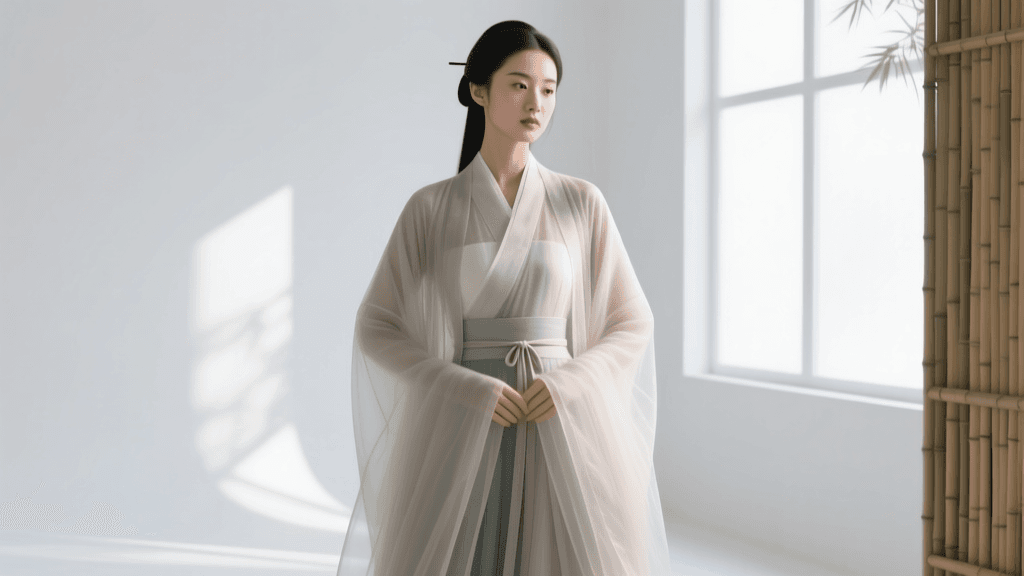
Achieving the correct historical drape requires abandoning modern, form-fitting tailoring standards. Tang Dynasty garments were designed to flow, stack, and project an aura of relaxed grandeur. If you are commissioning a custom yuanlingpao or banbi (half-sleeve jacket), provide your tailor with the following adjusted measurements:
- Shoulder Width: Measure your natural shoulder width and add 4 to 6 centimeters. The seam should drop slightly off the shoulder to create the characteristic sloping silhouette of Tang portraiture.
- Sleeve Length: Measure from the base of your neck to your wrist, then add 20 to 30 centimeters. Tang sleeves were designed to stack elegantly at the wrist or be tied back with arm bands (goujie).
- Chest and Waist: Add at least 15 centimeters of ease to your actual chest measurement. The robe should wrap comfortably without pulling at the side closures.
- Collar Dimensions: The round collar should sit snugly against the base of the neck, typically measuring 40-45 cm in circumference, fastened with a fabric knot button (pankou) on the right shoulder.
Timing and Logistics: If you are ordering custom-woven silk brocade from specialized artisans in China, expect a lead time of 4 to 6 weeks for the weaving process alone. Tailoring will take an additional 2 to 3 weeks. Factor in 2 weeks for international shipping via DHL or FedEx. Therefore, if you need a garment for a specific historical symposium or cultural festival, begin your sourcing process at least 12 weeks in advance.
Styling Your Tang-Influenced Hanfu
To authentically recreate a Silk Road-influenced Tang ensemble, the yuanlingpao must be layered and accessorized correctly. The cross-cultural aesthetic extends beyond the robe itself into the complete styling of the wearer.
- Inner Layers: Wear a cross-collared inner shirt (zhongyi) made of lightweight white or cream linen. The collar should peek out slightly from beneath the round collar of the outer robe.
- The Banbi: For cooler weather or added visual depth, layer a banbi (half-sleeve vest) over your inner shirt but beneath the yuanlingpao. Look for banbi featuring Central Asian geometric patterns or striped textiles, which were wildly popular among Tang women.
- Footwear: Abandon traditional Han Chinese cloth shoes. The Silk Road influence brought leather riding boots (xue) into everyday urban fashion. Invest in a pair of soft-soled, knee-high leather or vegan leather boots, preferably in black or dark brown.
- Belts and Hardware: Secure the waist with a leather belt featuring metallic plaques. Tang officials and nobles used jade, gold, or silver belt plaques that often depicted Central Asian musicians or dancers. Modern replicas in brass or oxidized silver are widely available and add crucial historical weight to the garment.
Conclusion
The Hanfu of the Tang Dynasty is a testament to the fact that traditional clothing is rarely static; it is a living record of human connection, migration, and trade. By studying the Sogdian pearl roundels, adopting the weft-faced twill weaves, and mastering the drape of the steppe-inspired yuanlingpao, modern wearers do more than just put on a historical costume. They actively participate in the preservation of a vibrant, cosmopolitan era where the Silk Road stitched the world together, one thread at a time.