Top Chinese Fashion Creators Reviving Hanfu in 2026
The Evolution of Chinese Fashion Journalism on Xiaohongshu
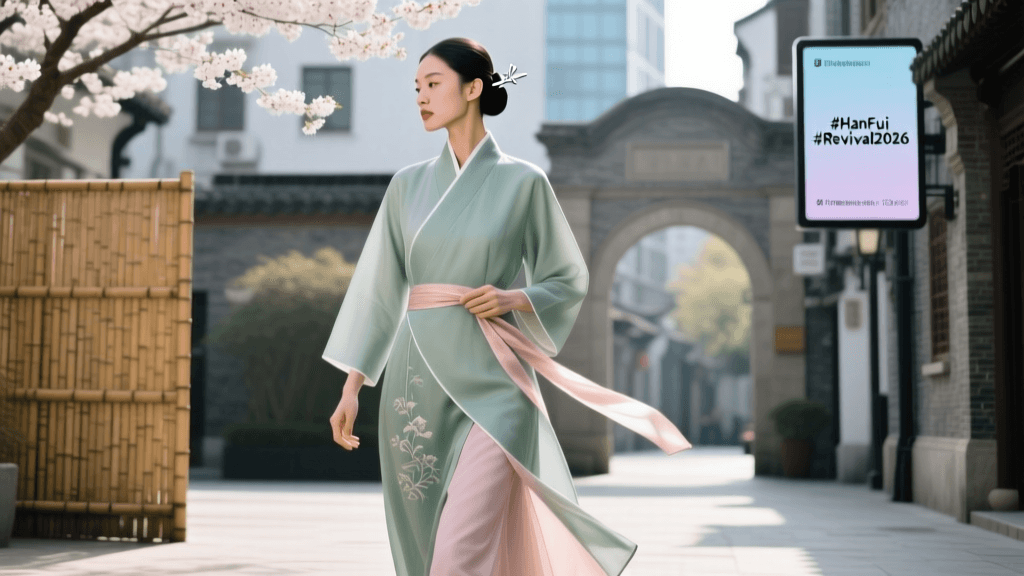
In 2026, the landscape of Chinese fashion journalism has undergone a radical and fascinating transformation. No longer confined to the glossy pages of legacy magazines or the superficial outfit-of-the-day (OOTD) posts of the early 2010s, a new vanguard of digital content creators and bloggers is treating traditional garments with the rigor of academic historians and the flair of high-fashion editors. Platforms like Xiaohongshu (RED) and Douyin have become the primary battlegrounds for sartorial storytelling, where the 'New Chinese Style' (Xin Zhong Shi) and the broader Hanfu movement are being meticulously documented, analyzed, and modernized for a global audience.
Today's top Chinese fashion bloggers are not merely influencers; they are digital journalists and cultural custodians. They spend weeks cross-referencing historical texts, visiting regional silk mills, and collaborating with master weavers to ensure their content is both historically grounded and aesthetically cutting-edge. This shift from passive consumption to active, educated engagement has fundamentally altered how traditional Chinese textiles are perceived, purchased, and worn in 2026.
The Shift from OOTD to Sartorial Journalism
The hallmark of 2026's top fashion creators is their commitment to 'sartorial journalism.' Rather than simply showcasing a beautiful Mamian skirt (horse-face skirt), creators are now producing long-form video essays and deeply researched photo journals that explain the garment's structural engineering, its historical significance during the Ming Dynasty, and the specific loom technologies used to create its metallic threads today. This journalistic approach has elevated the discourse around traditional Asian garments, transforming followers into informed collectors and enthusiasts.
Furthermore, the integration of advanced AI tools in 2026 has allowed these digital journalists to reconstruct damaged historical patterns. By feeding fragmented textile artifacts into specialized machine-learning models, creators can visualize and reproduce lost weaving techniques, sharing the entire R&D process with their audiences. This transparency not only builds immense trust but also educates the public on the immense labor and heritage embedded in every thread of authentic traditional clothing.
Key Platforms Driving the 2026 Hanfu Renaissance
While global platforms like Instagram and TikTok offer reach, the epicenter of Chinese fashion journalism remains firmly rooted in domestic ecosystems, primarily Xiaohongshu and Bilibili. Xiaohongshu's 2026 algorithm updates heavily favor long-form, heavily researched content, rewarding creators who provide actionable styling advice alongside historical context. The platform's native AR (Augmented Reality) try-on features now support complex, multi-layered Hanfu silhouettes, allowing users to visualize how traditional garments drape and move before making a purchase.
Meanwhile, Bilibili serves as the home for documentary-style fashion journalism. Here, creators produce 40-minute deep dives into the natural dyeing processes of Xiangyunsha (gambiered Canton gauze) or the intricate, time-consuming art of Kesi (silk tapestry) weaving. These creators often partner with academic institutions and The Metropolitan Museum of Art's Heilbrunn Timeline of Art History to verify the historical accuracy of the silk routes and textile trades they discuss, ensuring their journalism meets rigorous academic standards.
Textile Focus of Top Digital Journalists in 2026
To understand the current market, one must look at the specific textiles that dominate the content strategies of top Chinese fashion bloggers. The following table outlines the primary traditional fabrics being championed by digital journalists this year, their market positioning, and the primary narrative angles used to market them to younger demographics.
| Traditional Textile | Historical Era / Origin | 2026 Avg. Market Price (per meter) | Creator Adoption Rate | Primary Journalism Angle |
|---|---|---|---|---|
| Xiangyunsha (Gambiered Canton Gauze) | Qing Dynasty / Guangdong | $120 - $180 USD | 85% | Sustainable mud-dyeing, eco-friendly luxury, summer breathability. |
| Song Brocade (Song Jin) | Song Dynasty / Suzhou | $250 - $400 USD | 60% | Geometric pattern reconstruction, formal evening wear adaptation. |
| Kesi (Silk Tapestry) | Tang/Song Dynasties | $800 - $1,500+ USD | 45% | Investment pieces, museum-grade craftsmanship, intangible heritage. |
| Zhangzhou Velvet | Ming Dynasty / Fujian | $90 - $140 USD | 70% | Winter layering, textural contrast in modern streetwear. |
Bridging Heritage and the Global Runway
The impact of these digital journalists extends far beyond social media engagement; they are actively shaping the global fashion runway. During Shanghai Fashion Week Spring/Summer 2026, numerous emerging designers cited specific Xiaohongshu historians and Bilibili documentalists as their primary research partners. The bloggers act as a vital bridge, translating ancient motifs and structural tailoring into a visual language that international buyers and fashion houses can understand and appreciate.
This cultural renaissance is deeply tied to shifting consumer behaviors. According to the latest insights from the Bain & Company China Luxury Report, younger Chinese consumers are increasingly prioritizing cultural heritage and domestic craftsmanship over Western luxury logos. Fashion bloggers have capitalized on this by framing traditional garments not as costumes, but as the ultimate expression of quiet luxury and intellectual sophistication. By highlighting the UNESCO-recognized sericulture and silk craftsmanship of China, these creators elevate the perceived value of the garments, justifying premium pricing and fostering a deep sense of national pride.
Actionable Strategies for Aspiring Traditional Fashion Bloggers
For content creators and fashion journalists looking to break into the 'New Chinese Style' and Hanfu niche in 2026, the barrier to entry requires more than just a good camera. It demands a commitment to education, authenticity, and community building. Here are actionable strategies to succeed in this highly specialized space:
- Master Historical Verification: Never publish a garment review without verifying its structural accuracy. Utilize digital archives from global museums and cross-reference your findings with historical texts like the Tiangong Kaiwu (The Exploitation of the Works of Nature). Your audience in 2026 is highly educated and will quickly call out historical inaccuracies.
- Focus on the Supply Chain: Modern fashion journalism is as much about ethics and sustainability as it is about aesthetics. Travel to the source. Visit the mud-dyeing vats in Shunde or the jacquard looms in Suzhou. Documenting the artisans behind the fabric provides a compelling, emotionally resonant narrative that fast-fashion hauls simply cannot match.
- Leverage 2026 AR and AI Tools: Utilize Xiaohongshu's native AR plugins to allow your followers to 'try on' the historical garments you are reviewing. Use AI translation tools to provide accurate, nuanced English subtitles for your videos, thereby capturing the growing international audience fascinated by Asian traditional garments.
- Create Styling Matrices: One of the biggest hurdles for consumers is integrating traditional pieces into a modern 2026 wardrobe. Create detailed 'Styling Matrices' showing how a traditional Song Dynasty pleated skirt can be paired with a contemporary minimalist blazer or structured leather boots, emphasizing versatility and daily wearability.
The Economic Impact of Digital Sartorial Journalism
The financial implications of this blogger-driven renaissance are staggering. The Hanfu and 'New Chinese Style' market has matured from a niche subculture into a multi-billion-dollar industry by 2026. Digital journalists are the primary catalysts for this growth, serving as the most trusted source of product discovery and brand validation. Independent weavers and heritage brands that partner with these sartorial journalists often see immediate sell-outs, proving that the modern consumer is willing to invest heavily in garments that come with a rich, well-documented story.
Conclusion
As we navigate through 2026, Chinese fashion journalism has firmly established itself as a vital pillar of cultural preservation and innovation. The creators leading this charge on platforms like Xiaohongshu and Bilibili are redefining what it means to be a fashion influencer, proving that true style is inextricably linked to history, craftsmanship, and education. For the global fashion community, watching these digital journalists weave the past into the future offers a masterclass in how traditional garments can not only survive but thrive in the modern era.