Regional Japanese Kimono: Okinawan Ryusou vs. Mainland Silk
Introduction to Japan's Regional Garment Diversity
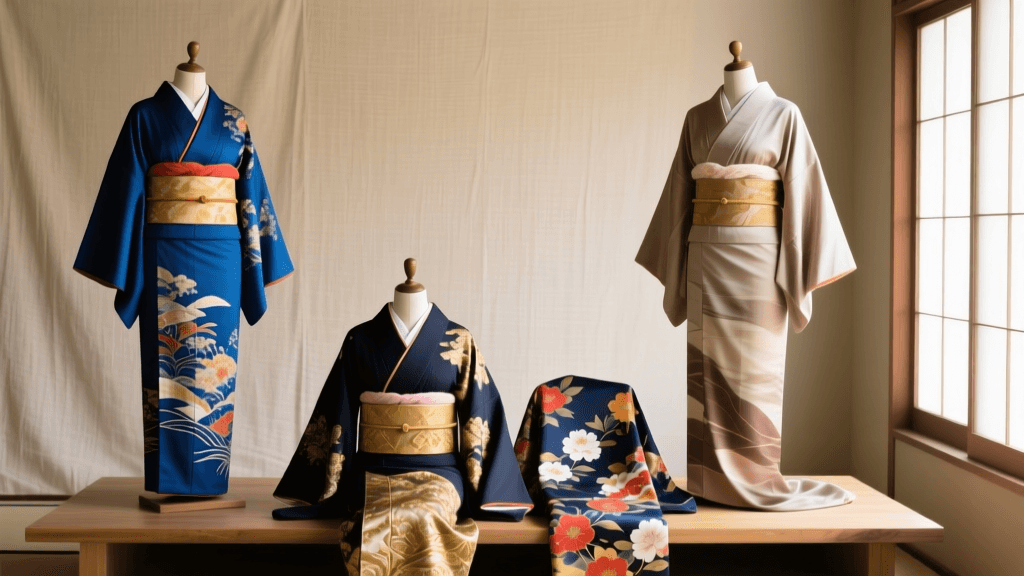
When the world thinks of traditional Japanese clothing, the monolithic term "kimono" often comes to mind. However, Japan's sartorial history is not a single, uniform narrative. It is a rich, complex tapestry of regional and prefectural variations, shaped by distinct microclimates, local flora, historical trade routes, and class structures. From the snow-swept dyeing studios of Ishikawa to the subtropical looms of the Ryukyu Islands, regional garments offer a profound lens into Japan's diverse cultural geography.
As noted by The Metropolitan Museum of Art, the evolution of Japanese textile arts is inextricably linked to regional climates and historical exchanges. For collectors, cultural enthusiasts, and travelers, understanding the nuances between mainland silk masterpieces and tropical Ryukyuan weaves is essential for appreciating—and acquiring—these wearable works of art.
Mainland Masterpieces: Kyo Yuzen and Kaga Yuzen
The mainland Japanese kimono, particularly those crafted from silk, reached their zenith during the Edo period (1603–1867). Two prefectures emerged as the undisputed capitals of luxury dyeing: Kyoto and Ishikawa.
Kyo Yuzen (Kyoto): Aristocratic Opulence
Originating in Kyoto, Kyo Yuzen is the epitome of aristocratic elegance. Developed in the late 17th century by Miyazaki Yuzensai, this technique utilizes a rice-paste resist method that allows for intricate, multi-colored pictorial designs. Kyo Yuzen is characterized by its lavish use of gold leaf (kinpaku), metallic threads, and vibrant, contrasting colors. The motifs often feature stylized, auspicious symbols like cranes, pine trees, and imperial court carriages. Because Kyoto was the imperial capital, Kyo Yuzen became the standard for high-ranking courtiers and, later, the wealthy merchant class and geisha of the Gion district.
Kaga Yuzen (Ishikawa): Samurai Naturalism
In contrast, Kaga Yuzen, originating in Kanazawa (Ishikawa Prefecture), reflects the refined, understated tastes of the samurai class. According to the Japan National Tourism Organization (JNTO), Kanazawa's rich cultural heritage was heavily patronized by the Maeda clan, who invited Kyoto artisans to their domain. Kaga Yuzen strictly adheres to the kaga-gosai (five traditional colors): indigo, yellow, green, maroon, and purple. The designs are highly realistic, focusing on local flora and fauna. A defining hallmark of Kaga Yuzen is mushikui—the deliberate depiction of insect-bitten leaves, symbolizing the samurai philosophy of embracing nature's imperfections and the transience of life. Furthermore, Kaga Yuzen rarely uses gold leaf, relying instead on the masterful bokashi (color gradation) technique to create depth.
The Tropical Elegance of Okinawa: Ryusou and Bashofu
Traveling south to the subtropical Okinawa Prefecture, the heavy, layered silk kimono of the mainland becomes entirely impractical. Here, the indigenous Ryukyuan culture developed its own distinct garment traditions, heavily influenced by centuries of maritime trade with Ming Dynasty China, Southeast Asia, and mainland Japan.
Ryusou: The Ryukyuan Court Dress
The Ryusou is the traditional formal wear of the Ryukyu Islands. Unlike the mainland kimono, which requires a tightly bound and intricately folded obi (sash), the Ryusou is designed for breathability and ease of movement in a humid climate. It is worn much looser, with a thinner, softer sash tied at the front or side. The most iconic textile associated with Ryusou is Bingata, a vibrant resist-dyeing technique that uses sweet potato starch paste and natural pigments derived from local plants, such as the Ryukyuan indigo and Fukugi tree yellow. The Okinawa Prefectural Museum highlights how Bingata motifs—featuring tropical flora, dragons, and Chinese clouds—were strictly regulated by the Ryukyuan royal court to denote social rank.
Bashofu: Woven Banana Fiber
While silk was reserved for the elite, the commoners and lower-ranking officials of Okinawa relied on Bashofu, a remarkable textile woven from the fibers of the Japanese fiber banana (Musa basjoo). The production of Bashofu is staggeringly labor-intensive. It takes approximately 200 banana plants to produce enough fiber for a single kimono. The fibers are hand-split, boiled in wood ash, and woven on traditional looms. The result is a lightweight, breathable, and highly durable fabric with a crisp, linen-like texture that is perfectly suited for Okinawa's sweltering summers.
Comparative Analysis: Mainland vs. Ryukyuan Garments
To understand the functional and aesthetic differences across these prefectures, review the comparative data below:
| Feature | Kyo Yuzen (Kyoto) | Kaga Yuzen (Ishikawa) | Ryusou / Bashofu (Okinawa) |
|---|---|---|---|
| Primary Material | Heavy Silk (Crepe, Rinzu) | High-Quality Silk | Banana Fiber, Ramie, Light Silk |
| Key Technique | Rice-paste resist, Gold leaf application | Rice-paste resist, Bokashi (gradation) | Sweet-potato resist (Bingata), Hand-weaving |
| Design Motifs | Stylized, auspicious, imperial court themes | Realistic nature, insect-bitten leaves | Tropical flora, dragons, geometric patterns |
| Climate Adaptation | Insulating, layered for distinct seasons | Insulating, adapted for snowy winters | Breathable, loose-fitting for high humidity |
| Obi (Sash) Style | Thick, stiff, intricately folded (e.g., Otaiko) | Thick, elegant, subdued patterns | Thin, soft, tied simply at the front/side |
Practical Guide: Buying, Wearing, and Preserving Regional Kimono
For those looking to invest in, wear, or collect regional Japanese garments, understanding the practical nuances of sizing, pricing, and seasonal timing is crucial.
Measurements and Sizing Nuances
Mainland silk kimono are traditionally made from standard-width bolts of fabric (tanmono), meaning they can be taken apart and re-tailored to fit different individuals. When commissioning or buying a mainland kimono, two measurements are paramount: the yuki (the distance from the center of the back neck, over the shoulder, to the wrist) and the mitake (the back length from the base of the neck to the ankle). A standard gosun (approx. 15 cm) allowance is added to the back length for the waist fold (ohashori), which is mandatory for women's mainland kimono.
Conversely, Okinawan Ryusou is cut more generously. Because it is worn without the restrictive ohashori waist fold and lacks the heavy, structured obi, the fit is far more forgiving. When purchasing vintage Bashofu, buyers should focus on the shoulder width and overall length, as the crisp banana fiber does not drape or fold as easily as mainland silk.
Investment and Pricing Guide
Authentic, handcrafted regional garments are significant investments. Prices vary based on the artisan's status, the complexity of the dye work, and the rarity of the materials.
- Kyo Yuzen: A formal, hand-painted Kyo Yuzen tomesode (married woman's formal kimono) typically ranges from $4,000 to $15,000+. The application of real gold leaf and metallic embroidery drives the higher price points.
- Kaga Yuzen: A high-quality Kaga Yuzen houmongi (visiting kimono) generally costs between $3,000 and $12,000. Pieces featuring the intricate mushikui motif by certified masters command premium prices.
- Okinawan Bashofu & Bingata: Authentic, hand-woven Kijoka Bashofu kimono are exceedingly rare due to the scarcity of weavers, often ranging from $2,500 to $9,000. Hand-dyed Bingata silk obi or garments usually start around $1,500 and can exceed $5,000 for complex, multi-color stenciled designs.
Seasonal Timing and Purchasing
Timing your visit to these prefectures can greatly enhance your understanding of the textile arts. In Kanazawa (Ishikawa), visit during the deep winter months (January to February). Artisans historically used the pure, mineral-rich snowmelt for washing dyed silks—a process known as yukizarashi. While modern water treatment has altered this, winter festivals and exhibitions still celebrate this heritage. In Kyoto, the bi-annual Gojoden Kimono Flea Markets (usually in May and October at the To-ji Temple grounds) are excellent for sourcing vintage Kyo Yuzen pieces at a fraction of the retail cost. For Okinawa, plan a trip to the village of Kijoka in April or May. This is the peak season for harvesting and processing the banana fibers, and local cooperatives often open their doors for weaving demonstrations and direct-to-artisan sales.
Conclusion
The story of Japanese traditional clothing is incomplete without acknowledging its profound regional diversity. The opulent gold-leafed silks of Kyoto, the naturalistic, samurai-inspired dyes of Kanazawa, and the breathable, masterfully woven banana fibers of Okinawa each tell a unique story of adaptation, aesthetics, and survival. Whether you are a textile collector, a cultural historian, or a traveler seeking a meaningful sartorial investment, looking beyond the generic "kimono" to these prefectural masterpieces will deeply enrich your appreciation of Japan's living heritage.