Douyin Street Fashion: Styling Mamianqun for Modern Wear
The Rise of Guochao and Douyin Street Fashion
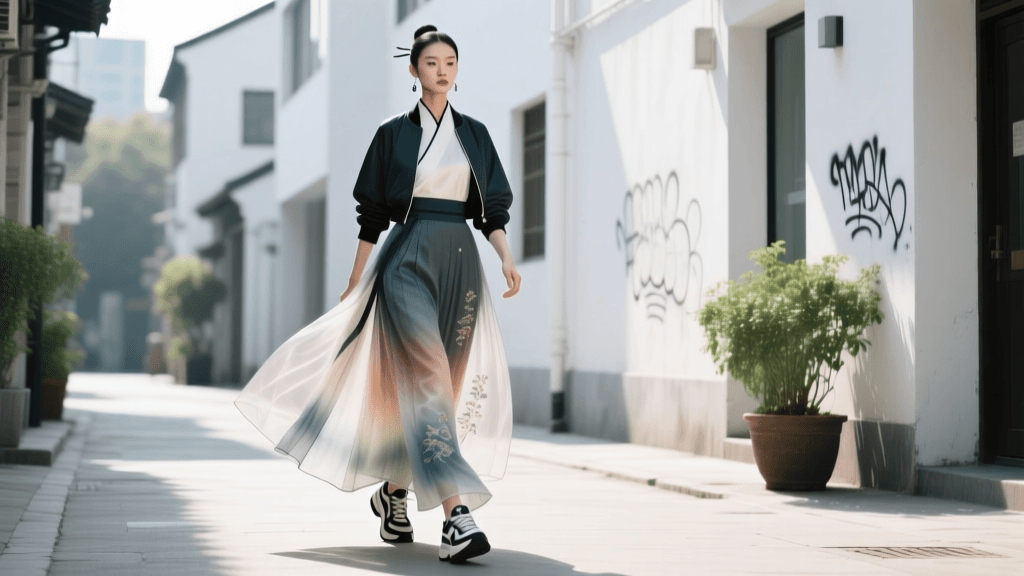
Scroll through Douyin—the Chinese counterpart to TikTok—and you will inevitably encounter a mesmerizing visual trope: a young creator stands in mundane modern clothing, the beat drops, and in a seamless transition, they are suddenly clad in a flowing, intricately woven traditional skirt paired with a sleek leather jacket or oversized graphic tee. This is not merely a costume change; it is the visual heartbeat of the 'Guochao' (National Trend) movement. Guochao represents a massive cultural shift where China's Gen Z and millennial consumers are reclaiming their heritage and weaving it into contemporary streetwear.
According to BBC News, the Hanfu revival movement has evolved from a niche historical reenactment hobby into a multi-billion-dollar mainstream fashion industry, driven heavily by social media influencers who refuse to relegate traditional garments to museum displays or holiday-only wear. Instead, Douyin street fashion influencers are treating traditional pieces like the Mamianqun (horse-face skirt) as versatile wardrobe staples that can withstand the rigors of urban commuting, skateboarding, and nightlife.
Deconstructing the Mamianqun for the Streets
The Mamianqun, characterized by its flat front and back panels with heavily pleated sides, originated in the Song and Ming dynasties. Historically, it was a symbol of status and elegance, often made from heavy silks and brocades. However, to survive the modern concrete jungle, Douyin influencers have demanded structural and material evolution.
For everyday street fashion, the traditional floor-grazing silk skirt is highly impractical. Influencers and modern Hanfu merchants have collaboratively developed the 'everyday Mamianqun.' These modern iterations typically feature a skirt length of 95cm to 105cm (hitting mid-calf or just above the ankle) to prevent the hem from dragging through puddles or catching on subway escalators. The pleat width is often sharpened to 4-6cm and heat-set using modern synthetic blends to ensure the pleats do not blow open in strong winds or lose their shape after machine washing.
'The true test of a cultural garment's survival is not how well it is preserved in a glass case, but how naturally it moves through a crowded city street on a Tuesday morning.'
Traditional vs. Douyin Street Styling Comparison
To understand the mechanics of this trend, we must compare the orthodox traditional styling with the subversive, highly practical streetwear adaptations popularized by Douyin creators.
| Styling Element | Orthodox Traditional Hanfu | Douyin Streetwear Adaptation |
|---|---|---|
| Top Pairing | Aoqun (cross-collar or standing collar silk top) | Oversized vintage graphic tees, cropped leather moto jackets, or tech-wear harnesses |
| Footwear | Embroidered cloud shoes or traditional cloth boots | Chunky skate shoes, combat boots (e.g., Dr. Martens), or high-top sneakers |
| Fabric Choice | 100% Mulberry silk, raw silk, or delicate brocade | Durable polyester-jacquard blends, cotton-linen, or metallic organza |
| Skirt Length | Floor-length (approx. 110cm - 120cm) | Mid-calf to ankle (approx. 90cm - 105cm) for mobility |
| Accessories | Jade pendants, silk sashes, traditional hairpins | Chunky silver chains, bucket hats, crossbody utility bags |
Three Actionable Douyin Styling Formulas
If you are looking to integrate the Mamianqun into your own wardrobe, Douyin influencers rely on three primary styling formulas that balance historical silhouettes with modern edge.
1. The Cyberpunk Scholar
This look leans into the futuristic, dystopian aesthetic popular in Asian streetwear hubs like Chengdu and Chongqing. Pair a dark, metallic-threaded Mamianqun (often featuring subtle dragon or cloud motifs) with a tight, black, long-sleeved mesh top. Layer a tech-wear chest harness or a cropped, utilitarian vest over the top. Finish with knee-high combat boots. The contrast between the ancient weaving techniques and the tactical, modern hardware creates a striking visual tension that performs exceptionally well on camera.
2. The Vintage Skater
For a more relaxed, approachable daytime look, influencers often pair a solid-colored or subtly patterned cotton-blend Mamianqun with an oversized, faded band t-shirt. Tuck the t-shirt in to define the waistline, as the skirt's high waistband is a crucial element of the silhouette. Add a pair of chunky skate shoes and a woven bucket hat. This formula is highly practical for university students and young creatives who want to express cultural pride without sacrificing comfort.
3. The Office Siren
Yes, Hanfu has entered the corporate world. The 'new Chinese style' (Xin Zhongshi) trend on Douyin features professionals pairing a sophisticated, muted-tone Mamianqun (think deep emeralds, navies, or charcoal greys) with a crisp, white, oversized button-down shirt. Swap the traditional silk sash for a sleek leather belt, and wear pointed-toe ankle boots. It is a powerful reclamation of professional attire that commands respect while honoring heritage.
Navigating the 'Hanfu Police' and Community Debates
As with any subculture that experiences rapid mainstream adoption, the Douyin Hanfu community has its internal friction. Traditionalists, sometimes colloquially dubbed the 'Hanfu Police' by netizens, often criticize streetwear adaptations for historical inaccuracies, such as pairing a Ming dynasty skirt with modern synthetic fabrics or wearing it above the ankle. However, the 'Everyday Hanfu' faction argues that historical accuracy should not come at the expense of modern utility. They point out that clothing in the Ming and Song dynasties also evolved based on the practical needs of the era, including the introduction of cotton and changes in pleating techniques to accommodate different climates and lifestyles. Douyin influencers largely champion the latter view, using their massive platforms to educate followers that cultural preservation requires evolution, not just replication. This ongoing debate actually fuels algorithmic engagement, as creators post 'get ready with me' (GRWM) videos defending their modern styling choices while explaining the historical roots of the base garment.
Sourcing, Fabrics, and the Economics of Hanfu Streetwear
The commercialization of this trend is staggering. As noted by the South China Morning Post, the Hanfu market has exploded, with specialized merchants on Taobao and Douyin's native e-commerce platforms catering specifically to the 'everyday wear' demographic. Understanding the pricing tiers is essential for building a sustainable streetwear wardrobe.
- Entry-Level (100 - 250 RMB / $15 - $35 USD): These skirts are typically made from 100% polyester jacquard. While they lack the breathability of natural fibers, they are virtually indestructible, machine washable, and hold their pleats perfectly in the rain. Ideal for beginners and festival-goers.
- Mid-Tier (300 - 600 RMB / $40 - $85 USD): This tier introduces blended fabrics, such as cotton-linen mixes for summer or heavier wool-blends for winter. The weaving patterns are more intricate, often featuring localized embroidery or metallic foil stamping that catches the light during video transitions.
- Haute & Independent Designers (800+ RMB / $110+ USD): These pieces feature genuine silk brocades, hand-rolled hems, and proprietary weaving techniques. While stunning, Douyin streetwear purists often reserve these for special events rather than daily street styling, as the delicate fabrics cannot withstand the friction of urban commuting.
Filming the Perfect Douyin Transition
For content creators looking to capture the magic of the Mamianqun on video, the fabric weight and camera technique are paramount. The signature Douyin 'spin' requires a skirt with enough weight in the hem to create a perfect, bell-shaped flare when twirling, but light enough at the waist to avoid bulkiness under modern tops.
Influencers recommend shooting at 60fps or 120fps to capture the intricate unfolding of the side pleats in slow motion. The lighting should be positioned to highlight the jacquard weave; direct sunlight or a harsh ring light will flatten the texture, whereas angled, golden-hour lighting will make the woven metallic threads pop. The transition is usually executed by tossing a modern jacket over the camera lens, cutting the clip, and pulling the jacket away to reveal the full traditional streetwear ensemble.
Conclusion
The integration of the Mamianqun into modern street fashion via Douyin is more than a fleeting internet trend; it is a profound cultural renaissance. By adapting historical garments to meet the practical demands of modern life, Chinese youth are ensuring that their sartorial heritage remains a living, breathing part of the global fashion dialogue. Whether paired with a leather jacket or a vintage tee, the horse-face skirt continues to gallop confidently through the streets of the 21st century.