The Ultimate Kimono Buying Guide: Yukata vs Komon vs Houmongi
Introduction to the World of Kimono Shopping
Navigating the market for traditional Japanese clothing can feel overwhelming for international buyers, collectors, and fashion enthusiasts alike. The term 'kimono' literally translates to 'thing to wear,' but it encompasses a vast and highly regulated universe of garments, each designated for specific seasons, ages, marital statuses, and levels of formality. According to the Victoria and Albert Museum's landmark Kimono exhibition, the garment is not merely a static historical artifact but a dynamic, evolving fashion statement that has influenced global textiles for centuries. Whether you are planning a trip to Kyoto, looking to invest in authentic silk, or simply wanting to understand the nuances of Japanese sartorial rules, knowing the differences between the primary kimono types is essential.
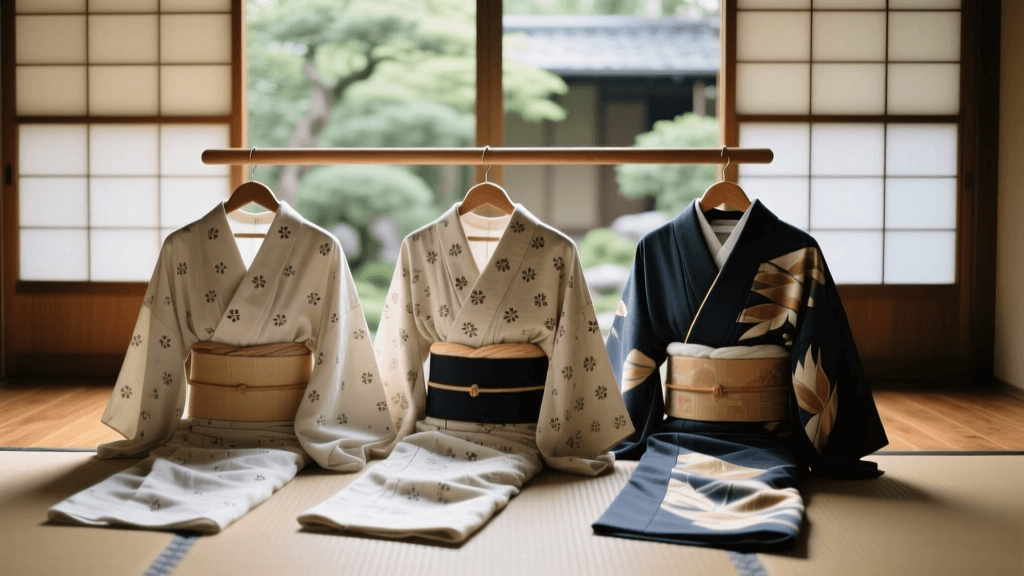
This comprehensive buying guide focuses on three of the most popular and practical kimono types for modern wearers and collectors: the casual Yukata, the versatile Komon, and the formal Houmongi. We will break down their unique characteristics, provide a detailed comparison chart, explain the complex Japanese sizing system, and offer actionable advice on where and how to purchase them, both in Japan and online.
Understanding the Core Kimono Types
Yukata: The Casual Summer Staple
The Yukata is the most accessible and widely recognized type of kimono, particularly among tourists and beginners. Originally worn as a bathrobe by the nobility during the Heian period, it evolved into the standard summer garment for the general public. Yukata are made exclusively from unlined cotton, hemp, or modern polyester blends, making them breathable, lightweight, and easy to wash. They are characterized by their bold, often repeating patterns, which range from traditional indigo-dyed florals to modern, pop-culture-inspired prints.
When to wear: Summer festivals (matsuri), fireworks displays, casual strolls through tourist towns, and as loungewear in traditional ryokan inns.
Cost expectation: A brand-new, mass-produced yukata set (including the garment and a basic belt) costs between ¥3,000 and ¥15,000 ($20–$100 USD). Vintage or artisanal hand-dyed shibori yukata can range from ¥20,000 to ¥50,000.
Komon: The Versatile Everyday Silk
If the yukata is the t-shirt of the kimono world, the Komon is the smart-casual button-down. 'Komon' translates to 'small pattern,' referring to the repeating motifs that cover the entire garment. Unlike the yukata, a traditional Komon is made from silk (though washable polyester versions are increasingly popular for daily wear) and is fully lined. The patterns can range from tiny, intricate geometric shapes (Edo Komon) to larger, playful floral or seasonal motifs.
When to wear: Casual daytime outings, dining with friends, attending informal tea ceremonies, or visiting the theater. It is considered 'town wear' (machigi) and is not appropriate for highly formal ceremonies.
Cost expectation: Because silk Komon require complex Yuzen dyeing techniques, new pieces from department stores start around ¥150,000 ($1,000+ USD). However, the secondary 'recycle' market is flooded with stunning vintage silk Komon for ¥5,000 to ¥30,000 ($35–$200 USD).
Houmongi: The Formal Visiting Kimono
The Houmongi, or 'visiting wear,' is a highly formal garment characterized by its Eba-moyo (picture pattern). Unlike the repeating patterns of a Komon, the design on a Houmongi flows continuously across the seams of the shoulders, sleeves, and hem, creating a single, cohesive canvas of art when the kimono is laid flat. Traditionally made from premium, hand-painted silk, the Houmongi often features one to three family crests (kamon) on the back and sleeves, elevating its formality.
When to wear: Weddings (as a guest), formal tea ceremonies, graduation ceremonies, and high-end cultural events.
Cost expectation: Due to the immense labor required to align the patterns across the seams and the premium silk used, a new Houmongi is a significant investment, typically ranging from ¥300,000 to over ¥1,000,000 ($2,000–$7,000+ USD). Vintage pieces can be found for ¥30,000 to ¥80,000.
Comparison Chart: Yukata vs. Komon vs. Houmongi
| Feature | Yukata | Komon | Houmongi |
|---|---|---|---|
| Formality | Very Casual | Casual / Semi-Formal | Formal |
| Material | Cotton, Hemp, Poly | Silk, Washable Poly | Premium Silk |
| Lining | Unlined (Hitoe) | Lined (Awase) | Lined (Awase) |
| Pattern Style | Repeating, Bold | Repeating, Small to Medium | Continuous across seams |
| Collar Style | Narrow, close to neck | Standard width | Wide, elegant drape |
| Footwear | Geta (wooden clogs), bare feet | Zori with Tabi socks | Formal Zori with Tabi |
| Vintage Price | ¥2,000 - ¥10,000 | ¥5,000 - ¥30,000 | ¥30,000 - ¥80,000 |
Sizing and Measurements: Getting the Perfect Fit
One of the most common hurdles for international buyers is understanding Japanese kimono sizing. Unlike Western clothing, kimono are not sold in standard S/M/L sizes based on bust or waist. Instead, they are tailored based on height and arm span. When browsing online auctions or visiting vintage shops, you must look for two critical measurements:
- Mitake (Back Length): This is the length of the kimono from the base of the collar to the hem. Unlike Western dresses, a kimono is meant to be folded at the waist (the ohashori) to adjust the length. The ideal Mitake is roughly 55% of your total height. For example, if you are 160 cm tall, your ideal Mitake is around 88 cm to 90 cm.
- Yuki (Sleeve/Shoulder Span): This measures from the center of the back of the neck, across the shoulder, and down to the wrist. The ideal Yuki is roughly 40% of your height. For a 160 cm tall person, a Yuki of 63 cm to 65 cm is ideal.
- Shoulder Width (Katahaba): While less critical than Yuki, knowing the width from shoulder seam to shoulder seam helps ensure the garment doesn't feel too restrictive across the back.
Pro Tip: Kimono are highly forgiving in the waist and hips because they are wrapped and tied. As long as the Mitake and Yuki are within 3-5 centimeters of your ideal measurements, the garment will fit beautifully when professionally dressed.
Where to Buy: New vs. The 'Recycle' Market
For those seeking brand-new, custom-tailored garments, major Japanese department stores like Mitsukoshi, Takashimaya, and Daimaru in Tokyo and Kyoto offer unparalleled quality and personalized fitting services. However, the entry price for a new silk Komon or Houmongi is steep, often exceeding thousands of dollars.
For most collectors and enthusiasts, Japan's thriving 'Recycle Kimono' market is the ultimate treasure trove. Chains like Tansu-ya and Chicago have dozens of locations across Tokyo, Kyoto, and Osaka. These shops meticulously clean, inspect, and grade vintage kimono. You can find museum-quality, hand-painted silk Houmongi from the Showa era for a fraction of their original cost. When buying vintage, always inspect the collar and the inner lining near the hips for discoloration or stains, as silk is notoriously difficult to clean at home.
For international buyers unable to travel to Japan, proxy bidding services like Buyee or ZenMarket allow you to bid directly on Japanese auction sites like Yahoo! Auctions Japan and Mercari, where thousands of kimono are listed daily by private sellers and estate liquidators.
Essential Accessories You Cannot Forget
Buying the kimono is only half the battle; the garment cannot be worn without its specialized accessories. When budgeting for your purchase, ensure you allocate funds for the following:
- Obi (The Sash): A Yukata requires a Hanhaba Obi (half-width, casual). A Komon requires a Nagoya Obi (pre-folded, semi-formal). A Houmongi requires a Fukuro Obi (fully lined, formal, often woven with gold or silver threads).
- Obijime and Obiage: The decorative cord (obijime) and silk scarf (obiage) that secure and hide the knots of the obi. These are crucial for Komon and Houmongi but generally not used with casual Yukata.
- Nagajuban: The under-kimono worn beneath silk garments to protect them from sweat and body oils. A Yukata does not require a nagajuban, but it is mandatory for Komon and Houmongi.
- Tabi and Zori: Split-toe socks (tabi) and formal sandals (zori). Note that when wearing a casual cotton Yukata, bare feet in wooden geta clogs are the traditional standard.
Care, Maintenance, and Storage
Proper care is vital to preserving the value and beauty of your garments. Cotton Yukata can be hand-washed or machine-washed on a gentle cycle in a mesh net. However, silk Komon and Houmongi must never be washed with water. They require a specialized Japanese dry-cleaning process called Maruarai, which involves taking the garment apart, washing the silk panels, and restitching them. For minor stains, spot-cleaning by a professional is recommended.
When storing silk kimono, never use wire hangers, as they will permanently distort the shoulder seams. Instead, fold the garment along its natural seam lines and store it flat in a breathable, acid-free paper sleeve called a tatoushi. Keep them in a cool, dark place with natural desiccants to prevent mold and humidity damage.
Conclusion
Investing in a traditional Japanese garment is a rewarding journey into one of the world's most intricate textile histories. Whether you opt for a breezy, budget-friendly Yukata for a summer festival, a versatile vintage Komon for elegant city strolling, or a breathtaking Houmongi for formal cultural events, understanding the distinctions between these types ensures you will dress appropriately and confidently. As noted by the Japan National Tourism Organization (JNTO), engaging with traditional dress is one of the most immersive ways to experience the living culture of Japan. By utilizing this guide, you are now equipped to navigate the market, measure for the perfect fit, and build a collection that honors the profound artistry of the kimono.