Decoding Kimono Patterns in Edo-Period Ukiyo-e Art
The Intersection of Woodblock Prints and Silk
Ukiyo-e, translating to 'pictures of the floating world,' flourished during Japan's Edo period (1603–1867). While these woodblock prints are globally celebrated for their sweeping landscapes, dramatic kabuki actors, and folklore, they also serve as meticulous historical catalogs of Japanese fashion. For garment enthusiasts, textile collectors, and historians, ukiyo-e prints are invaluable blueprints of Edo-period kimono styling, textile design, and the subtle, highly codified language of motifs. To understand the traditional Japanese garment, one must first learn to read the art that documented its golden age.
The Edo period was characterized by a strict social hierarchy and prolonged peace, which allowed a vibrant urban culture to blossom in cities like Edo (modern-day Tokyo), Kyoto, and Osaka. The merchant class, or chōnin, amassed significant wealth but were legally restricted by sumptuary laws (ken'yakurei) from flaunting it through ostentatious clothing. This tension gave rise to the aesthetic concept of iki—a refined, subtle, and understated elegance. Ukiyo-e artists navigated these restrictions by depicting the 'floating world' of courtesans, geisha, and kabuki actors, who were largely exempt from these strict dress codes, thereby creating a visual runway that dictated fashion trends across the archipelago.
The Floating World as a Fashion Runway
Artists like Kitagawa Utamaro and Suzuki Harunobu specialized in bijin-ga (pictures of beautiful women). Their subjects were rarely depicted in plain garments; instead, they were draped in lavishly patterned silk that showcased the pinnacle of contemporary textile arts. Through ukiyo-e, commoners who could not afford luxury silks could purchase a woodblock print for the price of a bowl of noodles, allowing them to study the latest color palettes, obi-tying methods, and seasonal motifs favored by the elite.
One of the most critical fashion elements documented in these prints is the art of layering, known as kasane. Ukiyo-e artists paid painstaking attention to the visible collars (eri) and sleeve openings, illustrating how contrasting colors and patterns were layered to create depth. A print might show a vibrant crimson under-kimono (juban) peeking out from beneath a subdued, indigo-dyed outer robe, signaling the wearer's sophisticated understanding of color theory and subtle rebellion against drab sumptuary mandates.
Printing Techniques that Simulated Textiles
To truly appreciate kimono in ukiyo-e, collectors must understand the specialized printing techniques developed to mimic expensive fabric treatments. Master printmakers employed methods that elevated the two-dimensional paper into a tactile representation of silk:
- Karazuri (Blind Embossing): Pressing paper into carved woodblocks without ink to create raised textures, often used to simulate the intricate folds of heavy silk brocade or the raised threads of embroidery.
- Surikomi (Wiping): Applying pigments directly to the block with a cloth to create soft gradients, perfectly capturing the bleeding edges of yuzen resist-dyeing or the subtle washes of shibori tie-dye.
- Kira-e (Mica Printing): Dusting wet ink with ground mica to create a shimmering background, often used to contrast with the matte finish of a depicted garment, drawing the viewer's eye directly to the kimono's patterns.
- Kingindei (Metallic Pigments): Utilizing powdered brass or copper to mimic surihaku, a luxurious technique where gold or silver leaf is pressed into stenciled paste on silk.
According to The Metropolitan Museum of Art's Heilbrunn Timeline of Art History, these technical innovations allowed ukiyo-e to transcend mere illustration, becoming a medium that celebrated the material culture and textile artistry of the Edo period with unprecedented fidelity.
Decoding Motifs and Seasonal Rules
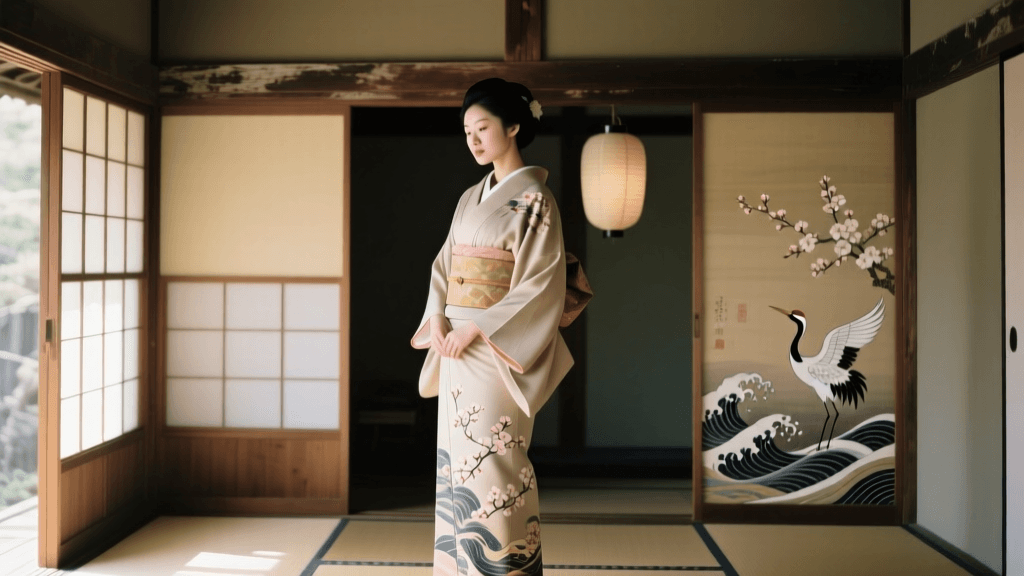
In traditional Japanese dress, motifs are never purely decorative; they are deeply tied to the seasons, literature, and auspicious meanings. Ukiyo-e prints strictly adhered to (and sometimes playfully subverted) these seasonal rules. A fundamental tenet of kimono etiquette is to wear motifs slightly before the season they represent, anticipating the change rather than reacting to it. Wearing cherry blossoms when they are already falling is considered okure (behind the times).
Below is a guide to the most prevalent motifs found in ukiyo-e prints, their seasonal timing, and their underlying symbolism:
| Motif | Japanese Name | Seasonal Timing | Symbolic Meaning | Ukiyo-e Context |
|---|---|---|---|---|
| Plum Blossoms | Ume | Late Winter (Feb) | Resilience, hope, purity | Often depicted on courtesans' outer robes, symbolizing endurance in the harsh winter of the pleasure quarters. |
| Cherry Blossoms | Sakura | Early Spring (March) | Ephemeral beauty, renewal | Used to highlight the fleeting youth and beauty of the bijin-ga subjects. |
| Iris | Kakitsubata | Early Summer (May) | Protection, martial success | Frequently paired with flowing water motifs, referencing classical Heian literature like the Tales of Ise. |
| Chrysanthemum | Kiku | Autumn (Sept-Oct) | Longevity, rejuvenation | Depicted in rich autumnal palettes (ochre, rust, deep green) on the garments of mature, high-ranking women. |
| Pine, Bamboo, Plum | Shochikubai | Winter / New Year | Auspiciousness, steadfastness | Reserved for formal, celebratory prints or New Year's greeting surimono (privately commissioned prints). |
Actionable Guide: Collecting Edo-Inspired Kimono Today
For modern collectors and practitioners of traditional Japanese dress, sourcing garments that reflect the aesthetics of ukiyo-e requires an understanding of historical construction and the vintage market. Authentic Edo-period kosode (the predecessor to the modern kimono) are rare, fragile, and primarily housed in museums. However, garments from the Taisho (1912–1926) and early Showa (1926–1989) eras frequently feature Edo-revival motifs and traditional hand-dyeing techniques.
Sizing and Measurements
When hunting for vintage kimono that mimic the silhouettes seen in Harunobu or Utamaro prints, pay close attention to the measurements. Edo-period garments were generally cut narrower and featured shorter sleeves than modern standard sizes.
- Yuki (Sleeve-to-Center-Back Length): Look for measurements between 60cm and 64cm for a historically accurate, slightly cropped sleeve drop that pools elegantly at the wrist, rather than the modern standard of 66cm+.
- Mihaba (Body Width per Panel): Antique and vintage pieces often have a narrower mihaba of 30cm to 32cm, compared to the modern 34cm. This creates the slender, elongated silhouette prized in bijin-ga prints.
- Sodeguchi (Sleeve Opening): Ensure the sleeve opening is relatively small (around 20-22cm) to maintain the modest, contained aesthetic of the Edo period, as opposed to the wide, sweeping sleeves of later formal wear.
Market Costs and Sourcing
Budgeting for historical and vintage textiles requires setting realistic expectations based on condition and provenance:
- Edo-Period Fragments & Heavily Worn Pieces: $50 – $200. Ideal for framing as art or studying historical shibori and yuzen techniques up close.
- Taisho-Era Vintage (Edo-Revival Motifs): $150 – $450. These pieces offer the best balance of historical aesthetic, wearable condition, and natural silk dyes.
- Modern Artisan Reproductions: $800 – $3,000+. Commissioned from traditional dyers in Kyoto or Kanazawa, utilizing authentic stencil (kata-yuzen) and hand-painting methods.
Caring for Historical and Vintage Silks
Silks depicted in ukiyo-e were meant to be worn, but surviving antiques require meticulous preservation. Never wash historical kimono at home. The natural dyes used in the Edo and Taisho periods, such as safflower red (benibana) and indigo (ai), are highly sensitive to modern alkaline detergents and will bleed or fade instantly.
Store your garments flat, folded along their original seams, and wrapped in unbuffered, acid-free tissue paper or traditional tatou (washi paper wraps). Avoid plastic garment bags, which trap moisture and encourage the growth of mold, a devastating enemy of protein-based silk fibers. Air the garments out in a shaded, well-ventilated room twice a year—traditionally during the dry, crisp days of late autumn—to prevent musty odors and fabric degradation.
Where to View Masterpieces of Kimono Art
To train your eye in the intricate details of Edo-period fashion, studying high-resolution prints and surviving garments is essential. The Victoria and Albert Museum's Kimono: Kyoto to Catwalk exhibition archives provide an extraordinary digital and physical resource, tracing the evolution of the garment from the 1660s to the present day, highlighting how historical layers and motifs influenced global fashion.
Additionally, major institutions like the Tokyo National Museum and the Art Institute of Chicago hold vast collections of ukiyo-e prints that are frequently digitized in high resolution. By cross-referencing the flattened, two-dimensional patterns of a woodblock print with the three-dimensional construction of a surviving kosode, collectors and enthusiasts can unlock a profound, tactile connection to the 'floating world' of Edo-period Japan.