Couture Hanfu: Sourcing Runway-Level Chinese Garments
The Global Runway's Fascination with Chinese Couture
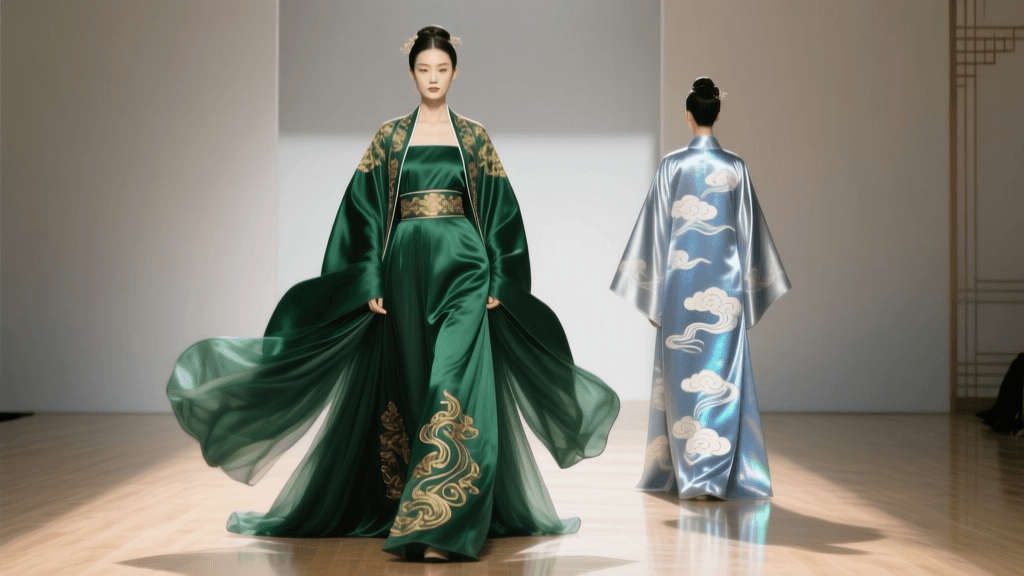
The intersection of Parisian haute couture and traditional Chinese structural design represents one of the most fascinating cross-cultural dialogues in modern fashion. For decades, Western interpretations of Chinese fashion were largely limited to the form-fitting Qipao or Orientalist dragon motifs. However, a profound shift has occurred over the last decade, with international runways and elite collectors turning their attention to the architectural brilliance of historical Hanfu. This movement elevates traditional Chinese garments from mere historical artifacts to highly sought-after, couture-level investments.
The global awakening to the depth of Chinese sartorial heritage was significantly amplified by the Metropolitan Museum of Art's landmark 2015 exhibition, China: Through the Looking Glass. The exhibition meticulously documented how Chinese aesthetics have fueled Western fashion fantasies, but it also laid the groundwork for a new generation of designers and collectors to look past surface-level exoticism and appreciate the complex tailoring, natural dyeing techniques, and philosophical underpinnings of authentic Chinese dress. Today, the focus is on structural integrity, heritage textiles, and the meticulous craftsmanship that rivals any Parisian atelier.
Deconstructing Couture-Level Traditional Silhouettes
The Mamianqun (Horse-Face Skirt)
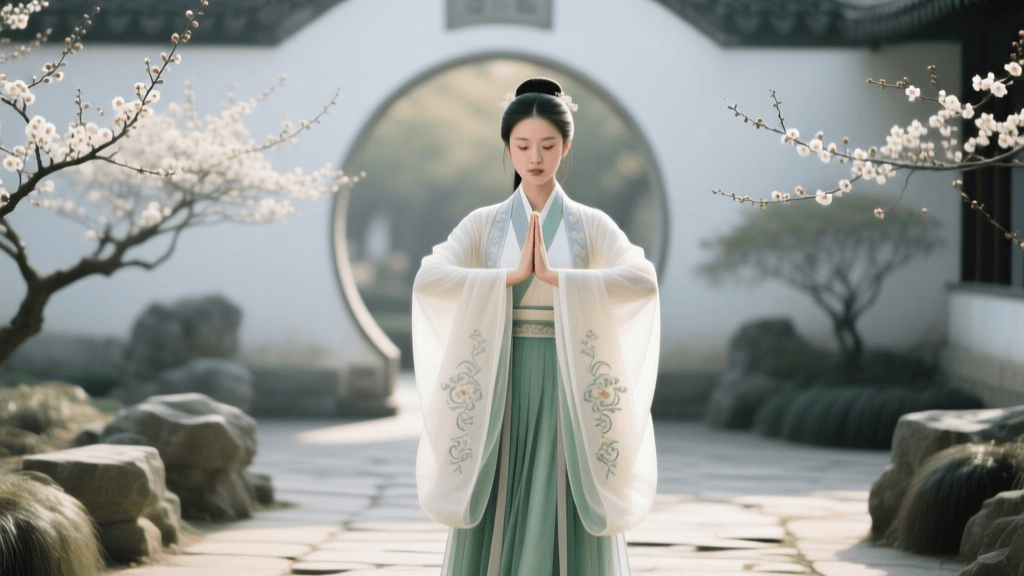
The Mamianqun is arguably the most recognizable and structurally complex garment driving the modern Hanfu renaissance. Characterized by two flat, unpleated front and back panels (the 'horse faces') flanked by deeply pleated side panels, this skirt is a masterclass in geometric tailoring. Unlike Western skirts that rely on darts and zippers to contour the body, the Mamianqun relies on an ingenious system of overlapping panels and waist ties. When walking, the pleats fan out dynamically, creating a fluid, architectural silhouette that has caught the eye of global luxury houses and independent couturiers alike.
Xiangyunsha (Gambiered Canton Gauze)
In the realm of textiles, few fabrics command the reverence and price point of Xiangyunsha, often referred to as 'soft gold' in the fashion industry. This silk fabric undergoes a grueling, entirely natural dyeing process native to the Pearl River Delta. The silk is repeatedly dipped in the tannin-rich juice of the Dioscorea cirrhosa tuber, sun-dried on grassy fields, and finally sealed with iron-rich river mud. The chemical reaction between the tannins and the iron creates a luxurious, dark, metallic-looking finish that is naturally water-resistant, antibacterial, and incredibly durable. The complexity and regional specificity of this craft have earned it a protected status, recognized globally by heritage organizations such as UNESCO as an Intangible Cultural Heritage.
Sourcing and Investing: A Buyer's Guide
For serious collectors and fashion enthusiasts looking to acquire runway-level traditional Chinese garments, the market is divided between mass-market replicas and true couture studios. Investing in the latter requires an understanding of the ecosystem, pricing, and lead times.
- Minghuatang (明华堂): Widely considered the pinnacle of historical accuracy and luxury in the Hanfu community. Minghuatang specializes in Ming Dynasty silhouettes, utilizing authentic weaving techniques and pure silk. Cost: A single Mamianqun ranges from $600 to $1,500 USD, while full formal sets can exceed $3,000 USD. Timing: They operate on a strict pre-order model with wait times spanning 6 to 12 months.
- Zhijing (织景): A slightly more accessible but highly respected studio focusing on intricate brocade weaves and Shu embroidery. Cost: Skirts and tops typically range from $250 to $600 USD. Timing: 2 to 4 months for production.
- Xiangyunsha Specialists (e.g., Tianyi): For authentic Gambiered Canton Gauze jackets and robes. Cost: $800 to $2,500 USD depending on the weight of the silk and the complexity of the cut. Timing: Often seasonal, as the dyeing process can only be performed during specific humid, sunny months in southern China.
Measurement and Fit Guide for Traditional Silhouettes
Sourcing couture Hanfu requires a fundamental shift in how we approach body measurements. Western couture relies on precise, body-hugging tailoring, whereas traditional Chinese garments prioritize drape, ease of movement, and structural geometry. Below is a comparison chart to guide your measurements when commissioning or purchasing high-end Hanfu.
| Garment Feature | Western Couture Standard | Traditional Hanfu Standard | Actionable Fit Tip |
|---|---|---|---|
| Skirt Waist | Exact waist measurement + 1 inch ease | Waist x 3 or 4 (Total Fabric Width) | Measure your natural waist, but ensure the skirt's total fabric width is at least 3x your waist to allow for proper overlapping of the 'horse face' panels. |
| Skirt Length | Waist to desired hemline | Waist to floor minus 1 inch | Traditional skirts should graze the shoe. Measure from your natural waist to the floor while wearing your intended footwear, then subtract 1 inch to prevent tripping. |
| Shoulder Drop | Exact shoulder seam alignment | Dropped shoulder (4 to 8 inches past natural shoulder) | Do not measure shoulder-to-shoulder for tops. Instead, measure from the nape of your neck to your wrist to determine the correct sleeve and drape length. |
| Sleeve Width | Fitted to the bicep and wrist | Wide, often 16 to 24 inches at the cuff | For formal 'Pipa' sleeves, ensure the cuff width is wide enough to slip your hand through comfortably, but features a tapered return curve to hold the fabric gracefully. |
Care and Preservation of Heritage Textiles
Investing in couture-level Hanfu is akin to acquiring museum-quality artifacts. Proper preservation is essential to maintain the structural integrity and chemical balance of heritage textiles. Institutions like the Victoria and Albert Museum maintain rigorous climate-controlled environments for their Asian textile archives, but collectors can adapt these principles for home care.
Washing and Drying
Never use alkaline detergents or standard laundry soaps on Xiangyunsha or silk brocades. The natural dyes and mud-coatings are highly sensitive to pH imbalances. Use a specialized, neutral-pH silk wash. Xiangyunsha should ideally only be spot-cleaned or gently hand-washed in cool water. Never wring the fabric; instead, roll it in a clean, dry cotton towel to absorb excess moisture and lay it flat in the shade. Direct sunlight will rapidly degrade the silk fibers and fade the natural tannin dyes.
Storage and Ironing
Store your Mamianqun flat or rolled rather than hung, as the heavy brocade and intricate pleats can stretch and distort under their own weight over time. Use acid-free tissue paper to stuff the pleats and maintain their sharp geometric lines. When ironing, always use a pressing cloth and a low-heat steam setting. For Xiangyunsha, the natural 'crackle' texture of the mud coating is part of its charm; avoid heavy pressing that might flatten this unique, organic surface.
The Future of Chinese Couture
As the global fashion industry continues to seek sustainability and artisanal authenticity, the traditional Chinese garment market is perfectly positioned to lead the charge. By investing in historically accurate, meticulously crafted Hanfu, collectors are not merely buying clothes; they are preserving living history. Whether it is the mathematical precision of a Ming Dynasty skirt or the alchemical magic of Cantonese silk dyeing, these garments offer a profound, wearable connection to centuries of Asian artistic triumph.