The Modern Qipao: Evolution, Styling, and Tailoring
The Journey of the Qipao: From Manchu Robes to Shanghai Glamour
The qipao, also widely known as the cheongsam, is arguably the most recognizable garment in Chinese fashion history. However, the form-fitting, high-collared dress recognized globally today is a relatively modern invention. Its origins trace back to the Qing Dynasty (1644–1912), where the Manchu 'changpao' was a loose, voluminous, and modest one-piece robe worn by both men and women. It was designed to conceal the figure and adhere to strict feudal sartorial codes.
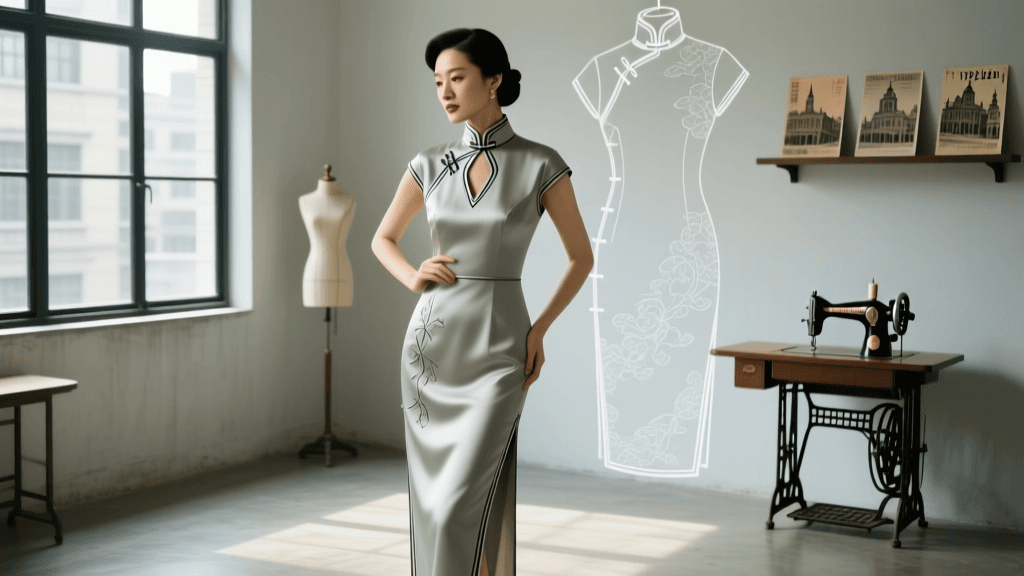
The true evolution of the qipao began in the 1920s in Shanghai, a bustling cosmopolitan hub where East met West. Influenced by Western tailoring techniques and the burgeoning feminist movement, Chinese women began to modify the traditional robe. They narrowed the sleeves, introduced darts to contour the bodice, and raised the hemline to reveal the ankles and later the calves. As noted by fashion historians and documented in exhibitions like the Metropolitan Museum of Art's landmark China: Through the Looking Glass, the 1930s qipao became a symbol of modern Chinese femininity, blending traditional silk brocades and frog buttons (pankou) with Art Deco geometric prints and Western silhouettes.
According to cultural retrospectives by the South China Morning Post, the mid-century qipao was the standard daily wear for urban women, teachers, and socialites alike. However, by the late 20th century, it had largely been relegated to the status of formalwear, wedding attire, or uniform for hospitality workers, losing its place in the everyday contemporary wardrobe.
The 'Xin Zhongshi' Movement: The Qipao in Contemporary Fashion
Today, the qipao is experiencing a massive renaissance, driven by the 'Xin Zhongshi' (New Chinese Style) movement. This trend rejects the rigid, hyper-formal interpretation of the cheongsam in favor of relaxed, wearable, and avant-garde iterations. Young designers are deconstructing the classic silhouette, experimenting with asymmetrical hems, oversized fits, and unconventional fabrics like denim, vegan leather, and technical nylon.
The modern qipao is no longer just a dress; it is a modular fashion statement. The defining characteristics of the Xin Zhongshi qipao include:
- Relaxed Silhouettes: Moving away from skin-tight tailoring to A-line or shift-dress cuts that prioritize comfort and mobility.
- Subtle Traditional Motifs: Replacing loud, embroidered dragons and phoenixes with minimalist tonal embroidery, abstract ink-wash prints, or subtle textile weaves.
- Hybrid Garments: Qipao-inspired tops, cropped jackets with mandarin collars, and two-piece sets that mimic the waistline of the traditional dress.
Practical Tailoring: How to Measure for a Modern Qipao
Whether you are ordering a bespoke qipao from a master tailor in Shanghai's South Bund Fabric Market or commissioning a custom piece from an online artisan, precise measurements are critical. Unlike Western dresses that often rely on stretch fabrics, traditional qipaos are cut from woven silks like crepe de chine or Shantung, which have zero mechanical stretch.
When providing measurements to your tailor, you must account for 'ease'—the extra fabric added to your body measurements to allow for breathing, sitting, and movement. Below is a comprehensive guide to the essential measurements and the recommended ease for a modern, comfortable fit.
| Measurement Point | How to Measure | Recommended Ease (Woven Silk) |
|---|---|---|
| Bust | Measure around the fullest part of the chest, keeping the tape level. | +4 cm to +6 cm |
| Waist | Measure at the natural waistline (narrowest part of the torso). | +3 cm to +5 cm |
| Hips | Measure around the fullest part of the hips and buttocks. | +4 cm to +6 cm |
| Shoulder Width | Measure from the edge of one shoulder bone to the other across the back. | Exact or +1 cm |
| Collar / Neck | Measure snugly around the base of the neck where the collar will sit. | +1.5 cm (Crucial for comfort) |
| Hollow to Hem | Measure from the hollow at the base of the neck down to the desired hemline. | Exact (Depends on heel height) |
| Armhole Depth | Measure from the top of the shoulder down to the armpit crease. | +2 cm for mobility |
Tailoring Tip: If you are commissioning a dress with a high slit (kaicha), ensure your tailor reinforces the apex of the slit with a hidden bar tack or a decorative knot to prevent the silk from tearing under tension when you walk or sit.
Modern Styling: Integrating the Qipao into Your Daily Wardrobe
The most common mistake people make when styling a qipao is treating it as a costume. To wear the qipao in a modern, everyday context, you must contrast its inherent elegance with casual, contemporary streetwear elements. This juxtaposition is the core of the Xin Zhongshi aesthetic.
Footwear Choices
Ditch the traditional high heels or delicate silk slippers. For a chic, urban look, pair a midi-length cotton or linen qipao with chunky sneakers (like the New Balance 990v5 or Converse Chuck 70s). If you are attending a semi-formal evening event, opt for structured leather combat boots or modern architectural mules to give the outfit an edgy, grounded feel.
Layering and Outerwear
The qipao is an excellent layering piece. In cooler months, layer a sleeveless or short-sleeved qipao over a fitted, sheer black turtleneck. For outerwear, avoid traditional silk shawls. Instead, throw on an oversized, structured menswear blazer, a cropped vintage denim jacket, or a long wool trench coat. The contrast between the sharp lapels of a blazer and the curved, traditional pankou buttons of the qipao creates a visually striking silhouette.
Accessories and Hardware
Keep jewelry minimal and modern. Skip the jade bangles and pearl necklaces, which can push the look into cliché territory. Opt for chunky silver hardware, geometric drop earrings, or a sleek leather crossbody bag. If your qipao features a high mandarin collar, wear your hair up in a messy claw-clip updo or a sleek low bun to elongate the neck and prevent the collar from looking suffocating.
Fabric Selection, Care, and Cost Breakdown
The fabric you choose dictates not only the drape of the garment but also its care requirements and overall cost. Here is a breakdown of the most popular fabrics used in modern qipao tailoring:
- Mulberry Silk Crepe de Chine (19mm - 22mm): The gold standard for luxury qipaos. It has a beautiful matte finish, excellent drape, and a soft hand-feel. Cost: $80 - $150 per yard. Care: Dry clean only or hand wash in cold water with pH-neutral silk detergent.
- Silk Shantung or Dupioni: Features a crisp texture and visible slubs (irregularities in the yarn). It holds structural shapes well, making it ideal for qipaos with exaggerated collars or A-line skirts. Cost: $60 - $120 per yard. Care: Dry clean only; steam carefully to avoid water spots.
- Cotton-Linen Blends: The preferred choice for everyday Xin Zhongshi streetwear. It is breathable, machine washable, and offers a relaxed, matte aesthetic. Cost: $15 - $35 per yard. Care: Machine wash cold, tumble dry low, iron while damp.
- Acetate or Triacetate Satin: A fantastic vegan alternative to silk that offers a high-gloss finish and heavy drape, often used for evening or wedding qipaos. Cost: $25 - $50 per yard. Care: Hand wash or dry clean; avoid high heat ironing.
Cost of Commissioning: If you are visiting Shanghai, a custom-tailored qipao at the South Bund Soft Spinning Material Market will typically cost between $120 and $250 USD, including mid-range silk fabric and labor, with a turnaround time of 3 to 7 days. For high-end, master-crafted bespoke pieces from heritage houses like Shanghai Tang or independent master tailors, expect to pay anywhere from $800 to over $2,500 USD, with multiple fitting sessions required over several weeks.
Conclusion
The qipao is not a relic of the past; it is a living, breathing garment that continues to evolve alongside the women who wear it. By understanding its rich history, mastering the nuances of bespoke tailoring, and embracing modern styling techniques, you can seamlessly integrate this iconic piece of Asian heritage into your contemporary wardrobe. Whether you opt for a classic silk crepe de chine or a deconstructed denim hybrid, the modern qipao remains a powerful expression of elegance, identity, and sartorial innovation.