Recreating Iconic Hanfu: Wu Zetian, Wang Zhaojun & Li Bai

The Power of Historical Fashion in Chinese Culture
Traditional Chinese clothing, broadly known as Hanfu, is not a single, static monolith. It is a vibrant tapestry of evolving silhouettes, textiles, and cultural philosophies that shifted dramatically across dynasties. From the austere, structured elegance of the Han Dynasty to the cosmopolitan, flowing opulence of the Tang Dynasty, historical figures have long served as the ultimate style icons. According to Britannica's comprehensive guide to Chinese dress, clothing in imperial China was deeply tied to social status, philosophical beliefs, and the wearer's role in society. Today, the modern Hanfu revival movement looks to these historical titans for inspiration. Whether you are preparing for a cultural festival, a historical cosplay, or a professional photoshoot, recreating the outfits of Wu Zetian, Wang Zhaojun, and Li Bai requires an understanding of both historical accuracy and modern sourcing. This guide provides actionable advice, precise measurements, and styling tips to bring these three iconic figures to life.
Wu Zetian: Tang Dynasty Opulence and the Qixiong Ruqun
Wu Zetian, the only female emperor in Chinese history, ruled during the Zhou dynasty (interrupting the Tang dynasty). Her era was characterized by immense wealth, Silk Road trade, and a relaxed, confident approach to women's fashion. The Tang dynasty silhouette celebrated volume, high waistlines, and luxurious textiles.
The Historical Look
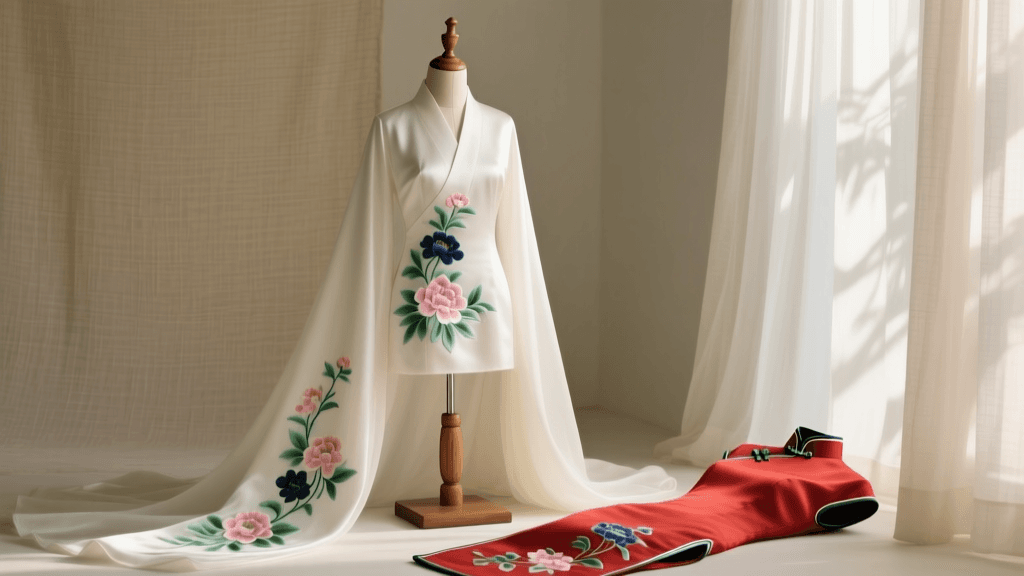
Wu Zetian’s most iconic representation in art and media features the Qixiong Ruqun (chest-high skirt) paired with a Pibo (silk stole) and elaborate Huadian (forehead makeup). The influx of foreign goods via the Silk Road heavily influenced Tang textiles, introducing vibrant dyes and intricate brocade patterns, as documented by The Metropolitan Museum of Art's Heilbrunn Timeline. To emulate an emperor's ceremonial or high-court look, the fabrics must scream luxury.
Practical Guide to Recreating the Look
- The Skirt (Qixiong Ruqun): The skirt must sit above the bust. For proper historical volume, the skirt's total width should be 2.5 to 3 times your underbust measurement. If your underbust is 80cm, you need a skirt width of at least 200cm to 240cm. The length should be your height minus 15cm to prevent tripping while maintaining a floor-sweeping look.
- The Top (Shan): A short-sleeved or long-sleeved crossed-collar top worn under the skirt. Opt for lightweight silk charmeuse or high-quality rayon. The sleeve width should be at least 40cm for a draping effect.
- The Stole (Pibo): A 3-meter long, 60cm wide piece of sheer silk organza or chiffon. Drape it over both elbows and let it trail behind you. To keep it in place, use double-sided fashion tape on the shoulders.
- Makeup & Hair: The Huadian (forehead flower) can be applied using gold leaf flakes or specialized cosmetic stickers. Hair should be styled in a high, elaborate bun (the Gaoji) adorned with gold-plated hairpins and silk ribbons.
- Cost Estimate: $120 - $250 USD for a high-quality, multi-layered silk or brocade set from specialized Hanfu boutiques.
Wang Zhaojun: Han Dynasty Elegance and the Quju Shen Yi
Wang Zhaojun, one of the Four Great Beauties of ancient China, is famous for her marriage alliance with the Xiongnu nomadic empire during the Han Dynasty. Her aesthetic is defined by sorrowful elegance, modesty, and the harsh, cold climates of the northern frontier.
The Historical Look
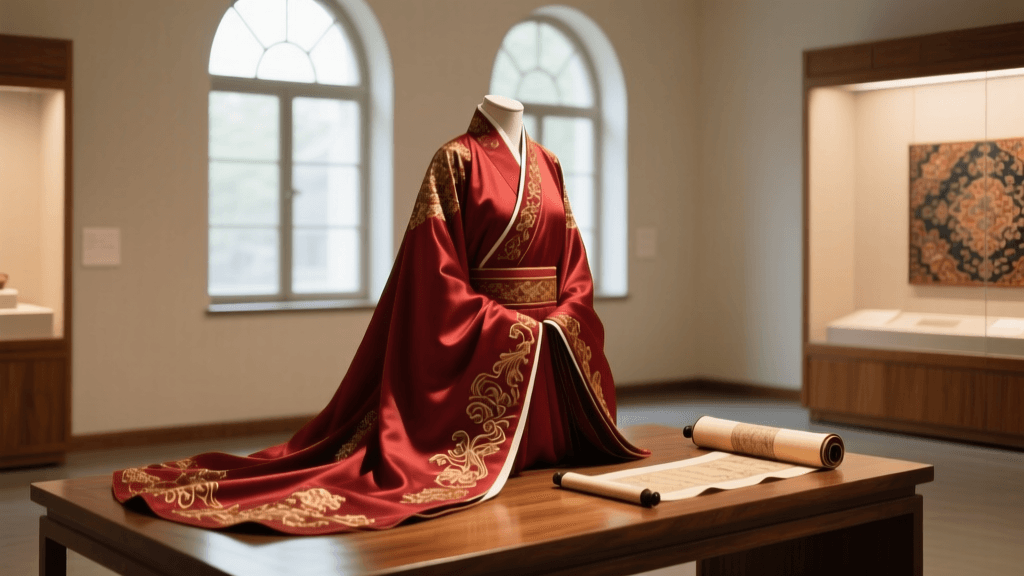
Unlike the exposed shoulders and high waists of the Tang dynasty, Han Dynasty fashion was conservative, grounded, and highly structured. The quintessential garment is the Quju Shen Yi (curved-hem deep robe). This one-piece robe wraps around the body, with a hem that curves dramatically to the back, creating a flowing, triangular train.
Practical Guide to Recreating the Look
- The Robe (Quju Shen Yi): Han dynasty fabrics were typically linen, ramie, or woven silk with muted, earthy, or deep jewel tones (avoid the bright neons of later eras). The robe requires precise wrapping. The collar must show distinct, contrasting layers (usually a white inner collar peeking out from a darker outer collar). Measure your shoulder width carefully; Han robes have a dropped shoulder seam that should sit exactly 5-10cm past your natural shoulder bone.
- The Cloak (Doupeng): To represent her journey to the freezing northern steppes, a winter cloak is essential. Source a faux-fur or heavy wool hooded cloak in deep crimson or charcoal. The cloak should be floor-length and fastened at the neck with a jade or metal toggle.
- The Prop (Pipa): Wang Zhaojun is almost always depicted holding a Pipa (Chinese lute). For photoshoots, purchase a decorative, non-playable Pipa (approx. 100cm in length) to save on cost and weight. Ensure the neck of the lute is angled correctly in portraits to frame the face.
- Cost Estimate: $80 - $150 USD. Han dynasty sets use less ornate embroidery, making them slightly more affordable, though a good quality wool cloak will add $40-$60.
Li Bai: Tang Dynasty Scholarly Romance and the Yuanling Pao
Li Bai, the legendary romantic poet of the Tang Dynasty, embodies the spirit of the wandering scholar. His fashion reflects a blend of official court attire and the relaxed, unbothered demeanor of a man who preferred wine and moonlight to bureaucratic rigidity.
The Historical Look
Li Bai’s iconic silhouette centers on the Yuanling Pao (round-collar robe). Originally adopted from nomadic riding gear, the round-collar robe became the standard daily wear for Tang men. It is practical, masculine, and deeply evocative of the era's literary heroes.
Practical Guide to Recreating the Look
- The Robe (Yuanling Pao): The round collar should sit snugly against the base of the neck. The collar diameter is typically 15-18cm. The robe should feature side slits for ease of movement. Choose breathable ramie, washed cotton, or lightweight linen in colors like ivory, pale blue, or bamboo green. The sleeves should be tapered at the wrist or feature wide, flowing scholar's cuffs depending on the specific sub-era you wish to depict.
- The Belt (Ge Dai): A thick leather or woven fabric belt is crucial. It should sit at the natural waist. Attach a small decorative pouch or a jade pendant to the belt to add movement and historical flavor.
- The Hat (Futou): The soft-footed Futou (scholar's hat) is mandatory for this look. Modern reproductions often come with internal wire frames to hold the two 'feet' upright or trailing. Ensure the hat fits your head circumference snugly; use bobby pins to secure it to your hair or a wig cap.
- Footwear: Black leather or heavy cotton cloth boots with a slight upward curve at the toe. Avoid modern sneakers at all costs; they ruin the silhouette.
- Cost Estimate: $60 - $120 USD. Men's and unisex cotton/linen robes are highly accessible and reasonably priced.
Comparison Chart: Sourcing and Styling the Three Icons
| Historical Figure | Era | Core Garment | Best Fabric Choice | Est. Cost (USD) | Styling Difficulty |
|---|---|---|---|---|---|
| Wu Zetian | Tang | Qixiong Ruqun | Silk Brocade, Organza | $120 - $250 | High (Complex hair/makeup) |
| Wang Zhaojun | Han | Quju Shen Yi | Linen, Ramie, Faux Fur | $80 - $150 | Medium (Wrapping technique) |
| Li Bai | Tang | Yuanling Pao | Washed Cotton, Ramie | $60 - $120 | Low (Simple layering) |
Modern Sourcing: Where and How to Buy Authentic Hanfu
When recreating these historical silhouettes, the fit and fabric drape are paramount. Mass-market costume shops often sell garments with incorrect collar alignments, synthetic fabrics that do not drape properly, and inaccurate proportions. As highlighted by The Metropolitan Museum of Art's exhibition archives regarding historical Chinese silhouettes, the structural integrity of the garment defines the aesthetic.
For authentic pieces, the best approach is to order directly from specialized Hanfu brands via platforms like Taobao, utilizing a shopping agent (such as Superbuy or Sugargoo) if you are outside of China. When taking your measurements, always use a soft measuring tape and record in centimeters. Crucial measurements for Hanfu include the shoulder width (measured from the bone, not the seam), arm length (from the base of the neck to the wrist, as traditional garments often use dropped shoulders), and underbust (for chest-high skirts). Always size up if you are between sizes; traditional Chinese garments are designed to be wrapped and tied, and a garment that is too small will pull at the collar, destroying the historical silhouette.
Conclusion
Recreating the outfits of Wu Zetian, Wang Zhaojun, and Li Bai is more than just playing dress-up; it is an immersive way to connect with the philosophies, climates, and social dynamics of ancient China. By paying close attention to fabric weights, precise measurements, and historical layering techniques, you can step out of the modern world and into the rich, woven history of Asian traditions with confidence and authenticity.