Su Embroidery Guide: Crafting Hanfu and Qipao Textiles
The Legacy of Su Embroidery in Chinese Textile Arts
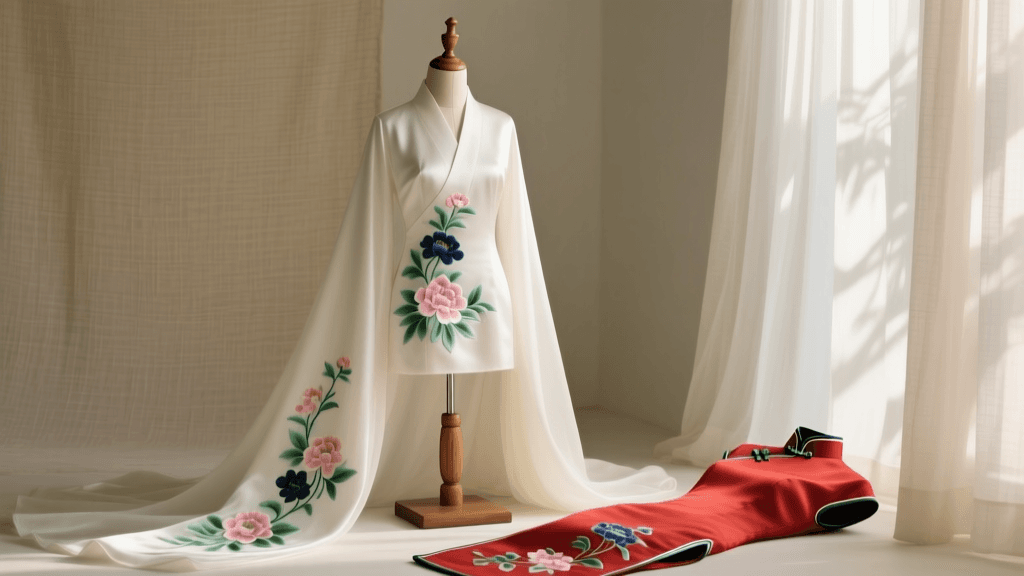
Suzhou embroidery, commonly known as Su Xiu, is one of the most celebrated and intricate textile arts in Asian history. Originating in the Jiangsu province over 2,000 years ago, this meticulous craft has become synonymous with luxury, elegance, and cultural heritage. For centuries, Su embroidery has been the premier choice for adorning high-status garments, particularly traditional Hanfu and the form-fitting Qipao (Cheongsam). The delicate nature of the silk threads and the vividness of the dyes allow artisans to create garments that are not merely clothing, but wearable canvases that reflect the philosophical and aesthetic ideals of Chinese culture.
The global significance of this craft is immense. In 2009, the sericulture and silk craftsmanship of China, which encompasses the foundational skills required for Su embroidery, was officially inscribed on the UNESCO Intangible Cultural Heritage list. This recognition highlights the painstaking processes of mulberry cultivation, silkworm reeling, and the masterful hand-stitching techniques that have been passed down through generations of female artisans in the Suzhou region.
Understanding the Four Major Chinese Embroidery Styles
To truly appreciate Su embroidery, one must understand its place among the 'Four Major Embroidery Styles' of China. While all four styles utilize silk, their techniques, regional motifs, and applications in traditional garments vary significantly. Su embroidery is uniquely favored for Qipao and Hanfu due to its flat, smooth finish, which prevents the fabric from bunching or adding unwanted bulk to the garment's silhouette.
| Style | Origin | Key Characteristics | Common Garment Use |
|---|---|---|---|
| Su (Suzhou) | Jiangsu | Delicate, flat, vibrant, double-sided stitching | Qipao, high-end Hanfu, ceremonial robes |
| Xiang (Hunan) | Hunan | Textured, monochromatic, realistic shading | Decorative screens, outer jackets |
| Shu (Sichuan) | Sichuan | Bright colors, thick threads, folk motifs | Everyday traditional wear, accessories |
| Yue (Guangdong) | Guangdong | Gold and silver threads, bold patterns | Theatrical costumes, wedding garments |
Technical Mastery: Stitches and Silk Thread Splitting
The hallmark of Su embroidery is the astonishing technique of 'thread splitting' (pi xian). A single strand of silk thread is incredibly fine, yet master artisans can split this single strand into multiple microscopic filaments to achieve unparalleled gradients and realism. According to historical archives and modern textile studies documented by institutions like The Metropolitan Museum of Art, the manipulation of silk at this microscopic level is what gives Chinese embroidery its legendary painterly quality.
- 1/2 and 1/4 Splits: Used for bold outlines, floral stems, and structural elements on heavy Hanfu outerwear like the Pifeng (cape).
- 1/8 and 1/16 Splits: The standard for most Qipao floral motifs, providing a smooth, satiny finish that catches the light beautifully.
- 1/32 and 1/64 Splits: Reserved for master-level details, such as the delicate scales of a koi fish, the individual feathers of a crane, or the subtle blush on a peony petal. A 1/64 split is thinner than a human hair.
Artisans employ over 40 distinct stitching techniques. The Pingzhen (flat stitch) is the most common, creating seamless color transitions. The Dazi (seed stitch) is used for textured elements like flower stamens, while the Jielin (scale stitch) is specifically engineered for overlapping textures like dragon or fish scales on ceremonial Hanfu.
Commissioning Bespoke Pieces: Cost, Timing, and Sizing
For collectors, brides, and Hanfu enthusiasts looking to commission or purchase authentic Su embroidered garments, understanding the market dynamics is crucial. True hand-embroidered silk is an investment of both time and capital. Here is a practical breakdown of what to expect when sourcing authentic pieces.
Pricing Tiers and Market Realities
- Machine-Made Imitations ($30 - $120): Produced using computerized multi-head embroidery machines. The back of the fabric will show messy jump stitches and bobbin thread. These lack the luminous sheen of hand-stitched silk and are unsuitable for heirloom Qipaos or formal Hanfu.
- Apprentice Hand-Embroidery ($300 - $800): Stitched by artisans with 3 to 5 years of experience. The thread splitting usually stops at 1/8 or 1/16. Ideal for everyday Hanfu accessories, Mamianqun (horse-face skirt) panels, and casual Qipaos.
- Master Artisan Commissions ($2,500 - $15,000+): Executed by provincial or national-level heritage inheritors. Utilizing 1/32 or 1/64 thread splits and double-sided embroidery (where the front and back patterns are identical and flawless). This tier is reserved for wedding Qipaos and museum-grade Hanfu.
Timing and Measurements
Hand embroidery is profoundly time-consuming. If you are commissioning a bespoke Qipao with a standard chest and hem panel embroidery (measuring approximately 12 by 18 inches per panel), expect the embroidery phase alone to take between 120 and 300 hours. In practical terms, this translates to a lead time of 2 to 4 months before the garment is even sent to the tailor for cutting and sewing. For a fully embroidered Hanfu Daxiushan (large-sleeved robe), the lead time can easily exceed 8 to 12 months.
Pro-Tip for Buyers: Always request a 'progress photo' of the embroidery hoop before the piece is cut from the main silk bolt. This ensures the work is genuinely hand-stitched and allows you to verify the thread density and color accuracy in natural lighting.
Preservation and Care for Embroidered Silk Garments
The longevity of a Su embroidered Qipao or Hanfu depends entirely on proper storage and handling. Silk is a protein fiber, making it highly susceptible to environmental damage, while the dense embroidery threads can warp the base fabric if stored incorrectly.
- Climate Control: Store your garments in an environment with a relative humidity of 45% to 55% and a stable temperature around 65°F (18°C). High humidity promotes mold growth on the silk sizing, while low humidity makes the threads brittle.
- Folding vs. Hanging: Never hang heavy, heavily embroidered Hanfu skirts or Qipaos on standard wire or thin wooden hangers. The weight of the dense silk threads will cause the base fabric to stretch and tear over time. Instead, fold the garments using acid-free, unbuffered tissue paper to cushion the folds and prevent permanent creasing in the embroidery.
- Cleaning Protocols: Avoid dry cleaning unless absolutely necessary, as harsh chemical solvents can strip the natural sericin coating from the silk threads, dulling their luster. For minor surface dust, use a soft, natural-bristle brush and gently sweep in the direction of the embroidery stitches. If a spill occurs, blot immediately with a microfiber cloth and consult a textile conservator who specializes in Asian heritage garments.
By understanding the profound technical skill, historical significance, and specific care requirements of Su embroidery, collectors and wearers can ensure that these magnificent examples of Asian textile art continue to be cherished for generations to come.