2026 Guide to Japanese Fashion School Workshops & Online Courses
The Renaissance of Wafuku Education in 2026
The global fascination with traditional Japanese garments, collectively known as wafuku, has reached unprecedented heights in 2026. Driven by a worldwide pivot toward sustainable, slow-fashion practices and an appreciation for heritage craftsmanship, international and domestic students are increasingly seeking formal education in Japanese textile arts. Whether you are an aspiring fashion designer looking to integrate shibori dyeing into contemporary streetwear, or a textile historian aiming to master the meticulous flat-pattern drafting of the kimono, the educational landscape in Japan has evolved to meet modern demands.
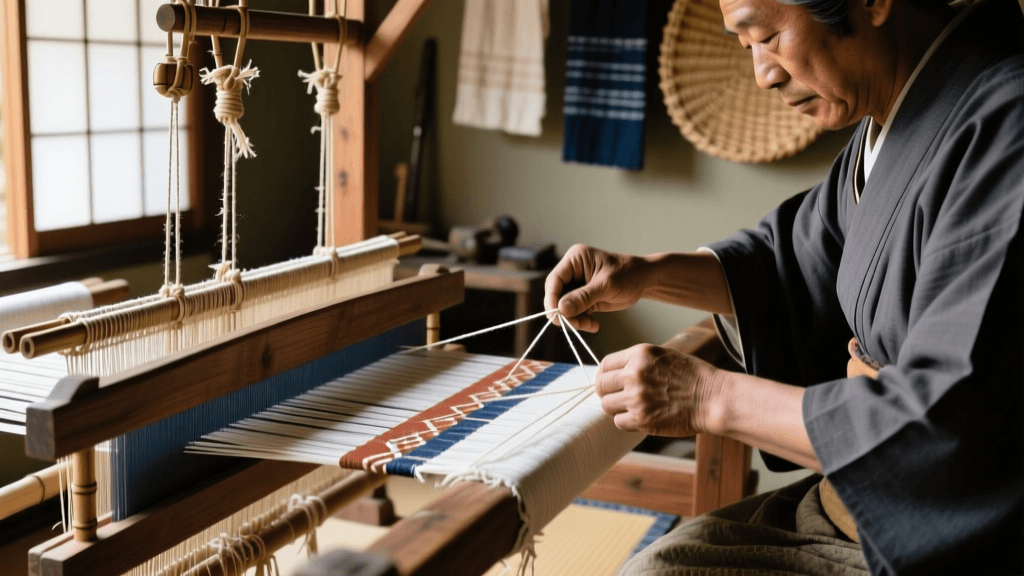
Historically, mastering techniques like Kyo-Yuzen silk dyeing or Nishijin weaving required a decade-long apprenticeship under a strict master artisan. Today, Japan’s premier fashion institutions have bridged the gap between ancient pedagogy and modern accessibility. Through intensive summer workshops, semester-long certificate programs, and high-definition hybrid online modules, students in 2026 can access centuries-old sartorial secrets without committing to a traditional multi-year apprenticeship.
Premier In-Person Workshops in Japan
For those able to travel to Japan, immersive in-person workshops offer unparalleled access to master artisans, specialized equipment, and authentic raw materials. The following institutions are currently leading the 2026 cohort for traditional garment education.
Bunka Fashion College: Kimono Pattern Drafting and Construction
Located in the heart of Tokyo's Shinjuku district, Bunka Fashion College remains Asia’s most prestigious fashion institution. While globally renowned for its avant-garde contemporary design alumni, Bunka’s Traditional Garment Construction short courses are highly sought after. In 2026, the college offers a specialized 4-week intensive module focusing on the geometry of the kimono.
Unlike Western tailoring, which relies on complex curved darts and seams to map the human form, kimono construction utilizes a straight-line, flat-pattern drafting system derived from the width of traditional silk bolts (tanmono). Students in this workshop learn to calculate precise proportions based on the wearer’s height and shoulder span, mastering the art of the okumi (front overlap panel) and the structural integrity of the eri (collar). The 2026 tuition for this 4-week intensive is approximately 380,000 JPY, which includes access to Bunka’s extensive historical garment archive and industrial steam-ironing facilities.
Kyoto Seika University: Kyo-Yuzen Dyeing Intensives
Kyoto is the undisputed epicenter of Japanese silk dyeing, and Kyoto Seika University offers one of the most rigorous academic approaches to traditional crafts. Their 2026 Summer Yuzen Intensive is a two-week, full-immersion program taught by active Kyo-Yuzen master dyers.
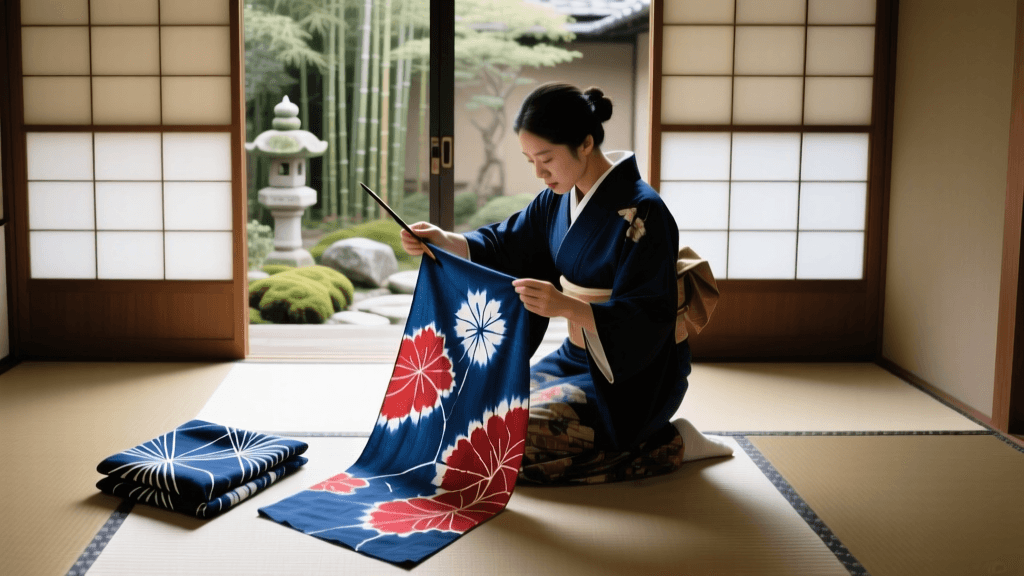
The Yuzen process is famously complex, often requiring over a dozen distinct steps. Students in this workshop begin with shitae (sketching the design directly onto the silk with aobana, a temporary blue flower dye). They then progress to itome-nori, the meticulous application of a rice-based resist paste using a specialized metal-tipped cone to outline the design. The curriculum also covers ji-ire (applying soybean milk sizing to prepare the fabric for color) and the vibrant irosashi (coloring) phase using traditional brushes. The workshop culminates in the mushi (steaming) process, which fixes the dyes into the silk fibers, followed by mizumoto (washing the fabric in cold running water to remove the resist paste). Tuition for the 2026 summer session is 250,000 JPY, excluding materials.
The Evolution of Online Japanese Textile Learning
For international students unable to secure immediate travel arrangements, 2026 has seen a massive leap in the quality of online textile education. High-definition, multi-camera workshop setups now allow remote learners to observe the exact viscosity of resist paste and the subtle color shifts in natural indigo vats.
The Japan Foundation Digital Cultural Modules
The Japan Foundation has expanded its digital outreach in 2026, offering a series of comprehensive online modules dedicated to Japanese textile history and basic techniques. While these courses do not replace the tactile experience of a physical workshop, they provide an exceptional theoretical foundation. Their "Threads of Heritage" series includes video lectures from Living National Treasures, detailed PDFs on the chemistry of natural dyes (such as ai indigo and benibana safflower), and virtual tours of historic weaving districts like Nishijin and Kiryu.
Specialized Shibori Masterclasses via Hybrid Platforms
Several independent Kyoto-based artisan studios have partnered with global craft education platforms to offer live-streamed Shibori workshops. In these interactive 2026 sessions, students receive a mailed kit containing pre-mordanted cotton, specialized binding threads, and wooden clamps. During the live broadcast, artisans guide students through complex binding techniques such as Kanoko (fawn-spot tie-dye) and Miura (looped binding). The real-time feedback mechanism allows instructors to correct a student's tension and binding pressure via webcam, ensuring the final resist patterns are crisp and well-defined.
Comparative Analysis: In-Person vs. Online Learning
Choosing between traveling to Japan and studying remotely depends on your learning style, budget, and professional goals. Below is a comparison of the primary educational pathways available in 2026.
| Program Type | Institution / Platform | Duration | 2026 Estimated Cost | Best For |
|---|---|---|---|---|
| In-Person Pattern Drafting | Bunka Fashion College (Tokyo) | 4 Weeks | 380,000 JPY (~$2,550 USD) | Aspiring fashion designers & tailors |
| In-Person Yuzen Dyeing | Kyoto Seika University | 2 Weeks | 250,000 JPY (~$1,680 USD) | Textile artists & surface designers |
| Online Theory & History | The Japan Foundation | Self-Paced | Free / Subsidized | Historians, curators, & beginners |
| Live Hybrid Shibori | Independent Kyoto Studios | 4-6 Hours | 25,000 JPY (~$170 USD) incl. kit | Hobbyists & global craft enthusiasts |
Sourcing Materials and Setting Up a Home Studio
Whether you are supplementing an online course or continuing your practice after returning from a Kyoto workshop, establishing a home studio for Japanese dyeing requires specific environmental controls and authentic materials.
- Sourcing Tango Chirimen: The preferred silk for Yuzen dyeing is Tango Chirimen, a highly textured crepe silk woven in the Tango region of Kyoto Prefecture. The crepe texture allows the fabric to absorb dyes deeply while maintaining a soft, elegant drape. In 2026, several authorized Japanese textile exporters ship raw, degummed Tango Chirimen bolts directly to international buyers via specialized e-commerce portals.
- Indigo Vat Management: If you are practicing Aizome (indigo dyeing), maintaining a natural sukumo (fermented indigo leaf) vat requires strict temperature and pH management. The vat must be kept at a consistent 25°C to 30°C. You will need to feed the vat regularly with alkaline agents (like wood ash lye) and nutrients (such as sake or wheat bran) to keep the indigo-reducing bacteria alive.
- Steaming Equipment: For Yuzen and steam-set acid dyes, a standard kitchen steamer is insufficient. You must invest in a professional textile steam chamber or construct a safe, well-ventilated PVC-pipe steam rig capable of sustaining 100°C for at least 45 minutes to ensure the dye molecules permanently bond with the silk proteins.
Navigating 2026 Travel and Cultural Visas
For international students planning to attend the in-person workshops at Bunka or Kyoto Seika, understanding Japan's 2026 visa landscape is crucial. Short-term workshops (under 90 days) generally fall under the Temporary Visitor status, which permits cultural study and unpaid workshops. Japan’s fully digitized e-Visa system, now available to over 70 countries as of 2026, allows applicants to submit proof of workshop enrollment and financial solvency entirely online, drastically reducing processing times to under 72 hours.
However, if you intend to enroll in a long-term, multi-year apprenticeship or a degree program in traditional crafts, you must secure a Student Visa. This requires a Certificate of Eligibility (COE) sponsored by the educational institution. Students are advised to consult directly with the international affairs offices of their chosen Japanese fashion schools at least six months prior to their intended 2026 start dates to ensure all documentation aligns with the latest immigration protocols.
Conclusion
The preservation and evolution of Japanese traditional garments rely heavily on the transmission of knowledge to new generations. The 2026 educational ecosystem—spanning rigorous in-person workshops in Tokyo and Kyoto to accessible, high-definition online modules—ensures that the intricate arts of kimono tailoring, Yuzen dyeing, and Shibori binding remain vibrant and globally accessible. By investing in these specialized courses, designers and artisans not only elevate their own technical repertoire but also become vital custodians of Asia’s rich sartorial heritage.