Japanese Jibata Looms & Kasuri Hand-Weaving Guide 2026
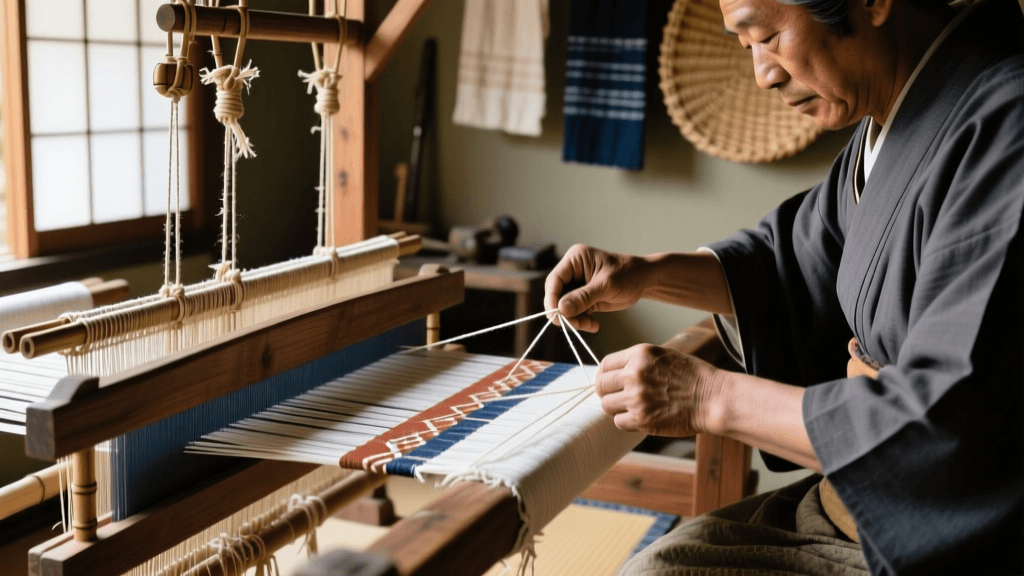
The Resurgence of Japanese Hand-Weaving in 2026
As we navigate the global textile landscape of 2026, the profound artistry of Japanese traditional looms and hand-weaving methods continues to captivate artisans, fashion designers, and cultural preservationists. Unlike the rapid, automated production of modern textile mills, traditional Japanese weaving is a meditative practice that intertwines mathematics, spirituality, and profound material knowledge. In 2026, there has been a notable renaissance in the appreciation of slow fashion, driving a renewed interest in heritage techniques like Kasuri (ikat) and Tsumugi (pongee) silk weaving. According to recent industry reports from The Association for the Promotion of Traditional Craft Industries, the demand for authentic, hand-woven Japanese textiles has seen a 22% year-over-year increase, fueled by a global consumer shift toward sustainable, traceable, and culturally rich garments.
Understanding the Jibata: The Traditional Floor Loom
The Jibata is the quintessential Japanese traditional floor loom, historically used for weaving narrow-width fabrics such as kimono silk. Unlike Western floor looms that utilize a complex system of foot treadles and overhead harnesses, the traditional Jibata relies on a backstrap tensioning system combined with a rigid wooden frame. The weaver sits on a low bench, using their body weight to control the warp tension, which allows for an incredibly nuanced feel of the thread.
The anatomy of a Jibata is a masterclass in functional woodworking, typically crafted from Hinoki (Japanese cypress) or Kiri (paulownia). Key components include the Chikiri (cloth beam), Makidake (warp beam), and the Osa (reed). The Osa in Japanese weaving is uniquely designed; it is often thicker and more robust than Western reeds, serving not only to beat the weft into place but also to maintain the precise spacing required for intricate patterns. In 2026, sourcing a vintage, well-maintained Hinoki Jibata can cost between $2,500 and $4,500 USD, while newly commissioned looms crafted by master woodworkers in Kyoto can exceed $8,000 USD due to the scarcity of aged, high-quality timber.
The Takabata: Evolution of the Treadle Loom
While the Jibata remains vital for specific artisanal applications, the Takabata (tall loom) represents the evolution of Japanese weaving, incorporating foot treadles and a suspended harness system introduced during the Meiji period. The Takabata allows for wider fabrics and more complex multi-shaft patterns without the physical strain of backstrap tensioning. For contemporary weavers in 2026 looking to produce wider obi sashes or modern home textiles using traditional methods, the Takabata is the preferred instrument. Setting up a Takabata requires meticulous alignment of the Heddles (eyes through which warp threads pass) to ensure a clean shed, a process that can take a master weaver several days for a complex 8-shaft configuration.
Mastering Kasuri: The Art of Resist-Dye Weaving
Kasuri is the Japanese iteration of ikat, a technique where threads are resist-dyed before they are woven together to create a pattern. The hallmark of authentic Japanese Kasuri is its slightly blurred, organic edge, often described as kasureru (to blur or fade). In 2026, the most highly prized Kasuri textiles still utilize natural indigo (aizome) and traditional tying methods.
The process begins with the Kukuri (tying) stage. Artisans use tightly wrapped cotton or synthetic thread to bind specific sections of the warp or weft yarns, preventing the dye from penetrating those areas. There are three primary types of Kasuri:
- Tate-gasuri (Warp Ikat): Only the longitudinal threads are dyed. This is the most common and allows for continuous vertical patterns.
- Yoko-gasuri (Weft Ikat): Only the horizontal threads are dyed. This requires the weaver to adjust each weft thread individually during weaving to align the pattern, demanding immense skill and patience.
- Tate-yoko-gasuri (Double Ikat): Both warp and weft threads are resist-dyed. When woven, the intersections create a complex, multi-dimensional image. The famous Kurume Kasuri from Fukuoka Prefecture is renowned for this painstaking double-ikat technique.
To achieve perfect alignment in Yoko-gasuri on a Jibata loom, weavers in 2026 often use a specialized bamboo measuring stick called a Kasuri-jaku. The margin of error is less than a millimeter; if the weft thread is not beaten in at the exact correct angle and tension, the pattern will distort.
Tsumugi: Hand-Spun Silk Pongee
Alongside Kasuri, Tsumugi represents the pinnacle of Japanese hand-weaving. Originally woven from the leftover, uneven silk fibers that could not be used for fine, smooth kimono silks, Tsumugi has evolved into a luxury textile celebrated for its rustic texture, warmth, and profound depth of color. The threads are hand-spun, resulting in a slubbed, irregular yarn that catches the light beautifully. Weaving Tsumugi requires a highly controlled environment; in 2026, modern artisan studios utilize smart-humidifiers to maintain a strict 65% to 75% relative humidity, preventing the delicate hand-spun silk from snapping under the tension of the Jibata loom.
Comparison: Japanese vs. Western Looms (2026 Market Data)
For weavers considering investing in traditional equipment, understanding the functional and financial differences between Japanese and Western looms is crucial. The table below outlines the core distinctions based on 2026 market averages and technical specifications.
| Loom Type | Tension Control | Best Application | 2026 Avg Cost (USD) | Portability |
|---|---|---|---|---|
| Japanese Jibata | Backstrap / Body Weight | Narrow silk, Kasuri alignment | $2,500 - $8,000 | Low (Heavy solid wood) |
| Japanese Takabata | Foot Treadle / Harness | Wider obi, complex multi-shaft | $4,000 - $12,000 | Very Low |
| Western Floor Loom (Jack) | Foot Treadle / Springs | Broadcloth, rugs, tapestries | $1,800 - $5,500 | Moderate (Foldable options) |
| Western Table Loom | Hand Levers | Samples, scarves, beginners | $400 - $1,500 | High |
Sourcing Authentic Tools and Materials in 2026
Acquiring authentic Japanese weaving tools outside of Japan has historically been a challenge, but the digital landscape of 2026 has improved accessibility. Specialized exporters in Kyoto and Fukui now offer direct-to-consumer shipping for essential tools. When purchasing an Osa (reed), it is vital to specify the Me (dents per inch) according to the thickness of your hand-spun Tsumugi silk. A standard kimono silk requires an Osa with roughly 30 to 40 dents per inch, whereas heavier Tsumugi may require 18 to 22 dents.
Furthermore, the Japanese government continues to actively protect and promote these heritage crafts. As detailed on the METI Traditional Craft Industries portal, the Ministry of Economy, Trade and Industry designates specific regions as official producers of traditional crafts, ensuring that textiles labeled as authentic Kurume Kasuri or Yuki Tsumugi meet rigorous historical and material standards. When sourcing vintage shuttles (Hi) or bobbins (Kuda), buyers should look for the official traditional craft seal to guarantee provenance and support the remaining artisan communities.
Preservation and the Future of Japanese Weaving
The survival of Japanese traditional looms and hand-weaving methods relies on a delicate balance between strict preservation and contemporary adaptation. In 2026, a new generation of weavers is blending ancestral techniques with modern design sensibilities. Institutions and museums play a vital role in this ecosystem; for instance, the Asian Collections department at the V&A continues to archive and study historical Japanese textiles, providing invaluable reference material for modern artisans attempting to recreate lost dyeing and weaving formulas.
For the dedicated practitioner, mastering the Jibata loom and the intricate mathematics of Kasuri is not merely about producing fabric; it is about participating in a living history. The rhythmic clack of the wooden shuttle, the scent of aged Hinoki cypress, and the gradual emergence of a blurred indigo pattern on the cloth beam offer a profoundly grounding experience in our increasingly digitized world. Whether you are a seasoned weaver looking to transition from Western harness looms to the nuanced tension of a Jibata, or a fashion designer seeking to incorporate authentic Tsumugi silk into your 2026 collections, engaging with these traditional methods ensures that the soul of Japanese textile artistry endures for generations to come.