2026 Cheongsam Trends: Global Fashion Media Styling Guide
The 2026 Editorial Shift: Authenticity and Structural Mastery
The cheongsam, also widely known as the qipao, has long been a cornerstone of Asian traditional dress. However, its representation in global fashion media has undergone a radical and necessary transformation. As we navigate the Spring/Summer and Fall/Winter 2026 editorial seasons, top-tier publications are finally moving away from the exoticized, costume-like caricatures of the past. Instead, the 2026 fashion media landscape treats the cheongsam as a masterclass in structural tailoring, bias-cut engineering, and cultural heritage. According to insights from McKinsey & Company's State of Fashion 2026 report, the global luxury market is seeing a massive pivot toward 'heritage authenticity,' where consumers and editors alike demand deep respect for the origins and construction of traditional garments.
In 2026, leading fashion editors and Asian creative directors are collaborating to showcase the cheongsam not as a novelty, but as a versatile, high-fashion staple. The focus is now on the architectural rigor of the mandarin collar, the mathematical precision of the bias-cut silk, and the artisanal density of the pankou (knotted buttons). For fashion enthusiasts and stylists looking to integrate this iconic garment into a modern, editorial-grade wardrobe, understanding the current media trends is essential.
Key Cheongsam Silhouettes Dominating 2026 Media
Global fashion spreads this year are highlighting three distinct silhouettes that bridge the gap between historical reverence and avant-garde styling. When sourcing or commissioning a piece for a high-fashion event, consider these media-favored cuts:
1. The Deconstructed Column Qipao
Featured heavily in avant-garde editorial spreads, the deconstructed column silhouette retains the high neck and signature side closures but introduces asymmetrical hems and exposed, raw-edge seams. This style is typically rendered in heavy silk crepe or matte wool-blend fabrics. The hem drop is intentionally uneven—often featuring a 2-inch drop at the back and a sharp, angled cut at the front thigh. It is a favorite among fashion editors for its blend of traditional modesty and modern rebellion.
2. The Cropped Jacket Cheongsam
The cropped qipao jacket has become the undisputed star of 2026 street-style photography and off-duty model editorials. Ending precisely at the natural waistline, this garment features the traditional mandarin collar and diagonal chest closures but is designed to be worn as outerwear or a top. It is almost exclusively styled with high-waisted, wide-leg trousers in contrasting textures, such as structured denim or fluid cupro.
3. The Floor-Length Minimalist Gown
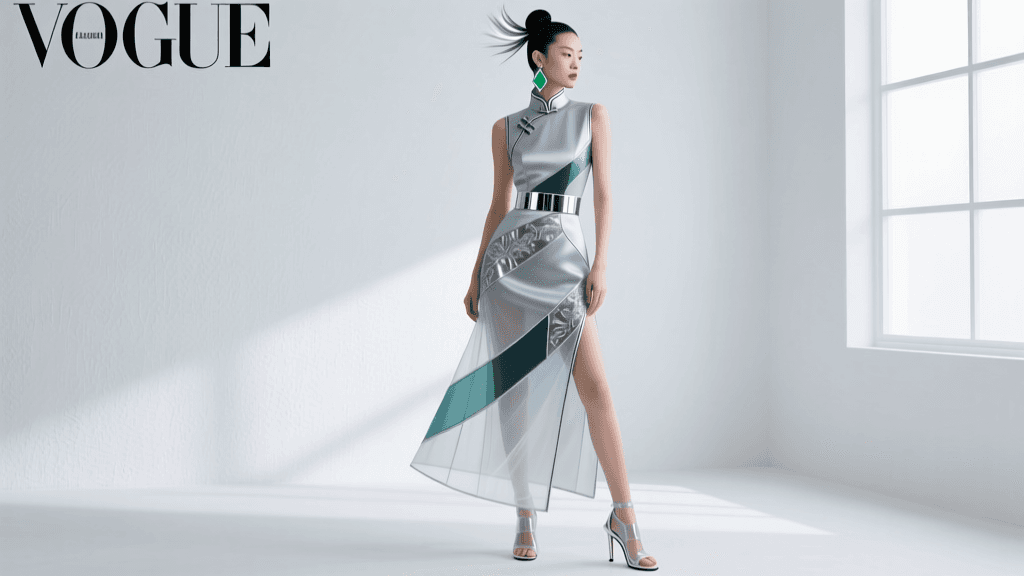
For red-carpet and gala editorials, the floor-length cheongsam is the ultimate statement of quiet luxury in 2026. Stripped of heavy, traditional embroidery (like dragons or phoenixes), these gowns rely entirely on the drape of the fabric and the perfection of the tailoring. The side slit is kept conservative, beginning exactly 2 inches above the knee to maintain structural integrity and elegance while walking. Editors favor solid, jewel-toned silks—emerald, sapphire, and deep oxblood—allowing the garment's bias cut to catch the light dynamically.
Fabric Selection and the Art of the Pankou Knot
The material and hardware of the cheongsam are heavily scrutinized in 2026 fashion critiques. The Victoria and Albert Museum's Asian textile archives remind us of the historical significance of silk weaving techniques, and modern media expects contemporary designers to honor these textiles.
- Heavy Silk Crepe and Gazar: For the 2026 column silhouettes, fluid charmeuse is out. Editors prefer heavy silk crepe and silk gazar, which provide a matte finish and enough structural weight to hold the garment's architectural shape without clinging.
- Matelassé and Brocade: For winter editorials, textured matelassé and subtle, tone-on-tone brocades are favored over shiny, heavily embroidered satins. The texture adds depth to editorial photography without looking theatrical.
- The Pankou Density: The knotted buttons, or pankou, are no longer just functional; they are the focal point of the garment's hardware. In 2026, high-fashion pieces feature 'micro-pankou'—intricately scaled-down knots placed in clusters of three or five along the collar and chest, requiring up to 40 hours of hand-rolling by master artisans.
2026 Media Trend Comparison: Traditional vs. Editorial Styling
To successfully style the cheongsam for a modern, high-fashion context, it is crucial to understand how editorial styling diverges from strict ceremonial traditions. The following table breaks down the styling choices seen across Vogue's 2026 Runway and Editorial Coverage.
| Styling Element | Traditional Ceremonial Wear | 2026 Global Fashion Media Styling |
|---|---|---|
| Footwear | Classic pointed-toe stilettos or embroidered silk slippers. | Chunky lug-sole loafers, architectural leather mules, or sleek combat boots. |
| Outerwear | Matching silk boleros or traditional fur-lined capes. | Oversized menswear blazers, sheer organza dusters, or cropped leather moto jackets. |
| Jewelry | Heavy jade bangles, pearl strands, and gold filigree. | Sculptural mixed-metal ear cuffs, singular geometric drop earrings, and layered chain belts. |
| Hair & Makeup | Neat updos, classic red lips, and winged eyeliner. | Slicked-back wet-look hair, bleached brows, and monochromatic, matte skin finishes. |
| Layering | Worn strictly as a standalone, unlayered dress. | Layered over fine-gauge merino turtlenecks or under sheer, voluminous tulle skirts. |
Editorial Styling Techniques for the Modern Wardrobe
Adopting the 2026 editorial look requires a deliberate clash of textures and eras. Here is actionable advice for styling your cheongsam for high-fashion events, gallery openings, or editorial shoots this year.
Footwear: Grounding the Silhouette
The most significant shift in 2026 is the abandonment of the stiletto. To give the cheongsam a contemporary, grounded edge, pair a mid-calf silk qipao with a chunky, lug-sole leather boot (such as those from Bottega Veneta or Prada's 2026 collections). The visual weight of the boot contrasts beautifully with the delicate bias cut of the silk, creating a look that is both tough and elegant. For summer events, opt for an architectural, flat leather mule with a square toe.
Layering: Transcending Seasons
Fashion media in 2026 champions the cheongsam as a year-round garment. For cooler months, layer a sleeveless, heavy-crepe cheongsam over a sheer, long-sleeved mesh turtleneck. This adds a grunge-inspired texture while maintaining the visibility of the garment's intricate chest closures. Conversely, for spring, wear a cropped qipao jacket over a fluid, floor-length slip dress, allowing the dress to spill out from beneath the structured hem of the jacket.
Accessorizing: Sculptural and Asymmetrical
Avoid matching jewelry sets, which can age the look significantly. Instead, lean into asymmetry. If the cheongsam's diagonal closure sweeps to the right, wear a singular, oversized sculptural ear cuff on the left ear to balance the visual weight. Belting is also a major 2026 trend; cinching a floor-length column qipao with a thin, hardware-heavy chain belt worn low on the hips introduces a Y2K-inspired edge that fashion editors are currently championing.
Sourcing Authentic, Editorial-Grade Garments in 2026
Fast-fashion imitations are heavily criticized in 2026 media for their poor construction and cultural insensitivity. To achieve a true editorial look, you must invest in authentic tailoring. Expect to invest between $450 and $1,800 for authentic, editorial-grade silk crepe qipaos from contemporary Shanghai-based or diaspora-led ateliers.
When commissioning or buying, pay strict attention to the grainline. A true cheongsam is cut on the bias (a 45-degree angle to the selvage), which allows the fabric to stretch and mold to the body without the need for darts. If the garment is cut on the straight grain and relies heavily on princess seams for shaping, it is a Western-style dress masquerading as a qipao. Furthermore, ensure the pankou knots are tightly rolled and hand-stitched; machine-made knots will fray and unravel, ruining the garment's high-fashion integrity.
Caring for High-Fashion Silks and Brocades
Editorial garments require meticulous care to maintain their structural stiffness and color depth. Never dry-clean a high-end silk cheongsam unless absolutely necessary, as the harsh chemicals can strip the silk of its natural luster and cause the stiff interfacing in the collar to warp.
- Washing: Use a pH-neutral silk wash (approx. $25 for specialty detergents) and hand-wash in cold water for no more than three minutes. Never wring the fabric.
- Steaming: Ironing will crush the bias cut and leave shine marks. Use a professional steamer set to exactly 110°C (230°F). Steam the garment from the inside out to preserve the matte finish of the silk crepe.
- Storage: Never hang a heavy silk or brocade cheongsam on a wire or thin hanger, as the weight of the fabric will distort the bias cut over time. Store the garment flat in a breathable cotton garment bag, layered with acid-free tissue paper and untreated cedar blocks to deter moisture and pests.
Conclusion
The cheongsam's evolution in 2026 global fashion media is a triumph of cultural respect and sartorial innovation. By focusing on structural tailoring, modern layering techniques, and avant-garde accessorizing, you can seamlessly integrate this historic Asian garment into a cutting-edge, high-fashion wardrobe. As the fashion world continues to embrace heritage authenticity, mastering the editorial styling of the cheongsam ensures you remain at the forefront of global style.