Zero-Waste Kimono Construction: Tanmono Techniques for 2026
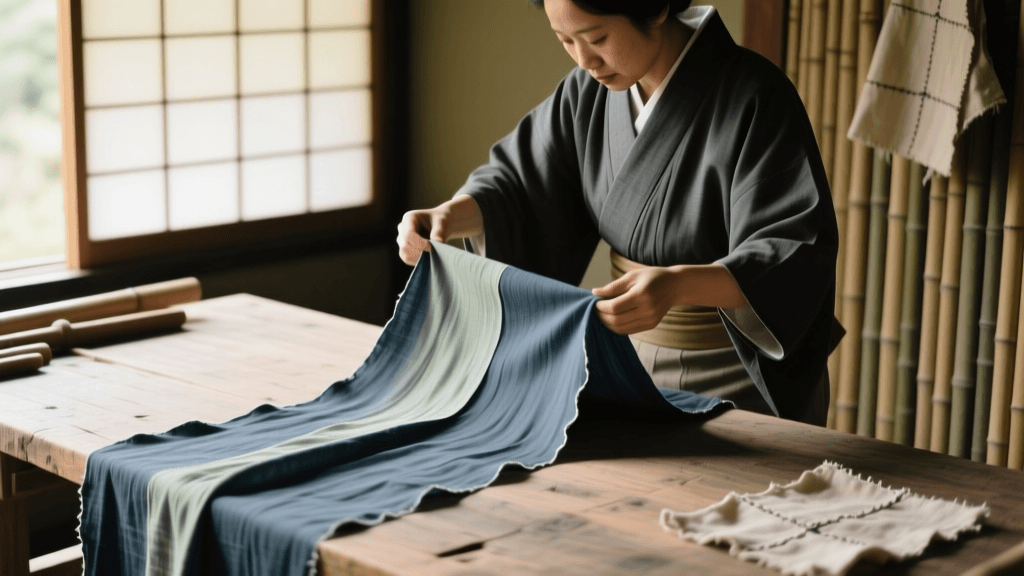
The Philosophy of Tanmono: Zero-Waste by Design
As the global fashion industry grapples with mounting textile waste and the urgent push for circularity in 2026, modern designers are increasingly looking to the past for solutions. Long before the concept of zero-waste pattern cutting entered contemporary sustainable fashion lexicons, traditional Japanese garment makers had already perfected it. The secret lies in the tanmono (反物), a standardized bolt of fabric that serves as the foundational blueprint for the kimono. Unlike Western tailoring, which relies on complex, curved pattern pieces that inevitably leave behind 15% to 20% in offcuts and scraps, the kimono is constructed entirely from straight, rectangular panels. This approach ensures that 100% of the woven fabric is utilized in the final garment, making it a masterclass in sustainable construction that remains highly relevant for today's eco-conscious sewists and designers.
Deconstructing the Tanmono: The Mathematics of the Bolt
To understand the genius of kimono construction, one must first understand the rigid parameters of the tanmono bolt. Historically woven on narrow backstrap or traditional treadle looms, a standard adult kimono bolt measures approximately 36 centimeters (about 14.2 inches) in width and 11.5 meters (about 12.5 yards) in length. This specific yardage is not arbitrary; it is mathematically calculated to yield exactly one adult-sized kimono with zero fabric waste. The width of the bolt dictates the maximum width of the garment's panels, while the length provides just enough yardage for the body, sleeves, overlaps, and collar.
According to the Victoria and Albert Museum, the kimono's T-shaped, straight-line construction is a direct result of this narrow-loom weaving tradition. Because the fabric is never cut into curves, the structural integrity of the woven threads remains entirely intact, preventing fraying and extending the lifespan of the textile by centuries.
Anatomy of the Cut: The Eight Essential Panels
A standard kimono is deceptively simple in its geometry. Once the 11.5-meter tanmono bolt is cut, it is divided into eight primary rectangular sections. Below is a breakdown of how a standard bolt is allocated in 2026 traditional tailoring.
| Panel Name | Japanese Term | Quantity | Function & Construction Notes |
|---|---|---|---|
| Body Panels | Migoro (身頃) | 2 | Forms the main front and back drape. Cut to the wearer's exact height plus allowance for the hip fold (ohashori). |
| Sleeves | Sode (袖) | 2 | Rectangular pouches attached to the body. The unsewn bottom opening allows for ventilation and intricate lining display. |
| Overlaps | Okumi (衽) | 2 | Long, narrow strips added to the lower front edges to ensure the garment wraps securely across the body without pulling. |
| Collar | Eri / Tomoeri (衿) | 1 (Folded) | A single long strip folded in half to create the neckband, often reinforced with a separate inner collar (han-eri). |
Because the panels are strictly rectangular, the cutting process requires only a few strategic snips with fabric shears. The remaining fabric is not discarded; if the bolt is slightly longer than required, the excess is simply folded up into the seam allowances at the shoulders and hem, allowing the garment to be resized for future generations.
Core Construction Techniques: The Kise Seam Advantage
The true brilliance of the kimono lies not just in how it is cut, but in how it is sewn. Western garment construction relies heavily on overlocking (serging) raw edges to prevent fraying, which permanently binds the fabric and makes future alterations difficult. In contrast, traditional kimono sewing (wasai) utilizes a technique called kise (キセ).
When joining two panels, the sewist creates a standard running stitch or machine straight stitch about 5 millimeters from the raw edge. However, instead of pressing the seam flat or overlocking it, the seam allowance is folded back onto itself and lightly tacked or pressed to create a tiny, hidden lip (the kise). This fold encapsulates the raw edge entirely within the seam allowance. As noted by The Metropolitan Museum of Art, this meticulous hand-finishing ensures that no raw edges are ever exposed to friction or wear, while maintaining the soft, fluid drape that rigid serged seams would otherwise destroy.
The Jōshi Topstitch
To further secure the kise fold and add structural reinforcement, a secondary line of stitching called jōshi (上糸) is often applied. This subtle topstitching runs parallel to the main seam, catching the folded allowance underneath. In 2026, while commercial kimono manufacturers may use specialized blind-stitch machines for the jōshi, high-end artisan tailors in Kyoto and Kanazawa still execute this by hand using fine silk thread, ensuring the stitches are virtually invisible from the right side of the garment.
Arai-Hari: The Ultimate Circular Lifecycle
The straight-seam, zero-waste construction of the kimono enables a remarkable maintenance practice known as arai-hari (洗い張り). Because the garment is made of simple rectangles held together by easily removable running stitches, a kimono that has become soiled or faded can be completely unpicked back into its original eight flat panels.
These flat panels are then washed, stretched on wooden boards or frames using water tension, and dried. This process removes all wrinkles, resets the fabric's grain, and can even fade out minor stains. Once dry, the panels are re-sewn into a brand-new kimono. This practice means a single high-quality silk tanmono can be worn, washed, resized, and passed down through three or four generations, perfectly aligning with the 2026 mandate for hyper-durable, circular wardrobes.
2026 Sourcing and Pricing: Acquiring Authentic Tanmono
For modern sewists, textile artists, and sustainable fashion brands looking to integrate tanmono techniques into their 2026 collections, sourcing authentic fabric bolts is easier than ever, though it requires navigating specific markets.
- Direct from Weaving Districts: Purchasing directly from cooperatives in Tango (Kyoto Prefecture) or Kiryu (Gunma Prefecture) ensures authenticity. In 2026, a premium silk chirimen (crepe) tanmono bolt typically ranges from ¥50,000 to ¥90,000 ($330 to $600 USD), depending on the complexity of the weave and dye.
- Vintage and Upcycled Bolts: The secondary market for deadstock and vintage tanmono is thriving. Platforms specializing in Japanese antique textiles offer unworn, vintage silk bolts from the mid-20th century for roughly $80 to $150 USD. These are ideal for makers who want authentic narrow-loom dimensions without the environmental footprint of new production.
- Modern Cotton and Hemp Alternatives: For everyday wear and modern styling, cotton kasuri (ikat) and hemp tanmono bolts are widely exported. These usually cost between $120 and $250 USD per bolt and offer excellent breathability for contemporary summer garments.
Adapting Tanmono for Western Sewists in 2026
While authentic 36cm wide tanmono is ideal, modern sewists working with standard 115cm (45-inch) or 150cm (60-inch) width fabrics can still apply the zero-waste philosophy of the kimono. The key is to adopt a modular, rectangular pattern-drafting approach. By nesting rectangular pattern pieces like a puzzle across the width of standard fabric, and utilizing the kise seam finish instead of overlocking, makers can drastically reduce their offcut waste. Furthermore, adopting the ohashori (the deep hip fold used to adjust the kimono's length) allows a single garment to be easily hemmed or lengthened for different wearers, completely eliminating the need to cut and discard fabric to achieve the perfect fit.
Conclusion
The tanmono system is a testament to the fact that true sustainability is not a modern invention, but a historical discipline. By restricting the width of the loom, Japanese artisans forced a design paradigm where waste was mathematically impossible. As we move through 2026, the integration of these zero-waste cutting layouts, the kise seam technique, and the circular arai-hari lifecycle offers a profound roadmap for the future of global garment construction. Whether you are an artisan preserving heritage techniques or a contemporary designer drafting a new sustainable collection, the geometry of the kimono remains an unparalleled masterclass in mindful making.