Sashiko & Boro in 2026 Global Luxury Fashion Collaborations
The Renaissance of Heritage Mending in 2026
In the landscape of 2026 global fashion, the intersection of Japanese heritage textiles and international luxury design has evolved far beyond mere aesthetic appropriation. Today, the most coveted runway pieces and capsule collections are born from deep, equitable partnerships between European fashion houses and multi-generational Japanese artisan ateliers. At the forefront of this movement are Sashiko (functional reinforcement stitching) and Boro (the art of mending and patchworking), techniques that have transitioned from rural necessity to the pinnacle of sustainable luxury.
As the global fashion industry faces stringent new circularity mandates in 2026, the philosophy of Boro—literally translating to 'tattered rags'—has become the ultimate symbol of regenerative design. International brands are no longer just mimicking the distressed look; they are commissioning authentic, hand-stitched garments from masters in Aomori, Okayama, and Tokushima. According to the Victoria and Albert Museum's extensive archives on Japanese fashion, the historical context of these garments was rooted in the extreme frugality and harsh winters of northern Japan. In 2026, that same ethos of 'never wasting a thread' resonates powerfully with a luxury consumer base demanding environmental accountability and profound storytelling.
Technical Breakdown: Traditional vs. Collaborative Sashiko
Understanding the 2026 collaborative market requires a keen eye for technical execution. Traditional Sashiko relies on specific stitch patterns, each carrying historical and regional significance. The hitome-zashi (straight stitch) and kuguri-zashi (wheat stitch) are now being adapted by international design teams to create structural reinforcement on high-end denim and technical outerwear.
However, a true 2026 collaboration respects the integrity of the craft. While fast-fashion brands utilize automated embroidery machines to replicate the Sashiko look, luxury collaborations employ a hybrid approach: the base garment is cut and assembled in Milan or Paris using advanced 3D-knitting and zero-waste pattern drafting, before being shipped to Japan for hand-finishing by certified artisans. The Metropolitan Museum of Art notes in its textile history archives that the tension and rhythm of hand-pulled Sashiko thread cannot be perfectly replicated by machines, resulting in a distinctive, organic texture that defines true luxury.
2026 Collaboration Comparison Matrix
| Feature | Traditional Tohoku Boro (Heritage) | 2026 Global Luxury Capsule (Collaborative) |
|---|---|---|
| Base Fabric | Hand-loomed hemp or vintage cotton | 21oz Regenerative Selvedge Denim / Technical Silk |
| Thread | Hand-spun cotton, naturally dyed | Recycled PET or Ethically Sourced Mulberry Silk |
| Dye Process | Fermented Sukumo (natural indigo) | Sukumo blended with bio-engineered bacterial dyes |
| Production Time | 3 to 6 months per garment | 6 to 9 weeks (optimized atelier scaling) |
| Price Point (USD) | $1,500 - $4,000 (Antique/Artisan) | $4,200 - $12,500 (Luxury Retail) |
The Influence of Zen Spirituality and Wabi-Sabi on 2026 Runways
The integration of Japanese heritage crafts into international design is not merely a technical exchange; it is a profound philosophical one. In 2026, as global consumers experience deep fatigue from hyper-digital, AI-generated fashion trends, the tactile, imperfect nature of Boro and Sashiko offers a grounding alternative. International creative directors are increasingly drawing upon the Zen concept of wabi-sabi—the acceptance of transience and imperfection. When a master artisan in Aomori repairs a tear in a luxury silk-blend jacket using contrasting white cotton thread, the repair is not hidden. Instead, it is highlighted as the focal point of the garment's history.
This philosophical alignment has reshaped the silhouette of 2026 luxury menswear and womenswear. The rigid, structured tailoring of European houses is being softened by the draped, utilitarian lines of the traditional Japanese noragi (farmer's jacket) and kimono. The resulting garments are modular, gender-fluid, and designed to be passed down through generations, perfectly aligning with the 2026 global mandate for heirloom-quality, multi-lifecycle clothing.
The Economics of Artisan Partnerships and Ethical Sourcing
A major critique of past cross-cultural fashion collaborations was the exploitation of indigenous or traditional knowledge without fair compensation. The 2026 market has radically corrected this through blockchain-verified artisan royalties and direct-to-atelier profit sharing. When a Parisian luxury house releases a Boro-inspired trench coat, the digital passport (NFC tag) embedded in the garment's hem details the exact hours worked by the Japanese artisans and routes a percentage of the secondary market resale value directly back to the Tsugaru craft cooperatives.
This economic model is heavily supported by international cultural preservation frameworks. The UNESCO Intangible Cultural Heritage registry for Japan highlights the ongoing necessity of protecting traditional crafting techniques from commercial dilution. By integrating these heritage skills into high-value global supply chains, international brands are effectively subsidizing the apprenticeship programs required to keep Sashiko and Boro alive for the next generation. In 2026, an authentic collaborative piece is not just a garment; it is a verifiable financial investment in Japanese cultural preservation.
A Collector’s Guide to Authentic 2026 Releases
For collectors and enthusiasts navigating the 2026 luxury market, distinguishing between a genuine artisan collaboration and a mass-produced 'boro-wash' imitation is critical. Here are the actionable metrics to evaluate before making a purchase:
- Examine the Reverse Side: True Sashiko is a running stitch that looks nearly identical on both the front and back of the fabric. If the reverse side shows a messy bobbin thread or floating jump-stitches, it is machine-embroidered.
- Verify the Indigo Scent and Fade: Authentic 2026 collaborations utilizing Tokushima sukumo indigo will have a faint, earthy, fermented scent when rubbed. Furthermore, natural indigo does not fade uniformly; it chips and wears based on the wearer's body mechanics, unlike synthetic indigo which washes out evenly.
- Check the NFC Digital Passport: Every legitimate 2026 luxury collaboration features an encrypted NFC tag. Scanning this with your smartphone should reveal the artisan's name, the specific atelier in Japan, the stitch count per inch, and the carbon-offset certificate for the garment's trans-Pacific shipping.
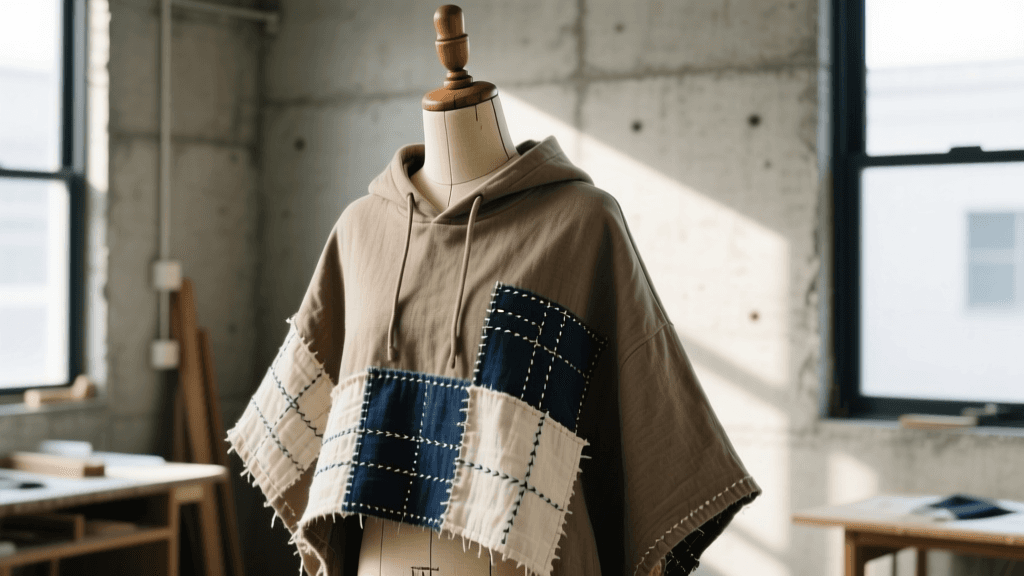
- Assess the Patchwork Overlap: In traditional Boro, patches are layered and stitched through all thicknesses to create thermal insulation. In high-end 2026 collaborations, this layering is maintained for structural integrity, often resulting in localized areas of the garment being three to four layers thick.
- Inspect the Hardware and Selvedge Lines: True 2026 collaborations do not use standard brass rivets. Look for hand-forged iron or oxidized copper hardware that complements the rustic nature of the Boro patchwork. Additionally, examine the inner seams; authentic collaborations will feature exposed selvedge lines that are stitched using a vintage Union Special chain-stitch machine, creating a characteristic 'roping' effect on the hem.
Care and Preservation of Collaborative Garments
Owning a piece from a 2026 Japanese-international collaboration requires a departure from standard luxury garment care. The fusion of heritage techniques with modern textiles demands specialized maintenance to preserve both the structural integrity of the Sashiko thread and the depth of the natural dyes.
Never dry-clean a Boro or Sashiko garment unless the international brand explicitly mandates it due to a delicate blended base fabric like cashmere-silk. For standard heavy-weight cotton or denim collaborations, hand-wash the piece in cold water (below 20°C) using a pH-neutral, indigo-specific detergent. Agitation destroys the hand-pulled tension of the Sashiko stitches, so the garment should only be gently pressed and soaked. When drying, avoid direct ultraviolet sunlight, which will rapidly degrade the natural indigo and cause the silk-blend threads to become brittle. Instead, lay the garment flat on a breathable bamboo drying rack in a shaded, well-ventilated room. With proper care, these 2026 collaborative pieces will not only endure but will continue to evolve, developing a unique patina that honors the centuries-old Japanese philosophy of finding beauty in imperfection and the passage of time.