2026 Hanfu Secondhand Market: Vintage Collecting & Resale Guide
The Evolution of the Hanfu Secondhand Market in 2026
By 2026, the global Hanfu movement has transitioned from a niche historical revival into a mature, multi-billion-dollar sustainable fashion ecosystem. As the market has saturated with fast-fashion replicas and mass-produced Taobao drops, serious enthusiasts and cultural preservationists have pivoted toward the secondhand and vintage Hanfu market. Today, collecting discontinued, early-revival, and artisan-crafted traditional Chinese garments is not just about sustainability; it is a pursuit of sartorial history. Whether you are hunting for a rare Ming-style Mamianqun (horse-face skirt) or looking to resell your own collection, understanding the nuances of the 2026 resale landscape is essential.
According to cultural analysts at The World of Chinese, the modern Hanfu revival has created a distinct 'vintage' category. Garments produced between 2010 and 2016 by pioneering, now-defunct indie studios are highly sought after by collectors. These early pieces often feature experimental weaving techniques and historical accuracies that modern commercial brands have simplified for mass production. Navigating this secondary market requires a keen eye for authentication, an understanding of platform-specific jargon, and specialized knowledge of traditional textile preservation.
Mastering Xianyu: The Epicenter of Hanfu Resale
Xianyu (Idle Fish), Alibaba's premier secondhand marketplace, remains the undisputed hub for Hanfu resale in 2026. However, the platform's sheer volume can be overwhelming for international buyers and newcomers. To successfully source rare pieces, you must master the specific search terminology used by Chinese sellers.
Essential Xianyu Search Terms for Collectors
- 绝版 (Jué bǎn): Out of print or discontinued. This is the magic keyword for finding rare, highly collectible pieces from top-tier brands like Minghuatang or Shisanyu.
- 退坑 (Tuì kēng): Literally 'leaving the pit' (quitting the hobby). Sellers using this term are often offloading entire, well-maintained wardrobes at bundled discounts.
- 仅试穿 (Jǐn shì chuān): 'Try-on only.' Indicates the garment is in pristine, unworn condition, often still bearing the original tags and brand packaging.
- 定制 (Dìng zhì): Custom-made or bespoke. These pieces were commissioned directly from traditional weavers or tailors and command a premium on the resale market.
- 来料 (Lái liào): 'Customer-supplied fabric.' A massive trend in 2026 where buyers source rare vintage silk brocades and pay independent tailors to construct Hanfu. Resale of lai liao pieces requires verifying the origin of the raw textile.
When negotiating on Xianyu, always request high-resolution, natural-light photos of the garment's inner seams, wash tags, and metallic yarn oxidation. Never rely solely on the seller's heavily filtered studio shots.
Authenticating Secondhand Ming-Style Mamianqun
The Mamianqun is the most counterfeited garment in the Hanfu secondary market. As highlighted by historical textile archives at the Metropolitan Museum of Art, the structural integrity and weaving methods of traditional Ming dynasty skirts are complex, making modern fast-fashion knockoffs identifiable to the trained eye. When evaluating a secondhand Mamianqun in 2026, focus on these three authentication pillars:
1. The Zhijin (Woven Gold) Test
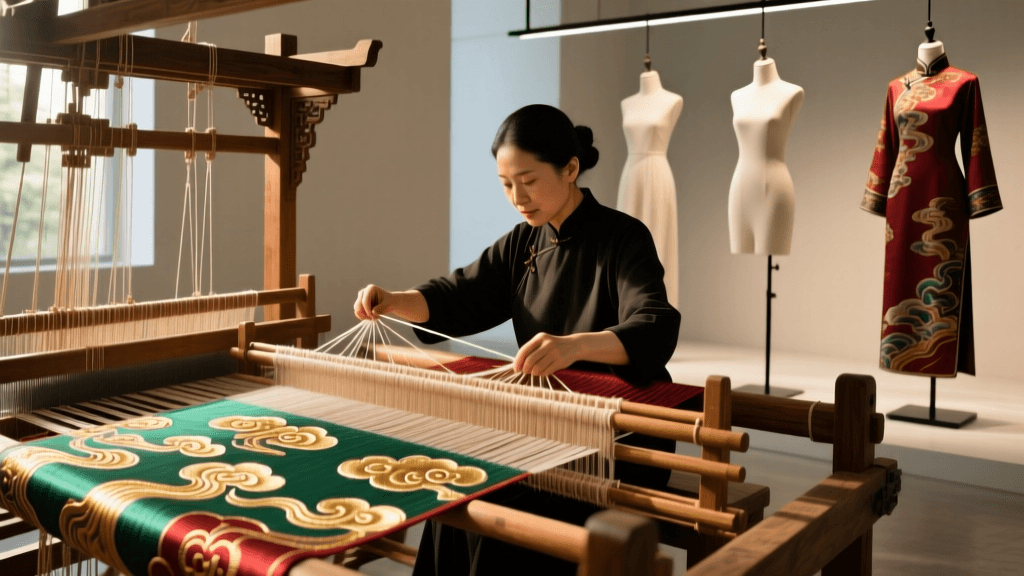
Authentic high-end Hanfu uses true zhijin techniques, where metallic threads are woven directly into the warp and weft of the fabric. Counterfeits often use surface-level foil stamping or glued plastic yarns. Run your fingernail gently across the gold motifs on the skirt's 'horse face' panel. If the metallic thread flakes, feels plasticky, or lacks the subtle, multi-directional light reflection of genuine metallic yarn, it is likely a mass-market replica.
2. Waistband Construction and Stitching
Traditional Mamianqun feature a distinct waistband structure, typically utilizing a contrasting, sturdy cotton or linen blend to bear the weight of the heavy brocade skirt. The standard waistband width for authentic modern reproductions ranges from 8cm to 12cm. Inspect the pleat-setting stitches at the top of the skirt. High-end brands use invisible hand-stitching or highly precise, dense machine locking stitches to ensure the knife pleats never splay open. If the pleats are merely ironed and lack structural stitching at the waistband junction, avoid the purchase.
3. Brand Tags and Wash Labels
Top brands like Zhongling and Minghuatang use specific, serialized wash tags. In 2026, many of these brands have integrated NFC microchips into their fabric labels to combat the secondary market counterfeit trade. Always ask the seller to scan the tag with their smartphone and provide a screenshot of the brand's official authentication certificate.
2026 Secondhand Hanfu Valuation Chart
Pricing in the Hanfu resale market fluctuates based on brand prestige, fabric rarity, and historical accuracy. Below is a comparative valuation guide for highly traded items on Xianyu and specialized Hanfu forums as of early 2026.
| Brand / Studio | Garment Type | Original Retail (RMB) | 2026 Resale Avg. (RMB) | Collector Demand |
|---|---|---|---|---|
| Minghuatang | Swallow & Cloud Mamianqun | 899 | 2,600 - 3,200 | Extreme (Grail Item) |
| Shisanyu | Spring Willow Aoqun Set | 450 | 650 - 800 | High (Steady Appreciation) |
| Zhongling | Heavy Silk Zhijin Pibo | 1,200 | 1,800 - 2,100 | Very High (Niche Collectors) |
| Early Indie (2012) | Experimental Song Beizi | 300 | 1,500+ | Museum/Archive Level |
| Fast-Fashion | Polyester Hanfu Sets | 150 | 30 - 50 | Low (High Depreciation) |
Note: Prices are in Chinese Yuan (RMB). International buyers should factor in proxy shopping fees (typically 8-12%) and cross-border freight costs for heavy silk garments.
Preservation: Caring for Pre-Loved Silk and Brocade
Acquiring a vintage or secondhand Hanfu is only half the battle; preserving it requires specialized knowledge of traditional Chinese textiles. Garments made from Xiangyunsha (Gambiered Canton Gauze) or delicate Song-style silk gauze are highly susceptible to environmental damage. The China National Silk Museum provides extensive guidelines on textile conservation that apply directly to private collectors.
Dealing with 'Storage Smell' and Oxidation
Secondhand Hanfu often arrives with a distinct 'storage smell'—a mix of camphor, dampness, and oxidized metallic threads. Never dry-clean or machine-wash vintage Hanfu. The harsh chemicals will strip the natural sericin from the silk and cause zhijin threads to tarnish instantly. Instead, hang the garment in a shaded, well-ventilated area for 72 hours. For stubborn odors, place the Hanfu in a breathable cotton garment bag alongside activated charcoal packets and dried osmanthus flowers for two weeks.
Proper Storage Techniques
- Ditch the Plastic: Never store silk Hanfu in the plastic dry-cleaning bags they often ship in. Plastic traps moisture and off-gasses chemicals that cause yellowing.
- Acid-Free Tissue: When folding a Mamianqun for long-term storage, stuff the pleats with acid-free, unbuffered tissue paper to maintain the knife-pleat structure and prevent hard creases that can snap silk fibers over time.
- Climate Control: Maintain a storage environment with a relative humidity of 45-55% and a stable temperature around 20°C (68°F). Fluctuating temperatures cause metallic yarns to expand and contract, leading to micro-tears in the surrounding silk weave.
Collector's Tip: If you purchase a secondhand Xiangyunsha garment that has developed a white, powdery residue, do not panic. This is a natural phenomenon known as 'frosting,' where the mud and plant dyes used in the traditional dyeing process crystallize on the surface. Gently buff it with a soft, dry microfiber cloth; the friction and natural oils from your hands will restore the fabric's signature glossy patina.
Sourcing Beyond China: Global Vintage Platforms
While Xianyu dominates the domestic market, international collectors in 2026 are increasingly turning to global platforms to find 'lost' Hanfu. During the early 2010s, many high-quality Hanfu pieces were exported to Japan and South Korea for cultural exchange events and photography studios. Today, these pieces frequently surface on Yahoo Auctions Japan and Mercari Japan under the search terms 'チャイナドレス' (often mistakenly used by Japanese sellers for all traditional Chinese dress) or '明の時代の衣装' (Ming era costume). Similarly, Etsy has become a haven for diaspora sellers offloading custom-tailored, high-end Hanfu sets. When buying globally, always request exact flat-lay measurements—specifically the shoulder width (jian kuan) and sleeve length (xiu chang)—as vintage sizing differs vastly from modern commercial Taobao charts.
Conclusion: The Future of Hanfu Archiving
The 2026 Hanfu secondhand market is a testament to the enduring legacy of traditional Chinese garment making. By participating in the resale and vintage collecting community, you are not merely engaging in sustainable fashion; you are actively preserving the material culture of the Hanfu revival. Whether you are carefully authenticating a woven-gold Mamianqun on Xianyu or meticulously archiving a 2012 indie-studio Beizi, your efforts ensure that these masterpieces of Asian textile tradition survive for future generations to study, wear, and admire.