Master Kimono Wardrobe Organization and Seasonal Rotation
The Art of Kimono Wardrobe Organization
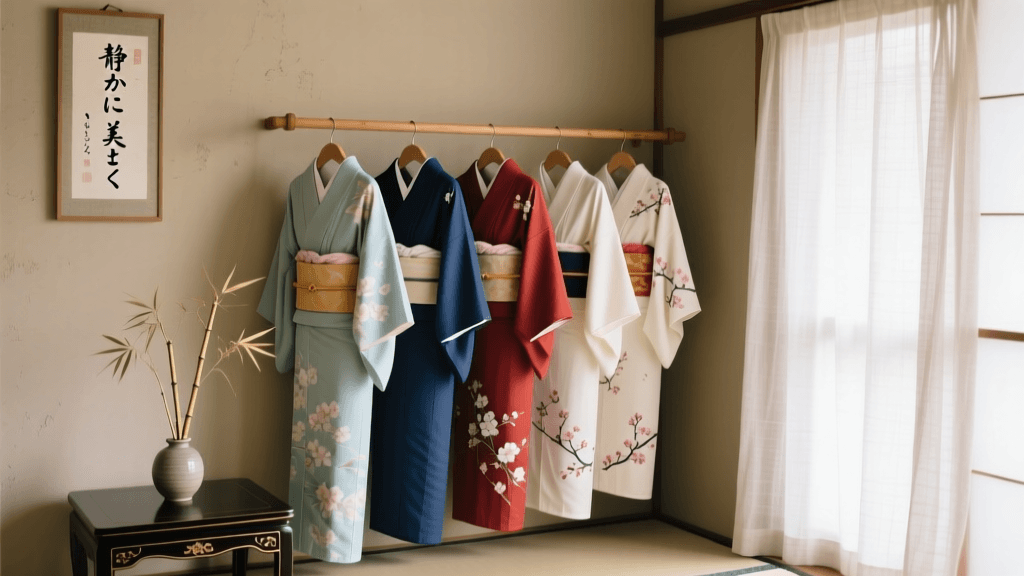
Owning a collection of traditional Japanese garments is a profound responsibility that extends far beyond mere fashion. A kimono is a woven narrative of Japanese history, seasonality, and meticulous artistry. As highlighted by the Victoria and Albert Museum in their comprehensive exploration of the garment's evolution, the kimono is a dynamic cultural artifact that demands respect and careful preservation Kimono: Kyoto to Catwalk. For modern collectors, enthusiasts, and practitioners of traditional arts, organizing a kimono wardrobe requires an understanding of both spatial logistics and the deep-seated cultural rhythms of Japan.
Unlike Western clothing, which is often hung on hangers and organized by color or occasion, traditional Japanese garments are folded flat, wrapped in specialized paper, and stored in specific types of wooden chests or acid-free boxes. This method prevents stress on the delicate silk fibers, maintains the structural integrity of the seams, and protects the intricate dyeing and embroidery work from environmental damage. Mastering this system of organization and seasonal rotation—known as koromogae—is essential for anyone looking to preserve their collection for future generations.
The Philosophy of Koromogae (Seasonal Transition)
In Japan, the changing of the seasons is not just a meteorological event; it is a cultural cornerstone that dictates aesthetics, cuisine, and wardrobe choices. The tradition of koromogae (衣替え), which translates to 'changing clothes,' historically occurred twice a year: on June 1st to transition into summer garments, and on October 1st to transition into winter wear. While modern climate control has blurred these strict dates for everyday Western clothing, the practice remains vital for traditional kimono wardrobes.
Kimono are strictly categorized by their seasonal appropriateness, which is determined by their lining, fabric weight, and motif. A well-organized wardrobe must separate these categories clearly:
- Awase (Lined Kimono): Worn from October to May. These feature a silk lining and are the most common type of kimono, suitable for cooler weather.
- Hitoe (Unlined Kimono): Worn in June and September. These lack a lining, making them breathable for transitional weather.
- Usumono (Sheer Summer Kimono): Worn in July and August. Made from lightweight, sheer fabrics like ro (gauze) or sha (leno weave), these are highly delicate and require specialized storage to prevent snagging.
Organizing your closet by these seasonal categories ensures that you can easily access the appropriate garments as the weather shifts, while also allowing you to perform necessary maintenance on off-season items.
Essential Storage Materials and Measurements
The foundation of kimono preservation lies in the materials used to store them. The traditional storage unit is the tansu, a wooden chest specifically designed for garment storage. However, modern collectors often use a combination of traditional and contemporary archival materials. The Kyoto Costume Institute, a premier authority on garment conservation, emphasizes the importance of using chemically stable, acid-free materials when storing historical and delicate textiles Kyoto Costume Institute.
Before storing any garment, it must be wrapped in a tatou-shi (kimono wrapping paper). Standard tatou-shi measures approximately 65 cm by 85 cm (25.5 x 33.5 inches), while larger versions are required for long-sleeved furisode or wide obi sashes. Below is a comparison of common storage materials used in kimono organization.
| Storage Material | Pros | Cons | Avg Cost (USD) |
|---|---|---|---|
| Paulownia Wood (Kiri-bako) | Naturally fire-resistant, regulates humidity, repels insects. | Heavy, expensive, requires periodic sanding to maintain. | $150 - $400+ |
| Acid-Free Cardboard Boxes | Archival safe, lightweight, affordable, stackable. | Does not regulate humidity, susceptible to water damage. | $15 - $35 |
| Plastic Bins (Polypropylene) | Waterproof, pest-proof, highly durable. | Traps moisture if not monitored, can off-gas if not archival grade. | $10 - $25 |
| Traditional Cedar (Sugi) | Pleasant scent, natural pest deterrent. | Wood oils can stain silk if garments are not properly wrapped. | $80 - $200 |
For optimal organization, label every box or drawer with the season, formality level (e.g., Kurotomesode, Komon), and the date the garment was last aired out. This inventory system is crucial for managing a large collection.
The Hon-Datami Folding Technique
Hanging a kimono on a standard Western hanger will destroy its structural integrity, stretching the shoulders and distorting the meticulous geometric seams. Therefore, folding is mandatory. The standard folding method is called hon-datami (本畳み), which translates to 'true fold' or 'standard fold.' This method ensures that all the seams and creases align with the original tailoring lines, preventing permanent, unsightly wrinkles.
The folding process requires a clean, flat surface, ideally a tatami mat or a large table covered with a clean cotton sheet. The garment is laid face down, and the panels are folded inward along their existing seam lines. The sleeves are folded back, and the body is folded in thirds or halves depending on the length. Crucially, any embroidered family crests (mon) or delicate metallic leafing must be padded with small rolls of acid-free tissue paper to prevent the threads or foil from cracking or transferring onto adjacent fabric layers.
For furisode (the formal, long-sleeved kimono worn by unmarried women), a variation called sode-datami is used to accommodate the extra-long sleeves without creating harsh creases across the elaborate dyed patterns.
Climate Control: Fighting Humidity and Pests
Silk is a natural protein fiber, making it highly susceptible to environmental fluctuations, mold, and protein-eating pests like carpet beetles and clothes moths. The Met Museum's Heilbrunn Timeline of Art History notes the historical significance and delicate nature of silk production and trade in East Asia, underscoring why these textiles require vigilant conservation Silk Trade.
Humidity is the silent enemy of the kimono wardrobe. In humid climates, silk can quickly develop mildew, which leaves permanent dark spots and degrades the fibers. To combat this, collectors must use desiccants. Silica gel packets are the modern standard, but they must be checked and replaced every six months. Traditionalists often use activated charcoal or specialized Japanese moisture-absorbing sheets placed at the bottom of the tansu drawers.
'Never store a kimono in a plastic bag or a sealed plastic bin without a desiccant. Silk needs to breathe, and trapped moisture will lead to irreversible mold damage within weeks.'
Pest control requires equal vigilance. Traditional Japanese camphor (shounou) is highly effective at repelling insects, but its strong odor can permeate the silk and be difficult to air out. Modern, odorless pyrethroid-based anti-moth papers are often preferred for everyday storage. Always place pest deterrents in the corners of the drawer or box, never in direct contact with the silk, to prevent chemical staining.
The Annual Mushiboshi (Airing Out) Ritual
Even with perfect storage, kimono must be removed from their drawers and aired out at least once or twice a year. This practice is called mushiboshi (虫干し), literally 'bug drying.' The ideal time for mushiboshi is during the dry, crisp days of late autumn or winter, when the humidity is low and the air is cool. Avoid doing this on rainy days or during the peak of summer, as high humidity will be absorbed by the silk.
During mushiboshi, the kimono are unfolded and draped over specialized bamboo or wooden drying racks in a shaded, well-ventilated room. Direct sunlight must be strictly avoided, as UV rays will rapidly fade the delicate natural and synthetic dyes. This process allows trapped moisture to escape, refreshes the fibers, and gives the collector an opportunity to inspect each garment for early signs of mold, pest damage, or loose threads.
Seasonal Rotation Schedule and Checklist
To maintain a pristine collection, implement a strict seasonal rotation schedule. This ensures that garments are inspected, cleaned, and properly transitioned as the year progresses.
Spring (March - May)
- Transition from heavy winter garments to lighter spring awase.
- Send any winter garments that require professional cleaning (arai-hari or modern dry cleaning) to a trusted specialist before storing them for the summer.
- Check desiccants in the winter storage drawers and replace if saturated.
Summer (June - August)
- Execute the June 1st koromogae: store awase and bring out hitoe and usumono.
- Ensure summer sheer garments are stored with extra tissue padding, as the gauze weaves are prone to snagging.
- Keep the storage room cool and use dehumidifiers if ambient humidity exceeds 60%.
Autumn (September - November)
- Execute the October 1st koromogae: store summer garments and bring out autumn awase.
- Perform the primary mushiboshi (airing out) ritual for all stored winter and summer garments during a dry, cool spell.
- Inspect all garments for pests and refresh camphor or anti-moth papers.
Winter (December - February)
- Rotate heavier winter accessories, such as silk-lined haori jackets and winter obi.
- Perform a secondary mushiboshi for garments that have been in deep storage.
- Inventory the collection and document any necessary repairs to be addressed in the spring.
Conclusion
Organizing a kimono wardrobe is a meditative practice that connects the modern collector to centuries of Japanese textile tradition. By respecting the rhythms of koromogae, utilizing archival-grade storage materials, mastering the hon-datami fold, and diligently managing humidity and pests, you ensure that these magnificent garments survive not just as artifacts in a museum, but as living, breathing expressions of culture that can be worn and appreciated for generations to come.