Hualou Drawloom Weaving: Ancient Brocade Techniques for 2026
The Resurgence of the Hualou Drawloom in 2026
In the rapidly evolving landscape of global fashion, the year 2026 has witnessed an unprecedented renaissance of authentic heritage textiles, driven largely by the maturation of the Xin Zhongshi (New Chinese Style) movement. While previous years saw a reliance on digital printing and mechanized jacquard approximations, today’s most discerning designers and high-net-worth collectors are demanding the genuine article: fabrics woven on the traditional Hualou (花楼) drawloom. This ancient Chinese weaving apparatus, most famous for producing Nanjing Yunjin (Cloud Brocade), is experiencing a massive revival as contemporary fashion houses seek to anchor their 2026 collections in verifiable cultural authenticity and unparalleled craftsmanship.
The Hualou drawloom is not merely a tool; it is a complex, wooden mechanical computer that predates the European Jacquard loom by centuries. As the Xin Zhongshi market expands in 2026, the integration of genuine drawloom-woven textiles into modern silhouettes—ranging from structured evening blazers to flowing, avant-garde trench coats—has redefined luxury. This article explores the intricate mechanics of the Hualou loom, its application in modern Chinese fashion, and how collectors and designers are sourcing these masterpieces today.
Anatomy of the Ancient Hualou Loom
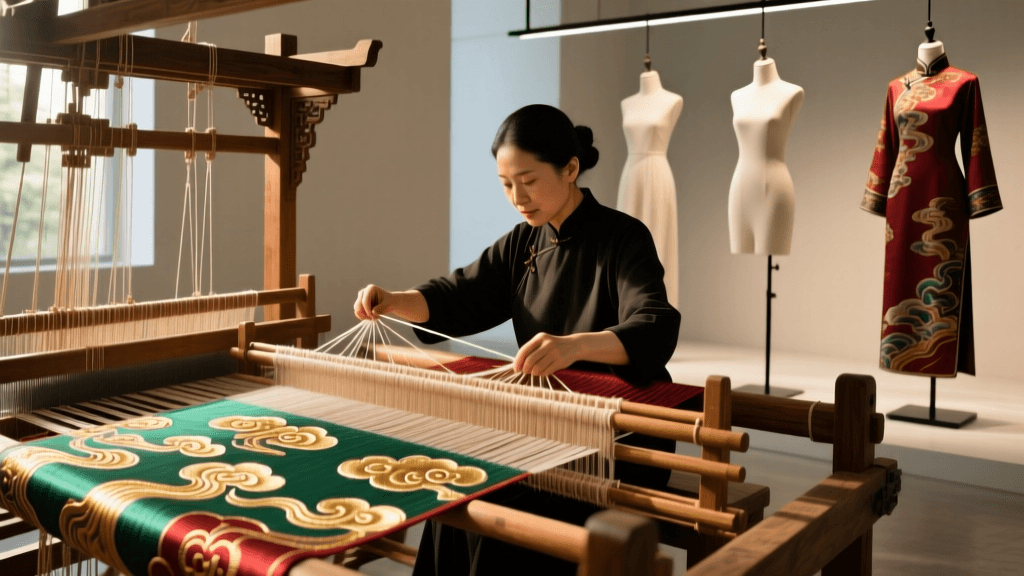
To understand the value of Hualou-woven textiles in the 2026 market, one must first understand the sheer scale and complexity of the machine itself. A traditional Hualou drawloom is a colossal structure, typically measuring 5.6 meters in length, 1.4 meters in width, and towering 4 meters high. Because of its immense height, operating a Hualou loom traditionally requires a specialized two-story workshop or a ground-floor studio with vaulted ceilings.
The loom is constructed from dense, aged timber to withstand the tremendous tension of the warp threads. The core components include:
- The Warp Beam and Cloth Beam: These anchor the thousands of silk threads that form the foundation of the fabric.
- The Heddles and Bamboo Reed: Used by the weaver at the front of the loom to separate the warp threads and beat the weft into place.
- The Pattern Harness (Huaben): Located at the top of the loom, this intricate network of cords acts as the physical ‘memory’ of the design, dictating which warp threads are lifted to create the brocade pattern.
Historical context regarding the evolution of these complex silk structures, as documented by the Metropolitan Museum of Art’s Heilbrunn Timeline of Art History, highlights how Chinese weavers mastered pattern weaving long before the advent of mechanized punch cards, relying instead on this sophisticated arrangement of knotted cords.
The Human Element: Weaver and Drawboy
Operating the Hualou requires a highly synchronized, two-person team. The weaver sits at the front of the loom, managing the shuttle, the ground weave, and the batten. Perched high above on the loom’s upper scaffolding is the ‘drawboy’ (or pattern puller). When the weaver is ready for a new pattern shed, the drawboy pulls specific bundles of the pattern harness cords according to the design sequence. This ‘pick and pull’ method requires intense physical stamina and flawless communication. In 2026, master weavers and pullers are treated as elite artisans, often training for over a decade before they are permitted to weave commercial-grade Yunjin brocade.
Material Innovation and 2026 Ethical Standards
Nanjing Cloud Brocade is renowned for its extravagant use of materials. Traditional Yunjin incorporates not just dyed mulberry silk, but also threads wrapped in real gold foil and, most famously, yarn spun from peacock feathers. In 2026, the luxury fashion sector has placed a heavy emphasis on sustainable and ethical sourcing, fundamentally changing how these raw materials are acquired for the Hualou loom.
Modern heritage workshops in Nanjing and Suzhou now utilize certified ethical gold leaf, ensuring that the precious metal wrapping processes do not involve toxic chemical binders. Furthermore, the peacock feathers used in 2026 brocade production are exclusively molted feathers gathered from sanctuaries and ethical aviaries, a stark contrast to historical practices. This commitment to cruelty-free and sustainable luxury has made Hualou-woven garments highly attractive to the eco-conscious Gen Z and Millennial consumers driving the Xin Zhongshi trend.
Comparative Analysis: Traditional Drawloom vs. Electronic Jacquard
While modern electronic Jacquard looms can mimic the visual patterns of ancient brocades, they fundamentally alter the drape, weight, and structural integrity of the fabric. The table below outlines the critical differences between the traditional Hualou drawloom and modern electronic alternatives as of the 2026 production cycle.
| Feature | Traditional Hualou Drawloom | Modern Electronic Jacquard |
|---|---|---|
| Daily Output | 5 to 6 centimeters | 50 to 100+ meters |
| Warp Thread Complexity | Up to 14,000+ individual threads | High, but limited by harness density |
| Material Integration | Gold leaf, peacock feathers, heavy silk | Standard silk, synthetic blends, metallic yarns |
| Fabric Drape & Weight | Heavy, sculptural, highly structured | Lighter, fluid, requires interlining |
| 2026 Market Price (per meter) | ¥8,000 to ¥30,000+ | ¥150 to ¥600 |
| Cultural Value | UNESCO Intangible Heritage | Commercial textile manufacturing |
The most striking difference lies in the fabric drape. Hualou-woven Yunjin possesses a natural stiffness and architectural quality due to the high density of the warp and the integration of metallic threads. In 2026, Xin Zhongshi designers are leveraging this structural integrity to create garments that require minimal internal tailoring or boning, allowing the ancient textile to act as its own architectural framework.
Sourcing Authentic Drawloom Textiles in 2026
For designers, collectors, and archivists looking to acquire authentic Hualou-woven textiles, the landscape in 2026 is highly regulated but accessible through specific channels. The epicenter of this craft remains the Nanjing Cloud Brocade Museum and its affiliated master workshops. Recognized by UNESCO as an Intangible Cultural Heritage of Humanity, the techniques are fiercely protected.
When commissioning a custom run for a fashion line or private collection, buyers must navigate a rigorous process:
- Design Translation: The pattern must be translated into the physical cord memory of the loom, a process that can take weeks for complex motifs like the imperial dragon or the intricate peony vine.
- Loom Setup: Threading 14,000 warp threads through the bamboo reed and heddles is a meticulous task that requires a dedicated setup period.
- Weaving Phase: Given the output rate of 5 centimeters per day, a standard 5-meter commission will require over three months of continuous weaving by a master team.
Buyers in 2026 should expect to pay a premium not just for the materials, but for the time and heritage certification that accompanies each roll of authentic Yunjin. Reputable workshops provide a digital and physical certificate of authenticity, detailing the names of the weaver and drawboy, the exact materials used, and the dates of production.
Storage, Maintenance, and Archival Care
Owning a Hualou-woven garment requires specialized care. The integration of gold thread and dense silk makes these textiles susceptible to environmental damage if not stored correctly. In 2026, conservation-grade storage is the standard for high-end Xin Zhongshi wardrobes.
- Climate Control: Maintain a strict relative humidity of 45% to 55%. Fluctuations can cause the silk core of the gold threads to expand and contract, leading to the flaking of the gold foil.
- Light Exposure: Prolonged exposure to UV light will degrade the natural dyes used in the ground weave. Garments must be stored in opaque, acid-free garment bags when not on display.
- Folding vs. Hanging: Due to the extreme weight of Cloud Brocade, hanging the garment for long periods can cause the warp threads to stretch and distort. It is highly recommended to store the textile flat, interleaved with acid-free, unbuffered tissue paper, inside a cedar or specialized archival textile box.
- Cleaning: Never dry clean or wash authentic Yunjin. Surface dust should be removed using a soft, natural-hair brush. For stains, consult a specialized textile conservator who understands the reactivity of peacock feather yarns and gold-wrapped threads.
Academic Research and Digital Preservation
As the demand for these textiles grows, so does the urgency to preserve the knowledge required to build and program the Hualou looms. In 2026, academic institutions across Asia are employing advanced 3D scanning and AI-driven pattern recognition to digitize the physical cord harnesses of historical drawlooms. This research ensures that even if a physical loom is lost, the intricate ‘code’ of the pattern can be reconstructed. Furthermore, universities are studying the biomechanics of the weaver and drawboy, developing ergonomic supports to extend the careers of these master artisans, ensuring that the human element of this ancient technology survives well into the future.
Conclusion
The Hualou drawloom is a testament to the ingenuity of ancient Chinese engineering and the relentless pursuit of aesthetic perfection. In 2026, it stands not as a relic of the past, but as a vital, breathing component of the contemporary fashion ecosystem. By blending the slow, deliberate rhythm of the drawboy and weaver with the bold, modern visions of the Xin Zhongshi movement, the fashion industry is ensuring that the legacy of Cloud Brocade continues to drape the future in the splendor of the past. For those willing to invest the time and resources, the Hualou loom offers a tangible connection to history that no modern machine can replicate.