Bespoke Geta & Zori Craft: Traditional Japanese Footwear 2026
The Enduring Legacy of Japanese Footwear in 2026
In the ever-evolving landscape of global fashion, the meticulous craft of traditional Japanese footwear remains a testament to heritage, functionality, and aesthetic purity. As we navigate through 2026, the renaissance of bespoke Geta and Zori is not merely a nostalgic revival; it is a vibrant intersection of Edo-period woodworking techniques and modern sustainable practices. For enthusiasts of Asian traditions and sartorial elegance, understanding the nuances of these iconic sandals offers a profound glimpse into Japanese culture. According to the Japan Ministry of Economy, Trade and Industry (METI), the designation and preservation of traditional crafts have seen a renewed focus on sustainable material sourcing, directly impacting how modern artisans carve, weave, and assemble footwear today.
Walking through the historic streets of Asakusa or the modern fashion districts of Omotesando, the distinctive 'karankoron' (clack-clack) of wooden Geta and the silent, elegant glide of silk Zori continue to define the sensory experience of Japanese attire. This comprehensive guide explores the anatomy, craftsmanship, sizing, and contemporary styling of traditional Japanese footwear, providing you with the knowledge to appreciate and commission your own bespoke pair in 2026.
Geta vs. Zori: Understanding the Core Differences
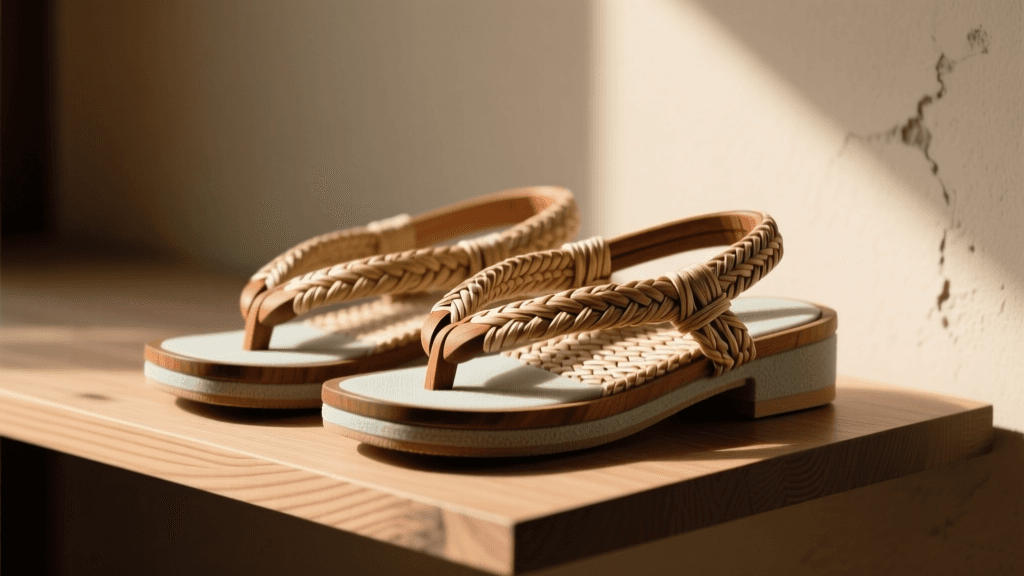
While both Geta and Zori share the fundamental T-shaped thong design known as the hanao, their construction, materials, and cultural applications differ significantly. Geta are primarily elevated wooden clogs designed to keep the hem of garments away from dirt, rain, and snow. Zori, conversely, are flat or slightly wedged sandals with soles made from a variety of materials, ranging from woven rice straw to modern synthetic leathers, and are generally considered more formal.
| Feature | Geta | Zori |
|---|---|---|
| Base Material | Solid Wood (Paulownia, Cypress, Cedar) | Rice straw, EVA, Leather, Vinyl, Brocade |
| Elevation | Raised on wooden 'teeth' (ha) | Flat or slightly wedged at the heel |
| Acoustic Profile | Distinctive rhythmic 'clack' (karankoron) | Silent or soft rustle against the ground |
| Formality Level | Casual to semi-formal (Yukata, Summer festivals) | Everyday wear to highly formal (Silk Kimono) |
| Primary Function | Elevation, weather protection, airflow | Elegance, formality, garment complement |
The Artisan's Bench: Materials and Craftsmanship
The Dai (Base) and the Mastery of Paulownia
The foundation of a Geta is the dai (base), traditionally carved from Kiri (Paulownia) wood. Paulownia is highly prized in Japanese woodworking for its exceptional lightweight properties, moisture resistance, and beautiful pale grain. In 2026, master artisans in regions like Hida-Takayama and Kyoto are combining centuries-old hand-carving techniques with 3D-scanning technology to create bespoke bases that perfectly match the arch and pressure points of the client's foot. The wood is dried for up to three years before carving to prevent warping. Once shaped, the base may be left bare to showcase the natural grain, charred using the shou sugi ban technique for weather resistance, or coated in multiple layers of natural urushi (lacquer).
Weaving the Hanao: Silk, Sustainability, and Strength
The hanao is the thong that secures the foot to the base. It consists of the outer covering and the inner core (chi). Historically, the inner core was woven from hemp or cotton for tensile strength, while the outer layer was crafted from silk or velvet. Today, the Japan National Tourism Organization (JNTO) highlights a massive surge in upcycling within traditional crafts. In 2026, many elite Zori and Geta ateliers are sourcing vintage Meiji and Taisho-era silk kimono scraps to weave into bespoke hanao, ensuring that each pair is a unique, sustainable work of art. The inner cores now frequently utilize advanced bio-resins and recycled marine plastics, offering superior durability and elasticity without sacrificing the traditional aesthetic.
The Golden Rule of Sizing: Why Smaller is Better
One of the most common mistakes Western buyers make when purchasing traditional Japanese footwear is selecting their exact Western shoe size. Geta and Zori are designed to be worn slightly smaller than the foot. This is not a quirk of vanity, but a highly functional design principle rooted in the mechanics of walking in traditional garments.
The 'Kakato ga Deru' Principle
In Japanese footwear fitting, the phrase kakato ga deru translates to 'the heel sticks out.' When standing in a properly fitted pair of Geta or Zori, your heel should overhang the back edge of the base by approximately 1 to 2 centimeters (about half an inch). There are two critical reasons for this:
- Garment Protection: If the footwear is too long, the back of your heel will catch the hem of your kimono or yukata with every step, potentially causing you to trip or soil the delicate silk fabric on the ground.
- Biomechanics: Japanese sandals are meant to be gripped with the toes, encouraging a natural, gliding walking style (suriashi) rather than a heavy heel-strike. The slight overhang forces the wearer to engage their toe muscles, promoting better posture and a quieter, more graceful gait.
When commissioning bespoke footwear in 2026, artisans will measure your foot from the tip of the longest toe to the center of the heel bone, rather than the very back of the heel, to calculate the exact length of the wooden dai.
Styling Traditional Footwear in Contemporary Wardrobes
While Geta and Zori are inextricably linked to the kimono and yukata, the fashion landscape of 2026 has fully embraced the integration of traditional Asian garments into everyday streetwear. The rigid boundaries between Eastern heritage and Western silhouettes have dissolved, creating exciting new styling opportunities.
Geta with Modern Streetwear
Wooden Geta pair exceptionally well with wide-leg trousers, cropped denim, and flowing linen pants. The elevated wooden teeth add a striking architectural element to an outfit, while the bare foot (or tabi socks) provides a grounded, organic contrast to modern textiles. In the summer months, wearing dark indigo shibori dyed yukata with raw-hem denim jackets and barefoot Geta is a highly sought-after aesthetic in Tokyo's fashion-forward districts.
Zori for Formal and Business Occasions
Modern Zori, particularly those crafted with matte leather or woven rattan soles and subtle, monochromatic hanao, are increasingly being worn with tailored suits and formal evening wear. The flat profile and minimalist lines of a high-quality Zori offer a sophisticated alternative to traditional leather loafers, especially in warm climates where breathability is paramount. For women, brocade-covered Zori remain the undisputed choice for formal ceremonies, weddings, and tea ceremonies, perfectly complementing the intricate obis and silk kimonos of the season.
Caring for Your Bespoke Footwear
Proper maintenance ensures that a handcrafted pair of Geta or Zori can last for decades. The natural materials used in 2026 require specific care routines to combat humidity and wear.
- Wood Care (Geta): Unlacquered Paulownia wood is susceptible to darkening from the natural oils in your skin and environmental moisture. Wipe the footbed with a dry, soft cloth after each use. If the wood becomes stained, a master artisan can lightly sand the top layer to reveal fresh, pale wood beneath.
- Straw and EVA Care (Zori): Natural rice straw Zori must be kept away from direct sunlight and high humidity to prevent mold and brittleness. Store them in a breathable cotton bag with silica gel packets. Modern EVA and leather Zori can be wiped with a slightly damp cloth and conditioned with natural beeswax.
- Hanao Replacement: The hanao is considered a consumable part of the footwear. Depending on your walking style and frequency of use, the thong may stretch or fray. Most traditional shops offer a re-thonging service, allowing you to refresh the look of your sandals by selecting a new silk or velvet covering without replacing the wooden base.
Where to Commission Authentic Footwear Today
For those looking to invest in authentic, artisan-crafted footwear, Tokyo's Asakusa district remains the epicenter of traditional sandal making. Historic shops like Tsujiya Honten have been crafting bespoke Zori and Geta for generations, offering an unparalleled selection of vintage silks and rare woods. Additionally, the Tokyo National Museum frequently hosts exhibitions detailing the evolution of Edo-period textiles and footwear, providing deep historical context for collectors and enthusiasts. Whether you are seeking a rugged, charred-wood Geta for summer festivals or an exquisite, gold-brocade Zori for a formal tea ceremony, the artisans of 2026 are perfectly equipped to bridge the gap between ancestral tradition and your personal style.