2026 Hanfu Secondhand Market Guide: Vintage Collecting & Resale Tips
The Evolution of the Hanfu Secondhand Market in 2026
Over the past two decades, the Hanfu movement has transformed from a niche internet hobby into a global cultural phenomenon. As we move through 2026, the market for traditional Chinese clothing has matured significantly. The initial wave of fast-fashion, mass-produced synthetic garments is being actively replaced by a robust, highly sophisticated secondhand and vintage market. Today's collectors and enthusiasts are prioritizing sustainability, historical accuracy, and textile preservation, driving a massive surge in peer-to-peer resale platforms.
For modern collectors, buying secondhand Hanfu is no longer just about finding a bargain; it is about acquiring pieces of living history. According to cultural historians tracking the revival of traditional Chinese dress, the secondary market has become the primary avenue for acquiring discontinued, high-fidelity reproduction garments that are no longer in production. In 2026, navigating this market requires a deep understanding of platform algorithms, textile authentication, and specialized garment care.
Where to Buy and Sell: 2026 Platform Breakdown
The landscape of Hanfu resale is split between domestic Chinese platforms and international vintage marketplaces. In 2026, Xianyu (Idle Fish) remains the undisputed king of the domestic market, having recently integrated AI-driven weave authentication to combat counterfeit luxury brocades. Meanwhile, global collectors are increasingly turning to curated vintage apps to find early 2010s 'first-wave' Hanfu pieces that are now considered highly collectible.
| Platform | Best For | Avg. Mamianqun Price (USD) | 2026 Buyer Protection |
|---|---|---|---|
| Xianyu (Idle Fish) | Domestic China, rare artisan finds | $45 - $350 | AI Weave Verification & Escrow |
| Depop | Global Gen Z, Y2K era Hanfu | $80 - $250 | Standard Depop Guarantee |
| Vestiaire Collective | High-end silk, designer collabs | $300 - $1,500 | Expert Physical Authentication |
| Weibo Super Topics | Community trading, direct peer-to-peer | $30 - $150 | None (Reputation-based) |
For international buyers, utilizing proxy shopping services for Xianyu remains the most effective way to access the deepest inventory of Ming Dynasty-style Mamianqun (horse-face skirts) and Song Dynasty Beizi. However, Depop has seen a 40% increase in Hanfu listings in 2026, as Western-based Asian diaspora communities begin to circulate their own archived collections.
Valuing Vintage: First-Wave vs. Restoration Hanfu
To succeed in the 2026 resale market, collectors must understand the distinction between 'First-Wave' and 'Restoration' Hanfu. First-Wave garments, produced roughly between 2008 and 2015, were often characterized by experimental silhouettes, theatrical influences, and a blend of traditional motifs with modern fantasy elements. While historically inaccurate by today's rigorous standards, these pieces are now highly sought after by fashion archivists and vintage collectors who view them as the foundational artifacts of the modern Hanfu revival.
Conversely, 'Restoration' Hanfu refers to pieces produced from 2018 onward, heavily based on archaeological findings and museum replicas. The secondhand value of Restoration Hanfu is dictated by the brand's reputation for historical fidelity, the complexity of the weave (such as true Zhuanghua brocade), and the scarcity of the colorway. Limited-run collaborations between heritage brands and institutions like the Palace Museum command massive premiums on the secondary market, often selling for triple their original retail price.
The Mamianqun Resale Phenomenon
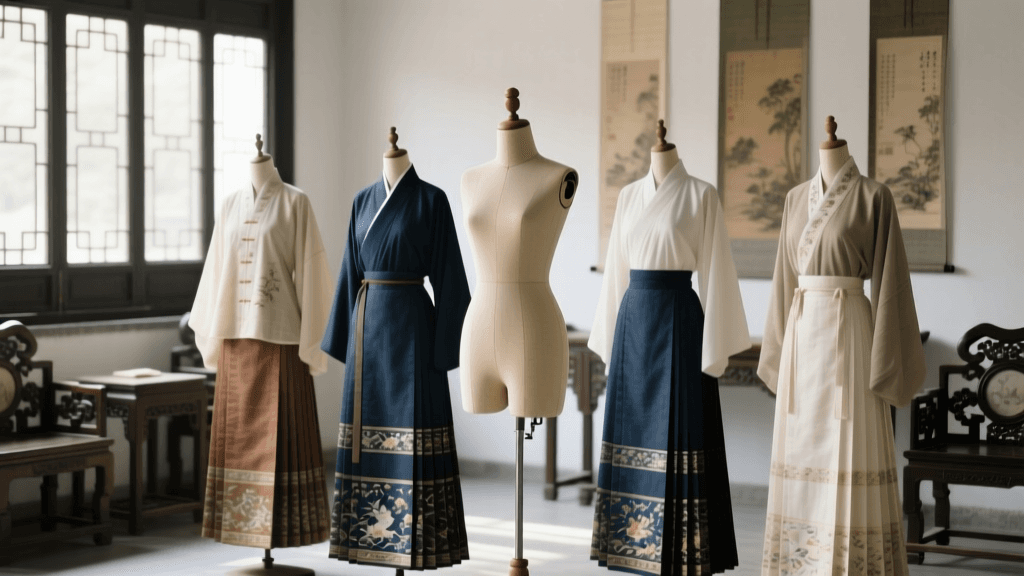
The Ming Dynasty Mamianqun remains the most traded item in the 2026 secondhand market. When evaluating a pre-loved Mamianqun, collectors look for specific markers of quality:
- Pleat Retention: High-quality secondhand skirts will still hold their sharp, knife-like pleats without the need for modern stitching or fusing.
- Waistband Integrity: The cotton or linen waistband should show minimal warping, as this area takes the most structural stress.
- Hardware: Original metal clasps or ties should be intact, with no signs of rust or fabric tearing around the attachment points.
Authenticating Secondhand Textiles: Silk vs. Synthetics
One of the greatest challenges in the 2026 Hanfu secondhand market is verifying fabric composition. As digital printing and synthetic jacquard technologies have advanced, distinguishing between genuine silk brocade and high-end polyester imitations requires a trained eye. True Zhuanghua (妆花) weaving involves a complex technique where colored weft threads are introduced only where needed, creating a rich, textured surface.
When inspecting a secondhand garment, always request high-resolution macro photos of the fabric's reverse side. In authentic traditional jacquard weaving, you will see the intricate floating threads and the organic, slightly messy nature of hand-loomed or high-end shuttle-loomed brocade. Digital prints or cheap synthetic jacquards will have a uniform, flat back, often with a white or single-color synthetic base. Furthermore, the luster of genuine mulberry silk changes dynamically under different lighting conditions, whereas polyester reflects light in a harsh, uniform glare.
Preservation and Care for Pre-Loved Garments
Acquiring a vintage or secondhand Hanfu piece is only the first step; preserving it for future generations is paramount. Traditional silk and delicate metallic threads require specialized care that differs vastly from modern wardrobe maintenance. Drawing on guidelines from the Victoria and Albert Museum's textile archives, collectors must adopt museum-grade preservation techniques at home.
Cleaning and Maintenance
Never machine wash or aggressively hand-wash secondhand silk Hanfu. The water temperature and agitation can cause irreversible dye bleeding and destroy the structural integrity of the pleats. Instead, opt for professional dry cleaning services that specialize in heritage textiles, explicitly informing them of the garment's metallic threads, which can tarnish or dissolve in standard chemical solvents. For minor surface dust, use a soft, natural-bristle brush and gently sweep in the direction of the weave.
Archival Storage Solutions
Proper storage is critical for maintaining the value of vintage Hanfu. The UNESCO Intangible Cultural Heritage frameworks emphasize the importance of environmental control in textile preservation. Follow these 2026 best practices for your collection:
- Acid-Free Tissue Paper: Always stuff the sleeves and fold lines with unbuffered, acid-free tissue paper to prevent hard creases that can lead to silk shattering over time.
- Climate Control: Store garments in a cool, dark environment with a stable relative humidity of around 50%. Fluctuations in humidity cause natural fibers to expand and contract, weakening the threads.
- Avoid Wire Hangers: Heavy Mamianqun and fully lined Aoqun sets should never be hung on wire or thin plastic hangers. The weight of the wet or heavy fabric will distort the shoulders. Use padded, wide wooden hangers covered in washed cotton muslin.
- Pest Deterrence: Avoid chemical mothballs, which can yellow silk and leave a permanent odor. Instead, use natural cedar blocks or dried lavender sachets placed in the corners of your storage boxes, ensuring they do not directly touch the fabric to prevent oil transfer.
Conclusion: The Future of Hanfu Collecting
As the Hanfu movement continues to evolve in 2026, the secondhand market has become a vital ecosystem for sustainability and cultural preservation. Whether you are hunting for a rare First-Wave experimental piece on Depop or negotiating for a museum-grade silk Mamianqun on Xianyu, success requires a blend of historical knowledge, textile expertise, and careful preservation. By treating these garments not just as clothing, but as collectible cultural artifacts, today's enthusiasts are ensuring that the beauty of traditional Asian textiles will endure for decades to come.