2026 Hanfu Fabric Drape Analysis: Texture & Comfort Guide
The Evolution of Hanfu Textiles in 2026
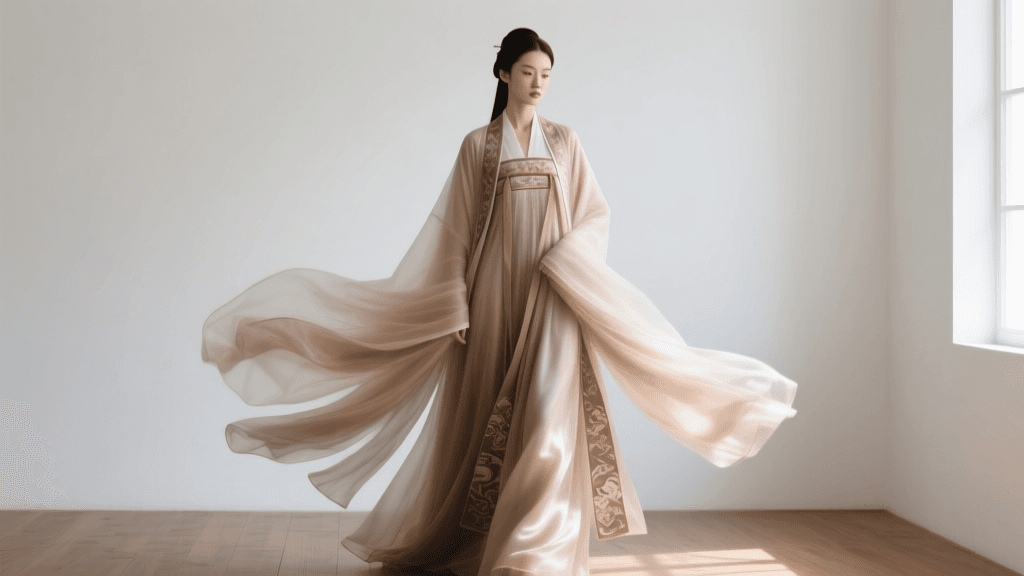
As we navigate the global fashion landscape of 2026, the Hanfu renaissance has matured far beyond mere historical replication. Today, the Xin Zhongshi (new Chinese style) movement demands a sophisticated synthesis of ancient aesthetics and modern livability. Enthusiasts and everyday wearers alike are no longer satisfied with stiff, purely ceremonial garments; they seek fabrics that offer a fluid drape, tactile comfort, and the resilience to withstand modern commutes. Understanding the biomechanics of fabric drape—how a textile bends, folds, and flows over the human body—is now essential for selecting the perfect Hanfu.
The drape of a garment is dictated by its flexural rigidity, shear stiffness, and weight. A traditional Song dynasty Beizi (open-front jacket) requires a fabric with low flexural rigidity to achieve a cascading, waterfall-like silhouette. Conversely, a Ming dynasty Mamianqun (horse-face skirt) demands high shear stiffness to maintain its sharp, structured pleats during movement. In 2026, advancements in eco-friendly fiber processing and AI-assisted loom tensioning have revolutionized how these traditional silhouettes behave. This comprehensive analysis breaks down the top three Hanfu fabrics dominating the 2026 market, evaluating their texture, drape coefficients, and everyday comfort.
The Physics of Traditional Silhouettes
To truly appreciate Hanfu textiles, one must understand the historical context of silk weaving. As documented by the Metropolitan Museum of Art's Heilbrunn Timeline of Art History, the ancient Silk Road facilitated not just the trade of raw silk, but the exchange of complex weaving techniques that dictated how garments moved. Historical weavers intuitively understood that altering the warp-to-weft ratio could transform a rigid brocade into a fluid gauze.
Today, textile scientists measure this using the Cusick Drape Test, which calculates a fabric's Drape Coefficient (DC). A lower DC indicates a softer, more fluid drape, while a higher DC indicates a stiffer, more structured material. In 2026, the integration of Lyocell (Tencel) and sustainably harvested flax has allowed manufacturers to precisely engineer these coefficients, creating Hanfu that honors historical silhouettes while offering unprecedented breathability and skin comfort.
Xiangyunsha: The Heritage Luxury Standard
Texture and Hand-Feel
Xiangyunsha, or Gambiered Canton Gauze, remains the pinnacle of luxury Hanfu textiles in 2026. Dyed with the juice of the Shulang yam and coated in iron-rich river mud, this fabric possesses a completely unique texture. It feels akin to soft, supple parchment paper. When worn, it produces a faint, rhythmic rustling sound—a characteristic highly prized by connoisseurs. The 2026 sustainable harvesting initiatives in Guangdong have ensured that the mud-dyeing process remains eco-friendly without sacrificing the fabric's signature dual-toned finish (glossy black on one side, matte terracotta on the other).
Drape and Comfort Analysis
Xiangyunsha has a moderate-to-high Drape Coefficient. It does not cling to the body; instead, it stands slightly away from the skin, creating an architectural, flowing silhouette. This makes it exceptionally comfortable in high humidity, as the fabric's natural stiffness prevents it from sticking to the wearer. However, its lack of elasticity means it is best suited for loose-fitting styles like the Jiaoling Ruqun or wide-sleeved Dashan. While it offers incredible cooling properties, the texture can feel slightly abrasive to highly sensitive skin until it has been worn and softened over several months.
Tencel-Linen Blends: The 2026 Xin Zhongshi Staple
Texture and Hand-Feel
The breakthrough of 2026 for everyday Hanfu is the perfected 70/30 Tencel-to-Linen blend. By combining the smooth, silk-like surface of botanically derived Lyocell (Tencel) with the rustic, slubbed texture of premium flax linen, manufacturers have created a textile that perfectly embodies the "quiet luxury" ethos of the modern Xin Zhongshi movement. The fabric is cool to the touch, featuring a subtle, natural luster that mimics raw silk but with vastly superior wrinkle resistance.
Drape and Comfort Analysis
This blend boasts a remarkably low Drape Coefficient, allowing it to flow like water. It is the ultimate choice for summer Qixiong Ruqun (chest-high skirts) and lightweight Beizi. The Tencel fibers provide the heavy, fluid drape necessary to keep the skirt anchored and elegant in a breeze, while the linen component ensures rapid moisture wicking and structural integrity. From a comfort perspective, it is unmatched in 2026: it is hypoallergenic, thermoregulating, and soft enough for direct contact with the skin, eliminating the need for additional inner layers.
Modern Song Brocade: Structured Elegance Reimagined
Texture and Hand-Feel
Songjin (Song Brocade) is historically revered for its intricate, low-profile geometric patterns and matte finish. Unlike the flashy, high-relief Shu brocade, Song brocade is understated and sophisticated. In 2026, the adoption of AI-tensioned digital jacquard looms has allowed weavers to utilize ultra-fine mercerized cotton and recycled polyester-silk threads, drastically reducing the fabric's weight while maintaining its complex structural weaves. The texture is smooth, dry, and distinctly crisp.
Drape and Comfort Analysis
Song Brocade is engineered for high shear stiffness. It is the undisputed champion for Mamianqun and structured outer garments like the Pifeng. The fabric's rigidity ensures that the deep, parallel pleats of a horse-face skirt remain razor-sharp, even after hours of sitting or walking. While traditional Song brocade could feel heavy and stifling, the 2026 lightweight variants (hovering around 120 GSM) offer excellent breathability. It is less comfortable for close-fitting bodices but provides an unparalleled, regal silhouette for outer layers and skirts.
Comparative Drape and Comfort Data (2026 Standards)
The following table summarizes the performance metrics of these three leading textiles, based on 2026 textile testing standards utilized by leading research institutions such as the Wilson College of Textiles at NC State University.
| Fabric Type | Average GSM | Drape Coefficient (%) | Breathability Index | Ideal Hanfu Application |
|---|---|---|---|---|
| Xiangyunsha (Gambiered Gauze) | 85 - 105 | 55% (Moderate-Stiff) | High | Wide-sleeve Dashan, Jiaoling Ruqun |
| Tencel-Linen Blend (70/30) | 110 - 130 | 30% (Highly Fluid) | Very High | Qixiong Ruqun, Summer Beizi |
| Modern Song Brocade | 120 - 150 | 75% (Highly Structured) | Moderate | Mamianqun, Structured Pifeng |
Care and Maintenance for High-Drape Textiles
Preserving the drape and texture of these specialized fabrics requires specific care protocols. For Xiangyunsha, avoid alkaline detergents entirely; the iron-mud dye reacts poorly to high pH levels, which can strip the fabric of its glossy finish. Hand wash in cool water using a specialized silk-and-gauze pH-neutral cleanser, and never wring the fabric. Instead, roll it in a microfiber towel to absorb excess moisture and dry it flat in the shade.
Tencel-linen blends are remarkably forgiving and can be machine washed on a gentle, cold-water cycle inside a mesh laundry bag. However, to maintain the fabric's fluid drape and prevent the linen fibers from snapping, remove the garment immediately after the cycle and hang it on a padded hanger. The weight of the wet Tencel will naturally pull out most wrinkles as it dries.
For structured Song Brocade Mamianqun, the pleats are your primary concern. The Victoria and Albert Museum's Asian Collections archives emphasize the importance of proper storage for pleated historical garments. In 2026, the best practice is to use smart garment steamers equipped with optical silk-sensors, which automatically adjust the steam pressure to prevent flattening the jacquard weave. When storing, never hang a heavy brocade skirt for long periods, as the warp threads will stretch and distort the pleats. Instead, fold the skirt along its original pleat lines, place acid-free tissue paper between the folds, and store it flat in a breathable cotton garment bag.
Conclusion
The Hanfu landscape in 2026 is a triumph of textile engineering and cultural reverence. Whether you are drawn to the architectural rustle of heritage Xiangyunsha, the liquid comfort of modern Tencel-linen blends, or the razor-sharp elegance of reimagined Song Brocade, understanding the science of fabric drape allows you to curate a wardrobe that is both historically resonant and perfectly suited for modern life. By selecting the right textile for the right silhouette, you ensure that your Hanfu not only looks breathtaking but feels like a second skin.