Best Kyoto Wasai & Seoul Hanbok Sewing Workshops 2026
The Renaissance of Heritage Tailoring in 2026
The global shift toward slow fashion and cultural preservation has sparked an unprecedented demand for traditional garment-making education. As we navigate through 2026, aspiring designers, textile artists, and cultural historians are increasingly seeking out immersive workshops and seminars dedicated to Asian traditional dress. Unlike Western pattern drafting, which relies on complex curved cutting to map the human form, traditional Asian tailoring often utilizes geometric precision, straight-line cutting, and intricate folding techniques that honor the integrity of the woven textile. For those looking to master these ancient crafts, the premier destinations remain the historic ateliers of Kyoto, Japan, and the cultural heritage centers of Seoul, South Korea. This comprehensive guide explores the top 2026 seminars for learning wasai (kimono tailoring) and hanbok construction, providing actionable insights, current pricing, and curriculum breakdowns.
Kyoto Wasai: Mastering the Straight-Line Cut
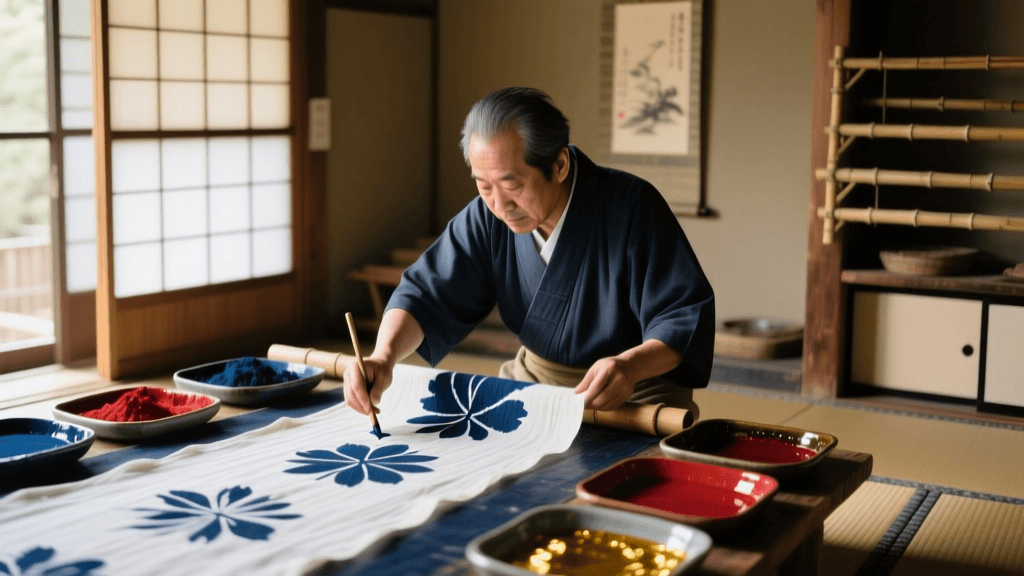
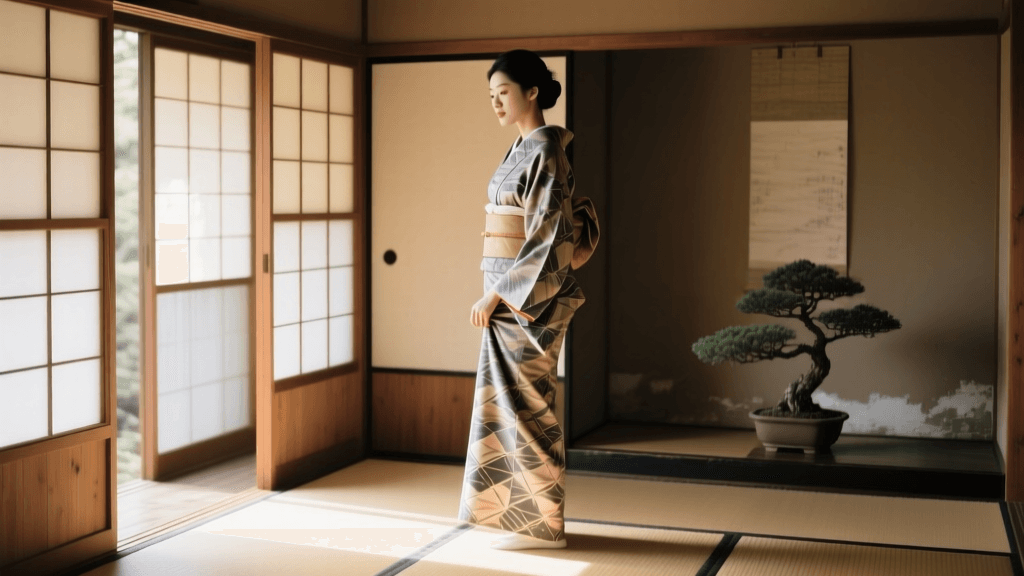
Wasai is the traditional Japanese art of kimono tailoring. The fundamental philosophy of wasai is a deep respect for the fabric. A standard kimono is constructed from a single bolt of cloth known as a tanmono, which measures approximately 36 centimeters in width and 12 meters in length. In 2026, the most prestigious workshops in Kyoto emphasize the sustainability of this method: because the fabric is cut in straight lines and sewn using running stitches, the garment can be entirely unpicked, washed, stretched, and resewn—a process known as arai-hari.
The 2026 intensive seminars in Kyoto focus heavily on the kuke (blind stitching) technique, which hides the thread inside the layers of silk, and the precise application of the eri (collar). Students learn to manipulate the okumi (front overlap panels) to ensure the garment drapes flawlessly without the use of darts or curved seams. According to the Japan National Tourism Organization, cultural immersion programs focusing on traditional craftsmanship have seen a 40% increase in international enrollment this year, prompting local ateliers to offer fully bilingual instruction in English and Japanese.
What to Expect in a 2026 Kyoto Wasai Intensive
- Duration: Typically 4 to 6 weeks of full-time study (Monday through Friday, 9:00 AM to 4:00 PM).
- Curriculum: Fabric preparation, marking with a hera (bamboo spatula), straight-line cutting, running stitch mastery, blind hemming, and final pressing with a traditional heavy iron.
- Materials: Most 2026 tuition packages include one standard silk tanmono and a cotton practice bolt.
- Prerequisites: Intermediate hand-sewing skills are mandatory; machine sewing is rarely used in authentic wasai.
Seoul Hanbok Seminars: Structuring the Chima and Jeogori
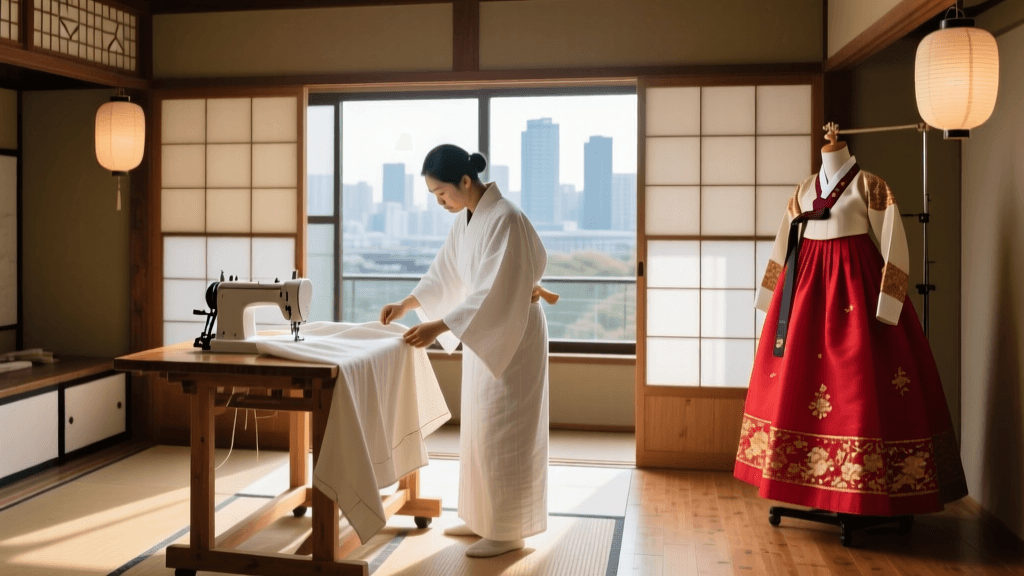
While Japanese wasai relies on straight lines, the Korean hanbok is celebrated for its elegant curves and three-dimensional volume, achieved entirely without Western-style darts. The 2026 masterclasses in Seoul, often supported by initiatives highlighted on the official Korean government portal, focus on the structural engineering of the chima (the voluminous wrap skirt) and the jeogori (the upper garment). The hallmark of the hanbok is the baerae, the beautifully curved underside of the sleeve that mimics the eaves of traditional Korean architecture, and the goreum, the long, flowing chest ties that require meticulous internal stiffening to hold their shape.
Modern hanbok seminars in Seoul also place a strong emphasis on color theory rooted in the Obangsaek (the traditional five-color spectrum) and the integration of sustainable, domestically produced ramie and silk blends. Instructors guide students through the complex gathering techniques of the chima waistband, ensuring the skirt achieves its signature bell-like silhouette while remaining comfortable and lightweight.
Key Techniques Taught in Seoul Masterclasses
- Dongjeong Application: Crafting the crisp, removable white paper-and-fabric collar that frames the face and protects the jeogori from skin oils.
- Goreum Construction: Sewing and pressing the chest ties so they lie perfectly flat and tie in the traditional asymmetric bow.
- Chima Pleating: Mastering the hidden micro-pleats at the waistband that distribute the heavy fabric evenly around the body.
2026 Workshop Comparison Chart
To help you choose the right educational path, we have compiled a comparison of the top traditional garment-making seminars available in 2026. Pricing reflects current 2026 rates, including basic materials and studio access.
| Workshop / Seminar Name | Location | Duration | 2026 Tuition (USD) | Skill Level |
|---|---|---|---|---|
| Kyoto Wasai Heritage Intensive | Kyoto, Japan | 4 Weeks | $3,200 | Intermediate / Advanced |
| Seoul Hanbok Structural Masterclass | Seoul, South Korea | 3 Weeks | $2,450 | Intermediate |
| Hybrid Asian Tailoring Foundations | Virtual / Global | 8 Weeks (Part-time) | $850 | Beginner / Intermediate |
| Advanced Silk Manipulation & Dyeing | Kanazawa, Japan | 2 Weeks | $1,900 | Advanced |
Sourcing Authentic Tools and Textiles in 2026
Attending a seminar is only the first step; building your traditional toolkit is essential for continued practice. In 2026, sourcing authentic tools has become more streamlined thanks to specialized global exporters, but knowing exactly what to acquire is crucial.
For wasai practitioners, the essential toolkit includes a shaku (a traditional Japanese measuring stick, roughly 37.9 cm), a hera for marking fabric without ink, and a kote (a specialized narrow iron for pressing seams open on delicate silks). For hanbok makers, a heavy tailor's clapper and specialized curved shears are necessary to manage the stiff simji (interfacing) used in collars and cuffs. Many 2026 Kyoto and Seoul workshops now offer an optional 'Tool Kit Add-on' for approximately $350 USD, which is highly recommended for international students to avoid customs delays when importing specialized crafting tools.
Preparing for Your Traditional Garment Seminar
Securing a spot in these highly sought-after 2026 programs requires advance planning. Applications for the Kyoto and Seoul intensives typically open in late 2025 and fill within weeks. Here is a checklist to ensure you are fully prepared:
- Portfolio Submission: Even for intermediate courses, directors will ask for photographs of your previous hand-sewing projects to assess your stitch consistency and tension control.
- Visa and Accommodation: Most cultural seminars in Japan and South Korea qualify for short-term cultural exchange visas. Workshops usually partner with local guesthouses, offering bundled lodging rates ranging from $800 to $1,200 per month.
- Physical Preparation: Traditional floor-based tailoring (sitting on tatami or ondol floors) requires physical stamina. Seminars in 2026 increasingly offer ergonomic Western-height tables upon request to accommodate diverse physical needs.
- Language Basics: While bilingual instructors are standard in 2026, learning the specific terminology (e.g., sode for sleeve, goreum for tie) will vastly accelerate your learning curve and show respect to the master artisans.
The Future of Asian Garment Making Education
The preservation of intangible cultural heritage is a global priority, as recognized by organizations like UNESCO. The 2026 cohort of traditional tailoring students represents a vital bridge between ancient techniques and modern sustainable fashion. By learning the zero-waste geometry of the kimono and the structural brilliance of the hanbok, today's makers are not just preserving history; they are actively participating in a global renaissance of mindful, culturally rich garment creation. Whether you choose the quiet, meticulous ateliers of Kyoto or the vibrant, structural studios of Seoul, investing in these workshops is an investment in the future of global textile heritage.