Paris Fashion Week 2026: Xiangyunsha Silk & Xin Zhongshi Trends
The Global Breakthrough of Xin Zhongshi in 2026
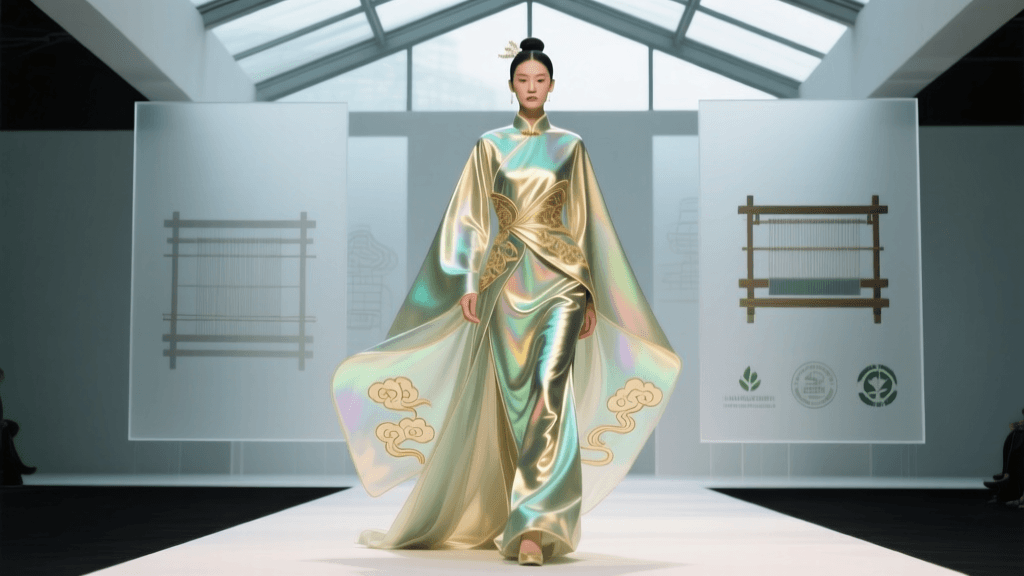
As the global fashion industry pivots toward heritage-driven sustainability, Paris Fashion Week (PFW) 2026 has witnessed an unprecedented surge in the Xin Zhongshi (New Chinese Style) movement. No longer confined to domestic streetwear or localized cultural festivals, traditional Chinese garments and textiles are now commanding the main stages at the Grand Palais Éphémère. This year, the spotlight is firmly on the intersection of ancient weaving techniques and contemporary structural tailoring, signaling a permanent shift in how Asian traditions influence global luxury.
The 2026 Spring/Summer collections have demonstrated that Xin Zhongshi is not merely an aesthetic choice but a rigorous methodology. Designers are moving past superficial motifs like embroidered dragons or basic mandarin collars. Instead, they are deconstructing historical silhouettes—such as the intersecting lapels (jiaoling youren) and the pleated Mamianqun (horse-face skirt)—and rebuilding them using zero-waste pattern cutting. According to the official schedule released by the Fédération de la Haute Couture et de la Mode, over a dozen emerging and established Asian heritage brands were featured in dedicated exhibition spaces this season, highlighting a massive institutional endorsement of Eastern sartorial history.
Xiangyunsha: The 'Soft Gold' of the Runways
The undisputed star of PFW 2026 is Xiangyunsha, also known as gambiered Canton gauze. Originating from the Guangdong province, this Intangible Cultural Heritage fabric is renowned for its complex, labor-intensive production process. It involves dyeing silk with the juice of the Dioscorea cirrhosa (shoulang) yam, coating it with iron-rich river mud, and sun-drying it repeatedly. The result is a dual-toned textile: a rich, earthy brown on one side and a glossy, pitch-black finish on the other.
In 2026, the European Union's stringent new directives on textile circularity and chemical use have made Xiangyunsha incredibly attractive to luxury conglomerates. Because it relies entirely on natural plant dyes, mineral mud, and solar energy, its carbon footprint is a fraction of that of commercially dyed silks. Furthermore, the fabric possesses natural antibacterial properties and a unique, crisp drape that holds architectural shapes without the need for synthetic stiffeners. Its status as a protected heritage craft is well-documented by organizations like UNESCO's Intangible Cultural Heritage list, adding a layer of authenticated prestige that modern consumers demand.
Drape Analysis and Fabric Behavior
From a technical design perspective, Xiangyunsha behaves differently from standard mulberry silk. Its mud-coating process gives it a texture akin to soft leather or high-grade parchment. In the 2026 exhibitions, designers showcased this by utilizing bias cuts to introduce fluidity, contrasting the fabric's natural stiffness. When used in traditional straight-grain cuts, Xiangyunsha creates striking, voluminous silhouettes that stand away from the body, making it ideal for modern interpretations of the Hanfu outer robe (Beizi).
Material Comparison for 2026 Couture
To understand why Xiangyunsha has eclipsed other textiles on the 2026 runways, we must compare its physical and environmental properties against standard luxury alternatives.
| Material | Drape Profile | Environmental Impact (2026 Index) | Avg. Cost per Meter (USD) | PFW 2026 Usage |
|---|---|---|---|---|
| Standard Mulberry Silk | Fluid, high-sheen, requires lining | Moderate (high water use in dyeing) | $80 - $150 | Widespread, baseline luxury |
| Xiangyunsha (Gambiered Gauze) | Crisp, architectural, dual-texture | Very Low (natural dyes, sun-dried) | $450 - $850 | Haute Couture, focal pieces |
| Song Brocade (Songjin) | Heavy, structured, ornate | Moderate (complex Jacquard weaving) | $300 - $600 | Evening wear, outerwear |
| Recycled PET Synthetics | Variable, often lacks luster | Low (upcycled), but microplastic risk | $40 - $90 | Prêt-à-Porter, streetwear |
Structural Hanfu: The Mamianqun Reimagined
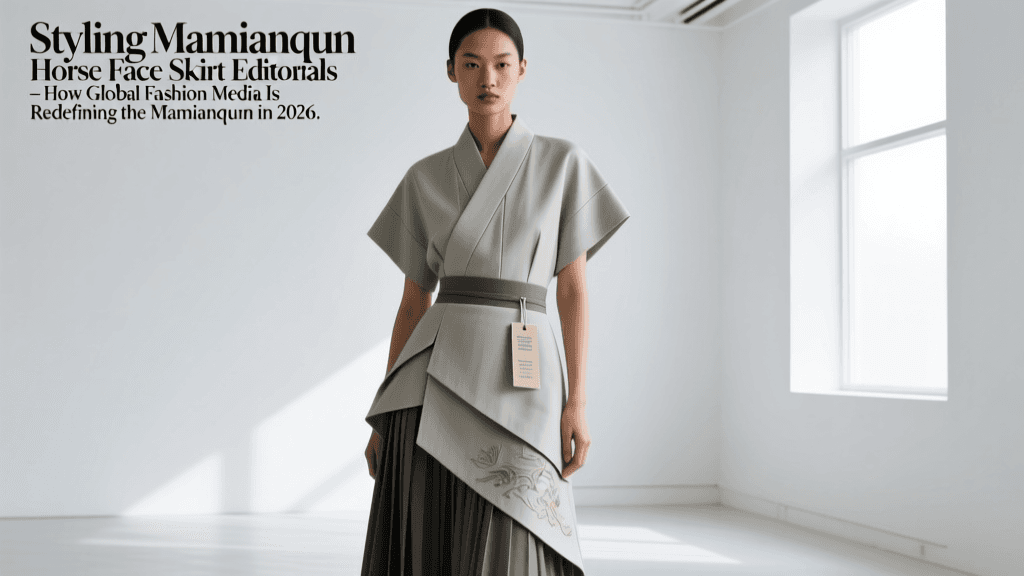
Beyond textiles, the structural adaptation of the Mamianqun (horse-face skirt) has been a major talking point at the 2026 exhibitions. Historically characterized by its flat front and back panels with heavily pleated sides, the Mamianqun is a masterclass in kinetic garment design. At PFW 2026, we saw this traditional skirt reimagined using asymmetric hemlines and integrated waistbands that eliminate the need for traditional ties, making it accessible for modern, fast-paced urban environments.
Designers are also experimenting with the pleat structures, using heat-setting techniques on wool-silk blends to ensure the pleats remain razor-sharp even after prolonged wear. This fusion of ancient geometry and modern textile science perfectly encapsulates the Xin Zhongshi ethos: honoring the past by engineering it for the future.
Sourcing and Authenticating Exhibition Pieces
For collectors, buyers, and fashion archivists attending international design weeks, sourcing authentic heritage pieces requires a discerning eye. The surge in demand for Xiangyunsha has unfortunately led to an influx of counterfeit fabrics—standard silks painted with chemical dyes to mimic the mud-coating effect.
Authentication Checklist for Xiangyunsha
- The Sound Test: Authentic Xiangyunsha produces a distinct, crisp rustling sound (often described as 'singing silk') when rubbed between the fingers, due to the hardened mud coating.
- The Water Test: While it is water-resistant, a drop of water on authentic Xiangyunsha will bead up slightly before absorbing, whereas chemically treated knock-offs will either absorb instantly or repel water entirely due to synthetic sealants.
- The Scent: Genuine fabric retains a very faint, earthy, herbal scent from the yam juice and river mud, even years after production.
- Visual Inspection: Look for microscopic irregularities. Because it is sun-dried and hand-coated, authentic Xiangyunsha will have slight, natural variations in the black finish, unlike the uniform perfection of machine-dyed fabrics.
Price Guide and Market Value in 2026
As of the 2026 market, investment-grade Xiangyunsha garments showcased at international exhibitions command premium prices. A ready-to-wear jacket crafted from authentic, aged Xiangyunsha (fabric that has been stored in controlled environments for 3-5 years to soften) typically retails between $2,800 and $4,500. Haute Couture pieces featuring hand-woven Song brocade panels integrated with Xiangyunsha can easily exceed $15,000. Buyers should always request a certificate of origin detailing the specific workshop in Foshan or Guangzhou where the fabric was processed.
Preservation, Storage, and Travel Packing
Acquiring a piece from a 2026 PFW exhibition is only the first step; maintaining these heritage textiles requires strict adherence to conservation protocols. Institutions like the Victoria and Albert Museum have long set the standard for Asian textile preservation, and private collectors must follow similar guidelines.
Climate Control and Storage
Xiangyunsha and Song brocade are highly sensitive to environmental fluctuations. Garments must be stored in a climate-controlled environment with a relative humidity (RH) strictly maintained between 45% and 55%. Temperatures should remain stable at around 18°C to 20°C (64°F to 68°F). Never store these garments in plastic dry-cleaning bags, as trapped moisture will cause the natural dyes to bloom or mold. Instead, use unbleached, acid-free cotton muslin garment bags.
Because Xiangyunsha has a memory and can crack if folded sharply along the same lines repeatedly, it is highly recommended to store the garments flat in archival boxes, padded with acid-free tissue paper to support the structural pleats and voluminous sleeves.
Travel Packing for Exhibition Buyers
When transporting these valuable pieces internationally after a design week, avoid checking them in standard luggage. Use a rigid, waterproof garment tube or a specialized flat-portfolio case. If folding is absolutely necessary, roll the garment around a core of acid-free tissue paper rather than creating hard creases. Always carry a portable digital hygrometer in your luggage to monitor the humidity levels during transit, especially when moving between the dry cabin air of a long-haul flight and the humid climate of your destination.
Conclusion
Paris Fashion Week 2026 has unequivocally proven that Asian traditions are not merely historical artifacts to be referenced, but living, breathing methodologies that hold the key to the future of sustainable luxury. The global embrace of Xiangyunsha silk and the structural brilliance of the Xin Zhongshi movement represents a profound cross-cultural exchange. For collectors and enthusiasts, investing in these pieces is not just an acquisition of fashion; it is the preservation of a centuries-old heritage, re-engineered for the modern world.