Mamianqun in 2026 Fashion Media: Editorial Styling Guide
The Mamianqun Takes Center Stage in 2026 Editorials
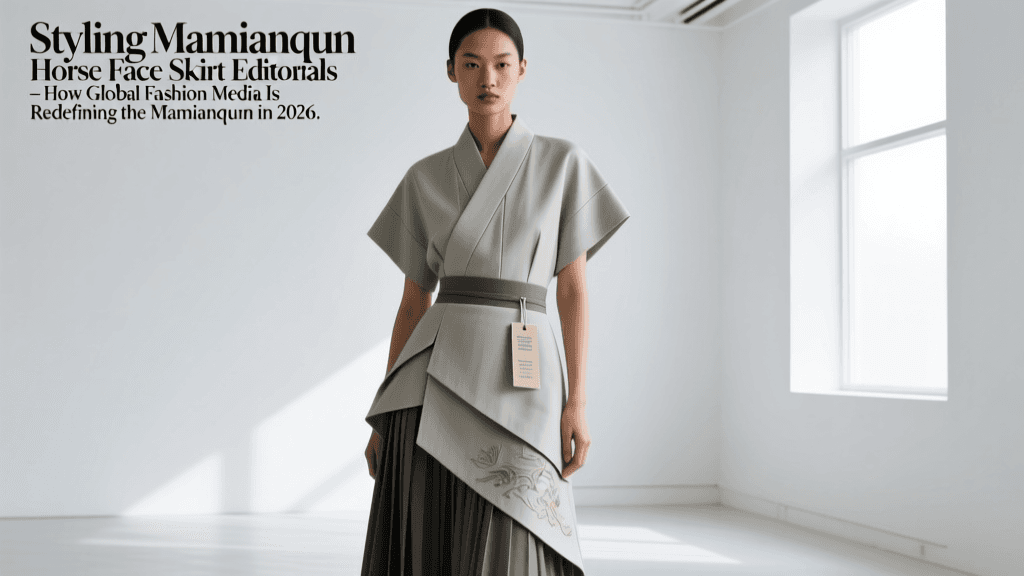
In the landscape of 2026 global fashion media, the Mamianqun (horse-face skirt) has firmly transitioned from a niche historical garment to a highly sought-after editorial staple. Featured prominently in the Spring/Summer 2026 issues of Vogue Italia, Harper's Bazaar, and Dazed, this traditional Chinese skirt is redefining how heritage textiles are presented on the world stage. For fashion stylists, art directors, and cultural consultants, understanding how to ethically source, style, and photograph the Mamianqun is no longer optional. It is a necessary skill in an industry that increasingly demands cultural fluency, historical accuracy, and authentic representation.
The Mamianqun is characterized by its unique structural design: two overlapping flat panels at the front and back (the 'horse faces') and densely pleated sides that remain hidden when standing still but explode into dynamic motion during walking or spinning. As global fashion magazines move away from superficial exoticism, the focus in 2026 has shifted toward celebrating the architectural brilliance and textile mastery of traditional Asian garments.
Historical Context Meets Modern Haute Couture
To style the Mamianqun respectfully in high-fashion editorials, one must first understand its origins. The skirt's structural evolution heavily influenced the silhouette and textile techniques used in Chinese dress for centuries. According to The Metropolitan Museum of Art's Heilbrunn Timeline of Art History, the development of Chinese dress during the Ming and Qing dynasties established the foundational aesthetics of garments like the Mamianqun, emphasizing intricate weaving techniques and symbolic motifs.
In 2026, top-tier magazines are collaborating directly with heritage weavers in Nanjing and Suzhou to showcase authentic Zhuanghua (silk tapestry) and gold-leaf brocade techniques. Editors are treating these garments with the same reverence as vintage Chanel or archival Dior. The Met Museum's Ming Dynasty Overview highlights the era's unprecedented advancements in silk weaving and garment construction, providing essential context for stylists looking to accurately credit the historical significance of the textiles they pull for shoots.
Technical Guide: Photographing the Horse-Face Pleats
Capturing the Mamianqun on camera requires a departure from standard editorial photography techniques. The garment's beauty lies in its movement and the interplay of light on its metallic threads.
Lighting the Brocade
Traditional Mamianqun often feature metallic gold or silver threads woven into the silk. To highlight this without blowing out the highlights, avoid flat, frontal lighting. Use a 120cm octabox positioned at a 45-degree angle as your key light, fitted with a fabric grid to control spill. Add a strip box with a honeycomb grid behind the model as a rim light. This setup separates the dark silk brocade from the background and catches the metallic threads, creating a luminous, three-dimensional effect that translates beautifully in print and digital media.
Capturing Movement and Structure
The side pleats are the soul of the Mamianqun. To capture the 'swing' in motion photography, instruct your model to walk toward the camera with long, deliberate strides, or to execute slow, controlled spins. Set your shutter speed to at least 1/800s to freeze the pleats in mid-air while maintaining sharpness on the flat front panels. A continuous shooting mode (burst) is essential, as the pleats fan out unpredictably, and you will need dozens of frames to capture the perfect geometric alignment.
2026 Editorial Styling: Pairings and Proportions
The 2026 editorial trend dubbed 'Neo-Heritage' focuses on juxtaposing historical volume with modern, architectural tailoring. Stylists are moving away from pairing the Mamianqun with traditional Hanfu tops, which can sometimes read as a period costume rather than high fashion. Instead, consider the following contemporary pairings:
- Architectural Knitwear: Pair a heavy, floor-length silk Mamianqun with a cropped, structured mohair sweater or an asymmetrical ribbed knit top. The contrast between the matte, voluminous knit and the glossy, flowing silk creates striking visual tension.
- Tailored Outerwear: Drape an oversized, sharp-shouldered blazer over a delicate silk camisole. The blazer's rigid lines mirror the flat front panels of the skirt, creating a cohesive, powerful silhouette.
- Avant-Garde Footwear: Abandon traditional cloth shoes for editorial shoots. In 2026, stylists are grounding the voluminous skirt with sleek, square-toe leather mules, minimalist combat boots, or avant-garde footwear like the Maison Margiela Tabi boot, bridging the gap between heritage and contemporary streetwear.
Sourcing Authentic Mamianqun for Editorial Shoots
Sourcing for editorial pulls requires balancing historical accuracy, budget, and lead times. Fast-fashion replicas are heavily frowned upon in 2026 fashion media due to issues of cultural appropriation and poor construction. Below is a guide to sourcing authentic pieces for your next shoot.
| Brand / Artisan Studio | Tier / Authenticity | Price Range (USD) | Lead Time | Editorial Best Use |
|---|---|---|---|---|
| Minghuatang | High-End Heritage | $800 - $2,500 | 3-5 Months | High-fashion covers, macro textile shots, museum-grade features. |
| Shisanyu | Mid-Tier Authentic | $150 - $400 | 2-4 Weeks | Street-style editorials, dynamic movement shots, commercial lookbooks. |
| Custom Nanjing Yunjin Weavers | Bespoke Museum Grade | $3,000+ | 6+ Months | Met Gala prep, archival fashion features, luxury brand collaborations. |
| Independent Taobao Hanfu Studios | Entry-Level Authentic | $60 - $120 | 1-2 Weeks | Indie zines, TikTok fashion media, youth-culture trend reports. |
On-Set Garment Care and Wardrobe Prep
The Mamianqun requires specialized care on set to maintain its structural integrity. The sharp creases of the side pleats are paramount to the skirt's silhouette. Never use a traditional steam iron directly on the pleats, as the moisture and heavy heat can permanently flatten the sharp creases. If the garment arrives wrinkled from transit, use a handheld steamer at least six inches away from the fabric, allowing the steam to gently relax the silk without saturating it. Let the garment air-dry on a wide, padded hanger before shooting. When adjusting the skirt on the model, use wardrobe weights sewn into the inner hem to ensure the flat panels hang perfectly straight, even in outdoor wind conditions.
Media Ethics: Crediting Heritage in Fashion Publishing
As the Mamianqun becomes a global fashion phenomenon, the language used in fashion publishing must evolve. In 2026, leading style editors and cultural critics are demanding precise terminology. Avoid lazy, homogenizing descriptors such as 'exotic,' 'costume,' or 'oriental.' Instead, use specific, historically accurate language: refer to it as a 'Ming-dynasty inspired Mamianqun' or highlight the specific textile technique, such as 'Nanjing Yunjin brocade.'
The Victoria and Albert Museum's Textile Collections underscores the critical importance of preserving and accurately attributing Asian textile histories in Western institutions and media. When publishing an editorial, the copy must credit the dynasty of origin, the specific weaving technique, and, whenever possible, the modern artisan or studio that produced the garment. This level of detail not only educates the reader but also protects the intellectual and cultural property of Asian heritage communities.
'True cultural appreciation in fashion media requires moving beyond the aesthetic surface. It demands that we credit the artisans, understand the historical weight of the garment, and present it with the same rigorous editorial standards applied to Western haute couture.'
Conclusion
The integration of the Mamianqun into 2026 global fashion media represents a maturing industry—one that values cultural depth as much as visual impact. By mastering the technical aspects of photographing brocade, embracing modern styling juxtapositions, and committing to ethical sourcing and crediting, stylists and editors can honor the legacy of the horse-face skirt. As Asian traditional garments continue to shape the global fashion narrative, the Mamianqun stands as a powerful testament to the enduring elegance and architectural genius of historical Asian dress.