Xiangyunsha Silk: China's Intangible Heritage Craft
The Legacy of Gambiered Canton Gauze
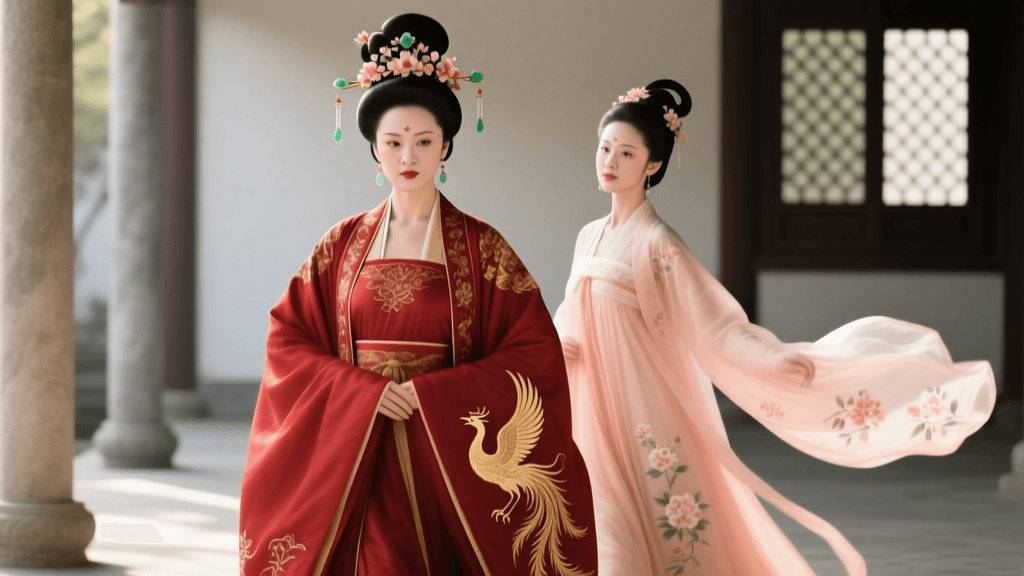
In the pantheon of traditional Chinese textiles, few fabrics command the reverence, mystery, and luxury of Xiangyunsha (香云纱), often translated as Gambiered Canton Gauze or 'Fragrant Cloud Silk.' Originating from the humid, river-rich delta regions of Shunde in Guangdong Province, this extraordinary fabric represents a pinnacle of Chinese traditional crafts. Recognized as a National Intangible Cultural Heritage, Xiangyunsha is not merely a textile; it is a living testament to the harmonious relationship between human artisanship and the natural environment. For enthusiasts of Hanfu and traditional Asian garments, understanding Xiangyunsha is essential to appreciating the depth of historical Chinese fashion.
The fabric's history stretches back over six centuries to the Ming Dynasty, where it was prized by nobility for its unique ability to cool the body in the sweltering southern Chinese summers. Today, the preservation of this craft is championed by institutions like the China National Silk Museum, which works tirelessly to document and safeguard ancient weaving and dyeing techniques from the brink of extinction. As modern consumers seek sustainable, artisanal fashion, Xiangyunsha has experienced a renaissance, bridging the gap between ancient heritage and contemporary luxury.
The Botanical and Geological Alchemy
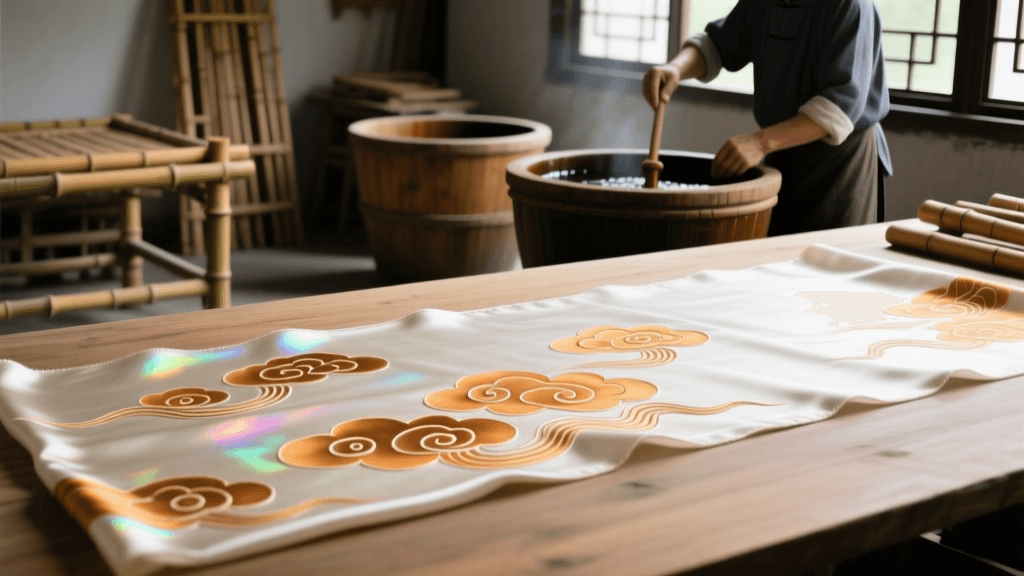
What sets Xiangyunsha apart from standard mulberry silk is its highly complex, labor-intensive dyeing process, which relies on a specific botanical extract and a unique geological resource. The primary dye is derived from the Dioscorea cirrhosa plant, locally known as 'Shoulang.' The tubers of this yam-like plant are crushed and soaked to extract a juice rich in tannins. This tannin-rich liquid acts as both a natural dye and a bio-mordant, gradually staining the raw silk a deep, warm amber.
However, the true magic of Xiangyunsha occurs when this tannin-coated silk meets the iron-rich mud of the Pearl River Delta. The chemical reaction between the plant tannins and the iron ions in the river mud creates a dark, lustrous, and water-resistant coating on one side of the fabric. This alchemy cannot be replicated in a factory; it requires the specific mineral composition of the Shunde riverbeds and the intense, direct sunlight of the Guangdong summer.
The 14-Step Artisan Dyeing Process
The creation of authentic Xiangyunsha is governed by strict traditional protocols, often summarized as the '14-step process.' This entire cycle can only be performed between April and October when the sunlight is strong enough to cure the fabric and the humidity is optimal. According to the guidelines set forth by the Ministry of Culture and Tourism of the PRC, safeguarding these specific manual processes is vital to maintaining the integrity of intangible cultural heritage.
Phase 1: The Shoulang Immersion
- Preparation: Raw white silk gauze (typically cut into 18 to 20-meter bolts) is prepared.
- Soaking: The silk is immersed in the Shoulang juice. This is not a one-time event; the fabric is soaked, wrung out by hand, and sun-dried repeatedly.
- Repetition: This cycle of soaking and drying is repeated up to 30 times over several days, slowly building up the tannin layers until the silk turns a rich, reddish-brown.
Phase 2: The River Mud Coating
- Harvesting Mud: Artisans wade into the local rivers before dawn to harvest the finest, most iron-rich silt from the riverbed.
- Application: The mud is evenly smeared across one side of the tannin-dyed silk. The fabric is then laid out on the grass under the blazing sun.
- The Reaction: As the sun bakes the mud into the fabric, the tannins and iron react, turning the mud-coated side a deep, metallic black or dark brown, while the reverse side remains a warm amber.
- Washing: After the chemical reaction is complete, the mud is washed off in the river, leaving behind a permanent, lustrous finish.
Phase 3: Curing and Resting
Once the dyeing and mud-coating are complete, the fabric is not immediately sold or sewn. It must be stored in a dark, well-ventilated room for at least six months to a year. This 'resting' period allows the fibers to fully stabilize, the colors to deepen, and the fabric to develop its signature soft, crackling drape.
Identifying Authentic Xiangyunsha: A Buyer’s Guide
With the rising popularity of Hanfu and heritage garments, the market has been flooded with synthetic imitations and chemically dyed knock-offs. Authentic Xiangyunsha is an investment piece. A genuine bolt of Xiangyunsha (roughly 18 meters long and 90 cm wide) typically costs between 3,000 and 8,000 RMB ($400 to $1,100 USD), depending on the weave complexity and the artisan's reputation. Imitations can be found for a fraction of the price, but they lack the breathability, skin-nourishing properties, and historical soul of the genuine article.
Tactile and Visual Cues
When examining a potential purchase, look for the following hallmarks of authenticity:
- The Sound: Genuine Xiangyunsha produces a distinct, soft 'crackling' or rustling sound when rubbed between the fingers, often compared to the sound of walking on dry autumn leaves.
- Two-Toned Appearance: Authentic fabric is distinctly two-toned. The face is a deep, lustrous black or dark brown with a subtle, leather-like sheen, while the reverse is a matte, earthy brown or amber.
- Texture Evolution: Unlike synthetic fabrics that degrade, real Xiangyunsha softens with wear. The body's natural oils condition the silk over time, making it more comfortable and lustrous the longer you own it.
- Imperfections: Because it is dyed outdoors on grass and riverbanks, authentic pieces often feature tiny, natural irregularities or faint grass stains, which are considered badges of honor rather than defects.
Material Comparison Chart
To understand where Xiangyunsha sits in the textile market, compare it against standard silks and modern imitations:
| Feature | Authentic Xiangyunsha | Standard Mulberry Silk | Chemical Imitation |
|---|---|---|---|
| Base Material | 100% Raw Silk Gauze | 100% Cultivated Silk | Polyester / Nylon Blend |
| Dye Source | Shoulang Tuber & River Mud | Synthetic or Plant Dyes | Chemical Dyes & Coatings |
| Breathability | Exceptional (Cooling effect) | High | Poor (Traps heat) |
| Texture | Crisp, leather-like, softens over time | Soft, smooth, fluid | Stiff, plasticky, unchanging |
| Average Cost (per meter) | 150 - 450 RMB ($20 - $60 USD) | 50 - 150 RMB ($7 - $20 USD) | 10 - 30 RMB ($1 - $4 USD) |
| UV & Water Resistance | Naturally high due to tannin/mud | Low (Degrades in sun) | Moderate |
Integrating Heritage Silk into Modern Garments
Today, master artisans and contemporary designers are collaborating to bring Xiangyunsha into the modern wardrobe. Within the Hanfu revival movement, Xiangyunsha is highly sought after for crafting Ming Dynasty-style silhouettes, particularly the Mamianqun (horse-face skirt) and the Dao Pao (scholar's robe). The fabric's natural crispness holds pleats exceptionally well, making it ideal for structured traditional garments.
Furthermore, the fabric's natural antibacterial and hypoallergenic properties, derived from the Shoulang tannins, make it a favorite for luxury Qipaos and summer linings. Designers often pair Xiangyunsha with traditional embroidery techniques like Su embroidery, creating a stunning contrast between the dark, muted background of the gauze and the vibrant silk threads of the embroidery.
Care and Maintenance for Heritage Textiles
Owning a piece of intangible cultural heritage requires specific care to ensure its longevity. Because Xiangyunsha is coated in natural tannins and iron compounds, it reacts poorly to harsh chemicals and alkaline environments.
Washing Instructions
- Water Temperature: Always use cold or lukewarm water (below 30°C / 86°F). Hot water will strip the natural tannin coating and cause the fabric to stiffen.
- Detergent: Use only a pH-neutral, silk-specific detergent. Never use standard laundry detergents, bleach, or alkaline soaps, as they will chemically react with the iron-mud coating and cause irreversible discoloration.
- Technique: Hand wash gently. Do not scrub, twist, or wring the fabric. Simply agitate it softly in the soapy water for no more than three minutes.
Drying and Storage
- Drying: Never put Xiangyunsha in a tumble dryer. Roll the garment in a clean, dry cotton towel to press out excess water, then lay it flat or hang it on a padded hanger in a shaded, well-ventilated area. Avoid direct sunlight during the drying process, as prolonged UV exposure post-dyeing can fade the amber reverse side.
- Ironing: If ironing is necessary, use the lowest heat setting (silk mode) and always place a damp cotton cloth between the iron and the garment. Iron on the reverse (amber) side to protect the lustrous black face.
- Storage: Store in a breathable cotton or linen garment bag. Avoid plastic covers, which trap moisture and can lead to mildew. Do not use camphor balls or mothballs, as the chemical fumes will react with the natural dyes and leave permanent yellow stains.
The Future of the Artisan Villages
The survival of Xiangyunsha relies entirely on the master dyers of Shunde. The work is grueling; artisans spend their days knee-deep in river mud and working under the punishing midday sun. In recent years, efforts aligned with UNESCO's Intangible Cultural Heritage framework have helped elevate the social and economic status of these craftspeople. By establishing heritage workshops, offering apprenticeships to younger generations, and leveraging e-commerce to reach global buyers, the artisan villages are finding a sustainable path forward.
When you purchase authentic Xiangyunsha, you are not just buying a garment. You are funding the preservation of a 600-year-old ecological craft, supporting rural artisan communities, and wearing a piece of living history that embodies the profound Chinese philosophy of unity between humanity and nature.