Kimono in Pop Culture: Cosplay and Streetwear Guide
The Cinematic and Anime Influence on Japanese Fashion
Japanese traditional garments have transcended their historical origins to become powerful visual motifs in global pop culture, cinema, and anime. From the cyberpunk aesthetics of Ghost in the Shell to the stylized, action-ready silhouettes in Kill Bill, the kimono and its associated garments have been continuously reimagined by international media. However, it is the explosive global popularity of anime that has most recently driven a massive resurgence in kimono-inspired fashion. Series like Demon Slayer (Kimetsu no Yaiba) have turned traditional patterns, such as the black-and-green checkerboard ichimatsu design, into globally recognized streetwear staples. According to the Victoria and Albert Museum's groundbreaking exhibition, Kimono: Kyoto to Catwalk, the garment has never been a static relic; rather, it is a dynamic fashion icon that has continuously influenced and absorbed global trends since the 17th century.
For fans, cosplayers, and streetwear enthusiasts, this media exposure presents a unique opportunity to integrate traditional Japanese clothing into modern wardrobes. Yet, navigating the intersection of authentic tradition and pop-culture adaptation requires an understanding of garment construction, proper sourcing, and cultural respect.
Streetwear Fusion: The Haori and Noragi Revolution
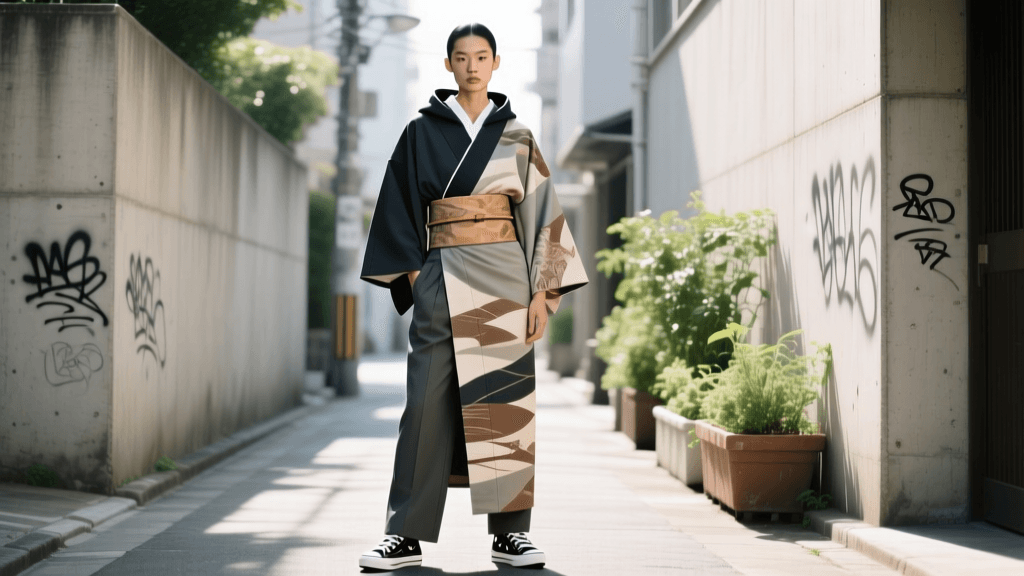
You do not need to attend a comic convention to wear traditional Japanese garments. The integration of pieces like the haori (a hip- or thigh-length kimono-style jacket) and the noragi (a traditional farmer's jacket) into urban streetwear has become a hallmark of avant-garde and techwear fashion. Brands in Harajuku and global streetwear labels frequently use vintage silk haori as statement outerwear.
Actionable Styling Tips for Urban Environments
- The Haori Over Denim: Pair a vintage, dark-toned silk haori with a plain white heavyweight t-shirt and raw selvedge denim. Leave the haori open, as it is traditionally worn without tying the front haori-himo (cords) in casual streetwear settings.
- Footwear Pairing: Swap traditional zori sandals for modern footwear. Chunky sneakers (like New Balance 990s or Nike Air Max) or combat boots create a striking silhouette that bridges Edo-period tailoring with contemporary utility.
- Noragi for Layering: Cotton or sashiko-stitched noragi jackets are excellent transitional outerwear. They typically cost between $80 and $250 for authentic vintage pieces and feature a relaxed, boxy fit that works well over hoodies in autumn.
Decoding Sizing: A Practical Measurement Guide
One of the most common hurdles for international buyers is sizing. Traditional kimono do not use standard Western sizing (S, M, L). Instead, they are tailored based on specific body measurements, primarily height and arm span. Because kimono are constructed from straight bolts of fabric, their width is relatively fixed, while length is adjusted during wearing via the ohashori (the fold at the waist).
Essential Kimono Measurements
- Mitake (Back Length): Measured from the base of the collar to the hem. For a traditional fit with an ohashori fold, the mitake should ideally be within 5 to 10 centimeters of your total height. For modern streetwear where the ohashori is omitted, you can wear a kimono that is 20 to 30 cm shorter than your height for a cropped, avant-garde look.
- Yuki (Sleeve Length): Measured from the center back seam of the neck, across the shoulder, and down to the wrist. A standard vintage kimono usually has a yuki of 62 to 66 cm. If your armspan exceeds 70 cm, you may find vintage sleeves end awkwardly above the wrist, making modern reproductions or custom tailoring necessary.
- Wrist-to-Wrist Span: When arms are outstretched, the total width of the kimono. Most vintage women's kimono have a span of 120 to 130 cm. If you have a broader chest or shoulders, look specifically for 'hiro-sode' (wide sleeve) or men's vintage kimono, which offer more room across the back.
Traditional vs. Pop-Culture Adaptations: A Comparison
Understanding the difference between strict traditional rules and pop-culture adaptations is crucial for both accurate cosplay and respectful daily wear. The table below outlines how garments are treated across different contexts.
| Feature | Traditional Wearing | Pop-Culture / Streetwear | Cosplay / Convention |
|---|---|---|---|
| Collar Rule | Strictly Left over Right (Right over Left is for the deceased) | Left over Right (Maintained out of respect) | Often Left over Right, but frequently mistaken by amateurs |
| Footwear | Tabi socks with Zori or Geta sandals | Sneakers, Boots, or barefoot with sandals | Tabi boots or character-specific shoes |
| Obi (Sash) | Complex, structured knots (e.g., Taiko musubi) requiring pads and ties | Often omitted, replaced by leather belts, or tied simply | Pre-tied obi, velcro, or safety pins for quick changes |
| Undergarments | Hadajuban and Nagajuban (full silk under-layers) | Modern t-shirts, turtlenecks, or crop tops | Flesh-toned compression wear or simplified cotton slips |
Cosplay and Convention Survival Guide
Wearing a kimono at a multi-day comic convention requires practical modifications for comfort, mobility, and durability. Authentic silk is delicate, and traditional tying methods can restrict movement or cause overheating in crowded convention centers.
- Fabric Choice: Avoid vintage silk for conventions. Opt for modern polyester washable kimono or cotton yukata. Polyester replicas cost between $40 and $90 online, are machine washable, and resist wrinkling when packed in a suitcase.
- The Two-Piece Hack: For conventions, purchase or create a 'two-piece' kimono. These are manufactured with a pre-sewn ohashori and an elasticized waist skirt, allowing you to put the garment on like a standard shirt and skirt. This reduces dressing time from 30 minutes to under 3 minutes.
- Securing the Collar: The V-shaped collar is notoriously difficult to keep in place during active movement. Use a specialized korin belt (a thin elastic band with clips) to secure the collar at the waist, and use double-sided fabric tape near the collarbone to prevent gaping.
- Obi Alternatives: Instead of a heavy, stiff brocade fukuro obi, use a lightweight heko obi (a soft, scarf-like sash) or a modern corset belt. This provides the visual silhouette of an obi without the back strain of a traditional knot.
Sourcing and Caring for Vintage Pieces
The secondary market for vintage Japanese garments is vast, offering incredible value for pop-culture fans looking for authentic materials. Websites like Yamatoku, Ichiroya, and specialized eBay sellers offer massive inventories. A vintage silk haori can be sourced for as little as $35 to $80, while heavily embroidered ceremonial uchikake (often repurposed for high-end cosplay or home decor) range from $150 to $400.
Essential Care Instructions
- Never Wash Silk: Water will permanently ruin the sizing and dye of vintage silk. Spot clean only, or take it to a dry cleaner who specializes in vintage textiles.
- Airing Out: After wearing, hang the garment in a shaded, well-ventilated area for 24 hours to allow moisture to evaporate before folding.
- Storage: Store folded kimono in acid-free tissue paper (tatou-shi). Never use plastic bags, as they trap humidity and promote mold growth. Include natural camphor or cedar blocks to deter insects, but ensure they do not directly touch the fabric to prevent oil stains.
Navigating Cultural Appreciation in Global Media
As the Smithsonian Magazine noted in its coverage of the kimono's global journey, the garment has a long history of cross-cultural exchange. However, there is a distinct line between appreciation and appropriation. Wearing a kimono as a streetwear statement piece, participating in a traditional tea ceremony, or accurately cosplaying a specific anime character is widely celebrated and encouraged by Japanese cultural ambassadors.
Conversely, mixing sacred or highly formal garments (like a bridal shiromuku) with provocative or unrelated costumes, or wearing the collar 'right-over-left' (the universal Japanese symbol for dressing the dead), is considered highly disrespectful. Furthermore, avoid 'geisha' or 'oriental' Halloween costumes that rely on caricatures rather than authentic garments. By investing time in understanding the terminology, sourcing authentic pieces from dedicated sellers, and adhering to the fundamental rules of wear, global fans can honor the rich legacy of Japanese fashion while actively participating in its ongoing evolution in pop culture.