Douyin Street Fashion: Styling Modern Hanfu and Xin Zhongshi
The Rise of Xin Zhongshi on Douyin Streets
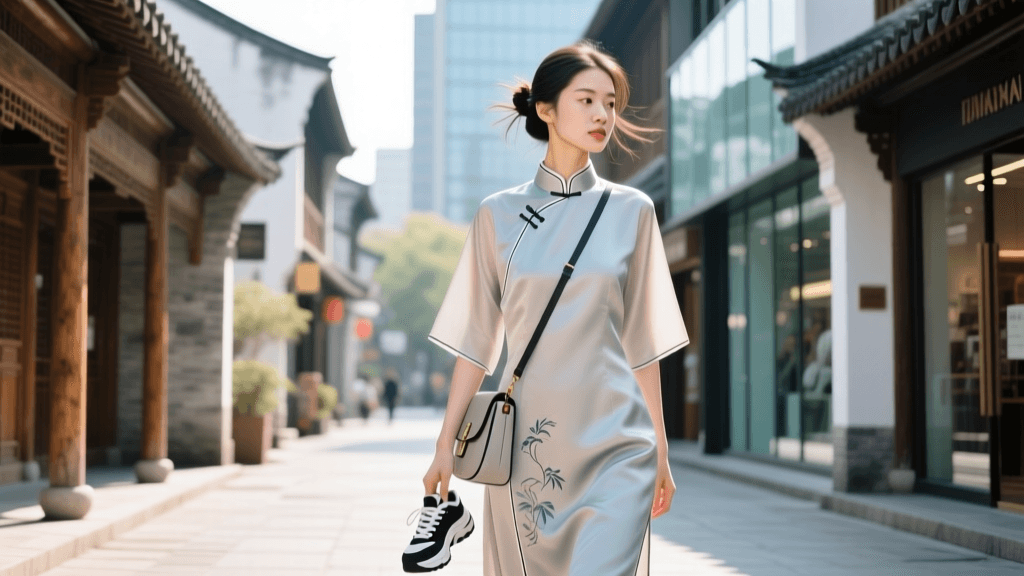
If you have scrolled through Douyin (the Chinese counterpart to TikTok) or Xiaohongshu recently, you have likely encountered the mesmerizing street snaps from Chengdu’s Taikoo Li or Hangzhou’s West Lake. Amidst the sea of global luxury brands and oversized streetwear, a distinct, homegrown aesthetic has taken over: Xin Zhongshi (New Chinese Style) and modernized daily Hanfu. This is not about wearing heavy, ceremonial museum replicas; it is about seamlessly integrating centuries-old silhouettes into the fast-paced, modern urban wardrobe.
The 'Guochao' (national trend) movement has propelled traditional garments from niche cosplay circles into mainstream street fashion. According to historical analyses of Chinese textiles, the evolution of Chinese clothing has always been marked by a blend of regional influences and material innovations. Today’s Douyin influencers are continuing this legacy by swapping delicate, high-maintenance silks for durable jacquards, and pairing Ming Dynasty skirts with leather moto jackets. The evolution of Hanfu from strictly historical reenactment to everyday streetwear represents a massive cultural shift, driven by young consumers eager to reclaim and modernize their heritage.
Deconstructing the Douyin Streetwear Look
To replicate the viral Douyin street fashion looks, you must understand the core garments that define the Xin Zhongshi aesthetic. Here is a practical breakdown of the essential pieces, complete with measurements, styling rules, and estimated costs.
1. The Everyday Mamianqun (Horse-Face Skirt)
The Mamianqun is the undisputed queen of modern Chinese street fashion. Characterized by its flat front and back panels with pleated sides, it is incredibly versatile.
- Measurements & Fit: For streetwear, avoid traditional floor-grazing lengths. Opt for a midi length (usually 85cm to 95cm) which hits right below the calf. This prevents the hem from catching on city grime or escalators. The waist is typically adjustable via tie-strings, accommodating a range of 65cm to 85cm.
- Fabric: Douyin influencers favor woven polyester jacquard or cotton-linen blends. These materials hold the pleats sharply in the wind and are machine-washable, unlike traditional silk.
- Styling: Pair a dark, woven Mamianqun with a fitted black turtleneck, an oversized vintage leather bomber jacket, and chunky combat boots.
- Cost: $30 to $75 USD on Taobao or independent Douyin storefronts.
2. The Modernized Song Dynasty Beizi (Open Jacket)
The Beizi is a long, open-front jacket with side slits that date back to the Song Dynasty. In the Xin Zhongshi movement, it is reimagined as a lightweight duster or summer trench coat.
- Measurements & Fit: Look for dropped shoulders and wide, flowing sleeves. The length should ideally fall just above the knee (around 100cm) for a balanced streetwear proportion.
- Details: Seek out modernized Pankou (frog knot buttons) made of matte metal or vegan leather rather than traditional silk thread, giving the garment an edgy, utilitarian vibe.
- Cost: $45 to $120 USD.
3. Hair Accessories and Jade Ornaments
Douyin fashion heavily incorporates traditional accessories, but with a modern twist. Heavy brass buyao (step hairpins) are replaced with lightweight acrylic or resin versions that mimic the look of carved jade and kingfisher feathers without the weight or ethical concerns. Velvet scrunchies embedded with genuine Hetian jade beads are a massive trend, costing between $10 and $25 USD. For necklaces, a simple black braided cord holding a single, uncarved jade donut pendant (Ping'an Kou) offers a minimalist nod to antiquity that pairs perfectly with graphic tees.
Style Comparison: Traditional vs. Xin Zhongshi vs. Douyin Fusion
Understanding the spectrum of Chinese traditional fashion is crucial for curating your wardrobe. Museums like the Victoria and Albert Museum highlight the intricate, highly structured nature of historical Asian garments, which contrasts sharply with today's street-ready adaptations.
| Feature | Traditional Hanfu | Xin Zhongshi (New Chinese) | Douyin Street Fusion |
|---|---|---|---|
| Skirt Silhouette | Floor-length Mamianqun or Baizhequn | Midi-length pleated skirts with subtle traditional motifs | Mini or asymmetrical skirts with Pankou hardware |
| Top Layer | Duijin Shan (cross-collar or parallel collar blouse) | Mandarin-collar shirts, modernized Tang suits | Oversized graphic tees or cropped hoodies |
| Outerwear | Pifeng (silk or brocade cape/shawl) | Trench coats with frog knot closures | Leather moto jackets, denim oversized jackets |
| Footwear | Embroidered cloth shoes (Xiu Xie) | Loafers, simple leather boots | Chunky sneakers, platform combat boots |
| Primary Fabric | Mulberry silk, raw silk, fine linen | Cotton-linen blends, light jacquard | Polyester jacquard, denim, vegan leather |
Actionable Shopping Guide: Keywords and Timing
To source authentic Xin Zhongshi and daily Hanfu pieces directly from Chinese manufacturers and Douyin influencers, you will need to navigate platforms like Taobao, Tmall, or Xiaohongshu. Since these platforms operate primarily in Mandarin, using the exact search terminology is vital.
Essential Search Terms (Copy and Paste)
- 新中式 (Xin Zhongshi): New Chinese Style. Use this for modernized, everyday traditional wear.
- 日常汉服 (Richang Hanfu): Daily Hanfu. This filters out the heavy, ceremonial wedding or photoshoot garments.
- 汉元素 (Han Yuansu): Han Elements. This yields modern Western clothing (like dresses or blouses) that feature traditional Chinese design motifs.
- 马面裙 (Mamianqun): Horse-face skirt. Add '短款' (short style) if you want a mini or knee-length version for streetwear.
- 国风穿搭 (Guofeng Chuanda): National Style Outfit. Great for finding full lookbooks and influencer styling guides.
When to Buy: Timing the Sales
Traditional garments see massive price drops during specific Chinese e-commerce festivals. The best time to build your Xin Zhongshi wardrobe is during the 618 Shopping Festival (mid-June) and the Singles’ Day Festival (November 11th). During these periods, boutique Douyin brands often offer 30% to 50% off bundle deals (e.g., buying a Mamianqun and a matching Beizi together). Additionally, look out for the 'Spring Collection' drops in late January, which feature heavy, winter-weight jacquard skirts perfect for layering.
Fabric Care for Modernized Traditional Wear
While Douyin street fashion favors durable materials over delicate historical silks, the intricate weaving of modern jacquards and the structural pleats of the Mamianqun require specific care to maintain their street-ready edge.
- Washing: Never machine-wash a Mamianqun on a standard cycle, as the agitation will destroy the heat-set pleats. Always use a fine mesh laundry bag, select the 'delicate' or 'hand wash' cycle, and use cold water (below 30°C).
- Drying: Never wring out jacquard or silk-blend fabrics. Roll the garment in a clean, dry towel to press out excess water, then hang it on a padded hanger in the shade. Direct sunlight will fade the rich, metallic threads often used in Xin Zhongshi patterns.
- Pleat Maintenance: If the side pleats of your skirt begin to lose their shape, lay the skirt flat on an ironing board. Use a low-heat steam iron, gently pressing the pleats back into place. For long-term storage, use specialized skirt clips to hang the Mamianqun by its waistband, allowing gravity to naturally maintain the pleat structure.
Conclusion: The Future of Asian Streetwear
The Douyin street fashion movement is proving that traditional Asian garments are not relics to be kept behind glass, but living, breathing elements of contemporary culture. By blending the architectural elegance of the Mamianqun and the Beizi with the gritty, utilitarian edge of modern streetwear, Xin Zhongshi offers a masterclass in cultural styling. Whether you are sourcing pieces directly from Taobao or adapting the silhouettes with local brands, embracing this trend is a powerful way to wear history on the modern streets.