Tang Dynasty Hanfu: Recreating Wu Zetian and Yang Guifei's Looks
The Golden Age of Tang Dynasty Fashion
The Tang Dynasty (618–907 CE) is universally celebrated as the golden age of Chinese arts, culture, and fashion. As the cosmopolitan capital of Chang'an attracted merchants, diplomats, and artisans from across the Silk Road, traditional Chinese clothing evolved to incorporate diverse, global influences. The era was characterized by bold silhouettes, vibrant colors, and luxurious textiles. According to the Metropolitan Museum of Art's Heilbrunn Timeline of Art History, the Tang period was marked by an unprecedented openness to foreign cultures, which deeply influenced local textile production and garment styling. Today, the modern hanfu revival frequently looks to this era for inspiration. By examining the wardrobes of two of the most famous women in Chinese history—Empress Wu Zetian and Imperial Consort Yang Guifei—we can uncover the foundational elements of Tang fashion and learn how to accurately recreate these iconic looks today.
Empress Wu Zetian: Power Dressing in the Tang Court
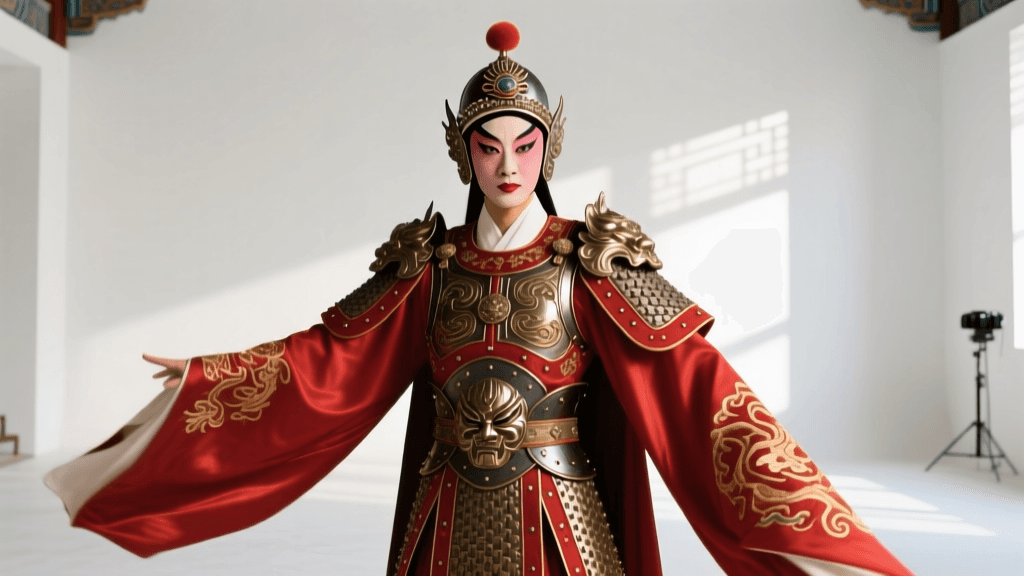
Wu Zetian, the first and only female emperor in Chinese history, utilized fashion as a potent tool for political legitimacy and authority. While Tang women frequently wore the standard high-waisted skirts, Wu Zetian was often depicted in the Yuanlingpao (round-collar robe), a garment traditionally reserved for male officials and the emperor. By adopting this structured, masculine-leaning silhouette, she visually asserted her right to rule. Her Yuanlingpao featured narrow sleeves for practicality, a structured leather belt to cinch the waist, and bold, commanding colors like deep crimson, imperial yellow, and dark indigo. For the modern hanfu enthusiast, the female Yuanlingpao is an incredibly versatile piece. It functions beautifully as a streetwear fusion jacket or a formal outer layer, offering a sharp, androgynous elegance that contrasts with the flowing skirts typical of the era.
Yang Guifei: The Epitome of Tang Elegance and the Qixiong Ruqun
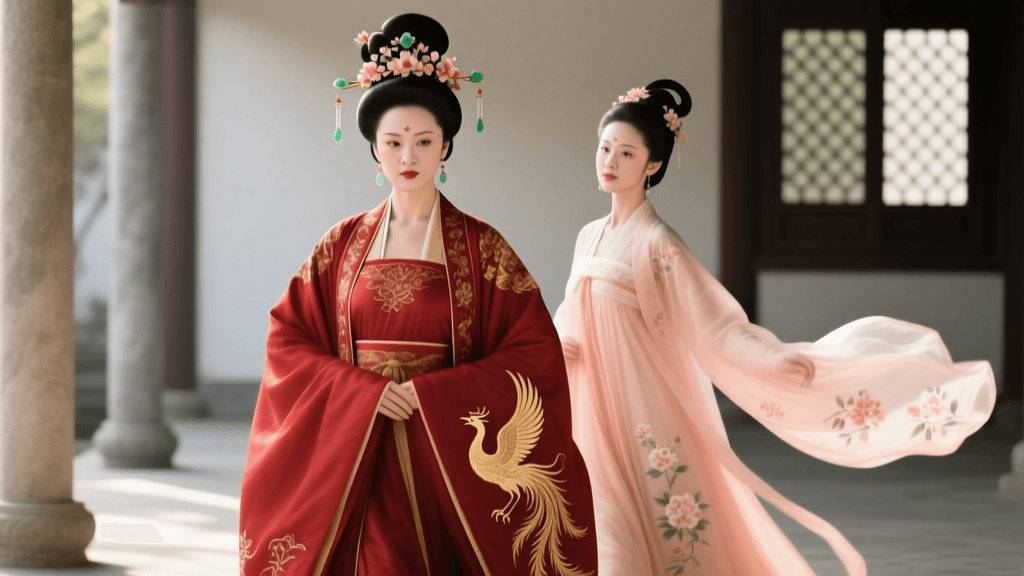
If Wu Zetian represented the authority of the Tang court, Yang Guifei (Imperial Consort Yang) represented its romantic, artistic, and opulent zenith. Yang Guifei is historically synonymous with the Qixiong Ruqun (chest-high tied skirt) and the Pibo (silk shawl). Historical records and court paintings, such as Zhou Fang's 'Court Ladies Adorning Their Hair with Flowers', depict women of her status in voluminous, high-waisted skirts that tied above the bust, elongating the lower body and creating a statuesque, flowing silhouette. The broader historical context of the era, noted by Encyclopedia Britannica, highlights a society that celebrated opulence and the arts, which was perfectly mirrored in Yang Guifei's wardrobe. Her outfits heavily featured Banbi (half-sleeve jackets) layered over sheer, gauzy silk tops, paired with heavily pleated skirts made of intricate brocade or lightweight chiffon. The Pibo, a long silk ribbon draped over the arms, added an ethereal, floating quality to her movements, establishing a standard of beauty that still influences Chinese aesthetics today.
Comparison Chart: Wu Zetian vs. Yang Guifei Signature Styles
To better understand how to approach these two distinct historical aesthetics, refer to the comparison table below. This chart breaks down the core garments, textiles, and modern applications for each iconic figure's wardrobe.
| Feature | Wu Zetian (Authority & Structure) | Yang Guifei (Romance & Elegance) |
|---|---|---|
| Primary Garment | Yuanlingpao (Round-collar robe) | Qixiong Ruqun (Chest-high skirt) |
| Outerwear / Layers | Leather belt, Putou (headwear) | Banbi (Half-sleeve jacket), Pibo (Silk shawl) |
| Color Palette | Crimson, Imperial Yellow, Black, Indigo | Peony Pink, Celadon, Pastels, Gold accents |
| Primary Textile | Heavy brocade, structured damask | Sheer silk gauze, soft chiffon, light jacquard |
| Modern Hanfu Use | Formal events, streetwear fusion, daily wear | Festivals, photoshoots, traditional dance |
Actionable Guide: Sourcing and Styling Tang-Style Hanfu Today
The modern hanfu revival, extensively documented by The World of Chinese, has made historical garments more accessible than ever. However, achieving an accurate Tang Dynasty silhouette requires attention to specific measurements, fabric choices, and styling techniques. Below is a practical guide to sourcing and wearing the iconic Qixiong Ruqun and Yuanlingpao.
1. Measurements and Fit for the Qixiong Ruqun
The most common mistake modern buyers make with the chest-high skirt is ordering based on their natural waist. The Qixiong Ruqun sits above the bust. When ordering from Taobao boutiques or international hanfu vendors, you must provide your upper bust (overbust)underbust measurements.
- Skirt Length: For a wearer who is 165 cm (5'5") tall, order a skirt length of 115 cm to 120 cm. The skirt should graze the top of your foot, allowing for a 5 cm hem allowance to prevent dragging.
- Hem Circumference: To achieve the voluminous, sweeping look seen in Tang dynasty paintings, ensure the skirt hem is at least 3 meters (approx. 3.2 yards). A 1.5-meter hem will look narrow and modern, breaking the historical illusion.
- Tying Straps: Authentic Tang skirts use long, dual-layer silk ties. Ensure the straps are at least 1.5 meters long each to allow for the traditional front-knot or back-tie styling.
2. Fabric Choices and Budgeting
Textile choice dictates the drape and authenticity of your outfit. Tang courtiers favored lightweight silks for summer and heavy, patterned brocades for winter.
- Entry-Level ($35 - $60 USD): Look for polyester jacquard and chiffon. While not historically accurate in material, high-quality polyester jacquard mimics the woven patterns of Tang brocade and is highly durable for outdoor festivals and conventions.
- Mid-Tier ($70 - $120 USD): Viscose blends and cotton-silk mixes offer a more natural drape and better breathability. Seek out skirts with metallic foil stamping to replicate the gold-thread weaving techniques of the era.
- Luxury / Museum Grade ($150 - $300+ USD): Authentic mulberry silk, silk gauze (Luo), and Xiangyunsha (gambiered Canton gauze). These fabrics offer the ethereal, translucent layering effect essential for the Yang Guifei aesthetic. When wearing sheer silk gauze tops, it is historically accurate to wear a contrasting Moxiong (tube top) underneath.
3. Sourcing Reputable Brands
For accurate Tang-style silhouettes, avoid generic costume shops. Look for specialized hanfu brands that base their patterns on unearthed artifacts and tomb murals. Brands like Shisui (known for meticulous Tang and Song replicas) and Chenghua Tang offer excellent structural accuracy. When shopping on international platforms, search for specific terms like 'Tang Dynasty Qixiong Ruqun 3-meter hem' to filter out modernized, inaccurate costumes.
4. Mastering the Pibo (Silk Shawl) Drape
The Pibo is the defining accessory of the Yang Guifei look, but it is notoriously difficult to style without it slipping off.
- Dimensions: Your Pibo should be at least 2.5 meters long and 30 cm wide. Shorter shawls will not achieve the dramatic, trailing effect.
- The Drape Technique: Drape the center of the shawl over the back of your neck. Bring both ends forward over your shoulders. Cross the ends over your chest, then loop them over your forearms just above the elbow. Let the remaining fabric hang down past your wrists.
- Friction Hack: Because silk and chiffon are slippery, use two small, clear silicone garment clips hidden under the arms to secure the shawl to the sleeves of your inner top (Shan). This allows you to move, dance, and pose without constantly adjusting the fabric.
Conclusion
The wardrobes of Wu Zetian and Yang Guifei offer a masterclass in the power of silhouette, color, and textile manipulation. Whether you are drawn to the commanding, structured elegance of the Yuanlingpao or the romantic, flowing grace of the Qixiong Ruqun, Tang Dynasty hanfu provides a deeply rewarding avenue for historical exploration. By paying close attention to precise measurements, investing in the correct hem circumference, and mastering the art of the Pibo drape, modern wearers can step into the golden age of Chinese fashion with both historical reverence and striking visual impact.