Peking Opera Costumes: Sourcing Mang Robes and Kao Armor
Introduction to the Peking Opera Wardrobe (Xingtou)
The visual spectacle of Peking Opera (Jingju) is inextricably linked to its elaborate costume system, known collectively as Xingtou. Unlike Western theatrical traditions where costumes are often designed to reflect a specific historical era, traditional Chinese opera costumes are stylized, symbolic, and largely transcend specific dynasties. According to UNESCO's Intangible Cultural Heritage registry, the intricate craftsmanship and symbolic color-coding of these garments are vital components of this centuries-old art form. For modern cultural festival organizers, theater troupes, and heritage performers, sourcing authentic, performance-ready Peking Opera garments requires a deep understanding of their construction, sizing, and stage mechanics.
This guide focuses on the two most iconic and complex garments in the Jingju wardrobe: the Mang (Python Court Robe) and the Kao (Martial Armor). Whether you are outfitting a professional troupe or preparing for a major Asian heritage festival, understanding the practicalities of these garments is essential for a flawless performance.
The Mang (Python Robe): Courtly Elegance on Stage
The Mang is the formal court robe worn by emperors, high-ranking officials, and noble characters. Despite its name, the 'python' motif is virtually indistinguishable from the imperial dragon, typically featuring five claws to denote supreme authority on stage. The robe is characterized by its deep, flowing cut, side slits for movement, and the iconic 'water sleeves' (shuixiu) attached to the cuffs.
Sizing and Measurements for the Mang
Unlike modern Western clothing, the Mang is designed to be overwhelmingly large to create a majestic, imposing silhouette. When ordering from theatrical suppliers in Beijing or Suzhou, you must provide specific performance measurements rather than standard tailoring metrics:
- Body Length: Measure from the C7 vertebra (base of the neck) down to the performer's ankle bone. Standard lengths range from 130 cm to 150 cm.
- Sleeve and Water Sleeve Drop: The base sleeve should reach the wrist. The attached white silk water sleeves must be measured based on the performer's skill level. Beginners should order 60 cm extensions, while advanced performers manipulating complex sleeve choreography require 100 cm to 120 cm extensions.
- Shoulder Width: The Mang features structured, padded shoulders. Provide the exact shoulder span to ensure the internal bamboo or cotton padding aligns correctly with the performer's frame.
Material, Tiers, and Cost Breakdown
The cost of a Mang robe varies wildly based on the embroidery technique and base fabric. The renowned Britannica encyclopedia of Asian performing arts notes that traditional Suzhou embroidery (Su Xiu) is the gold standard for these garments, utilizing gold and silver couching threads.
- Festival/Amateur Grade ($150 - $300): Made from high-density polyester with machine embroidery. Ideal for outdoor cultural festivals where weather and frequent washing are concerns. The gold thread is synthetic but visually effective from a distance.
- Performance/Troupe Grade ($400 - $800): Silk-blend bases with dense, semi-hand-embroidered motifs. The water sleeves are made of premium Habotai silk, allowing for fluid, snapping movements during choreography.
- Cinematic/Master Grade ($1,500 - $5,000+): 100% heavy silk satin with entirely hand-embroidered gold bullion thread. Reserved for lead performers in major state-sponsored productions.
Timing Tip: Custom-embroidered Mang robes require a minimum lead time of 6 to 8 weeks. Always order well ahead of the lunar new year or major autumn festival seasons when ateliers are backlogged.
The Kao (Armor): Martial Heroism and Stage Combat
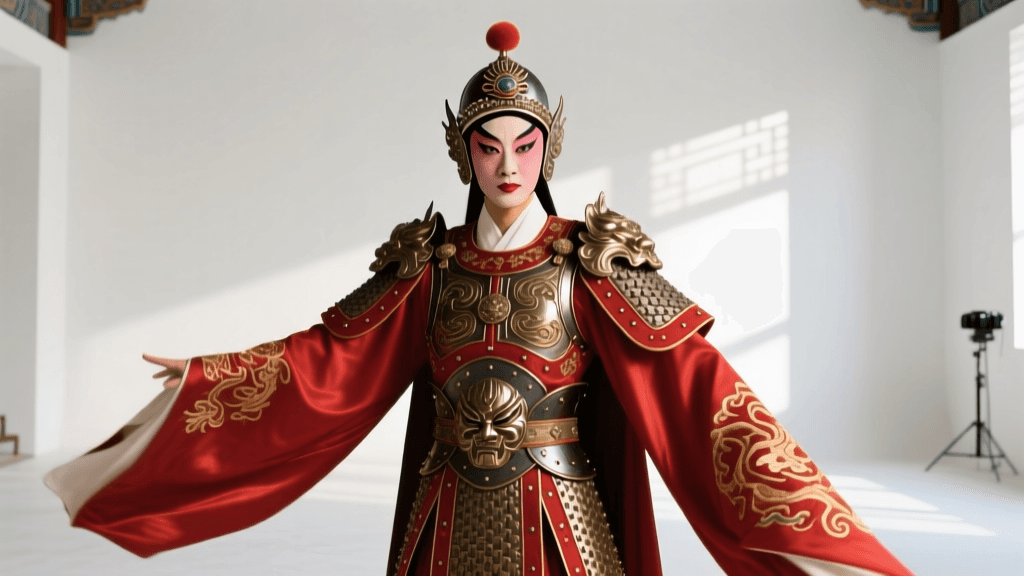
The Kao is the stylized armor worn by generals and martial heroes (Wusheng and Wudan). It is a marvel of theatrical engineering, designed to look like heavy plate armor while allowing the performer to execute acrobatic flips, high kicks, and complex spear choreography. The Kao is divided into two main categories: the Hard Kao (with four flags attached to the back) and the Soft Kao (without flags, used for lighter combat roles).
Anatomy and Rigging of the Hard Kao
The Hard Kao is incredibly complex to don. It consists of the front breastplate, the back plate, the shoulder tiger-head pads, and the lower skirt panels. The most striking feature is the Kaoqi—the four triangular flags mounted on the back, which represent the general's commanding authority and visually amplify the performer's movements during spins and leaps.
'The rigging of the Kao flags is an art in itself. The flags must be anchored to a specialized leather harness worn beneath the armor, distributing the 10-to-15-pound weight across the performer's hips and shoulders rather than the spine. If rigged improperly, the centrifugal force of a stage spin can cause severe neck strain.' — Master Wardrobe Technician, National Centre for the Performing Arts.
Practical Tips for Movement and Festival Logistics
Performing in a Kao at an outdoor Asian heritage festival presents unique challenges. The flags act like sails in the wind, which can throw off a performer's balance during acrobatic routines. For outdoor festivals, consider the following actionable advice:
- Wind Mitigation: If wind speeds exceed 15 mph, swap the traditional stiff silk flags for weighted, flexible mesh alternatives, or remove the flags entirely and perform in a Soft Kao configuration.
- Hydration and Ventilation: The layered padding of the Kao traps immense body heat. Performers must wear moisture-wicking compression garments beneath the cotton under-tunic (shuiyi) to prevent heat exhaustion during summer festivals.
- Quick-Change Rigging: In festival settings where quick changes are necessary, invest in modern Velcro-adapted harnesses for the shoulder pads and waist belts. While traditionalists use silk sashes and complex knots, Velcro adaptations can reduce dressing time from 25 minutes to under 8 minutes without being visible to the audience.
Comparison Chart: Mang vs. Kao for Festival Performers
When planning a festival lineup or a theatrical production, understanding the logistical footprint of these costumes is vital for stage managers and wardrobe supervisors.
| Feature | Mang (Court Robe) | Hard Kao (Armor with Flags) | Soft Kao (Armor, No Flags) |
|---|---|---|---|
| Role Type | Emperors, Officials, Nobles | Commanding Generals, Martial Leads | Scouts, Light Infantry, Acrobats |
| Average Weight | 3 - 5 lbs (1.5 - 2.2 kg) | 12 - 18 lbs (5.5 - 8 kg) | 6 - 9 lbs (2.7 - 4 kg) |
| Dressing Time | 10 - 15 minutes | 25 - 40 minutes | 15 - 20 minutes |
| Mobility Restriction | Low (Restricts fast running) | High (Limits deep bends/flips) | Low (Allows full acrobatics) |
| Festival Cost (Mid-Tier) | $400 - $600 | $700 - $1,200 | $450 - $750 |
Water Sleeves (Shuixiu): The Soul of Expression
Both the Mang and certain softer martial garments utilize Shuixiu, or water sleeves. These elongated white silk cuffs are extensions of the performer's emotional vocabulary. The Smithsonian Folklife Festival's exploration of Chinese performing arts highlights how the flick, fold, and tremble of the water sleeve can convey sorrow, anger, or joy without a single spoken word.
When sourcing replacement water sleeves for existing costumes, ensure you purchase 100% mulberry silk. Polyester blends lack the necessary weight and 'snap' required for techniques like the tousui (throwing the sleeve outward) or the zhuaixiu (flinging the sleeve in anger). Standard width for the cuff attachment is 33 cm, tapering slightly toward the end. Always store water sleeves rolled, never folded, to prevent permanent creases that ruin the visual line during performances.
Maintenance and Storage of Theatrical Silks
The investment in high-quality Jingju costumes requires rigorous maintenance protocols. The metallic threads used in Mang embroidery are highly susceptible to oxidation and tarnishing when exposed to humidity and human sweat.
- Post-Performance Care: Never hang a sweaty Mang or Kao in a closed garment bag. Air-dry the garments on wide, padded wooden hangers in a climate-controlled room (ideally 45-55% humidity) for 24 hours before storage.
- Spot Cleaning: The water sleeves and inner collars (huling) are designed to be detachable. Remove and hand-wash these white silk components with mild, pH-neutral detergent after every single use. The main body of the Mang should never be submerged in water; use specialized theatrical dry-cleaning sprays and a soft-bristled brush to remove surface dust.
- Long-Term Storage: Wrap embroidered garments in unbleached, acid-free muslin cloth. Never use plastic dry-cleaning bags, as trapped off-gassing will degrade the silk fibers and tarnish the gold couching threads. Store the Kao flags flat in archival boxes to prevent the bamboo or fiberglass internal spines from warping.
Conclusion
Acquiring and managing Peking Opera costumes is a significant logistical and financial undertaking, but the payoff is a visually breathtaking representation of Asian theatrical heritage. By understanding the precise measurements required for the Mang, the complex rigging of the Kao, and the strict maintenance protocols for theatrical silks, festival organizers and troupe directors can ensure these magnificent garments endure for generations of performances to come. Whether staging a grand martial epic or a subtle court drama, respecting the engineering and artistry of the Xingtou is the first step toward a flawless production.