Neo-Hanfu Fusion: Styling the Mamianqun for Modern Wardrobes
The Resurgence of the Mamianqun in Modern Fashion
The intersection of historical heritage and contemporary street style has given rise to one of the most fascinating fashion movements of the 21st century: the Neo-Hanfu revival. While traditional Hanfu encompasses a vast array of silhouettes from millennia of Chinese history, one specific garment has broken through the boundaries of cosplay and historical reenactment to become a staple in modern, everyday wardrobes: the Mamianqun, or 'horse-face skirt.' Originating in the Song Dynasty and popularized during the Ming Dynasty, the Mamianqun is characterized by its flat front and back panels (known as 'skirt doors') flanked by intricate, structured pleats.
According to cultural analysts, the modern Hanfu movement is no longer just about historical accuracy; it is about cultural reclamation and everyday integration. As noted by BBC Culture, young Chinese consumers are increasingly blending ancient silhouettes with modern aesthetics to forge a unique sartorial identity that honors the past while functioning in the fast-paced present. This fusion approach, often termed 'Neo-Hanfu,' prioritizes wearable fabrics, practical lengths, and versatile styling, making the Mamianqun the ultimate canvas for modern fashion experimentation.
Anatomy of the Mamianqun: Why It Works for Fusion
To successfully style the Mamianqun in a modern context, one must understand its structural brilliance. Unlike a standard gathered skirt, the Mamianqun is a wrap skirt constructed from two overlapping pieces of fabric. The flat 'doors' at the front and back provide a sleek, slimming silhouette that mimics the clean lines of modern pencil or A-line skirts, while the side pleats offer dramatic volume and ease of movement. This architectural duality is exactly what makes it so amenable to fusion fashion. The flat panels can easily accommodate modern tops tucked in without adding bulk to the waist, while the pleats provide a kinetic, avant-garde edge that pairs beautifully with structured outerwear.
Modern Fusion: Styling the Mamianqun for Everyday Wear
Integrating a historically significant garment into a modern wardrobe requires a balance of proportions, textures, and cultural respect. Here is how to style the Mamianqun for two distinct modern environments: the corporate boardroom and the urban street.
1. Corporate Chic: The Boardroom Adaptation
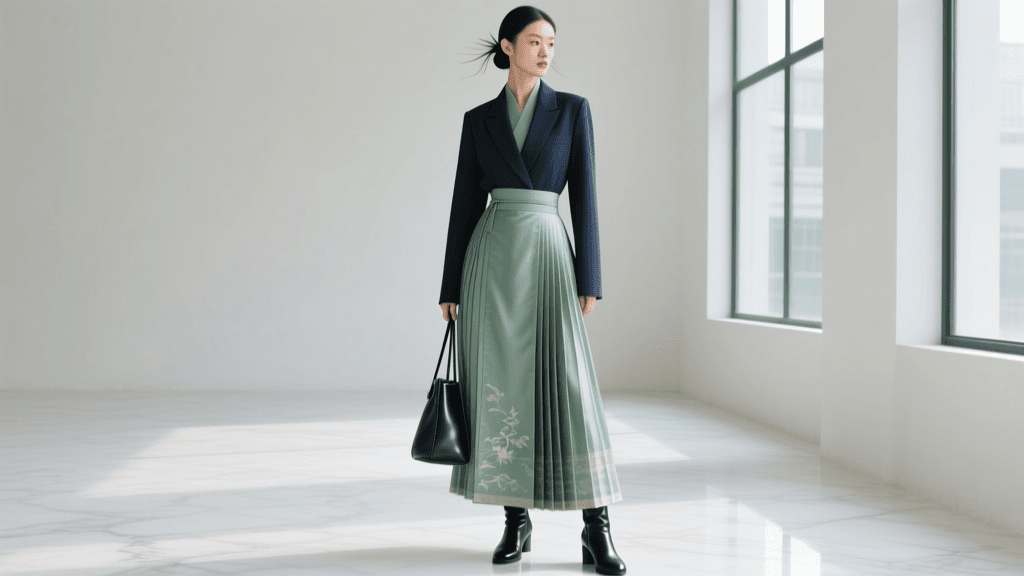
The Mamianqun can easily replace the standard midi skirt in a professional setting if styled with deliberate restraint. The key to corporate fusion is minimizing the 'costume' element and maximizing the 'couture' element.
- The Skirt: Opt for a midi-length Mamianqun (approximately 85cm to 90cm from the natural waist, hitting just below the calf). Choose solid, muted tones like navy, charcoal, dark emerald, or burgundy. Avoid loud, traditional embroidered dragons or phoenixes; instead, look for subtle, tonal jacquard weaves or minimalist geometric patterns.
- The Top: Pair the skirt with a high-neck, long-sleeved silk blouse or a fitted, ribbed merino wool turtleneck. Tuck the top neatly into the waistband to highlight the flat front panel.
- The Outerwear: An oversized, structured blazer (think brands like Shushu/Tong or a classic Zara masculine-fit blazer) creates a striking contrast between the fluid pleats of the skirt and the sharp shoulders of the jacket.
- Footwear: Pointed-toe leather ankle boots with a modest 5cm block heel. The pointed toe elongates the leg and peeks out elegantly from beneath the pleats when walking.
2. Urban Streetwear: The Edgy Adaptation
Streetwear thrives on juxtaposition, and the Mamianqun offers a dramatic silhouette that pairs exceptionally well with contemporary urban staples. The global conversation around the skirt intensified after a high-profile controversy involving a Western luxury brand appropriating the Mamianqun silhouette, which sparked a fierce wave of cultural pride and local styling innovations, as reported by the South China Morning Post.
- The Skirt: A shorter, ankle-grazing or midi Mamianqun in high-contrast colors, metallic threads, or modern prints (like houndstooth or tartan, which surprisingly echo the pleated structures of punk fashion).
- The Top: A cropped, heavy-weight graphic tee or a fitted ribbed tank top. The cropped length should hit exactly at the top of the skirt's waistband to avoid cutting the torso awkwardly.
- Layering: Add a tactical harness belt over the skirt's waistband to introduce a cyberpunk or tech-wear element. A cropped leather moto jacket or an oversized distressed denim jacket completes the look.
- Footwear: Chunky sneakers (such as the New Balance 990v5 or Balenciaga Track) or heavy combat boots like Dr. Martens Jadon. The heavy footwear grounds the voluminous pleats and anchors the outfit in modern street culture.
Seasonal Adaptations: Fabrics and Timing
One of the greatest advantages of the Neo-Hanfu market is its adaptation to modern seasonal needs. Traditional garments were often limited by the textile technologies of their time, but modern fusion allows for year-round wearability.
Spring/Summer: Look for Mamianqun crafted from lightweight chiffon, organza, or Tencel blends. These fabrics allow the pleats to float and catch the wind. To prevent the skirt from clinging, ensure the garment includes a breathable cotton or silk lining. Cost for these lightweight versions typically ranges from $40 to $80 USD.
Autumn/Winter: Transition to wool-blend jacquards, heavy crepes, or even vegan leather. A dark, wool-blend Mamianqun paired with opaque fleece-lined tights and knee-high leather boots is a highly practical, warm, and visually stunning winter outfit. Winter-weight skirts require more precise tailoring to ensure the pleats hold their shape despite the heavier fabric, pushing the price point to $90 - $200 USD.
Sizing, Costs, and Sourcing Your Mamianqun
Buying a Mamianqun, especially from Chinese indie brands or platforms like Taobao, requires an understanding of traditional sizing, which differs vastly from Western fast fashion. Because the Mamianqun is a wrap skirt, it does not rely on zippers or buttons. Instead, it ties at the waist using extended fabric ribbons.
Crucial Measurement: The most important metric is your natural waist circumference. Unlike modern skirts that sit on the hips, the Mamianqun must be worn at the narrowest part of your waist to support the weight of the pleats. If your waist is 70cm, you should order a skirt with a waistband length of at least 85cm to allow for the necessary overlap and tie-off. A skirt that is too small will gap at the front 'door,' while one that is too large will bulk uncomfortably at the sides.
For authentic, high-quality fusion pieces, consumers often turn to established Neo-Hanfu indie brands like Minghua Hall or Shisanyu, which bridge the gap between historical accuracy and modern wearability. As detailed in analyses of the Hanfu Movement by RadiiChina, these brands have built multi-million dollar ecosystems by catering to young professionals who demand historical respect mixed with modern convenience.
Comparison Chart: Traditional vs. Neo-Hanfu Mamianqun
| Feature | Traditional / Historical Replica | Neo-Hanfu / Modern Fusion |
|---|---|---|
| Fabric | 100% Silk, raw linen, heavy brocade | Polyester jacquard, wool blends, chiffon, Tencel |
| Length | Maxi (100cm+), often sweeping the floor | Midi to Maxi (80cm - 95cm), practical for walking |
| Waistband | White cotton/linen tie (hidden under tops) | Matching fabric tie, sometimes with modern hook-and-eye clasps |
| Motifs | Dragons, phoenixes, lotus, historical weaves | Solids, houndstooth, subtle florals, geometric jacquards |
| Pleat Setting | Hand-pressed, requires frequent maintenance | Machine-heat-set for permanent, wash-resistant pleats |
| Price Range | $250 - $1,000+ USD | $40 - $200 USD |
Caring for Your Fusion Garments
Maintaining the crisp, architectural pleats of a Mamianqun is the most challenging aspect of ownership. Modern heat-set pleats in polyester or wool blends are highly resilient, but they still require specific care. Never machine wash a Mamianqun on a spin cycle, as the agitation will twist the pleats out of alignment. Instead, hand wash in cold water with a mild detergent or use a professional dry cleaner.
When drying, hang the skirt by the waistband in a shaded area. Once dry, if the pleats need refreshing, lay the skirt flat on an ironing board, align the pleats by hand, pin them down, and use a steam iron on a low setting, pressing gently. Store the skirt hanging in a breathable garment bag; folding a Mamianqun will permanently damage the structural integrity of the 'skirt doors' and side pleats.
Conclusion
The Mamianqun is no longer confined to museum archives or historical drama sets. Through the lens of modern fusion fashion, it has been reborn as a versatile, powerful garment that commands attention in both corporate and street environments. By understanding its unique structure, respecting its cultural origins, and applying contemporary styling techniques, fashion enthusiasts can seamlessly weave centuries of Asian tradition into the fabric of modern daily life.