Sen no Rikyu: The Tea Master Who Shaped Wabi-Sabi Kimono Style
The Architect of Rustic Elegance
In the pantheon of Japanese historical figures, few have left as indelible a mark on the nation’s aesthetic consciousness as Sen no Rikyu (1522–1591). As the preeminent tea master of the Azuchi-Momoyama period, Rikyu did not merely refine the Japanese tea ceremony (chanoyu); he fundamentally rewired the Japanese approach to beauty, space, and textiles. While the warlords of his era, such as Oda Nobunaga and Toyotomi Hideyoshi, favored ostentatious displays of wealth through heavy gold brocades and flamboyant silk weaves, Rikyu championed wabi-sabi—the profound appreciation of the imperfect, the impermanent, and the understated.
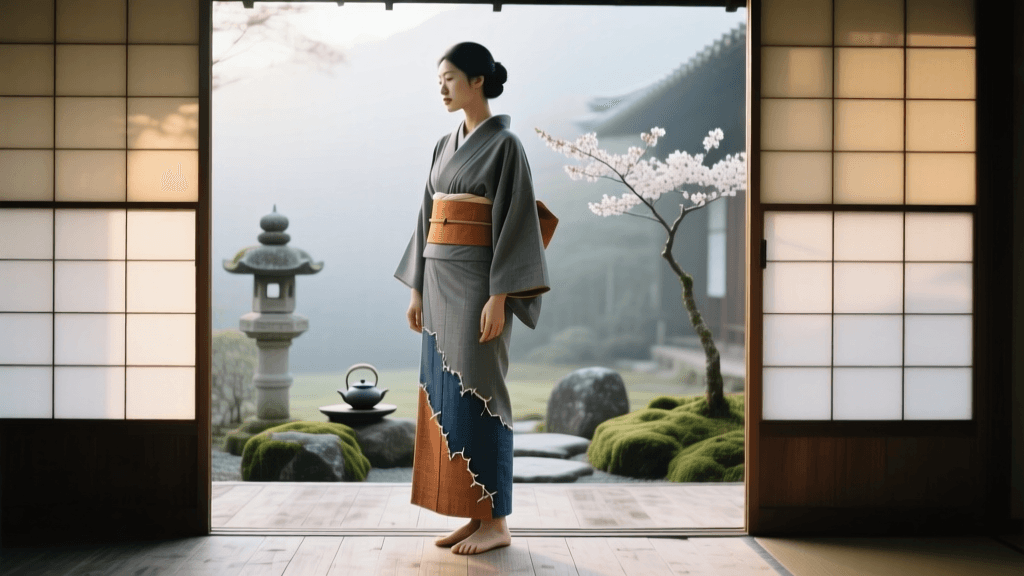
This philosophical rebellion against opulence birthed a revolutionary approach to fashion. Rikyu’s influence dictated what was worn inside the tea room, giving rise to chafuku (tea ceremony attire) that prioritized natural textures, muted earth tones, and a quiet dignity over flashy status symbols. Today, the legacy of Sen no Rikyu remains a cornerstone of Japanese kimono styling, offering modern wearers a masterclass in subtle elegance.
From Gold Brocade to Earthy Tsumugi: Rikyu’s Textile Revolution
During the late 16th century, the Japanese elite were obsessed with kinran (gold-thread brocade) and nishiki (richly patterned silk). These fabrics were loud, stiff, and designed to catch the light in grand castles. Rikyu, however, believed that the tea room was a sanctuary of equality and spiritual grounding. According to the Metropolitan Museum of Art’s historical archives on Chanoyu, the tea room's rustic architecture required garments that harmonized with mud walls, tatami mats, and unglazed ceramics.
The Philosophy of Kirei-Sabi in Garments
Rikyu introduced the concept of kirei-sabi (beautiful patina) to textiles. He favored tsumugi (pongee silk), which is woven from the uneven threads of pierced cocoons, resulting in a fabric that is matte, slightly nubby, and deeply tactile. He also embraced asa (hemp and linen) and momen (cotton). These materials were traditionally associated with peasants and merchants, but Rikyu elevated them to the height of aristocratic fashion by focusing on the mastery of the dye and the weave rather than the cost of the raw material.
The Colors of Rikyu: A Masterclass in Muted Palettes
Rikyu’s color preferences were so influential that several shades were named after him. These colors remain staples in the modern kimono wardrobe, particularly for autumn and winter tea gatherings.
- Rikyu-cha (Rikyu Tea): A grayish, olive-green hue that mimics the color of dried tea leaves and moss. It is incredibly versatile and pairs beautifully with almost any obi color.
- Rikyu-nezumi (Rikyu Gray): A warm, brownish-gray that evokes the color of ash or weathered wood. Unlike cool, blue-based grays, Rikyu-nezumi has an underlying warmth that flatters the complexion.
- Susutake-iro (Aged Bamboo): A deep, yellowish-brown that represents the natural aging process of bamboo, a core material in tea room construction.
Actionable Guide: Styling a Wabi-Sabi Kimono Ensemble Today
Incorporating Rikyu’s wabi-sabi philosophy into your modern kimono wardrobe does not require you to be a tea master. It requires a shift in focus from brand-new perfection to textured authenticity. Here is how to build a Rikyu-inspired ensemble, complete with specific fabric recommendations and styling metrics.
1. Selecting the Right Fabric and Texture
Opt for matte, textured silks or high-quality plant fibers. Avoid glossy rinzu (satin damask) or modern synthetic blends that reflect light.
- Yuki Tsumugi: The pinnacle of pongee silk. It is lightweight, breathable, and features a subtle, uneven texture. Cost: $800–$2,500 for new, but vintage pieces can be found for $150–$300.
- Oshima Tsumugi: Mud-dyed silk from Amami Oshima. It features intricate, subdued geometric patterns woven into the fabric rather than dyed on top. Cost: $200–$600 on the vintage market.
- Shibori Linen (Asa): For summer, choose linen with shibori (tie-dye) texturing. The physical crinkles in the fabric perfectly embody the wabi-sabi love for irregularity.
2. The Anatomy of a Wabi-Sabi Outfit
Every layer of the garment should reflect a connection to nature and a sense of understated restraint.
- Juban (Undergarment): Use an unbleached cotton or subtle linen han-juban. The han-eri (collar) should be a soft, off-white or pale gray, avoiding stark, blinding white.
- Kimono: A solid Rikyu-cha tsumugi with a single, subtle family crest (kamon), or no crest at all for a more relaxed, rustic feel.
- Obi (Sash): A Hakata-ori obi. This stiff, ribbed silk from Fukuoka is deeply traditional and lacks the shiny gold foil of formal brocades. Choose a color like deep rust, indigo, or pine green.
- Obijime (Cord): A braided cotton or matte silk cord in a contrasting earth tone. Avoid cords with metallic threads or glass bead obidome (clasps).
- Footwear: Zori sandals with woven rattan, bamboo, or rush grass soles, paired with unbleached or pale gray tabi socks.
3. Embracing Imperfection (The Art of Vintage)
The true essence of wabi-sabi is found in the passage of time. When sourcing kimono, look for vintage pieces that show slight, artful fading on the shoulders or hem. In the Japanese textile tradition, minor mending or the softening of the silk over decades is not seen as damage, but as a record of the garment's life. The Victoria and Albert Museum’s extensive kimono archives frequently highlight how historical Japanese garments were unpicked, re-dyed, and re-woven, celebrating the lifecycle of the textile.
Comparison Chart: Ostentatious vs. Wabi-Sabi Kimono Styling
Understanding the contrast between the prevailing fashion of the Momoyama period and Rikyu’s lasting legacy helps clarify how to make mindful styling choices today.
| Feature | Pre-Rikyu (Momoyama Opulence) | Rikyu’s Wabi-Sabi Legacy | Modern Actionable Equivalent |
|---|---|---|---|
| Fabric | Heavy gold brocade (Kinran), glossy satin | Matte pongee silk (Tsumugi), hemp, cotton | Vintage Oshima Tsumugi or textured linen |
| Color Palette | Vivid reds, bright golds, stark contrasts | Earthy greens, ash grays, muted browns | Rikyu-cha (olive-gray) or Susutake-iro |
| Motifs | Large, bold pheasants, dragons, sprawling florals | No motifs, or tiny, subtle woven geometric patterns | Solid colors or micro-patterns (Komon) |
| Obi Style | Thick, heavily embroidered Fukuro obi with gold foil | Stiff, ribbed Hakata-ori or simple indigo-dyed cotton | Matte silk Nagoya obi in a dark, muted tone |
| Overall Silhouette | Rigid, heavily padded, demanding attention | Relaxed, natural drape, blending with the environment | Softer Ohashori (waist fold), natural shoulders |
Sourcing Authentic Wabi-Sabi Textiles
To build a wardrobe that honors Sen no Rikyu’s aesthetic, skip the modern, mass-produced department store kimono sections. Instead, seek out antique markets where the patina of time has already done the work for you.
- Toji Temple Kobo-san Market (Kyoto): Held on the 21st of every month, this market is a treasure trove for vintage tsumugi and rustic asa kimono. Expect to pay between $30 and $150 for high-quality, unblemished vintage pieces.
- Oedo Antique Market (Tokyo): Held on the 1st and 3rd Sundays at the Tokyo International Forum. This is the premier destination for serious textile collectors. You can find Edo-period indigo-dyed work garments (noragi) that have been repurposed into stunning, wabi-sabi statement pieces.
- Online Sourcing: When searching online auction sites or specialized kimono exporters, use specific search terms like Yuki Tsumugi, Kasuri (ikat weave), and Shibori Asa to filter out modern synthetics and glossy silks.
Conclusion
Sen no Rikyu’s fashion legacy is a testament to the idea that true luxury does not shout; it whispers. By stripping away the gold and the gloss, Rikyu revealed the profound beauty hidden in the uneven thread of a silk cocoon and the quiet, mossy green of a tea leaf. For the modern kimono enthusiast, adopting the wabi-sabi aesthetic is not just a stylistic choice—it is a mindful practice. It encourages us to slow down, to appreciate the tactile nature of our clothing, and to find elegance in the quiet, imperfect moments of daily life. Whether you are preparing for a formal tea gathering or simply dressing for a crisp autumn walk, a Rikyu-inspired ensemble ensures you carry centuries of refined, rustic grace with every step.