Tang Dynasty Imperial Fashion: Recreating Iconic Hanfu Looks
The Allure of Tang Dynasty Imperial Fashion
The Tang Dynasty (618–907 CE) is universally celebrated as the golden age of Chinese arts, culture, and fashion. Characterized by cosmopolitan openness, immense wealth, and Silk Road trade, the era produced some of the most breathtaking silhouettes in the history of global textiles. According to the Encyclopædia Britannica, the Tang era was marked by unprecedented prosperity that allowed the imperial court to elevate clothing from mere utility to a profound expression of status, artistry, and political power. For modern Hanfu enthusiasts, recreating the iconic looks of this era is not just about wearing historical costumes; it is about embodying the confidence, grace, and opulence of China's most legendary historical figures.
In this comprehensive guide, we will explore the signature styles of two of the most influential women in Chinese history—Empress Wu Zetian and Imperial Consort Yang Guifei. We will break down their iconic outfits and provide actionable, practical advice on how to source, measure, and tailor these garments for modern wear, complete with fabric recommendations, budgeting, and styling protocols.
Wu Zetian: Power Dressing in the Early Tang Court
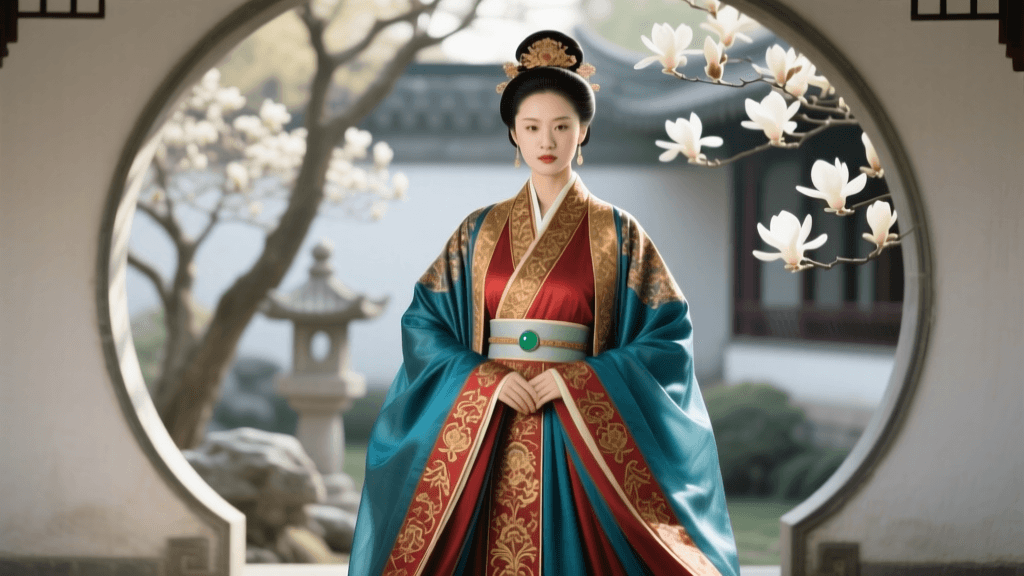
Wu Zetian (624–705 CE) remains the only female emperor in Chinese history. Her ascent to power required a masterful manipulation of court politics, and her wardrobe was a crucial tool in projecting absolute authority. While traditional women's Hanfu of the time centered around the Ruqun (blouse and skirt), Wu Zetian frequently adopted and adapted the Yuanlingpao (round-collar robe), a garment traditionally reserved for male officials and the emperor. By wearing tailored, structured robes with bold, dark color palettes and intricate dragon or phoenix embroidery, she visually asserted her mandate to rule.
However, her court dress also retained distinct feminine elegance through the use of the Pibo (a long, flowing silk shawl draped over the arms) and high-waisted skirts. As noted by the Metropolitan Museum of Art, Tang fashion was heavily influenced by Silk Road trade, introducing Central Asian motifs, vibrant jewel tones, and heavier brocades to the Chinese court, all of which Wu Zetian leveraged to create an intimidating yet mesmerizing imperial presence.
Recreating the Wu Zetian Aesthetic: Practical Guide
To recreate a Wu Zetian-inspired Yuanlingpao for modern Hanfu wearers, focus on structure, rich coloration, and high-quality silk.
- Garment Focus: A tailored, floor-length round-collar robe with structured shoulders and a leather or heavy silk belt.
- Fabric Recommendation: 22 Momme heavy silk crepe or silk-linen blends. The fabric must have enough weight to hold a structured shape without clinging to the body.
- Color Palette: Deep crimson, imperial yellow, or dark plum, accented with gold-thread embroidery at the cuffs and collar.
- Measurements & Yardage: You will need approximately 4.5 to 5 meters of fabric (assuming a standard width of 1.4 meters). Ensure the sleeve length reaches the base of the thumb, and the hem grazes the top of your footwear.
- Cost & Timing: Authentic 22 Momme silk costs between $40 and $60 per yard. Expect to spend $180–$250 on materials alone. Custom tailoring for structured robes takes 4 to 6 weeks, so plan your commission well in advance of major events like the Spring Festival.
Yang Guifei: The Opulence of High Tang Aesthetics
Yang Guifei (719–756 CE), one of the Four Beauties of ancient China, represented the zenith of High Tang opulence. Her style was characterized by extreme luxury, volume, and a celebration of fuller, more voluptuous silhouettes, which was the prevailing beauty standard of the High Tang period. Her most iconic contribution to Hanfu history is the popularization of the Qixiong Ruqun (chest-high skirt) paired with the Daxiushan (large-sleeve sheer shirt).
The Qixiong Ruqun sits above the bust, creating an elongated, flowing lower silhouette that dramatically alters the wearer's proportions. The Daxiushan features sleeves that are exceptionally wide—often exceeding 60 centimeters in circumference—creating a dramatic, wing-like effect when the arms are raised. The foundation of these breathtaking garments relied on advanced sericulture and weaving techniques, a practice recognized by UNESCO as an Intangible Cultural Heritage of humanity.
Recreating the Yang Guifei Aesthetic: Practical Guide
Yang Guifei’s look requires mastering the art of draping, pleating, and layering sheer textiles over rich brocades.
- Garment Focus: A heavily pleated chest-high skirt (Qixiong Ruqun) paired with a sheer, large-sleeved outer blouse (Daxiushan).
- Fabric Recommendation: Use Jacquard silk brocade for the skirt to provide volume and a rich, reflective texture. For the Daxiushan, use 12 Momme sheer silk organza or lightweight silk chiffon.
- Pleating Specifications: The skirt should feature precise knife pleats. For an authentic High Tang volume, request 1.5-inch wide pleats from your tailor. The total circumference of the skirt hem should be at least 4.5 meters to allow for a sweeping, dramatic drape.
- Yardage: The skirt requires 6 to 7 meters of brocade. The sheer outer shirt requires 2.5 meters of organza.
- Cost & Budgeting: High-quality Jacquard brocade ranges from $30 to $45 per yard. Budget approximately $250–$350 for the complete ensemble, including the intricate pleating labor, which typically adds $50–$80 to the tailoring cost.
Sourcing and Tailoring: Fabric Comparison Chart
Choosing the right textile is the most critical step in recreating historical Hanfu. Modern synthetic blends often lack the historical accuracy, breathability, and drape required for Tang Dynasty silhouettes. Below is a comparison chart to help you select the appropriate materials for your commission.
| Fabric Type | Cost per Yard (USD) | Drape & Weight | Best Historical Application |
|---|---|---|---|
| 19 Momme Mulberry Silk | $35 - $50 | Fluid, medium weight, luminous | Inner blouses (Shan), Shawls (Pibo) |
| 22 Momme Silk Crepe | $45 - $65 | Heavy, structured, matte finish | Round-collar robes (Yuanlingpao) |
| Jacquard Silk Brocade | $30 - $55 | Stiff, voluminous, highly textured | Chest-high skirts (Qixiong Ruqun) |
| Silk Organza / Chiffon | $20 - $35 | Sheer, lightweight, crisp | Large-sleeve outer shirts (Daxiushan) |
| Tencel-Linen Blend (Modern Alt) | $15 - $25 | Soft, breathable, moderate drape | Everyday practice wear, summer sets |
Crucial Measurements for the Perfect Fit
Tang Dynasty garments, particularly the chest-high Qixiong Ruqun, rely heavily on precise measurements to prevent wardrobe malfunctions and ensure a flattering silhouette. When submitting your measurements to a Hanfu tailor or purchasing ready-to-wear pieces, pay special attention to the following:
Measuring for the Qixiong Ruqun (Chest-High Skirt)
- Upper Chest Circumference: Measure directly across the top of your bust, where the skirt's waistband will sit. Add 1.5 inches (approx. 4 cm) to this measurement for ease and breathing room. This is the exact length the tailor must cut the top edge of the skirt.
- Skirt Length: Measure from the top of your bust (where the waistband will rest) down to the floor, while wearing the shoes you intend to pair with the outfit. Add 2 inches to ensure the hem sweeps the ground elegantly without tripping you.
- Strap Length: If your skirt features shoulder straps, measure from the front waistband, over the shoulder, to the back waistband. Adjustable tie-straps are highly recommended for a customized fit.
Measuring for the Daxiushan (Large-Sleeve Shirt)
- Wingspan (Sleeve-to-Sleeve): Measure from wrist to wrist with arms outstretched. For a true High Tang look, the sleeves should extend 3 to 5 inches past your fingertips.
- Sleeve Circumference: Ensure the armhole and sleeve opening are at least 50 cm (20 inches) in circumference to achieve the signature billowing effect.
Hair, Jewelry, and Imperial Etiquette
No Tang Dynasty imperial recreation is complete without the appropriate hair and accessories. Both Wu Zetian and Yang Guifei favored elaborate updos adorned with Buyao (dangling hairpins) and Huadian (forehead floral appliqués).
Accessory Sourcing: Invest in brass or silver-plated Buyao featuring jade or resin pendants. Authentic-looking sets can be sourced from specialized Hanfu artisans on platforms like Etsy or Taobao for $40 to $120. For the Huadian, modern wearers can use high-quality cosmetic gold leaf or reusable silicone appliqués applied with spirit gum.
"To wear the garments of the Tang court is to adopt a posture of unhurried grace. The weight of the silk and the sweep of the sleeves dictate a slower, more deliberate way of moving through the world."
Greeting Protocols in Tang Hanfu
When attending Hanfu festivals or cultural exhibitions in full Tang regalia, observing traditional etiquette elevates the experience. The standard Tang greeting for women is the Wanfu (万福) or the Fushou gesture. To perform this correctly, place your hands together in front of your chest or slightly to the left, bend your knees slightly, and bow your head. The wide sleeves of the Daxiushan will naturally cascade forward, creating a stunning visual display of respect and elegance.
Conclusion
Recreating the iconic Hanfu looks of Wu Zetian and Yang Guifei is a deeply rewarding endeavor that bridges the gap between ancient history and modern sartorial expression. By understanding the historical context, investing in high-quality sericulture textiles, and adhering to precise tailoring measurements, you can authentically channel the power and opulence of the Tang Dynasty. Whether you are preparing for a cultural exhibition, a traditional festival, or a historical photoshoot, the imperial silhouettes of the Tang court remain a timeless testament to the artistic zenith of traditional Chinese fashion.