From Anime to Streetwear: Styling Vintage Haori Globally

The Pop Culture Catalyst: From Screen to Street
The intersection of traditional Japanese clothing and global pop culture has birthed a fascinating sartorial movement. Once confined primarily to formal ceremonies, tea houses, or historical dramas, garments like the haori (traditional jacket) and kimono are now staple pieces in international streetwear, cosplay, and avant-garde high fashion. Driven by the explosive global reach of anime, cinematic masterpieces, and immersive video games, a new generation of fashion enthusiasts is looking East for silhouette inspiration.
Consider the massive global impact of the anime phenomenon Demon Slayer (Kimetsu no Yaiba). The protagonist’s iconic green-and-black ichimatsu (checkerboard) haori sparked a worldwide surge in demand for traditional woven patterns, bridging the gap between cosplay and daily streetwear. Similarly, the critically acclaimed video game Ghost of Tsushima introduced millions of Western players to the rugged, layered aesthetics of samurai workwear, specifically the noragi and hakama. In Hollywood, the structural elegance of Japanese tailoring—characterized by drop shoulders, wide sleeves, and wrap silhouettes—has long influenced costume design, most notably in the Jedi robes of the Star Wars franchise.
This guide explores how global fans and fashion lovers can ethically source, accurately measure, and stylishly integrate authentic vintage Japanese garments into a modern, pop-culture-inspired wardrobe.
Sourcing Authentic Vintage Garments: A Buyer’s Guide
While fast-fashion retailers frequently produce cheap, culturally disconnected “kimono cardigans,” true enthusiasts seek the quality, history, and craftsmanship of authentic vintage pieces. Japan has a robust second-hand market, and accessing it from abroad has never been easier.
Where to Buy
- Yahoo! Auctions Japan & Mercari Japan: The goldmines for vintage textiles. Since these platforms require a Japanese address, global buyers use proxy services like Buyee, ZenMarket, or FromJapan.
- Etsy & Specialized Dealers: Western-based vintage kimono shops offer curated selections. While prices are marked up for convenience and international shipping, the curation saves hours of digging.
- Flea Markets (Nomiku): If traveling to Tokyo or Kyoto, visiting local flea markets at shrines like Hanazono Shrine can yield incredible silk haori for as little as 500 yen ($3.50 USD).
Essential Japanese Search Terms
To navigate Japanese auction sites, copy and paste these terms:
- 羽織 (Haori): The traditional jacket worn over a kimono.
- 古着 (Furugi): Vintage or second-hand clothing.
- 正絹 (Shoken): Pure, 100% silk (crucial for avoiding synthetic blends).
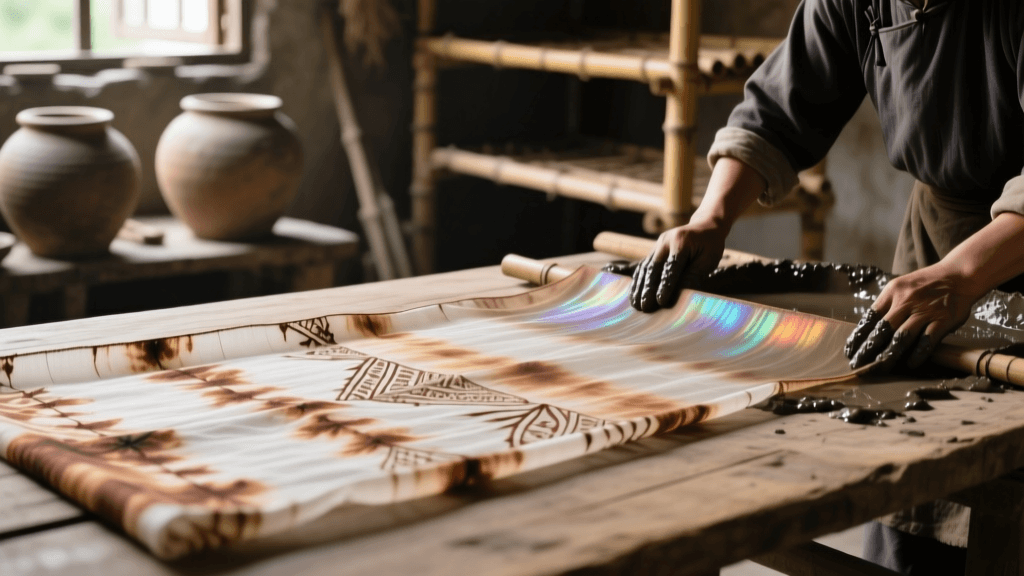
- 大島紬 (Oshima Tsumugi): A highly prized, mud-dyed silk textile known for its intricate geometric patterns and durability.
- 友禅 (Yuzen): Hand-painted or stencil-dyed silk featuring elaborate, pictorial designs.
Cost Breakdown
Expect to pay between $20 and $45 for casual, everyday haori made from wool, polyester, or cotton blends. Vintage pure silk (shoken) haori with standard patterns typically range from $80 to $200. Museum-quality antique pieces featuring hand-painted yuzen dyeing or gold leaf application can easily command $500 to over $1,500.
Decoding Measurements for the Perfect Fit
Unlike Western clothing, which is tailored to hug the body’s contours, traditional Japanese garments are constructed from straight bolts of fabric, resulting in a T-shape silhouette. They are designed to be draped and layered. However, when styling a haori for streetwear, proportions are everything.
Instead of looking for standard S/M/L sizes, you must read the measurement charts provided by sellers. Here is how to translate them for a modern streetwear fit:
- Yuki (裄 - Center Back to Wrist): This determines the sleeve drop. For a modern, oversized streetwear look that mimics a drop-shoulder hoodie, look for a yuki between 65cm and 75cm (approx. 25.5 to 29.5 inches).
- Mitake (身丈 - Back Length): This is the length from the base of the collar to the hem. A cropped, boxy look (great for pairing with high-waisted trousers) requires a mitake of 75cm to 85cm. For a dramatic, duster-style coat effect, aim for 95cm to 105cm.
- Sodehaba (袖幅 - Sleeve Width): The width of the sleeve opening. Wider sleeves (35cm+) provide a more dramatic, traditional drape, while narrower sleeves feel more like a modern cardigan.
Pro Tip: Take your favorite oversized vintage jacket, lay it flat, measure from the center back neck seam to the cuff, and use that number as your target yuki when bidding on Japanese auctions.
Styling Matrix: Traditional Garments in Modern Streetwear
Integrating a centuries-old garment into a 21st-century wardrobe requires balancing volumes and textures. Below is a styling matrix designed to help you channel specific pop culture aesthetics using authentic vintage pieces.
| Garment Type | Pop Culture Archetype | Modern Streetwear Pairing | Footwear | Est. Cost (USD) |
|---|---|---|---|---|
| Vintage Silk Haori | Anime Protagonist / Shonen Hero | Oversized graphic tee, wide-leg cargo pants, cross-body tactical bag | Chunky sneakers (e.g., Balenciaga Track) | $80 - $150 |
| Cotton Noragi | Wandering Ronin (Ghost of Tsushima) | Thermal henley, selvedge denim, layered canvas vest | Split-toe Tabi boots or Dr. Martens | $60 - $120 |
| Wool Kimono Jacket | Cyberpunk / Sci-Fi Dystopia | Cropped over a black turtleneck, pleated midi skirt or tech-wear joggers | Platform combat boots | $40 - $90 |
| Michiyuki (3/4 Coat) | Neo-Noir Detective | Mock-neck sweater, tailored wool trousers, silver jewelry | Minimalist leather Chelsea boots | $70 - $130 |
Authentication and Care for Vintage Textiles
When buying online, verifying the authenticity of the textile is paramount. Many modern reproductions are made from polyester but sold as silk. If the listing does not explicitly state shoken (pure silk), you must investigate.
Visual and Tactile Authentication
Look closely at the weave. Textiles like Oshima Tsumugi feature distinct “slubs” (small, intentional irregularities in the thread) that are incredibly difficult and expensive to replicate in polyester. Furthermore, genuine vintage silk will feel cool to the touch and possess a subtle, organic luster, whereas polyester often has a harsh, synthetic shine and feels warm or clammy.
If you already own the garment and need to be certain, perform a careful burn test on a single loose thread from an inside seam. Genuine silk will burn slowly, smell like burnt hair, and crumble into a fine ash. Polyester will melt, smell like sweet plastic, and harden into a solid, uncrushable bead.
Proper Storage and Maintenance
Never hang a vintage silk haori or kimono on a wire or standard wooden hanger. The weight of the garment will distort the shoulders and stretch the delicate fibers over time. Instead, store them using the traditional tato folding method, which distributes the weight evenly and prevents permanent creases. Wrap the folded garment in acid-free tissue paper or unbleached cotton to protect it from moisture and light, and store it in a cool, dark place. Use tatou-shi (traditional Japanese anti-moth paper) rather than chemical mothballs, which can permanently stain and degrade silk proteins.
Navigating Cultural Appreciation in Global Fashion
As traditional Japanese garments become deeply embedded in global pop culture, the conversation surrounding cultural appreciation versus appropriation is more relevant than ever. Wearing a haori as a streetwear piece is generally embraced by the Japanese fashion community, provided it is done with respect, understanding, and a rejection of harmful stereotypes.
True appreciation begins with education. Understanding the historical context, the regional dyeing techniques, and the social significance of the garments you wear elevates your style from mere trend-chasing to a genuine celebration of the culture. The Metropolitan Museum of Art’s Heilbrunn Timeline offers an exceptional, scholarly overview of the evolution of the kimono, detailing how its structure and social meaning shifted from the Heian period through the Edo period.
Furthermore, the global fashion dialogue has been heavily documented by major institutions. The Victoria and Albert Museum’s landmark exhibition explored how the kimono transcended borders, influencing European tailoring in the 17th century and continuing to inspire contemporary avant-garde designers today. For those looking to study historical construction and textile patterns in high resolution, the Kyoto Costume Institute Digital Archives serves as an invaluable, free resource for designers and collectors alike.
“The kimono is not merely a garment; it is a canvas of cultural expression, a testament to the mastery of Japanese artisans, and a living textile that continues to evolve in the hands of global creatives.”
Conclusion
The journey of the haori and kimono from the historic streets of Kyoto to the runways of Paris and the cosplay conventions of Los Angeles is a testament to the timeless appeal of Japanese design. By learning how to accurately measure, ethically source, and respectfully style these vintage garments, global pop culture fans can build a wardrobe that is not only visually striking but deeply rooted in centuries of artisanal tradition. Whether you are channeling the fierce determination of an anime swordsman or the sleek, layered aesthetics of modern techwear, the vintage haori remains one of the most versatile and culturally rich garments in the world.