Kimono Buying Guide: Compare Types, Fabrics, and Prices
The Ultimate Kimono Buying Guide: Navigating Types, Fabrics, and Prices
The kimono is far more than a traditional Japanese garment; it is a meticulously crafted canvas that reflects centuries of artistry, social hierarchy, and seasonal awareness. For international collectors, cultural enthusiasts, and fashion historians, acquiring an authentic kimono is a deeply rewarding pursuit. However, the sheer variety of styles, weaving techniques, and strict sartorial rules can overwhelm even the most dedicated buyers. According to The Metropolitan Museum of Art's Heilbrunn Timeline of Art History, the evolution of the kimono from the utilitarian kosode of the Edo period to the highly codified ceremonial wear of today represents one of the most complex sartorial histories in the world.
This comprehensive buying guide will demystify the kimono hierarchy, explain traditional sizing, and provide actionable advice on where and how to purchase authentic pieces, whether you are browsing the vintage markets of Kyoto or shopping from international online exporters.
The TPO Rule: Time, Place, and Occasion
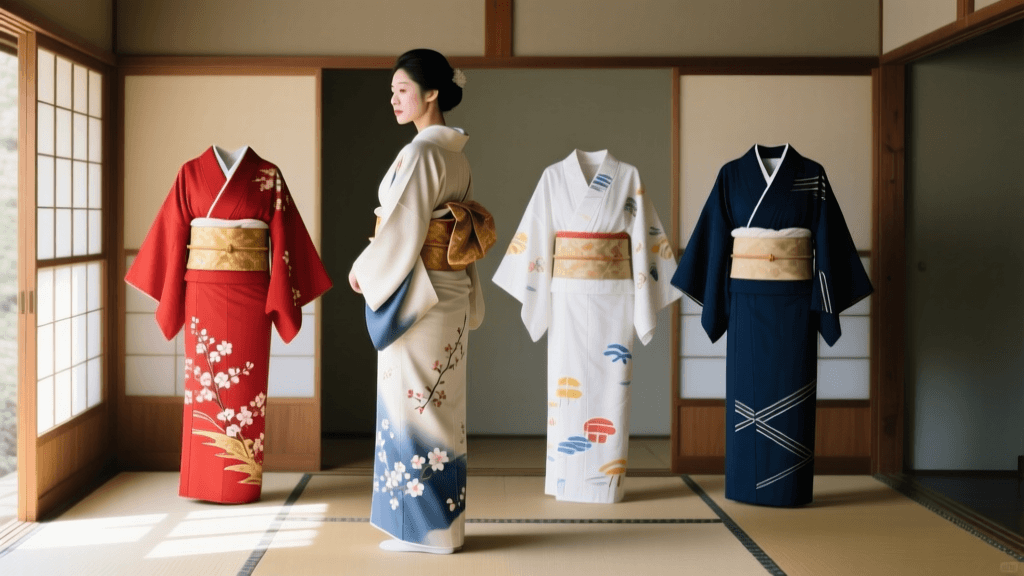
Before purchasing a kimono, one must understand the Japanese concept of TPO: Time, Place, and Occasion. Unlike Western formalwear, which often defaults to a standard tuxedo or evening gown, kimono formality is dictated by a matrix of pattern placement, fabric type, sleeve length, and the presence of family crests (kamon). Wearing a casual cotton yukata to a formal tea ceremony, or a heavy, crested silk tomesode to a summer fireworks festival, is considered a significant faux pas. Understanding these distinctions is the first step to building a versatile and culturally respectful collection.
Understanding the Kimono Hierarchy
Furisode: The Pinnacle of Unmarried Formality
The furisode (swinging sleeves) is the most formal kimono for young, unmarried women. Characterized by dramatically long sleeves that can measure anywhere from 85 to 114 centimeters, the furisode is worn during coming-of-age ceremonies (Seijin Shiki), weddings (by the bride's unmarried female relatives), and formal tea gatherings. The patterns are typically vibrant, covering the entire garment using the labor-intensive yuzen resist-dyeing technique. Because of their specialized use and high production costs, new furisode can cost anywhere from $3,000 to over $10,000, though vintage options are widely available for a fraction of the price.
Tomesode and Homongi: Married and Semi-Formal Elegance
For married women, the kurotomesode (black tomesode) is the highest level of formality. It features a solid black background with five white family crests and a continuous, elaborate pattern (eba) located only below the waistline. It is traditionally worn by the mothers of the bride and groom at weddings. The homongi (visiting wear) is a semi-formal option for both married and unmarried women. Its defining feature is the eba pattern, which is dyed on the fabric before it is cut, allowing the design to flow seamlessly across the seams when the kimono is laid flat. As noted by the Victoria and Albert Museum's Asian Collections, the seamless integration of pattern and structure in garments like the homongi highlights the sophisticated relationship between Japanese textile artists and tailors.
Komon and Tsumugi: Everyday Casual Wear
For casual outings, shopping, or informal dining, the komon and tsumugi are the garments of choice. A komon features a small, repeating pattern dyed across the entire fabric. Edo komon, a highly prized variation, uses microscopic patterns that appear solid from a distance but reveal intricate geometric designs up close. Tsumugi refers to pongee silk, woven from pre-dyed threads, resulting in a muted, textured, and highly durable fabric. These kimono do not bear family crests and are perfect for collectors looking for comfortable, wearable, and historically rich everyday pieces.
Yukata: Summer Festivals and Bathhouse Cotton
The yukata is an unlined, casual summer kimono made almost exclusively of cotton or modern synthetic blends. Originally worn as a bathrobe in the Edo period, it is now the standard attire for summer festivals (matsuri) and fireworks displays. Yukata are the most accessible and affordable entry point for new collectors, often costing between $30 and $150 brand new.
Kimono Comparison Chart: Type, Occasion, and Price
To help you navigate your purchase, refer to the comparison table below. Prices reflect the secondary (vintage/reuse) market in USD, which is where most international collectors acquire their pieces.
| Kimono Type | Formality Level | Target Demographic | Defining Features | Vintage Price Range (USD) |
|---|---|---|---|---|
| Furisode | Very Formal | Unmarried Women | Long sleeves (85-114cm), all-over vibrant patterns | $150 - $800+ |
| Kurotomesode | Most Formal | Married Women | Black silk, 5 crests, pattern below waist only | $100 - $500 |
| Homongi | Semi-Formal | All Women | Continuous pattern across seams, 1-3 crests | $80 - $400 |
| Komon | Casual | All Women | Small repeating patterns, no crests | $30 - $150 |
| Yukata | Very Casual | Men and Women | Unlined cotton, summer wear | $20 - $80 |
The Hidden Costs: Obi and Accessories
A common mistake among first-time buyers is assuming that purchasing the kimono itself completes the outfit. In reality, the kimono is merely the foundation. The true focal point of a formal ensemble is often the obi (the sash). A high-quality, hand-woven Nishijin-ori fukuro obi can easily cost more than the kimono it accompanies. When budgeting for a complete outfit, you must also account for the undergarments and accessories:
- Juban and Han-eri: The under-kimono and its decorative collar, which peek out at the neckline.
- Obiage and Obijime: The silk sash and braided cord used to secure and decorate the obi knot.
- Tabi and Zori: The split-toe socks and traditional sandals. (Note: Yukata are worn with bare feet in wooden geta sandals, without tabi).
- Koshihimo: Cotton ties used to secure the kimono tightly before the obi is wrapped.
According to the Japan National Tourism Organization (JNTO), experiencing the full dressing process, known as kitsuke, is an essential cultural activity that reveals the architectural complexity of these garments.
How to Measure and Size Your Kimono
Unlike Western clothing, kimonos are not sold in standard S/M/L sizes. They are measured in traditional units (shaku and sun) or centimeters. The two most critical measurements for a buyer are:
- Yuki (Arm Span): Measured from the center of the back of the neck, over the shoulder, and down to the wrist. A standard modern women's yuki is around 64-66 cm. If the yuki is too short, the garment will look ill-fitted; if too long, it will bunch awkwardly at the wrists.
- Take (Length): The total length of the kimono from the back collar to the hem. The ideal take is roughly equal to the wearer's height, allowing the excess fabric to be folded and tied at the waist (the ohashori). For a person who is 160 cm tall, a kimono take of 155-160 cm is ideal.
When buying vintage, always ask the seller for the yuki and take in centimeters. Do not rely on 'one size fits all' descriptions.
Where to Buy Authentic Kimonos
In-Person in Japan
If you are traveling to Japan, bypass the overpriced tourist boutiques and head to 'reuse' shops (the Japanese term for vintage/secondhand stores). Chains like Tansu-ya or local markets like Tokyo's Oedo Antique Market offer thousands of pieces. You can find exquisite, mid-century silk komon for as little as 3,000 JPY ($20 USD). For high-end, certified antique textiles, specialized galleries in Kyoto's Nishijin district are unparalleled.
Online Exporters and Auctions
For international buyers, dedicated Japanese export websites and eBay stores run by Japanese sellers are the most reliable sources. Look for sellers who provide detailed photographs of the lining, the crests, and any potential flaws (such as shimi or age spots). Avoid generic fast-fashion sites selling 'kimono cardigans' or 'kimono wrap dresses,' as these are Western appropriations that lack the structural integrity and cultural significance of the T-shaped garment.
Care, Maintenance, and Storage
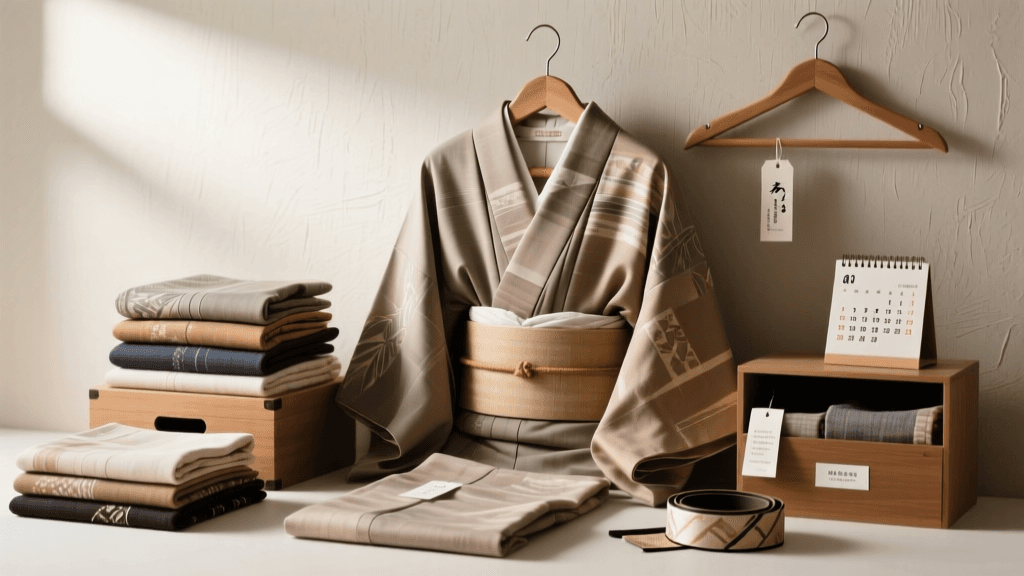
Silk kimonos are rarely washed at home. Traditional care involves airing the garment out in the shade for a few hours after wearing to remove moisture and odors. For stains, the garment must be sent to a specialized cleaner for maruarai (a process where the kimono is taken apart, washed, and re-sewn). When storing your collection, never use plastic bags or wire hangers. Kimonos must be folded flat along their seam lines and wrapped in acid-free tatou paper to prevent the silk from yellowing or the dyes from transferring.
'To wear a kimono is to wrap oneself in the seasons, the landscape, and the poetry of Japan. Collecting them is an act of preserving a living, breathing art form.'
Conclusion
Building a kimono collection requires patience, an understanding of Japanese aesthetics, and a respect for the artisans who weave and dye the silk. By understanding the distinctions between a furisode and a komon, mastering the essential measurements, and budgeting for the vital obi and accessories, you can curate a wardrobe that honors the profound legacy of the Japanese garment. Whether you are hunting for a Taisho-era vintage treasure in a Kyoto alleyway or carefully selecting a summer yukata online, the journey into the world of kimono is as intricate and beautiful as the garments themselves.