Global Fashion Media's 2026 Obsession: Xiangyunsha Cheongsam & Hanbok
The 2026 Shift: From Cultural Motif to Structural Foundation
In the rapidly evolving landscape of 2026 global fashion media, Asian traditional garments have transcended their historical roles as mere cultural references or ceremonial costumes. Today, top-tier publications like Vogue, Harper's Bazaar, and Elle are featuring the cheongsam and the hanbok not as nostalgic novelties, but as foundational elements of modern luxurywear. This year marks a definitive pivot in editorial styling: fashion directors and red-carpet stylists are now prioritizing authentic textile heritage and structural deconstruction over superficial motif appropriation. The focus has shifted entirely to the intricate craftsmanship of traditional Asian weaving and the architectural brilliance of historical silhouettes, reimagined for the contemporary sartorial lexicon.
As we navigate the Spring/Summer and Autumn/Winter 2026 fashion weeks across Paris, Milan, and New York, two specific garments have dominated the editorial spreads and high-profile red carpets: the Xiangyunsha silk cheongsam and the structurally modified hanbok. This comprehensive guide explores how global fashion media is styling these heritage pieces, the specific textiles driving the 2026 market, and how you can incorporate these high-fashion adaptations into your own wardrobe.
Xiangyunsha Silk: The 'Soft Gold' of 2026 Editorials
The most significant textile story in 2026 Asian fashion media is the unprecedented demand for Xiangyunsha, also known as gambiered Canton gauze. Originating from the Guangdong province, this unique silk is dyed using the juice of the Dioscorea cirrhosa tuber and coated with iron-rich river mud, then baked in the sun. The result is a fabric that is naturally water-resistant, exceptionally breathable, and possesses a distinctive crackled, leathery texture that catches the light beautifully on camera. According to historical textile archives on Gambiered Canton gauze, this labor-intensive process requires specific humidity and sunlight conditions, making authentic Xiangyunsha one of the rarest and most expensive silks in the world.
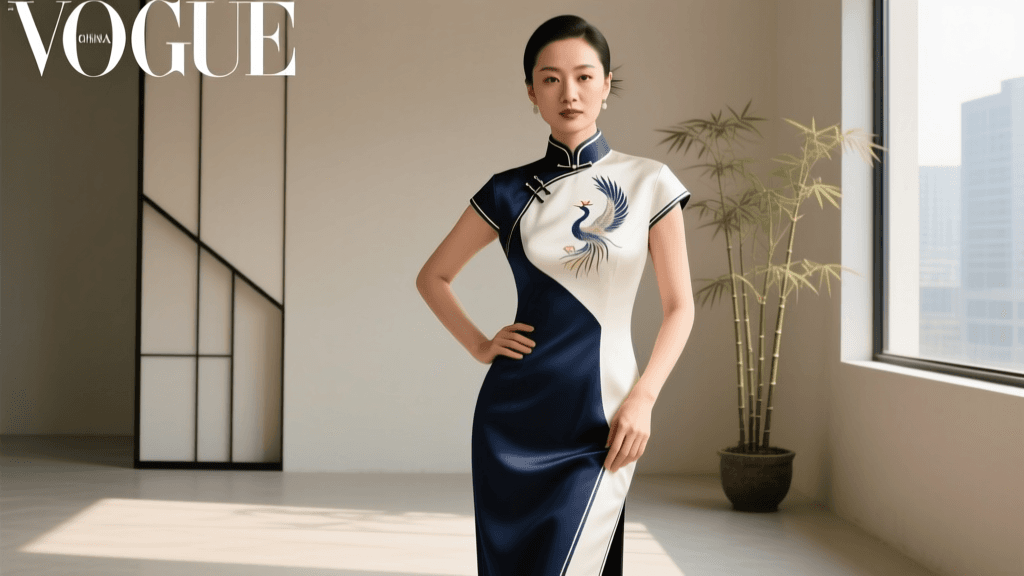
In 2026, global fashion houses are sourcing authentic Xiangyunsha for their flagship cheongsam (qipao) collections. As noted in Britannica's comprehensive guide to the qipao, the garment's evolution has always been tied to the availability of luxurious textiles. Today, a genuine, hand-dyed Xiangyunsha cheongsam featured in a high-end editorial spread commands a retail price between $1,800 and $4,500, reflecting the 2026 market rate of $450 to $850 per yard for the raw, finished fabric.
How 2026 Stylists are Draping Mud Silk
Global fashion media stylists are moving away from the skin-tight, heavily embroidered cheongsams of the late 20th century. Instead, the 2026 editorial silhouette favors a relaxed, architectural drape that highlights the stiff yet fluid nature of Xiangyunsha. Key styling details seen in recent campaigns include:
- The Modernized Collar: Traditional 5cm Mandarin collars have been reduced to a sleek 3.5cm height, often featuring a subtle V-notch at the center to elongate the neck and accommodate modern statement jewelry.
- Hidden Fastenings: While traditional hand-knotted pankou knots are retained on the shoulder and upper chest for visual heritage, the side seams now utilize hidden magnetic closures to maintain a flawless, uninterrupted line on camera.
- Asymmetrical Hemlines: Stylists are pairing floor-length, side-slit Xiangyunsha skirts with structured, cropped silk blazers, creating a striking contrast between the matte, crackled mud silk and high-sheen modern tailoring.
Deconstructing the Hanbok: The 2026 Red Carpet Silhouette
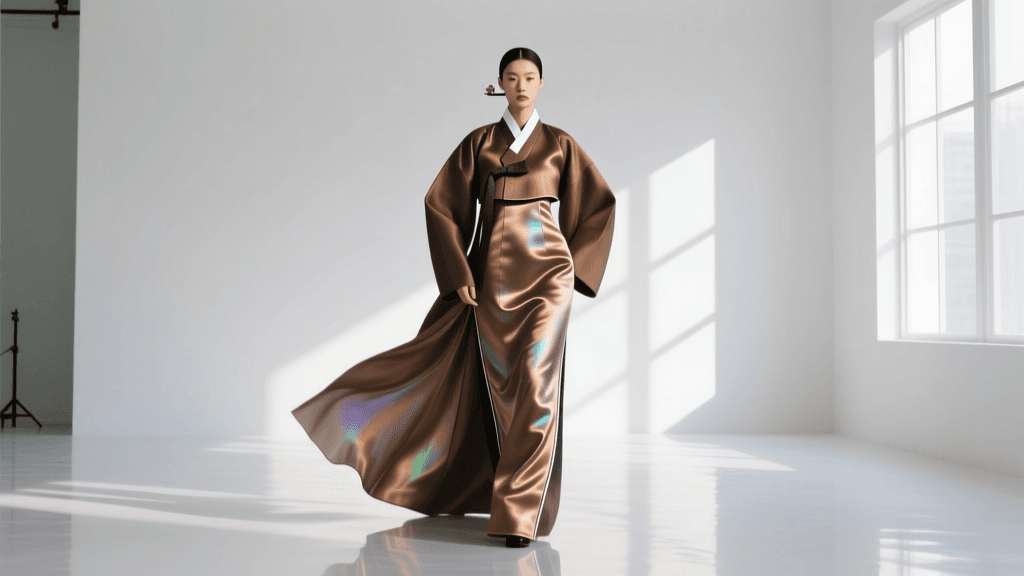
Parallel to the rise of the modern cheongsam, the Korean hanbok has undergone a radical structural deconstruction in 2026 global fashion media. Historically defined by its vibrant colors and simple lines without pockets, the hanbok's traditional proportions are being manipulated by avant-garde designers and celebrity stylists for maximum photographic impact. Historical archives on the Hanbok detail the classic components—the jeogori (upper garment) and the chima (wrap skirt) for women—which are now being reinterpreted through the lens of modern haute couture.
On the 2026 red carpets, the most media-covered hanbok adaptations feature extreme volume and structural wire-hemming. Stylists are utilizing 16-momme to 22-momme silk organza to create chima skirts that defy gravity, holding their bell-shape without the need for traditional under-petticoats. The jeogori is frequently cropped even further, ending just below the bust line, and is often constructed from contrasting textures like matte crepe or sheer tulle, adorned with subtle, tone-on-tone embroidery rather than the bold, contrasting colors of historical royal court dress.
Actionable Hanbok Styling for the Modern Consumer
For those looking to adopt the 2026 hanbok aesthetic for formal events or high-end evening wear, the key is balancing historical reverence with modern wearability. Here are the precise measurements and styling cues currently favored by fashion editors:
- Skirt Drop and Volume: Opt for a chima with a 45-inch drop from the empire waist. Ensure the hem is finished with a flexible wire or heavy horsehair braid to maintain the iconic A-line sweep when walking.
- Sleeve Architecture: The traditional curved baerae (sleeve line) is being sharpened in 2026. Look for jeogori sleeves with a slight structural pleat at the shoulder cap, offering a more tailored, Western-friendly fit while retaining the graceful drape of the wrist.
- The Goreum (Ribbon): Instead of the traditional long, flowing front bow, modern media stylists are pinning the goreum into structured, origami-like rosettes at the chest, or replacing it entirely with minimalist metallic brooches for a sleeker profile.
2026 Media Placement: Traditional vs. Modern Adaptations
To understand how global fashion media is positioning these garments, it is essential to compare the authentic heritage pieces with their 2026 editorial counterparts. The following table breaks down the key differences in styling, construction, and media context.
| Feature | Traditional Heritage Piece | 2026 Global Media Adaptation |
|---|---|---|
| Primary Fabric | Heavy brocade, standard mulberry silk, hemp | Xiangyunsha mud silk, 22-momme silk organza, matte crepe |
| Silhouette | Modest, floor-grazing, reliant on undergarments for volume | Architectural, gravity-defying hems, strategic cut-outs and slits |
| Fastenings | Ties, fabric buttons, traditional pankou knots | Hidden magnetic closures, structural zippers, decorative knot accents |
| Color Palette | Vibrant primary colors, high contrast (Obangsaek) | Monochromatic, earthy mud-dye tones, tone-on-tone layering |
| Media Context | Cultural festivals, historical dramas, traditional ceremonies | High-fashion editorials, Met Gala, international film festivals |
Actionable Guide: Sourcing and Styling for 2026
As the demand for Asian traditional garments in global media peaks, the market has bifurcated into authentic investment pieces and high-street editorial adaptations. If you are looking to purchase or style these garments in 2026, understanding where to allocate your budget is crucial.
Investment Pieces: The Authentic Route
For collectors and those attending black-tie events, investing in an authentic Xiangyunsha cheongsam or a bespoke silk hanbok is highly recommended. In 2026, reputable heritage brands and specialized ateliers in Shanghai, Guangzhou, and Seoul are offering custom fitting services. Expect to pay between $1,200 and $3,500 for a made-to-measure garment. The critical factor when purchasing Xiangyunsha is to verify the 'crackle' on the reverse side of the fabric; authentic mud silk will show a distinct, uneven darkening where the river mud reacted with the tannins, whereas synthetic imitations will have a uniform, printed look.
High-Street Adaptations: The Editorial Look
For fashion enthusiasts who want to capture the 2026 editorial aesthetic without the haute couture price tag, several contemporary Asian-heritage designers are offering ready-to-wear adaptations. Look for brands that utilize high-quality polyester-silk blends engineered to mimic the stiff drape of mud silk. These pieces typically range from $250 to $600. When styling these high-street adaptations, lean into the 2026 media trend of 'heritage-meets-hardware': pair a modernized, midi-length cheongsam with chunky, architectural leather boots and minimalist silver cuffs to ground the traditional silhouette in contemporary streetwear.
The Future of Asian Heritage in Global Media
The integration of the Xiangyunsha cheongsam and the deconstructed hanbok into the upper echelons of 2026 global fashion media represents a maturing of cross-cultural sartorial appreciation. By focusing on the intrinsic value of traditional textiles and the architectural genius of historical tailoring, modern stylists and designers are ensuring that these garments are respected as living, evolving masterpieces of fashion engineering. As we move further into 2026, the boundary between 'traditional dress' and 'high fashion' will continue to dissolve, proving that the most innovative designs of the future are often rooted deeply in the craftsmanship of the past.