Master the Otaiko Musubi: Step-by-Step Nagoya Obi Tutorial
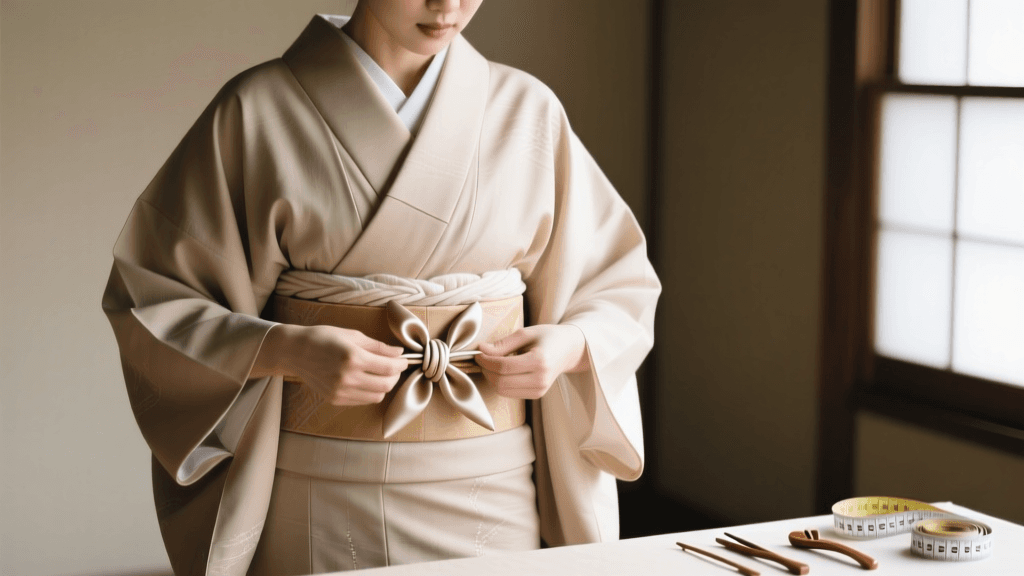
The Soul of the Kimono: Understanding the Otaiko Musubi
The obi is far more than a simple belt; it is the structural and aesthetic anchor of traditional Japanese dress. According to the Metropolitan Museum of Art, the obi evolved from a narrow, functional cord in the early Edo period (1603–1867) into the wide, elaborate sashes that define modern kimono fashion. Among the dozens of ways to tie an obi, the Otaiko Musubi (drum knot) remains the most iconic, elegant, and widely worn knot for married women and formal occasions.
This comprehensive guide focuses on tying the Otaiko Musubi using a Nagoya Obi. Invented in the 1920s by Haruko Koshida in Nagoya, this specific obi style features a pre-folded, narrower front section that makes the complex drum knot accessible for beginners and modern wearers alike. While a professional kitsuke (kimono dresser) can complete this knot in under five minutes, beginners should set aside 20 to 30 minutes for practice.
Essential Tools and Accessories
Before you begin, you must gather the correct accessories. The Otaiko Musubi requires specific structural supports to maintain its signature 'drum' shape without sagging throughout the day. Below is a breakdown of the required tools, their purposes, and average retail costs for those looking to purchase their own kits.
| Accessory | Japanese Name | Purpose | Average Cost (USD) |
|---|---|---|---|
| Obi Board | Obi-ita | Inserted into the front obi to prevent wrinkling and maintain a smooth, flat appearance. | $10 - $25 |
| Obi Pillow | Obi-makura | A small padded cushion that provides the structural volume for the 'drum' shape at the back. | $8 - $15 |
| Decorative Cord | Obi-jime | A braided silk cord that secures the knot horizontally and adds a pop of contrasting color. | $15 - $50 |
| Silk Scarf | Obi-age | A piece of dyed silk used to conceal the obi-makura (pillow) and add a layered accent at the top. | $20 - $60 |
| Waist Ties | Koshi-himo | Long, narrow cotton or silk ties used to secure the kimono and temporarily hold the obi in place. | $5 - $12 (set of 3) |
| Clips | Obi-klips / Binder clips | Used to hold the 'te' (tail) of the obi out of the way while wrapping the main body. | $3 - $8 |
Anatomy of the Nagoya Obi
To tie the knot correctly, you must understand the anatomy of the Nagoya obi. A standard Nagoya obi measures approximately 315 to 320 cm in length and 30 cm in width. It is divided into two main sections:
- The Te (Tail): The narrower, folded end of the obi. For the Otaiko Musubi, you will leave a 'te' length of about 110 cm from the starting point.
- The Tare (Drape): The wider, unfolded portion that wraps around the body and eventually forms the wide face of the drum knot.
Step-by-Step Tutorial: Tying the Otaiko Musubi
Step 1: Positioning and the First Wrap
Drape the obi over your shoulders from the back, ensuring the folded edge of the 'te' is facing upward. Adjust the 'te' so it hangs down your back to about the length of your arm (roughly 110 cm). Use a clip to secure the 'te' to your collar or shoulder temporarily so it doesn't fall forward. Take the wider 'tare' end and wrap it tightly around your waist from back to front, ensuring the bottom edge aligns perfectly with your hips. The tension here is critical; a loose first wrap will cause the entire knot to sag.
Step 2: Securing the Front and Inserting the Obi-ita
Bring the 'tare' around to the front, overlapping it slightly over the first layer. Before pulling it all the way tight, slide the obi-ita (obi board) between the layers of the obi at the front center to ensure a smooth, wrinkle-free surface. Pull the obi taut and wrap it around to the back one more time. You should now have two layers of obi wrapped securely around your torso.
Step 3: The Temporary Knot
At the center of your back, bring the 'tare' (the wide end you've been wrapping) up and over the 'te' (the tail hanging down). Cross them to create a simple, temporary X-shaped knot. Take one of your koshi-himo (waist ties) and tie it tightly over this intersection to hold the obi in place while you construct the drum. Remove the shoulder clip from the 'te' and let it hang down.
Step 4: Creating the Otaiko (Drum) Shape
This is the most technical part of the process. Take the wide 'tare' end and fold it upward to create the face of the drum. The width of the fold should be roughly 30 cm (the full width of the obi). Slide the obi-makura (pillow) into the top fold of the 'tare' to give it volume. Pull the pillow strings tightly around your waist, just above the main body of the obi, and tie them securely at the front.
Next, take the narrow 'te' end, pull it down over the front of the newly formed drum, and tuck it neatly inside the bottom fold of the 'tare'. The 'te' should act as the inner lining of the drum, hiding the raw edges and creating a clean, hollow tube shape reminiscent of a Japanese taiko drum.
Step 5: Finishing with Obi-age and Obi-jime
To hide the strings of the obi-makura, drape the obi-age (silk scarf) over the pillow, tucking the ends neatly into the top of the obi at the front. Finally, take the obi-jime (decorative cord) and thread it horizontally through the center of the drum knot. Pull it tightly to the front, tie a secure, flat square knot (hon-musubi), and tuck the frayed ends neatly into the sides of the cord. Adjust the drum shape from the back to ensure it sits perfectly horizontal.
Troubleshooting Common Mistakes
Even experienced wearers encounter issues when dressing. Here is how to fix the most common Otaiko Musubi problems:
- The Drum is Sagging: This happens if the initial waist wraps were too loose or the obi-makura strings were not tied tightly enough. Fix: Un tie the koshi-himo, pull the bottom layer of the obi upward to lift the drum, and re-secure the temporary knot higher on the back.
- The Front is Wrinkled: Usually caused by skipping the obi-ita or wrapping the obi over uneven kimono fabric. Fix: Ensure your kimono is smoothed down with a date-jime (under-belt) before applying the obi, and always use a rigid obi-ita.
- The Obi-jime is Slipping: If the decorative cord slides down the drum, the knot is likely too loose or the cord material is too slippery. Fix: Use a cord with a textured surface (like woven silk or metallic threads) and ensure the final square knot is pulled completely taut.
Cultural Context and Modern Styling
The Otaiko Musubi is deeply embedded in Japanese social etiquette. According to the Victoria and Albert Museum, the motifs, colors, and knot styles of a kimono ensemble act as a complex visual language, signaling the wearer's age, marital status, and the formality of the event. The Otaiko Musubi, with its subdued elegance and flat profile, is the standard for married women attending weddings, tea ceremonies, and formal graduations. It is considered respectful and mature, avoiding the flamboyant, butterfly-like knots (such as the Fukura-suzume) reserved for unmarried youth.
'The beauty of the Otaiko Musubi lies in its restraint. It frames the wearer's posture, forcing an upright, elegant stance, while allowing the intricate textile art of the kimono's lower half to remain visible and unobstructed.' — Traditional Kitsuke Master
For international tourists and modern fashion enthusiasts, experiencing this traditional art form is more accessible than ever. As noted by Matcha Japan Travel Magazine, kimono rental shops in cultural hubs like Kyoto and Asakusa frequently utilize the Nagoya obi and the Otaiko knot for their premium dressing packages. These shops provide pre-measured, easy-to-tie modern variations of the obi, allowing visitors to comfortably explore historic districts while wearing structurally sound, culturally accurate garments.
Conclusion
Mastering the Otaiko Musubi with a Nagoya obi is a rewarding journey into the heart of Japanese sartorial tradition. While the folding, wrapping, and tying require patience and spatial awareness, the result is a timeless silhouette that commands respect and admiration. By investing in the proper structural accessories and understanding the precise measurements of the obi, anyone can achieve a flawless, professional-grade drum knot that honors centuries of Asian textile heritage.