Xiangyunsha: Guide to China's Intangible Heritage Silk
The Legacy of Xiangyunsha: Mud, Sun, and Silk
In the rich tapestry of Chinese traditional textiles, few fabrics command as much reverence and curiosity as Xiangyunsha (香云纱), often translated as Gambiered Canton Gauze or "Fragrant Cloud Silk." Originating from the Shunde district of Foshan in Guangdong Province, this extraordinary fabric is celebrated not merely for its aesthetic beauty, but for the grueling, deeply ecological, and entirely manual process required to create it. Often referred to by textile collectors and historians as "soft gold," Xiangyunsha represents a pinnacle of Chinese traditional crafts and holds a prestigious spot on China's National Intangible Cultural Heritage list.
The history of silk weaving in China spans millennia, serving as a cornerstone of global trade and cultural exchange. As detailed by the Metropolitan Museum of Art's Heilbrunn Timeline of Art History, Chinese sericulture and silk craftsmanship have continuously evolved, with regional artisans developing highly specialized techniques adapted to their local climates and natural resources. Xiangyunsha is a perfect embodiment of this regional adaptation, relying entirely on the unique botanical and geological properties of the Pearl River Delta.
The Artisan Process: A Race Against the Weather
The creation of authentic Xiangyunsha is a 14-step marathon that tests the endurance and expertise of master artisans. Unlike standard silk dyeing, which can be done indoors year-round, Xiangyunsha production is strictly bound to the seasons and the weather. It can only be produced between March and November, requiring intense sunlight, high temperatures, and specific humidity levels.
The Gambier Dyeing Phase
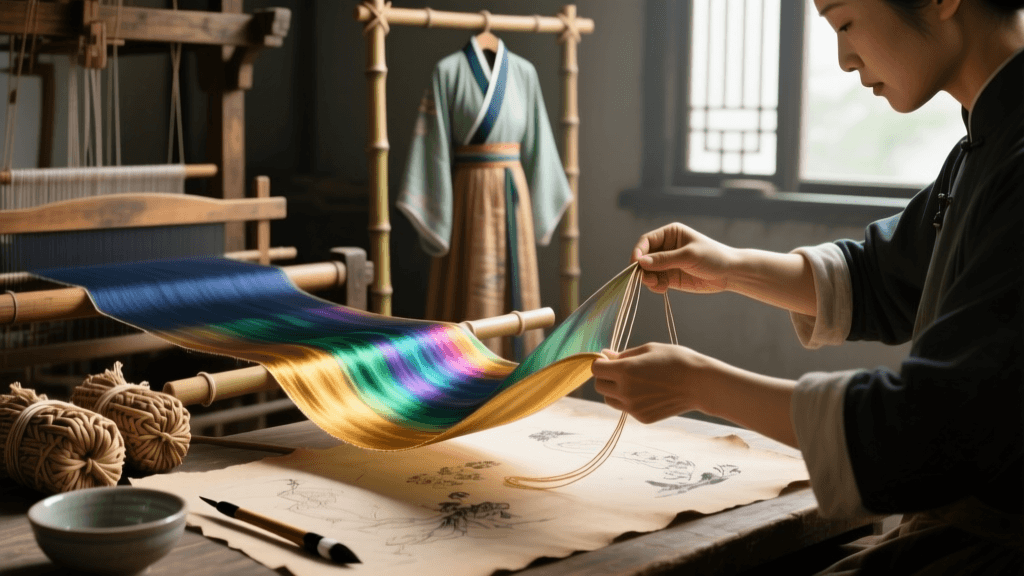
The process begins with raw, undyed mulberry silk gauze. Artisans prepare a dye bath using the tubers and vines of the Dioscorea cirrhosa plant, commonly known as gambier or "shoulang" in Chinese. This plant is rich in tannic acid. The silk is repeatedly immersed in the gambier juice, squeezed, and then laid out on grassy fields to dry under the blazing sun. This cycle of dipping and sun-drying is repeated up to 30 times. The tannic acid gradually bonds with the silk fibers, transforming the pristine white fabric into a deep, rich reddish-brown.
The River Mud Coating
The defining step of Xiangyunsha occurs when the artisans apply a specialized mud harvested from the bottom of the Pearl River. This mud is exceptionally rich in iron ions. When the iron-rich mud is smeared evenly over the tannin-dyed silk, a profound chemical reaction occurs. The iron ions react with the tannic acid to create a dark, almost black, metallic-looking coating on one side of the fabric, while the reverse side remains a warm, earthy brown. After the mud dries, the fabric is washed in the river to remove the excess earth, leaving behind a lustrous, water-resistant, and incredibly durable textile.
Practical Guide: Buying and Authenticating Xiangyunsha
Because of the immense labor and specific environmental conditions required, authentic Xiangyunsha is expensive and increasingly rare. The market is unfortunately flooded with synthetic imitations or chemically dyed silks masquerading as the real thing. When sourcing fabric for your Hanfu collection, it is vital to know how to authenticate the material.
- The "Ice Crackle" Pattern: Authentic Xiangyunsha features a subtle, irregular crackle pattern on its dark side, resembling the glaze crackle on ancient ceramics or ice fracturing. This occurs naturally as the mud coating dries and flexes. Fakes often have a uniform, printed, or completely smooth surface.
- The Scent: Genuine fabric carries a faint, earthy, and herbal scent reminiscent of dried leaves and river clay. Chemical imitations will smell like synthetic dyes, vinegar, or plastic.
- The Sound and Drape: When rubbed between the fingers, real Xiangyunsha produces a distinct, crisp rustling sound, often compared to the sound of walking on dry autumn leaves. It is stiffer than standard silk but softens beautifully against the skin with wear.
Material Comparison Chart
| Feature | Authentic Xiangyunsha | Standard Mulberry Silk | Synthetic Imitation |
|---|---|---|---|
| Base Material | 100% Mulberry Silk | 100% Mulberry Silk | Polyester / Nylon |
| Dye Source | Gambier juice & River Mud | Chemical / Plant Dyes | Chemical Dyes |
| Surface Texture | Crisp, slight crackle, matte black/brown | Smooth, lustrous, uniform | Slippery, overly shiny |
| Price (per meter) | 800 - 2,500 RMB | 150 - 400 RMB | 20 - 50 RMB |
| Breathability | Exceptional, cooling, antibacterial | High | Low, traps heat |
Tailoring Xiangyunsha for Hanfu: Actionable Advice
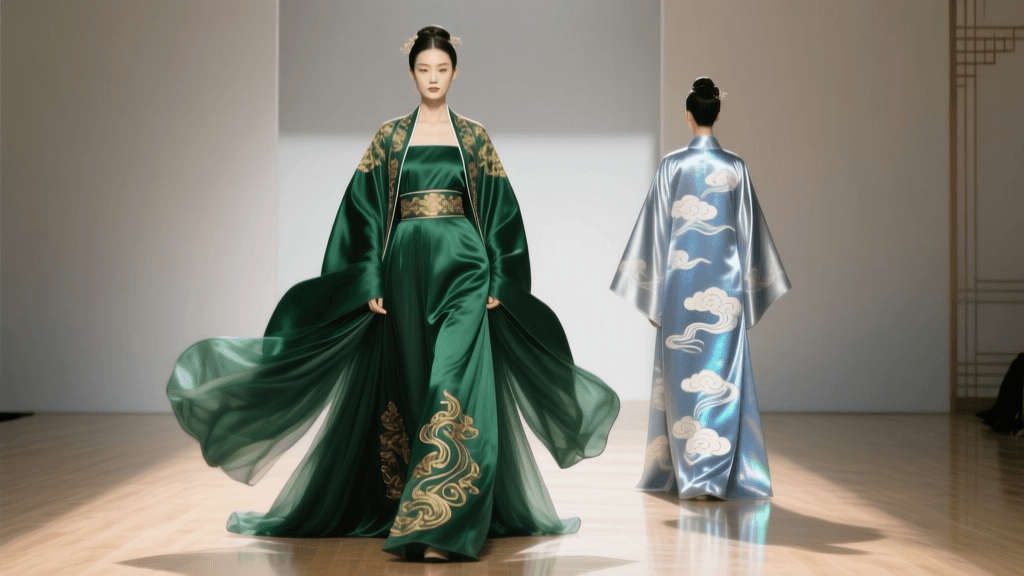
Integrating Xiangyunsha into a Hanfu wardrobe requires an understanding of its unique structural properties. Because the mud-coating process gives the silk a crisp, structured drape that is highly resistant to wrinkling, it is not suitable for flowing, ethereal garments like the Wei-Jin style wide-sleeved robes. Instead, it excels in structured, tailored silhouettes.
Recommended Hanfu Styles
Ming Dynasty Mamianqun (Horse-Face Skirt): This is arguably the best application for Xiangyunsha. The fabric's natural stiffness holds the deep, structured pleats of the Mamianqun perfectly, preventing them from collapsing throughout the day. The dark, metallic sheen of the black side creates a striking contrast when paired with intricate woven gold or silver waistbands.
Song Dynasty Beizi (Long Jacket): For summer wear, a lightweight Xiangyunsha Beizi is unparalleled. The fabric's natural antibacterial properties and exceptional breathability make it ideal for hot, humid climates. It drapes cleanly over the body without clinging, providing an elegant, scholarly silhouette.
Yardage and Cost Estimates
When commissioning or sewing your own garments, accurate yardage is crucial due to the high cost of the fabric. Xiangyunsha typically comes in widths of 114 cm to 140 cm.
- Mamianqun: Requires 4 to 6 meters of fabric, depending on the desired pleat depth and skirt length. Expect to spend between 3,200 and 15,000 RMB just on the raw material.
- Beizi or Ao (Jacket): Requires 2.5 to 3.5 meters. Material costs will range from 2,000 to 8,750 RMB.
- Timing Your Purchase: Because production halts in the winter, the best time to purchase raw Xiangyunsha fabric is in late autumn or early winter, when the year's harvest has been completed and master weavers release their premium batches to the market.
Caring for Your Gambiered Silk Garments
Despite its durable reputation, the mud-coated surface of Xiangyunsha requires specialized care to maintain its integrity and luster. The iron-tannin bond is strong, but harsh chemicals can strip the coating and ruin the fabric.
- Washing: Never machine wash or dry clean Xiangyunsha. Hand wash only in cool water (below 30°C). Use a specialized, pH-neutral silk detergent. Avoid alkaline soaps or standard laundry detergents, which will degrade the gambier dye.
- Handling: Do not wring, twist, or scrub the fabric. Gently agitate it in the soapy water for no more than three minutes, then rinse thoroughly in clean, cool water.
- Drying: Never expose washed Xiangyunsha to direct sunlight, as UV rays can fade the reddish-brown reverse side and brittle the fibers. Roll the garment in a clean, dry towel to press out excess water, then hang it to dry in a well-ventilated, shaded area.
- Storage: Store the garment hanging in a breathable cotton garment bag. Avoid folding it tightly for long periods, as this can cause the mud coating to crack permanently along the fold lines.
Preserving the Craft: Supporting the Artisans
The survival of Xiangyunsha is intrinsically linked to the survival of the artisans who possess the generational knowledge to read the weather, harvest the mud, and time the sun-drying process. As urbanization encroaches on the grassy fields required for drying the silk, and as younger generations seek less grueling employment, the number of master craftsmen is dwindling.
Recognizing the profound cultural value of such techniques, the UNESCO Intangible Cultural Heritage list has inscribed sericulture and silk craftsmanship of China, highlighting the necessity of protecting these ancient practices from the homogenizing forces of modern mass production. By choosing to invest in authentic, ethically sourced Xiangyunsha, Hanfu enthusiasts and textile collectors do more than acquire a beautiful garment; they provide the economic lifeline necessary to keep this extraordinary intangible heritage alive.
Supporting these artisans aligns perfectly with the broader goals of UNESCO's Intangible Cultural Heritage framework, which emphasizes that traditional crafts are not merely relics of the past, but living practices that foster community identity, sustainable use of local resources, and a deep, enduring connection to the natural world. When you wear Xiangyunsha, you are wearing the sun, the river, and the enduring spirit of Chinese artisanal mastery.