Wu Zetian's Iconic Tang Dynasty Hanfu: Qixiong Ruqun Guide
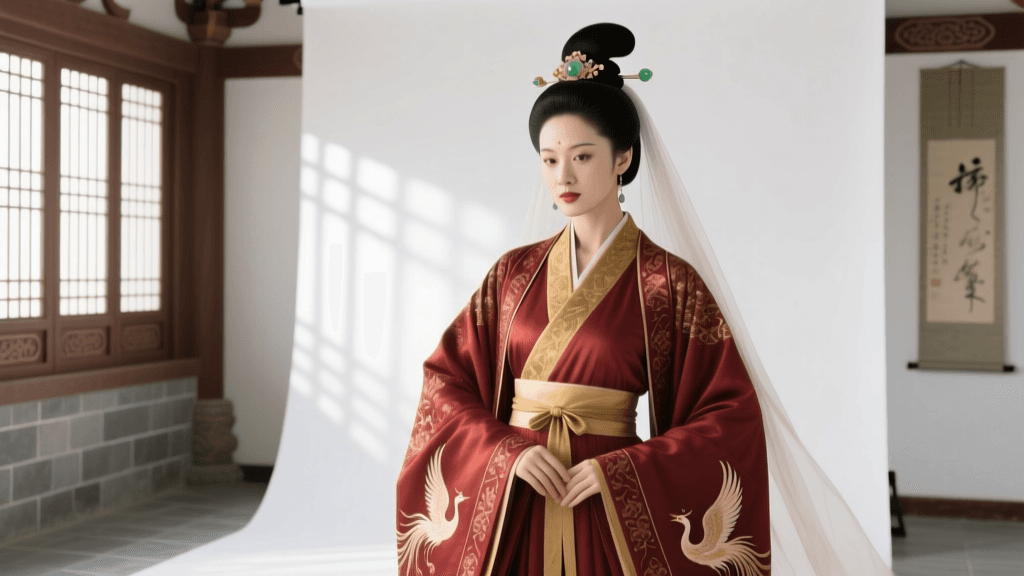
When discussing the zenith of traditional Chinese fashion, no era is as celebrated as the Tang Dynasty (618–907 AD), and no historical figure looms larger than China’s only female emperor, Wu Zetian. Her unprecedented reign was marked by immense cultural openness, economic prosperity along the Silk Road, and a radical shift in women's societal roles. This liberation was vividly reflected in the clothing of the era, most notably through the iconic Qixiong Ruqun (chest-high skirt ensemble). Today, as the global Hanfu revival movement gains momentum, understanding the historical accuracy, structural layering, and modern styling of Wu Zetian’s court attire offers both a fascinating historical study and a practical guide for modern enthusiasts.
The Cultural Shift and the Silk Road Influence
Under Wu Zetian’s rule, the Tang capital of Chang'an was a cosmopolitan metropolis. The influx of foreign merchants, diplomats, and artisans from Central Asia, Persia, and India brought new textile techniques, vibrant dyes, and exotic motifs. According to historical analyses of clothing in ancient China, women's fashion transitioned from the more modest, restrictive silhouettes of the preceding Sui Dynasty to bolder, more expressive forms. The waistline of the skirt was raised from the natural waist to the chest or even the underarms, elongating the lower body and allowing for wider, more dramatic sleeves. This silhouette became the defining look of Tang aristocratic women and remains one of the most recognizable styles in the modern Hanfu community.
Anatomy of the Qixiong Ruqun Ensemble
To accurately recreate or understand the Tang Dynasty aesthetic, one must break down the ensemble into its foundational layers. The Qixiong Ruqun is not a single garment, but a carefully coordinated system of structural layering.
1. The Shan (Upper Blouse)
The Shan is the upper garment, typically featuring a crossed collar (Jiao Ling) or a parallel collar (Dui Jin). In the Tang Dynasty, the parallel collar was highly favored for the Qixiong style, as it allowed the collarbones and neck to be elegantly exposed. The sleeves were often exceptionally wide, sometimes trailing past the hands, crafted from sheer silk gauze to create an ethereal, floating effect.
2. The Qun (Chest-High Skirt)
The centerpiece of the outfit is the Qun, a heavily pleated, voluminous skirt tied high on the chest. Historical records and scroll paintings show these skirts in vibrant hues like pomegranate red, saffron yellow, and deep emerald, often featuring intricate woven patterns or hand-painted floral motifs. The skirt's high waistband is secured with long, trailing silk ribbons.
3. The Banbi (Half-Sleeve Jacket)
Worn over or beneath the Shan, the Banbi is a short-sleeved or half-sleeved vest. Originally adapted from military and working-class attire, it was elevated to court fashion under Wu Zetian. It adds a layer of contrasting color and structural depth to the outfit, often featuring thick brocade fabrics.
4. The Pibo (Silk Shawl)
No Tang Dynasty court outfit was complete without the Pibo, a long, lightweight silk stole draped over the shoulders and wrapped around the arms. As noted in the Metropolitan Museum of Art's research on the history of silk and trade, these delicate accessories showcased the finest, most translucent silk weaves available, fluttering behind the wearer to emphasize movement and grace.
Fabric Analysis: Historical vs. Modern Equivalents
For modern Hanfu wearers, sourcing historically accurate fabrics can be challenging and expensive. Below is a comparison chart detailing historical Tang textiles and their modern, accessible equivalents for those looking to commission or purchase a Qixiong Ruqun.
| Garment Component | Historical Tang Fabric | Modern Hanfu Equivalent | Drape & Feel | Est. Cost (Per Yard) |
|---|---|---|---|---|
| Shan (Blouse) | Lightweight Silk Gauze (Luo) | Silk Organza or Chiffon | Sheer, crisp, breathable | $15 - $35 |
| Qun (Chest Skirt) | Heavy Silk Brocade (Jin) | Jacquard Weave or Taffeta | Structured, voluminous, rich | $20 - $50 |
| Banbi (Half-Sleeve) | Patterned Silk Twill | Cotton-Linen Blend or Rayon | Soft, matte, comfortable | $10 - $25 |
| Pibo (Silk Shawl) | Painted Silk Crepe | Printed Mulberry Silk | Fluid, delicate, flowing | $30 - $60 |
Actionable Guide: How to Wear and Secure the Chest-High Skirt
The most common complaint among modern Hanfu enthusiasts regarding the Qixiong Ruqun is the tendency for the chest-high skirt to slip down during wear. Because the skirt rests on the narrowest part of the ribcage rather than the hips, gravity and movement can cause the waistband to slide. Here is a practical, step-by-step guide to securing your skirt using the traditional 'Cross-Back Tie' method, ensuring all-day stability.
Measurements and Sizing
- Underbust Measurement: Measure snugly around your ribcage, directly under your bust. This is where the top edge of the skirt will sit.
- Skirt Length: Measure from your underbust down to the floor while wearing your intended shoes. Add 5 cm (2 inches) to this measurement to allow the hem to pool slightly or to account for the skirt sitting slightly lower after tying.
- Waistband Width: Look for a waistband that is at least 6-8 cm (2.5-3 inches) wide. Wider bands distribute pressure better and grip the ribcage more securely.
The Cross-Back Tying Method
- Positioning: Wrap the skirt around your body, ensuring the top edge sits firmly against your underbust. Hold the two ties in front of you.
- The First Cross: Pull the ties tightly to the front, crossing them over each other. The right tie should go over the left.
- Wrap to the Back: Bring both ties around your back, pulling them taut. Cross them again in the back, then bring them forward to the front over your shoulders or under your arms.
- The Double Knot: Tie a firm double knot in the center of your chest. Do not use a standard bow, as the loops will loosen with movement. Tuck the excess ribbon length into the top edge of the skirt waistband to hide it and create extra friction.
- The Friction Hack: If you are wearing a sheer Shan (blouse), ensure the blouse is tucked into the skirt. The friction of the blouse fabric against the inside of the waistband will drastically reduce slipping.
Sourcing, Budgeting, and Caring for Modern Hanfu
If you are looking to purchase a Qixiong Ruqun inspired by the Tang Dynasty, the modern Hanfu market offers options across various price points. Understanding the market dynamics will help you make an informed investment.
Brand Tiers and Budgeting
- Entry-Level ($40 - $80 USD): Brands like Shisanyu offer beautiful, mass-produced sets using polyester blends and chiffon. These are excellent for beginners, festivals, and casual wear. The drape is slightly stiffer, but the vibrant prints are highly photogenic.
- Mid-Range ($100 - $250 USD): Brands such as Tingyuege or Luqiongyin focus on historical accuracy, utilizing real silk blends, accurate Tang Dynasty textile patterns (like the Baoxiang flower motif), and superior tailoring. The waistbands in this tier are often reinforced with anti-slip silicone strips.
- Couture and Custom ($500+ USD): High-end studios like Ming Hua Tang offer museum-grade recreations. These pieces use authentic silk brocades, hand-woven gold threads, and natural plant dyes. These are investment pieces meant for formal ceremonies or serious collectors.
Ordering Timelines
Be aware that the Hanfu market operates heavily on a pre-order model. When a brand releases a new Tang Dynasty collection, pre-orders typically remain open for 15 to 30 days. Following the close of pre-orders, manufacturing and shipping usually take an additional 45 to 90 days. Always plan your purchases well in advance of specific events, cultural festivals, or photoshoots.
Fabric Care and Maintenance
Tang-style garments, particularly those featuring sheer organza or delicate silk shawls, require meticulous care. Never machine wash a Qixiong Ruqun. Instead, hand wash the garments in cold water using a pH-neutral silk detergent. Do not wring the fabric; gently press the water out between two clean towels. Hang the skirt by the waistband in a shaded, well-ventilated area to prevent the vibrant dyes from fading in direct sunlight. Store the Pibo (shawl) rolled rather than folded to prevent permanent creases in the delicate silk fibers.
Conclusion
Empress Wu Zetian’s legacy extends far beyond her political triumphs; she presided over an era where fashion became a canvas for female empowerment, cultural exchange, and artistic brilliance. The Qixiong Ruqun remains a testament to the bold, unapologetic spirit of Tang Dynasty women. By understanding the historical context, selecting the right fabrics, and mastering the structural techniques of wearing the chest-high skirt, modern enthusiasts can respectfully and beautifully bring this iconic slice of Asian tradition into the contemporary world.