Traveling With Kimono: 2026 Packing & Transport Guide
The Renaissance of Kimono Travel in 2026
The global appreciation for traditional Japanese garments has reached new heights in 2026, with international travelers increasingly packing kimonos for destination photoshoots, cultural festivals, and immersive ryokan stays. However, transporting these delicate, T-shaped garments across the globe presents a unique logistical challenge. According to the Japan National Tourism Organization, cultural immersion trips focusing on traditional arts and attire have surged by over 40% this year, driving a massive demand for specialized travel solutions that protect vintage silks and modern textiles alike.
Unlike Western garments that can be rolled or stuffed into compression cubes, a kimono requires meticulous folding, climate awareness, and specialized on-the-go care. Whether you are traveling with a priceless antique shoken (silk) kimono or a modern, easy-care sen'i (synthetic blend) piece, mastering the art of kimono transport is essential for any traveling enthusiast. This comprehensive guide covers the latest 2026 packing methodologies, cutting-edge portable steaming technology, and strategic dressing techniques for small hotel spaces.
Understanding Your Garment: Silk vs. Modern Blends
Before packing, it is crucial to understand the material composition of your kimono, as this dictates your transport strategy. The Metropolitan Museum of Art highlights the traditional T-shaped structure of the kimono, which features long, continuous seams that are highly susceptible to permanent creasing if folded incorrectly under pressure.
Shoken (Silk) Kimonos
Silk is a protein fiber that breathes but also absorbs moisture and odors rapidly. When packing silk, you must avoid airtight plastic compression bags, which can trap humidity and lead to mildew or permanent yellowing. Silk requires rigid structural support in your luggage to prevent the heavy folds of the migoro (body panels) from crushing one another during transit.
Sen'i (Synthetic) and Cotton Yukata
Modern polyesters and traditional cotton yukata are far more forgiving. These fabrics can withstand mild compression and are highly resistant to deep-set wrinkles. For these garments, you can utilize soft-sided packing cubes and slightly tighter rolling techniques to save valuable luggage space without risking structural damage to the fibers.
The Modern 'Tatoshi' Folding Technique
Historically, kimonos were stored in specialized paper wrappers called tatoushi. Today, travelers replicate this protective barrier using acid-free archival tissue paper. The Victoria and Albert Museum emphasizes the vulnerability of silk to acidic degradation and harsh creases, making the modern tissue-buffered folding method a necessity for 2026 travelers.
Step-by-Step Hon-Datami (Basic Fold)
- Preparation: Lay the kimono face down on a clean, flat surface. Ensure your hands are free of oils or lotions.
- Sleeve Folding: Fold the left sleeve back over the body of the kimono, aligning the edge with the center seam. Repeat with the right sleeve, tucking it slightly underneath to create a neat, rectangular profile.
- The Tissue Buffer: Place a sheet of acid-free tissue paper along the natural fold lines—specifically at the shoulders, the hem, and the sleeve attachments. This prevents hard creases from forming under the weight of your luggage.
- Body Folding: Fold the left side of the body panel toward the center, then overlap the right side. You should now have a long, narrow rectangle.
- Final Tri-Fold: Fold the bottom hem up to the collar, and then fold the collar down to meet the hem. Wrap the entire bundle in a final layer of unbleached cotton or a specialized breathable garment bag.
2026 Luggage Solutions: Comparison Chart
Choosing the right luggage is paramount. Hard-shell suitcases offer crush protection, while soft garment bags prevent harsh bends. Below is a comparison of the top-rated kimono transport solutions available in 2026.
| Case Type | 2026 Brand & Model | Dimensions (LxWxH) | Weight | Est. Price (USD) |
|---|---|---|---|---|
| Rolling Garment Bag | Samsonite Silhouette 18 Tri-Fold | 22 x 42 x 3 in | 4.2 lbs | $269 |
| Hard-Shell Insert | Away The Garment Bag Insert | 21 x 21 x 9 in | 1.8 lbs | $95 |
| Tatoshi Cube Set | Muji Kimono Archival Folder | 15 x 12 x 4 in | 0.6 lbs | $48 |
| Soft Duffel Hybrid | Tumi Alpha 3 Garment Duffel | 24 x 18 x 10 in | 5.5 lbs | $795 |
For travelers bringing multiple silk kimonos, the Samsonite Silhouette 18 remains the gold standard, as its tri-fold design accommodates the full length of an unhemmed kimono without requiring an aggressive center fold. For minimalist travelers bringing a single synthetic piece, the Muji Archival Folder paired with a standard carry-on backpack is highly efficient.
On-the-Go Steaming and Wrinkle Rescue
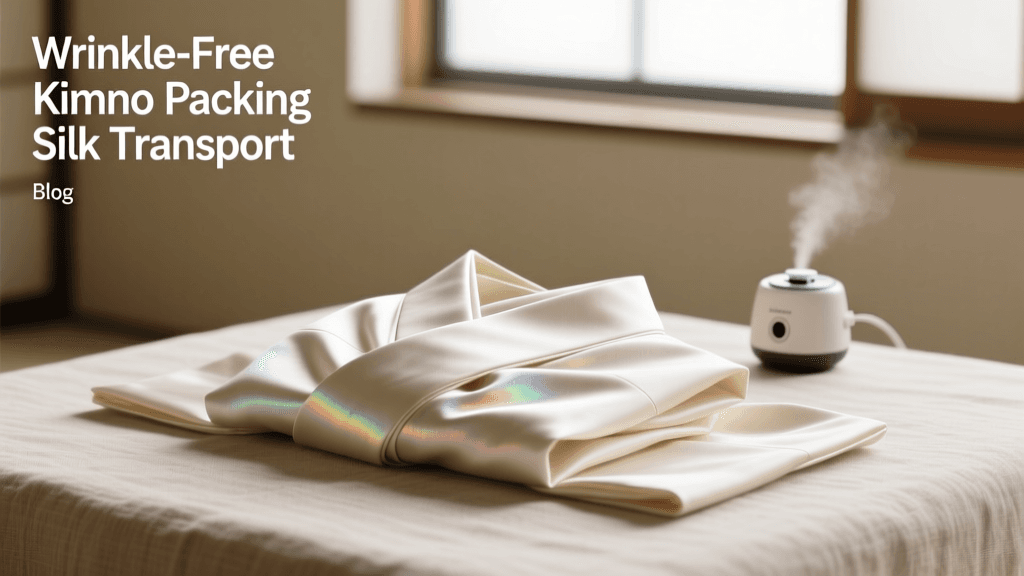
Even with perfect folding, minor creases are inevitable after a long-haul flight. In 2026, the market has shifted away from traditional boiling-water travel irons toward ultrasonic portable steamers. These devices use high-frequency vibrations to turn water into a fine, cool mist that relaxes silk fibers without the risk of water-spitting or heat scorching.
Top 2026 Steamer Pick: Panasonic NI-GSD090
The latest iteration of Panasonic's travel steamer features a micro-pulse head that is entirely safe for delicate shibori (tie-dye) and kinsha (crepe silk) textures. To use it safely on a kimono:
- Hang the kimono on a padded, wide-shoulder hanger (never use wire hangers, which will distort the shoulder seams).
- Hold the steamer at least two inches away from the fabric.
- Steam from the inside of the garment first, allowing the vapor to push outward through the weave.
- Allow the silk to air-dry completely for 15 minutes before attempting to dress.
The Shower Steam Alternative
If you forget your steamer, the classic hotel shower method still works, but requires caution. Hang the kimono on the bathroom door hook, ensuring it is far enough from the shower curtain to avoid direct water splashes. Run the shower on the hottest setting for 10 minutes to fill the room with ambient steam. This gentle humidity will relax the tissue-buffered creases naturally.
Dressing On-the-Go: The Ryokan & Hotel Strategy
One of the most overlooked challenges of kimono travel is the actual dressing process (kitsuke) in cramped accommodation spaces. Traditional Japanese ryokans and modern boutique hotels often feature limited floor space, making it difficult to lay out the obi (sash) and obiage (sash scarf).
Space-Saving Kitsuke Tips
- Use a Bed as a Staging Area: Lay a clean, white cotton sheet over the hotel bed to act as your staging surface. This keeps your accessories off potentially dusty carpets and provides a wide, flat area to fold your obi.
- Pre-Tie the Obi: If you are wearing a fukuro obi or a complex musubi (knot), consider pre-tying it on a obi-ita (sash board) at home and securing it with clips. You can slip it on like a belt at your destination, saving up to 20 minutes of cramped dressing time.
- The Koshimaki Shortcut: Always pack a modern, velcro-closure koshimaki (slip) and hadajuban (undershirt). These can be put on quickly in a small bathroom before stepping out into the main room to begin the formal wrapping of the kimono.
The Ultimate 2026 Kimono Travel Packing Checklist
To ensure you are fully prepared for your cultural excursion, verify that your luggage includes the following specialized items:
- Kimono & Nagajuban: Wrapped in acid-free tissue and placed in a breathable cotton bag.
- Obi & Accessories: Obi, obijime (cord), obiage (scarf), and obi-ita (stiffener).
- Undergarments: Hadajuban, koshimaki, and a pair of crisp white tabi socks (pack an extra pair in case of rain).
- Dressing Tools: 4 koshihimo (tying cords), 1 datejime (wide under-sash), and an itajime (straightening board).
- Footwear: Zori (sandals) with removable, washable hanao (thongs), packed in a separate shoe bag to keep dirt away from the silk.
- Emergency Kit: Ultrasonic travel steamer, acid-free tissue paper, double-sided garment tape, and a microfiber cloth for spot-cleaning.
By respecting the traditional architecture of the garment while embracing 2026's advanced travel textiles and ultrasonic care technology, you can confidently transport your kimono across the globe. Whether you are attending a tea ceremony in Kyoto or a cultural exhibition in Paris, your garment will arrive pristine, ready to tell its story for generations to come.