Ahimsa vs Mulberry Silk: Banarasi Sari Fabrics 2026
The Evolution of Banarasi Silk in 2026
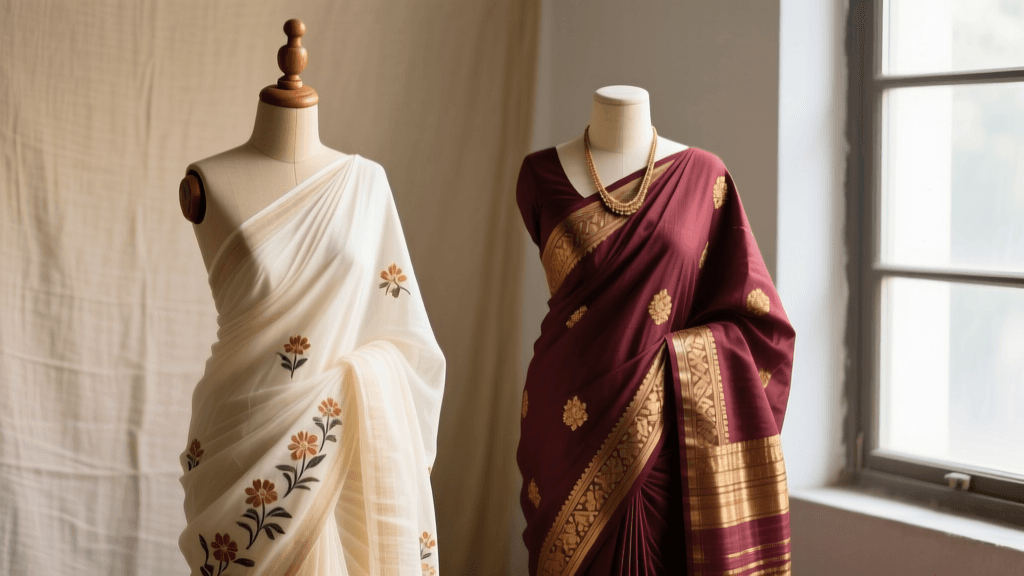
The Banarasi sari remains one of the most iconic and revered garments in South Asian traditional wear. Known for its opulent gold and silver zari work, intricate motifs, and rich cultural heritage, this garment is a staple for weddings, festivals, and generational heirlooms. However, as we navigate the 2026 wedding and festive season, the conversation among textile connoisseurs, designers, and ethical consumers has shifted significantly. The focus is no longer solely on the complexity of the weave or the purity of the metallic threads; it is equally on the ethical and environmental footprint of the base fabric itself.
For centuries, traditional mulberry silk has been the undisputed foundation of the Banarasi sari. Yet, the rise of conscious luxury has propelled Ahimsa silk—commonly known as peace silk—into the spotlight. Understanding the technical, aesthetic, and ethical differences between these two textiles is crucial for anyone looking to invest in a Banarasi sari in 2026. Whether you are a bride selecting your trousseau, a collector of heritage textiles, or a sustainable fashion advocate, choosing the right silk base will dictate the drape, longevity, and moral alignment of your garment.
Mulberry Silk vs. Ahimsa Silk: A Technical Breakdown
To make an informed decision, one must first understand the sericulture and manufacturing processes behind these two distinct fibers. The Victoria and Albert Museum's comprehensive guide on silk notes that the method of harvesting the silk filament fundamentally alters its structural integrity, luster, and subsequent weaving applications.
The Traditional Standard: Mulberry Silk
Mulberry silk is produced by the Bombyx mori silkworm, which feeds exclusively on mulberry leaves. In conventional sericulture, the silkworm spins a continuous cocoon of a single, unbroken protein filament that can measure up to 900 meters in length. To harvest this continuous filament, the cocoons are boiled with the pupae still inside, preventing the moth from emerging and breaking the thread. This yields a perfectly smooth, uniform, and highly lustrous yarn. In the context of Banarasi weaving, mulberry silk provides a flawless, reflective canvas that amplifies the brilliance of zari (metallic thread) and creates the signature liquid drape associated with heritage saris.
The Sustainable Contender: Ahimsa (Peace) Silk
Ahimsa silk, rooted in the principle of non-violence, allows the moth to complete its life cycle and naturally emerge from the cocoon. Because the moth chews its way out, the continuous filament is broken into shorter staple fibers. These fibers must then be spun together, much like cotton or wool, rather than reeled. Alternatively, Ahimsa silk is often derived from the Samia cynthia ricini (Eri silkworm), which naturally spins a cocoon with an opening, allowing the moth to leave without breaking the fibers, though the resulting yarn still requires spinning. The resulting fabric has a distinctly different hand-feel: it is slightly textured, possesses a warm, matte luster, and offers exceptional thermal regulation and breathability.
2026 Comparison Chart: Mulberry vs. Ahimsa Banarasi Silk
The choice between these two fabrics involves trade-offs in aesthetics, cost, and environmental impact. Below is a detailed comparison based on 2026 textile market data and weaving standards.
| Feature | Traditional Mulberry Silk | Ahimsa (Peace) Silk |
|---|---|---|
| Filament Type | Continuous, unbroken reeled filament | Short staple fibers, spun yarn |
| Luster & Finish | High, reflective, brilliant shine | Soft, matte, earthy sheen |
| Texture & Hand-feel | Exceptionally smooth, cool to touch | Slightly textured, warm, cotton-like |
| Drape Quality | Fluid, heavy, liquid drape | Structured, voluminous, breathable |
| 2026 Avg. Price (USD/meter) | $25 - $45 (Base fabric only) | $35 - $60 (Base fabric only) |
| Zari Compatibility | Excellent; high contrast and shine | Good; offers a subdued, vintage look |
| Eco & Ethical Impact | High water usage; pupae are destroyed | Cruelty-free; lower water footprint |
Weaving Dynamics: How Silk Choice Affects Banarasi Techniques
The interaction between the base silk and the weaving technique is where the true artistry of the Banarasi sari lies. In 2026, master weavers in Varanasi have adapted their jacquard loom setups to accommodate the rising demand for Ahimsa silk, but the physical properties of the yarn dictate which weaving styles yield the best results.
For the Kadwa technique—a painstakingly slow brocade method where each motif is woven individually with no loose threads on the back—mulberry silk remains the preferred choice. The high tensile strength and smoothness of the continuous mulberry filament allow the weaver to pack the zari threads tightly, resulting in crisp, raised, and highly detailed motifs that mimic embroidery. The tight weave also ensures that the heavy metallic threads do not pull or distort the delicate base fabric.
Conversely, Ahimsa silk shines in the Fekua (or extra-weft) technique and in contemporary, minimalist Banarasi designs. Because the spun Ahimsa yarn is slightly thicker and more elastic, it creates a beautifully textured ground fabric. When woven with Resham (silk thread) motifs instead of heavy metallic zari, Ahimsa silk produces a sari that is remarkably lightweight, breathable, and comfortable for day-long wear during summer weddings. The matte finish of the peace silk gives the colored silk motifs a rich, jewel-toned depth that is highly sought after in modern, understated luxury fashion.
Sourcing and Pricing in the 2026 Market
As reported by India's Ministry of Textiles, government initiatives and cooperative societies have significantly improved the traceability of handloom textiles in 2026. However, the premiumization of sustainable textiles means that authentic Ahimsa Banarasi saris command a higher price point than their conventional counterparts, primarily due to the labor-intensive spinning process and lower yield per cocoon.
When shopping for a Banarasi sari in 2026, expect to pay between $300 and $800 for a high-quality, hand-loomed mulberry silk sari with tested zari. An authentic Ahimsa silk Banarasi sari, complete with ethical certifications and hand-woven motifs, will typically range from $450 to $1,200, depending on the complexity of the jaal (trellis) work and the reputation of the weaving cluster.
What to Look For When Shopping
- The Silk Mark: Always look for the Silk Mark label, which guarantees the authenticity of the natural silk fiber. In 2026, digital QR codes on Silk Mark tags allow buyers to trace the sari back to the specific Varanasi weaving cooperative.
- Texture Verification: Authentic Ahimsa silk will have slight slubs (unevenness in the yarn) and a matte finish. If the fabric is perfectly uniform and highly reflective, it is likely conventional mulberry silk or a synthetic blend.
- The Burn Test: While not recommended in a retail store, a legitimate weaver will provide a small swatch. Both mulberry and Ahimsa silk will smell like burning hair and turn to crushable ash when burned, whereas synthetic blends will melt into hard plastic beads.
- Zari Purity: Pure gold and silver zari is exceptionally rare and expensive in 2026. Most premium Banarasi saris now use high-grade 'tested zari' (copper or silver-coated synthetic cores), which offers excellent durability and tarnish resistance while keeping the garment lightweight.
Garment Care: Preserving Your 2026 Silk Investments
The longevity of a Banarasi sari depends heavily on how the base fabric is maintained. Mulberry and Ahimsa silks react differently to environmental factors, cleaning agents, and storage conditions.
Cleaning: Mulberry silk Banarasi saris, especially those with heavy zari work, should exclusively be dry-cleaned by specialists who understand heritage textiles. The chemical solvents used in standard dry cleaning can sometimes strip the natural sericin coating from the silk, so it is vital to use a reputable cleaner. Ahimsa silk, being a spun fiber, is slightly more forgiving and can sometimes be gently hand-washed in cold water using a pH-neutral, silk-specific detergent. However, if the sari contains metallic zari, dry cleaning remains the safest route to prevent the metal from oxidizing or bleeding onto the matte fabric.
Storage: Never store your silk saris in plastic covers, as this traps moisture and leads to mildew, which will permanently stain both mulberry and Ahimsa fibers. Instead, wrap the sari in unbleached, pure cotton muslin cloth. This allows the fabric to breathe while protecting it from dust and light exposure. Refold the sari every three months to prevent permanent crease lines, which can eventually cause the silk fibers to snap along the fold.
Pest Control: Avoid traditional naphthalene balls or chemical mothballs, as their harsh fumes can degrade the silk proteins and tarnish the zari. In 2026, the standard for textile preservation is the use of natural alternatives like cedar wood blocks, dried neem leaves, or lavender sachets, which repel insects without compromising the structural integrity or fragrance of the garment.
Conclusion
The choice between Ahimsa and mulberry silk for a Banarasi sari in 2026 is ultimately a reflection of personal values and aesthetic preferences. Mulberry silk continues to offer the unparalleled, mirror-like brilliance and fluid drape that has defined royal South Asian fashion for centuries. Meanwhile, Ahimsa silk provides a deeply ethical, breathable, and beautifully textured alternative for the conscious consumer. By understanding the unique properties, weaving compatibilities, and care requirements of each textile, you can confidently invest in a Banarasi sari that not only elevates your wardrobe but also aligns with the future of sustainable heritage fashion.