Hanfu Travel Wardrobe 2026: Packing & Destination Styling
The Rise of the Global Hanfu Travel Wardrobe in 2026
As heritage tourism continues to dominate global travel trends in 2026, the traditional Chinese wardrobe known as Hanfu has transcended local photoshoots and domestic festival wear to become a highly sought-after staple of the international travel wardrobe. Modern travelers are no longer content with leaving their cultural garments at home; instead, they are integrating centuries-old silhouettes into their global itineraries. From the cobblestone streets of Europe to the historic temples of East Asia, wearing Hanfu abroad is a profound way to connect with Asian traditions while making a distinct sartorial statement.
However, traveling with traditional garments presents unique logistical challenges. Multi-layered outfits, delicate silk weaves, and intricate pleating require a strategic approach to packing, fabric selection, and destination styling. This comprehensive 2026 guide will equip you with the essential knowledge to build a wrinkle-free, versatile, and culturally respectful Hanfu travel wardrobe, ensuring you look impeccable whether you are navigating a bustling airport or attending a sunset tea ceremony overseas.
Selecting Transit-Friendly Hanfu Fabrics
The cornerstone of any successful travel wardrobe is fabric selection. While pure mulberry silk is the historical gold standard—and beautifully documented on the Met Museum's Heilbrunn Timeline of Art History for its luxurious drape and historical significance—it is notoriously difficult to maintain on the road. Pure silk wrinkles upon contact with a suitcase zipper and requires meticulous steaming.
Fortunately, the textile innovations of 2025 and 2026 have introduced a new generation of travel-friendly Hanfu fabrics. Modern weavers are utilizing memory-shape polyester-silk blends, crushed crepe textures, and Tencel-linen mixes that mimic the luster and drape of traditional silks while offering the resilience of modern activewear. When shopping for your 2026 travel Hanfu, prioritize garments labeled as 'anti-wrinkle' or 'memory-shape jacquard.' These fabrics can be rolled tightly into a suitcase and will naturally release their creases within an hour of being hung in a humid bathroom.
2026 Fabric Comparison Chart for Travelers
| Fabric Type | Wrinkle Resistance | Best Travel Season | 2026 Travel Verdict |
|---|---|---|---|
| Pure Mulberry Silk | Very Low | Spring / Autumn | Avoid for transit; reserve for luxury hotel events where professional steaming is available. |
| Memory-Shape Polyester-Silk Blend | Very High | All Seasons | The ultimate 2026 travel choice. Retains pleats in Mamianqun skirts and resists crushing. |
| Tencel-Linen Blend | Moderate | Summer | Excellent breathability for hot climates. Natural slubs hide minor transit wrinkles well. |
| Crushed Crepe Chiffon | High | Summer / Resort | Pre-textured to look intentionally wrinkled. Ideal for lightweight, flowing outer layers. |
| Heavy Brocade / Jacquard | Moderate | Winter | Best for structured jackets (Ao). Thick enough to resist folding lines but heavy to pack. |
The Essential Hanfu Packing Toolkit
To protect your garments and maintain their structural integrity, you must upgrade your packing accessories. Standard packing cubes will crush delicate pleats and embroidery. In 2026, the well-dressed Hanfu traveler relies on a specialized toolkit designed specifically for heritage garments.
- Silk-Lined Garment Folders: Unlike standard plastic suit bags, silk-lined folders reduce static and friction, preventing delicate gold-thread embroidery from snagging or fraying during transit.
- Acid-Free Tissue Paper: Essential for stuffing sleeves and maintaining the structural shape of standing collars (Liling) without leaving chemical residue on the fabric.
- Dual-Voltage Micro-Steamer: A 1200W portable steamer with a ceramic soleplate is mandatory. Ensure it comes with a global adapter kit, as hotel irons are strictly forbidden for use on traditional woven textiles.
- Velvet Jewelry Rolls: Traditional hairpins (Zan), jade pendants, and waist chains (Jinyue) can easily tangle or scratch. A velvet roll with individual elasticized slots keeps metal accessories secure and polished.
Destination-Specific Styling & Wardrobe Planning
A successful Hanfu travel wardrobe must adapt to the climate, cultural context, and physical demands of your destination. Here is how to style your traditional garments for three highly popular 2026 heritage travel hubs.
Kyoto, Japan: Subtle Elegance in Historical Districts
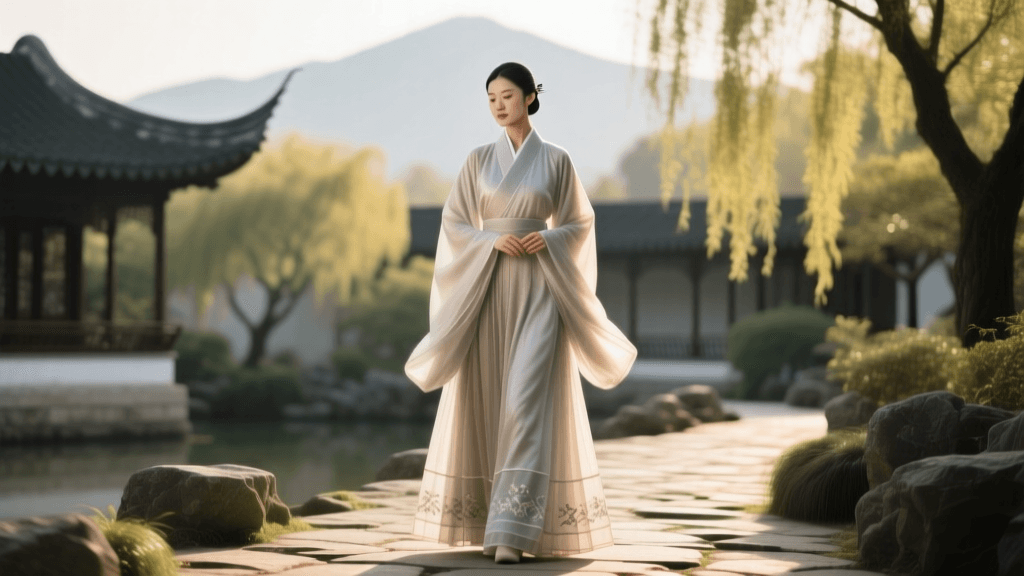
When wandering through the Higashiyama district or visiting the temples of Kyoto, modesty and subtle elegance are paramount. The Song Dynasty aesthetic is perfectly suited for this environment. Pack a lightweight, semi-transparent Beizi (open-front jacket) layered over a simple, high-necked camisole and a solid-colored, ankle-length pleated skirt. This silhouette mirrors the refined, understated layers seen in traditional Japanese aesthetics while remaining distinctly Chinese. The muted tones of celadon, bamboo green, and soft ivory will photograph beautifully against Kyoto's wooden architecture and moss gardens without appearing overly theatrical.
Xi'an, China: Breathable Layers for Summer Exploration
If your travels take you to the Datang Everbright City in Xi'an during the sweltering summer months, the Tang Dynasty Qixiong Ruqun (chest-high skirt) is your best ally. However, to combat the heat, opt for 2026's modernized Tencel blends which offer moisture-wicking properties. Choose a sleeveless or short-sleeved upper garment (Shan) with wide, flowing armholes to promote air circulation. Avoid heavy, multi-layered Pibo (shawls) during the day; instead, carry a lightweight, UV-protective silk parasol, which serves as both a historical prop and a practical shield against the intense Shaanxi sun.
Paris, France: Urban Chic with the Mamianqun
For a cosmopolitan destination like Paris, particularly if you are attending fashion events or dining in Le Marais, the Ming Dynasty Mamianqun (horse-face skirt) is the ultimate crossover piece. In 2026, the global fashion scene heavily embraces the Mamianqun as a standalone luxury skirt. Pack a richly woven, dark-toned jacquard Mamianqun and pair it with contemporary Western pieces—a tailored cashmere turtleneck, a crisp oversized blazer, or a sleek silk blouse. This fusion styling respects the garment's traditional roots while seamlessly integrating it into a high-end, modern urban wardrobe. It is practical for walking on cobblestones and sophisticated enough for Michelin-starred dining.
The Bundle-Wrapping Packing Technique
To pack your Hanfu without causing permanent creases, abandon the traditional folding method and adopt the 'Bundle-Wrapping' technique favored by luxury stylists. Begin by laying your largest, most wrinkle-resistant garment (such as a long pleated skirt or an outer coat) flat on your bed. Place your more delicate, smaller items (like embroidered tops and silk sashes) in the center of the large garment. Fold the sleeves and edges of the outer garment inward, wrapping it completely around the inner items to form a soft, cylindrical bundle. This method eliminates hard crease lines, distributes pressure evenly inside your suitcase, and ensures that your garments emerge from transit looking as though they were just steamed by a professional.
Cultural Etiquette and Respectful Wear
Wearing traditional dress in foreign countries requires a nuanced understanding of local etiquette. While Hanfu is a beautiful expression of Asian heritage, it is vital to respect the cultural norms of your host country. For instance, when visiting sacred sites in Japan, the Japan National Tourism Organization (JNTO) emphasizes the importance of modest dress and quiet reverence. Ensure your Hanfu layers are securely fastened so that wide sleeves do not accidentally knock over incense burners or brush against delicate artifacts.
Furthermore, understanding the historical context of your garments elevates the experience from mere costume-wearing to cultural ambassadorship. The preservation of these textile arts is a global endeavor, recognized by institutions worldwide. As noted by the UNESCO Intangible Cultural Heritage list, the traditional production of silk and weaving techniques are vital human legacies that deserve respect and accurate representation. By taking the time to learn the proper way to tie your sashes, cross your collars (always left over right for the living), and style your hair, you honor the artisans who keep these traditions alive in 2026.
Ultimately, building a Hanfu travel wardrobe is an exercise in mindfulness. It forces the modern traveler to slow down, appreciate the craftsmanship of their garments, and engage with the world through a lens of deep cultural pride and historical continuity.