Hanfu Travel Guide 2026: Packing Tips & Top Photo Destinations
The 2026 Hanfu Tourism Boom: Why Preparation Matters
The intersection of traditional Chinese culture and modern travel has reached new heights in 2026. The Xin Zhongshi (New Chinese Style) movement has evolved from a niche fashion trend into a mainstream cultural phenomenon, with millions of travelers donning Hanfu to explore China's historical landmarks. However, traveling with multi-layered silk garments, delicate chiffon sleeves, and structured pleated skirts presents unique logistical challenges. Unlike modern casual wear, Hanfu requires meticulous packing strategies to prevent irreversible creasing, fabric snags, and moisture damage. Whether you are embarking on a weekend photography trip to Xi'an or a week-long cultural immersion in Hangzhou, mastering the art of Hanfu travel packing is essential for capturing flawless images and preserving your investment.
The Ultimate 2026 Hanfu Packing Arsenal
To transport delicate historical garments safely, you must upgrade your luggage strategy. Standard suitcases often crush voluminous sleeves and ruin intricate embroidery. In 2026, savvy Hanfu travelers rely on a specialized packing arsenal:
- Hard-Shell Garment Carriers: Brands like Tumi and Briggs & Riley now offer dedicated, crush-proof garment compartments specifically designed for multi-layered traditional wear, ensuring your outerwear remains pristine during high-speed rail transit.
- Portable Steamers: The Philips 2026 Compact Travel Steamer is a game-changer. It heats up in under 20 seconds and features a specialized silk-attachment head that prevents water spotting on delicate brocades and gauzes.
- Acid-Free Tissue Paper: Essential for buffering folds and preventing dye transfer between contrasting layers (such as a dark indigo jacket over a pale yellow skirt).
- Compression Packing Cubes: Peak Design's latest compression cubes allow you to shrink down undergarments and cotton inner layers (zhongyi) without applying damaging pressure to your outer silk layers.
Mastering the Fold: Techniques by Garment Type
Different Hanfu components require vastly different packing methodologies. A one-size-fits-all approach will result in hours of tedious steaming upon arrival at your hotel. Below is a comprehensive guide to packing the most popular Hanfu styles worn in 2026.
| Hanfu Component | Fabric Type | Best Packing Method | Unwrinkling Strategy |
|---|---|---|---|
| Mamianqun (Pleated Skirt) | Polyester/Silk Blend | Roll around a cardboard tube | Hang in steamy bathroom |
| Daxiushan (Wide Sleeves) | Chiffon/Gauze | Loose fold with acid-free tissue | Portable steamer (low heat) |
| Ao (Lined Jacket) | Brocade/Heavy Silk | Flat fold in hard-shell case | Professional hotel pressing |
| Songmo (Song Dynasty Skirt) | Lightweight Crepe | Accordion fold with clips | Gentle mist and air dry |
Step-by-Step: Packing the Mamianqun (Horse-Face Skirt)
The Mamianqun, characterized by its flat front and back panels with intricate side pleats, is the undisputed staple of the modern Hanfu wardrobe. Improper packing will permanently distort the knife pleats, ruining the garment's structural elegance.
- Prep the Pleats: Lay the skirt flat on a clean surface. Use specialized pleating clips (widely available from Hanfu accessory brands in 2026) to secure the top and bottom edges of the pleats.
- The Tube Method: Take a sturdy cardboard wrapping paper tube or a dedicated PVC garment tube. Place the top edge of the skirt against the tube.
- Roll, Don't Fold: Gently roll the skirt around the tube, ensuring the pleats lay perfectly flat against one another. Do not pull the fabric taut; let it rest naturally.
- Secure and Bag: Slide the rolled skirt into a breathable cotton garment bag. Never use plastic dry-cleaning bags, as they trap moisture and can cause mildew on natural silk fibers during transit.
Top 3 Hanfu Photography Destinations for 2026
Choosing the right destination is just as crucial as packing the right garments. In 2026, China's cultural tourism infrastructure has expanded, making remote historical sites more accessible than ever via the high-speed rail network.
1. Xi'an: The Tang Dynasty Nightlife
Xi'an remains the undisputed capital of Hanfu tourism. The Datang Everbright City offers an immersive, neon-lit streetscape that perfectly complements the opulent, wide-sleeved Tang Dynasty styles. According to comprehensive travel guides from China Highlights, the best time to photograph here is between 7:00 PM and 9:00 PM when the traditional lanterns are illuminated. Pack a Daxiushan (large-sleeved robe) in vibrant crimsons or golds to capture the cosmopolitan spirit of the ancient Silk Road, a vital historical trade route extensively documented by the UNESCO Silk Roads Programme.
2. Luoyang: Luoyi Ancient City and Grottoes
Luoyang has aggressively positioned itself as a premier Hanfu destination. The Luoyi Ancient City offers sprawling architectural backdrops specifically designed for traditional photography. Furthermore, the nearby Longmen Grottoes provide a breathtaking, solemn backdrop for Wei and Jin dynasty styles, which favor flowing, minimalist aesthetics and earthy tones. When visiting the grottoes, pack flat, embroidered cloth shoes (xuezi) as the stone pathways require extensive walking.
3. Hangzhou: West Lake Elegance
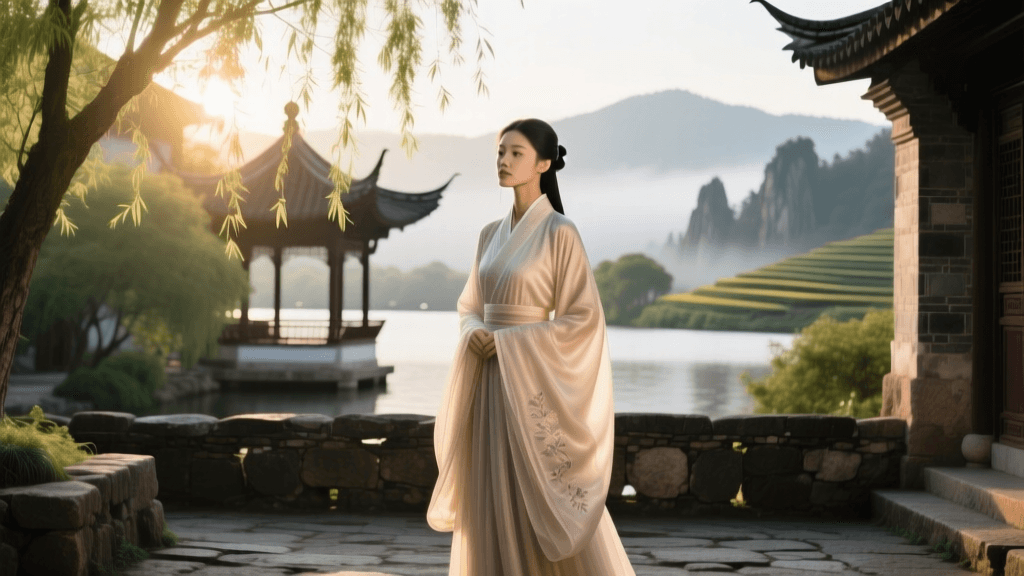
For those who prefer the refined, understated elegance of the Song Dynasty, Hangzhou is unparalleled. The West Lake Cultural Landscape of Hangzhou, a designated UNESCO World Heritage site, offers misty pavilions, weeping willows, and lotus ponds that perfectly frame a Song-style Beizi (long, open-front jacket) paired with a pleated Songmo skirt. The 2026 spring season is particularly ideal, as the blooming peach blossoms provide a soft, natural color palette that complements the pastel hues typical of Song Dynasty fashion.
On-the-Go Maintenance and Cultural Etiquette
Traveling in Hanfu requires more than just looking the part; it demands an understanding of garment maintenance and cultural respect.
- Weather Preparedness: Spring and autumn in China can bring sudden rain showers. Always carry a transparent, traditional-style oilpaper umbrella (youzhisan). Not only does it protect your silk garments from water spots, but it also serves as an exquisite photography prop.
- Hemline Management: When navigating crowded tourist sites or uneven cobblestone streets, use a discreet skirt lifter or simply hold the side seams of your Mamianqun to prevent the hem from dragging through mud or dust.
- Respectful Styling: Ensure your hair is styled appropriately. Wearing Hanfu with messy, modern hairstyles or wearing the garment with the wrong collar overlap (always ensure the left side crosses over the right, known as "jiaoling youren") is considered disrespectful to the tradition. Bring a portable hairpiece kit with traditional hairpins (zanzan) to elevate your look on the go.
Conclusion
Traveling with Hanfu in 2026 is a deeply rewarding experience that bridges the gap between ancient artistry and modern exploration. By investing in the right packing gear, mastering fabric-specific folding techniques, and selecting destinations that honor the historical context of your garments, you ensure that every journey is as seamless as the silk you wear. Pack thoughtfully, travel respectfully, and let the rich tapestry of Asian traditions guide your next adventure.