What Is Traditional Indian Clothing Called? A Comprehensive Guide
When exploring the rich tapestry of global fashion, one question frequently arises among enthusiasts, historians, and travelers alike: what is traditional Indian clothing called? Unlike many Western nations that might point to a single historical costume, the Indian subcontinent boasts a vast, living wardrobe. There is no single term that encapsulates the entirety of Indian traditional dress. Instead, it is a diverse collection of garments—such as the saree, salwar kameez, lehenga, kurta, and dhoti—that vary dramatically by region, climate, religion, and community.
This comprehensive guide delves into the origins, characteristics, and profound cultural significance of these iconic garments, offering a detailed map of India's sartorial heritage and answering the most common questions about the subcontinent's iconic attire.
The Origins & Evolution of Indian Garments
The story of Indian clothing begins thousands of years ago in the Indus Valley Civilization, where archaeological evidence points to the early cultivation of cotton and the use of unstitched fabrics. Historically, the philosophy of Indian dress was deeply rooted in the concept of purity; unstitched cloth was considered sacred and ideal for religious ceremonies. This ancient reverence for the loom and the weaver laid the foundation for a rich Indian textiles heritage that continues to thrive in contemporary times.
As centuries passed, the subcontinent saw the arrival of various empires and trade routes, each leaving an indelible mark on local attire. The most significant shift occurred with the establishment of the Mughal Empire, which introduced tailored and stitched garments to the royal courts. The Mughal influence on fashion brought forth intricate embroidery, luxurious silks, and structured silhouettes like the precursor to the modern sherwani and anarkali. Later, the British colonial era introduced mill-made fabrics and Western tailoring techniques, leading to a fascinating synthesis of indigenous draping styles and European cuts that defines much of modern Indo-Western fashion.
Defining Characteristics of Traditional Indian Attire
While the silhouettes of Indian clothing are incredibly diverse, several unifying characteristics bind them together into a cohesive cultural aesthetic.
- Emphasis on Draping: Many foundational Indian garments, such as the saree, dhoti, and turban, rely on complex folding and draping techniques rather than zippers, buttons, or seams.
- Masterful Textile Arts: India is globally renowned for its weaving and dyeing techniques. From the vibrant tie-dye patterns of Bandhani to the intricate resist-dyeing of Ikat, the fabric itself is often the primary ornament.
- Embellishments & Embroidery: Traditional attire is frequently adorned with zari (metallic thread weaving), zardozi (heavy metal embroidery), mirror work, and block printing, transforming simple textiles into wearable art.
- Modesty & Layering: Across most regions, traditional dress emphasizes modesty, often utilizing layering pieces like the dupatta (a long scarf) or the angavastram (a shoulder stole) to cover the head or shoulders in sacred spaces.
Iconic Garments for Women: Sarees, Lehengas, & Salwar Kameez
When people ask what traditional Indian clothing is called, they are most often thinking of the iconic ensembles worn by Indian women. These three garments form the cornerstone of the feminine wardrobe.
The Saree (or Sari)
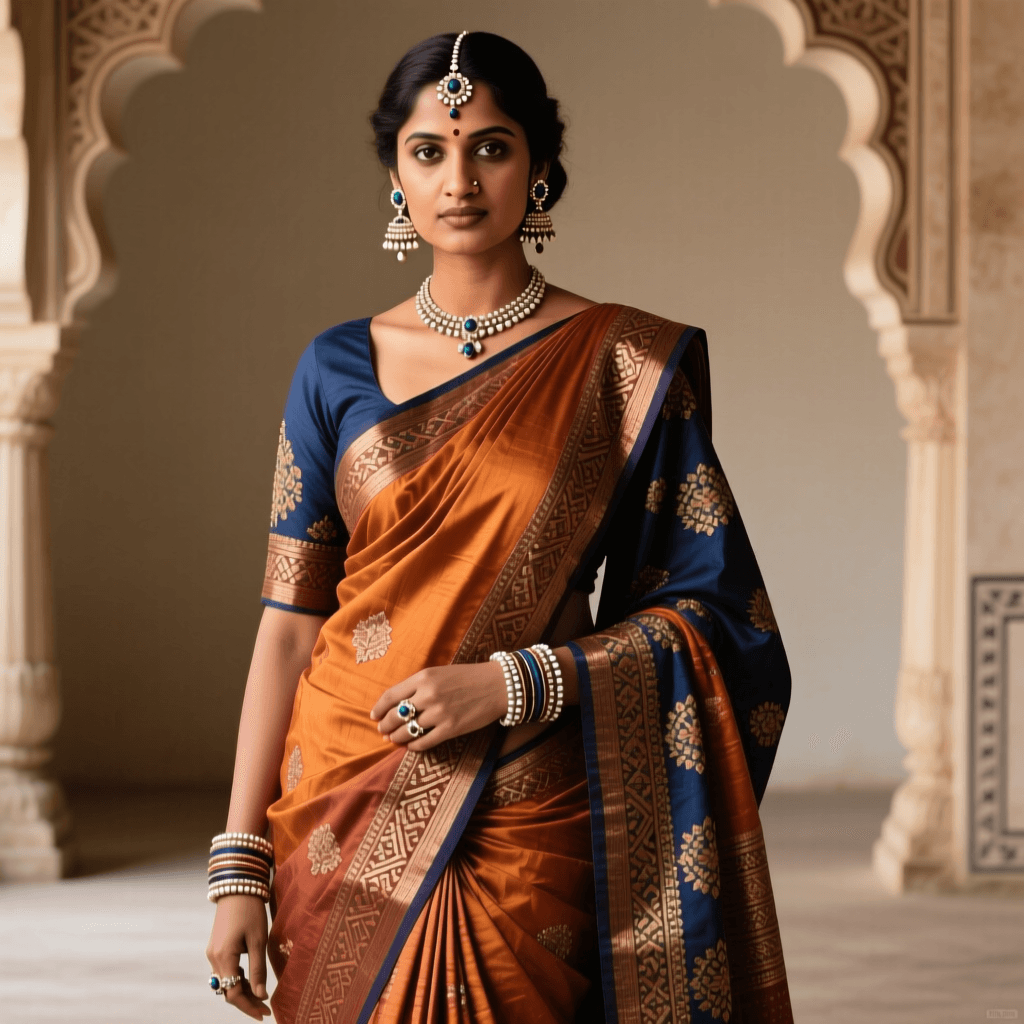
The saree is arguably the most globally recognized Indian garment. It consists of a single, continuous piece of fabric ranging from six to nine yards in length, which is wrapped around the waist and draped over the shoulder. It is typically worn with a fitted blouse (choli) and a petticoat. The beauty of the saree lies in its versatility; there are over a hundred distinct ways to wear it. Exploring various saree draping styles reveals how a single garment can adapt to the physical demands and cultural norms of different states. For those interested in luxury weaves, understanding silk sarees like the Banarasi or Kanjeevaram is essential, as these are considered heirloom pieces passed down through generations.
The Lehenga Choli
The lehenga is a three-piece ensemble comprising a long, heavily embroidered skirt (the lehenga), a fitted blouse (the choli), and a draped scarf (the dupatta). Originating in the royal courts of the Mughal and Rajput empires, the lehenga is the quintessential bridal and festive wear in North India. Its voluminous skirt allows for elaborate surface ornamentation, making it a favorite for weddings and grand celebrations.
The Salwar Kameez
Often referred to as a Punjabi suit, the salwar kameez consists of a long tunic (kameez), loose-fitting tapered trousers (salwar), and a matching scarf (dupatta). It is prized for its comfort, modesty, and ease of movement. The history of the salwar kameez traces its roots to the northern regions of the subcontinent, but it has since become a ubiquitous daily wear option for women across the entire country, available in everything from simple cotton for office wear to heavily embellished silks for parties.
Traditional Menswear: Kurta, Dhoti, & Sherwani
While women's clothing often dominates global discussions of Indian fashion, traditional Indian menswear is equally rich in history and craftsmanship.
The Dhoti, Lungi, & Mundu
Like the saree, the dhoti is an unstitched garment. It is a rectangular piece of cloth, usually cotton, wrapped around the waist and legs, and knotted securely. In South India, variations of this garment are known as the mundu or veshti, often featuring a striking gold or colored border. The lungi is a similar, more casual tubular garment worn widely in tropical regions for its breathability.
The Kurta Pajama
The kurta is a loose, collarless shirt that falls to the knees or below, paired with a pajama (lightweight drawstring trousers) or a churidar (tightly fitting trousers that gather at the ankle). The kurta pajama is the standard everyday traditional wear for men, suitable for everything from casual gatherings to religious ceremonies.
The Sherwani & Bandhgala
For formal occasions and weddings, men don the sherwani—a long, coat-like garment buttoned to the neck, often heavily embroidered and worn over a churidar. The Bandhgala (or Jodhpuri suit) is a slightly shorter, tailored jacket with a closed neck, blending Indian aesthetics with Western tailoring structures.
Headgear: The Turban (Pagdi/Safa)
In many parts of India, particularly in Rajasthan, Punjab, and Maharashtra, the turban is an essential component of traditional male attire. Far more than a mere accessory, the turban signifies honor, respect, and regional identity, with specific colors and tying styles reserved for weddings, festivals, and religious observances.
Regional Variations Across the Subcontinent
India's vast geography and diverse climates have given rise to highly specific regional garments that are deeply tied to local identity.
- North India: In the freezing valleys of Kashmir, men and women wear the Pheran, a long, loose woolen gown designed to trap heat, often worn over a kangri (a pot of hot embers). In Punjab, the vibrant Phulkari embroidery adorns dupattas and shawls, reflecting the agricultural joy of the region.
- South India: The tropical climate dictates the use of lightweight cottons and breathable silks. Women frequently wear the Pavadai (a long skirt and blouse) or the half-saree (Langa Voni), while men prefer the white Mundu with a gold zari border. The region is also famous for its heavy, temple-inspired Kanjeevaram silk sarees.
- East India: In Assam, women wear the elegant Mekhela Chador, a two-piece handloom garment woven from indigenous Muga or Pat silk. In West Bengal, the crisp, white Tant saree with a bold red border is the quintessential attire for festivals and religious rituals.
- West India: Gujarat and Rajasthan are famous for their mirror work and vibrant colors. Men in rural Gujarat often wear the Kediyu, a flared, tightly gathered tunic paired with wide trousers. In Maharashtra, women traditionally drape the nine-yard Nauvari saree in a dhoti-style wrap, allowing for freedom of movement.
The Cultural & Spiritual Significance of Indian Dress
Traditional Indian clothing is never merely functional; it is deeply embedded in the spiritual and social fabric of the culture. Colors play a highly symbolic role. Red, representing prosperity, fertility, and marital bliss, is the quintessential color for Hindu brides. Conversely, white is traditionally associated with mourning and widowhood in many Hindu communities, though it is also worn by men for peace and religious purity. Yellow and turmeric shades are prominent during spring festivals like Basant Panchami, symbolizing knowledge and learning.
Motifs woven into the fabrics also carry profound meanings. The peacock represents grace and royalty; the lotus signifies purity and divine beauty; and the mango motif (which evolved into the Western paisley) is a symbol of fertility and eternal life. Wearing traditional attire during festivals like Diwali, Eid, or Navratri is considered an act of respect toward the deities and a way to honor one's ancestors. The garments serve as a visual language, communicating a person's marital status, regional roots, and religious affiliations without a single word being spoken.
Frequently Asked Questions
What is the most common traditional dress in India?
For women, the saree and the salwar kameez are the most ubiquitous traditional garments, worn daily by millions across the country for work, leisure, and worship. For men, the kurta pajama is the most common traditional outfit, serving as a versatile staple for both casual and semi-formal occasions.
What is the difference between a saree and a lehenga?
A saree is a single, continuous piece of unstitched fabric (usually six to nine yards long) that is draped around the body. A lehenga, on the other hand, is a stitched, three-piece ensemble consisting of a flared skirt, a fitted blouse, and a scarf. While sarees are worn for everything from daily office wear to weddings, lehengas are generally reserved for festive occasions, parties, and bridal wear.
What do Indian men traditionally wear?
Indian men traditionally wear a variety of garments depending on the region and occasion. The most common everyday traditional wear is the kurta pajama. For religious ceremonies or rural settings, the unstitched dhoti or lungi is preferred. For grand occasions like weddings, men opt for heavily embroidered sherwanis or tailored Bandhgala jackets, often accessorized with a turban and traditional footwear like juttis or mojaris.
Is it appropriate for foreigners to wear traditional Indian clothing?
Yes, absolutely. Indian culture is generally very welcoming and appreciative when visitors and foreigners choose to wear traditional attire. Donning a saree, lehenga, or kurta to an Indian wedding, festival, or cultural event is widely viewed as a sign of respect and a genuine interest in the local heritage. It is always helpful to ask a local friend or guide for assistance with draping and styling to ensure the garments are worn correctly and modestly.
What is the traditional Indian dress code for a wedding?
Indian weddings are lavish, multi-day affairs with specific dress codes for different events. For the main wedding ceremony, brides typically wear a red or heavily embellished lehenga or a traditional silk saree, adorned with intricate gold jewelry. Grooms usually wear a regal sherwani with a turban. Guests are expected to wear their finest festive attire, such as brightly colored sarees, anarkali suits, or lehengas for women, and kurta pajamas or sherwanis for men. It is generally advised to avoid wearing solid black or solid white, as these colors can be associated with mourning in certain traditional contexts.