What Are Traditional Fashion Accessories? A Complete Styling & Heritage Guide
Fashion is a universal language, but traditional fashion accessories are its most profound dialects. While clothing provides the foundation of an outfit, accessories offer the punctuation, the emphasis, and the soul. But what exactly are traditional fashion accessories? Far from being mere decorative afterthoughts, these pieces are wearable artifacts that carry the weight of history, the skill of ancestral craftsmanship, and the vibrant stories of diverse cultures. In the modern style landscape, integrating these heritage pieces into your daily wardrobe is not just a sartorial choice; it is a celebration of global artistry and a rejection of fast-fashion homogenization.
Whether you are drawn to the intricate beadwork of indigenous artisans, the heavy silver filigree of ancient metalworkers, or the vibrant warp & weft of handwoven textiles, understanding how to wear and source these items is essential. This comprehensive guide explores the essence of traditional accessories, offering practical styling tips, occasion-based advice, and a conscious buying guide to help you build a wardrobe that honors cultural heritage while remaining effortlessly chic.
Defining Traditional Fashion Accessories
At their core, traditional fashion accessories are adornments that originate from the specific cultural, regional, or historical practices of a community. Unlike mass-produced contemporary accessories, traditional pieces are defined by their materials, techniques, and symbolic meanings. They are often created using methods passed down through generations, relying on indigenous craftsmanship and locally sourced materials.
What separates a traditional accessory from a standard fashion trend is its narrative. A hand-tooled leather belt from the Andes, a silk embroidered scarf from Central Asia, or a hammered brass cuff from West Africa are not just items of utility or beauty; they are markers of identity. They frequently denote social status, marital standing, spiritual beliefs, or regional pride. The creation of these items often involves rituals, specific seasonal harvesting of materials, and a deep respect for the natural world. When you wear a traditional accessory, you are participating in a living history, draped in the legacy of global textiles and ancestral artistry.
Essential Traditional Accessories to Elevate Your Wardrobe
Building a wardrobe that incorporates heritage pieces requires an eye for detail and an appreciation for diverse aesthetics. Here are the essential categories of traditional accessories that can transform your everyday style.
Headwear and Hair Ornaments
From the structured elegance of East Asian hairpins carved from jade or bone to the vibrant, beaded fascinators of African heritage, headwear has long been a primary canvas for traditional expression. In many cultures, the way hair is adorned signifies rites of passage. Today, a simple tortoiseshell-style comb or a woven headband can add an immediate touch of heritage-inspired elegance to a modern updo or loose waves.
Statement Jewelry
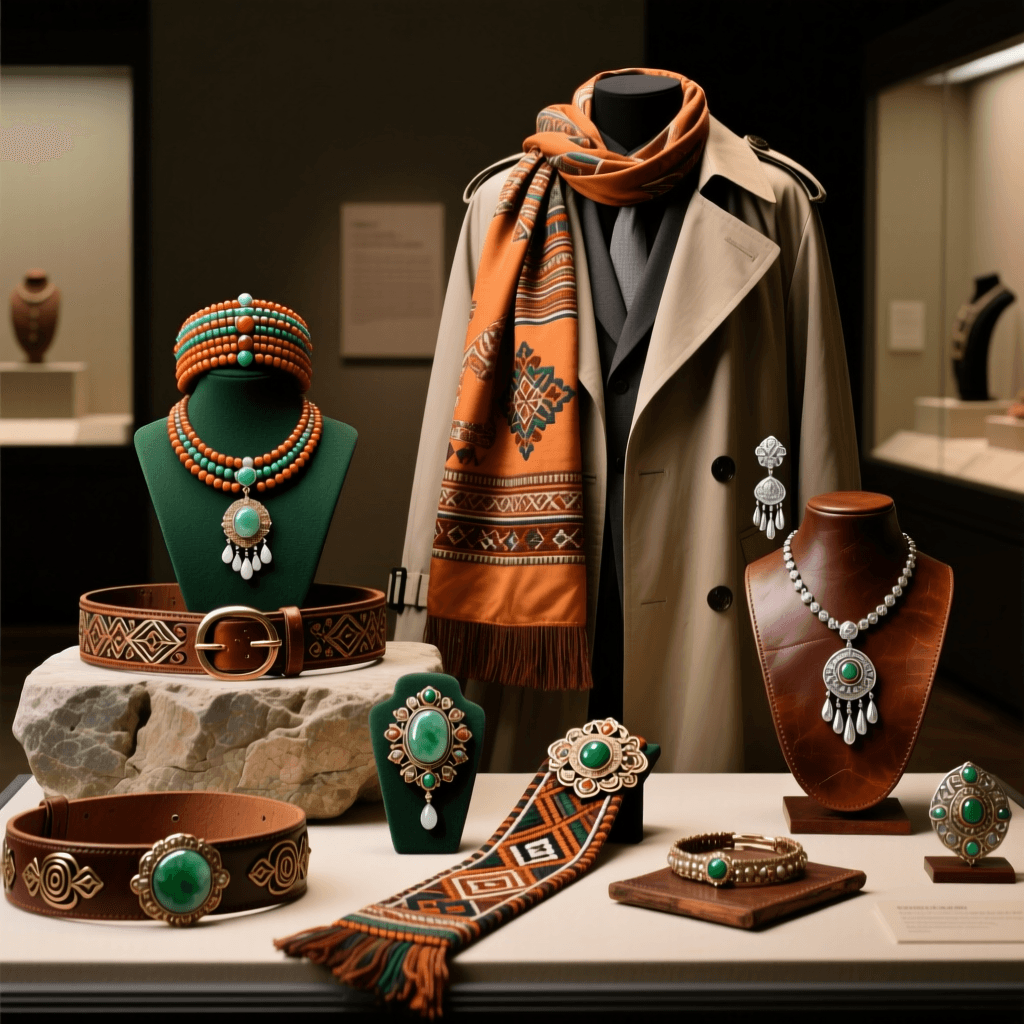
Traditional jewelry is perhaps the most recognized category of cultural adornment. Think of the heavy, oxidized silver jewelry of the Himalayas, the intricate gold filigree of the Mediterranean, or the colorful, geometric beadwork of the Maasai people. These pieces are often bold, serving as the focal point of an ensemble. They are crafted using techniques like lost-wax casting, hand-stamping, and meticulous stone-setting that modern machinery simply cannot replicate.
Belts, Sashes, and Obis
Waist adornments are highly functional yet deeply symbolic. The Japanese obi, the woven fajas of Latin America, and the tooled leather belts of the American Southwest are masterclasses in textile and leather artistry. A traditional woven sash can be wrapped over a modern trench coat or used to cinch a flowing dress, instantly adding structure and a pop of cultural color to your silhouette.
Shawls, Wraps, and Scarves
Textile accessories are incredibly versatile. Handwoven shawls, such as the intricate Jamawar of Kashmir or the vibrant Kente cloth wraps of Ghana, are masterpieces of the loom. Learning how to drape and style traditional shawls allows you to incorporate rich patterns and luxurious, natural fibers like alpaca, silk, and fine wool into your layering strategy.
Styling Tips: Blending Heritage with Modern Fashion
The key to wearing traditional fashion accessories in the modern era is balance. The goal is to look curated and contemporary, avoiding the pitfall of looking as though you are wearing a costume. Here are practical styling strategies to seamlessly blend heritage pieces with your current wardrobe.
The Rule of the Focal Point
Traditional accessories are often visually rich, featuring complex patterns, bold colors, and substantial weight. To prevent your outfit from becoming overwhelming, apply the rule of the focal point. Choose one or two statement pieces—such as a heavy turquoise squash blossom necklace or a heavily embroidered clutch—and keep the rest of your accessories minimal. Let the heritage piece command the attention it deserves.
Textural Contrast
One of the most effective ways to highlight traditional craftsmanship is through textural contrast. Pair the rugged, organic feel of a hand-tooled leather belt with the sleek, modern lines of a tailored midi skirt. Contrast the delicate, intricate beadwork of a vintage-style collar with a crisp, structured white button-down shirt or a classic denim jacket. The juxtaposition of ancient techniques and modern fabrics creates a dynamic, fashion-forward look.
Color Blocking with Purpose
Many traditional accessories feature highly specific, naturally derived color palettes. Use these colors to inform the rest of your outfit. If you are wearing a scarf featuring deep indigos and rich marigolds, pull one of those secondary colors into your top or footwear. This creates a cohesive, intentional look that ties the traditional piece directly into your contemporary ensemble.
Occasions for Wearing Traditional Accessories
Traditional accessories are remarkably versatile and can be adapted for almost any event on your calendar, provided you scale the pieces appropriately.
Everyday and Casual Wear
For daily errands, casual weekends, or relaxed office environments, opt for subtle heritage pieces. A pair of small, hand-hammered brass hoops, a slim woven belt, or a silk scarf tied around the handle of your handbag adds a touch of global sophistication without overpowering your casual uniform of jeans and knitwear.
Professional and Office Settings
In the workplace, you want accessories that convey authority and polish while showcasing your personal style. A structured leather bag featuring subtle, traditional tooling or a sleek, dark-wood bangle bracelet can elevate a standard suit or sheath dress. Stick to pieces with refined lines and avoid overly noisy or cumbersome jewelry that might distract in a professional setting.
Formal Events and Cultural Celebrations
Evening galas, weddings, and cultural festivals are the perfect arenas to let your most spectacular traditional accessories shine. This is the time to drape yourself in a hand-embroidered silk shawl, wear a cascading beaded necklace, or sport an intricate metalwork headpiece. These events celebrate maximalism and storytelling, making them the ideal backdrop for your most treasured heritage items.
Modern Adaptations of Heritage Pieces
The fashion industry is increasingly recognizing the value of ancestral techniques, leading to the rise of fusion fashion. Contemporary designers are collaborating with traditional artisans to reimagine heritage accessories for the modern consumer. This might look like a classic European leather handbag fitted with a handle woven by South American textile artists, or a modern minimalist sneaker featuring subtle, traditional embroidery.
These adaptations are vital for the survival of ancient crafts. By integrating traditional motifs and techniques into modern silhouettes, designers ensure that artisan communities have a sustainable economic outlet, keeping the needle & thread of history moving forward. When shopping, look for brands that prioritize these collaborative, respectful adaptations, ensuring that the original creators are credited and compensated fairly.
The Conscious Buying Guide: Sourcing Authentic Pieces
As the demand for artisanal and traditional fashion grows, so does the market for mass-produced imitations. Sourcing authentic traditional accessories requires diligence, respect, and a commitment to ethical consumerism. Follow these guidelines to build an authentic, ethically sourced collection.
Verify Provenance and Artisan Support
Always ask about the origin of the piece. Authentic sellers will be proud to share the name of the artisan, the region of origin, and the specific community that crafted the item. Look for certifications of Fair Trade or direct partnerships with artisan cooperatives. Purchasing directly from makers or reputable galleries ensures that the financial benefits reach the communities preserving these cultural traditions.
Examine the Materials and Techniques
Authentic traditional accessories are made from natural, locally sourced materials. Look for genuine sterling silver, solid brass, natural stones, hand-spun cotton, and vegetable-tanned leathers. Avoid pieces that use synthetic plastics disguised as turquoise or bone. Examine the stitching, the clasp mechanisms, and the finishing. Handcrafted items will have slight, beautiful imperfections that prove they were made by human hands, not factory molds.
Understand Cultural Appropriation vs. Appreciation
When buying traditional accessories, it is crucial to approach the culture with respect. Avoid purchasing items that hold deep, closed spiritual or religious significance if you are not part of that culture. Instead, focus on accessories meant for trade, everyday adornment, and artistic expression. Educate yourself on the symbolism behind the patterns and motifs you wear, allowing you to share the story of the piece with others accurately and respectfully.
Frequently Asked Questions
What is the difference between traditional and vintage accessories?
Vintage accessories refer to items that were produced in a previous era, typically at least twenty to ninety years ago, reflecting the fashion trends of that specific time. Traditional accessories, on the other hand, are defined by their cultural lineage, ancestral techniques, and regional materials. While a vintage piece might be a 1950s plastic brooch, a traditional piece is a hand-carved bone pendant made using methods that have remained unchanged for centuries.
How do I care for delicate traditional jewelry and textiles?
Heritage pieces require specialized care to preserve their integrity. For textiles, avoid harsh chemical detergents and machine washing; instead, hand wash in cold water with a mild, pH-neutral soap or seek professional dry cleaning for delicate silks and wools. For metalwork and beaded jewelry, store them in a cool, dry place away from direct sunlight. Use a soft, dry cloth to polish metals, and consult our comprehensive accessory care guide for specific material instructions.
Can I mix traditional accessories from different cultures?
Yes, mixing traditional accessories from various global cultures can result in a beautifully eclectic and personal style. The key to doing this successfully is to find a unifying element, such as a shared color palette, a similar material (like mixing different types of hammered silver), or a cohesive aesthetic vibe. Ensure that each piece is given enough space to be appreciated, avoiding a cluttered look that diminishes the individual beauty of each cultural artifact.
Are traditional fashion accessories sustainable?
Authentic traditional accessories are inherently sustainable. They are the antithesis of fast fashion. Artisans typically utilize locally sourced, natural, and biodegradable materials, employing slow, manual production methods that have a minimal carbon footprint. Furthermore, because these pieces are crafted with immense skill and durability, they are designed to be heirlooms, passed down through generations rather than discarded after a single season. Investing in traditional accessories is a powerful way to support sustainable, ethical fashion practices.