Top Wasai Kimono Sewing Workshops 2026: In-Person & Hybrid
The Global Resurgence of Wasai in 2026
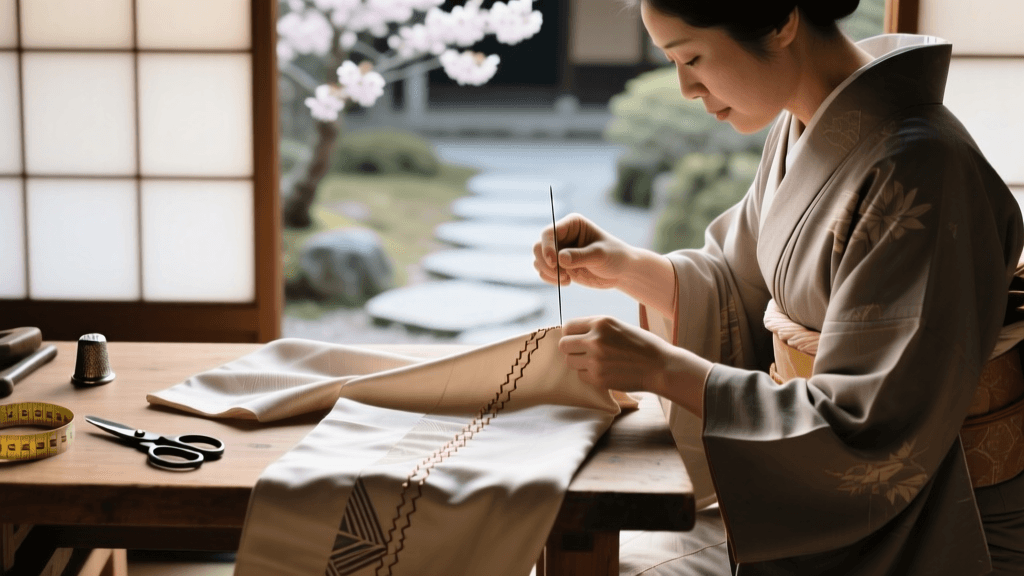
Traditional Japanese garment construction, known as wasai, is experiencing a profound global renaissance in 2026. Unlike Western tailoring (yosai), which relies on curved seams, darts, and complex pattern drafting to contour the human body, wasai is built on the philosophy of chokusen-date—straight-line sewing. The kimono is constructed from rectangular panels cut from a single bolt of fabric, meaning the garment is not shaped to the body; rather, the body shapes the garment through the art of kitsuke (dressing). According to the Metropolitan Museum of Art’s Heilbrunn Timeline of Art History, this straight-line construction not only preserves the integrity of the textile but also allows the garment to be entirely disassembled, cleaned, and resewn, a testament to sustainable fashion centuries before the modern zero-waste movement.
For textile enthusiasts, fashion historians, and sustainable sewing practitioners, 2026 offers unprecedented access to wasai education. Driven by a surge in heritage craft preservation initiatives and the normalization of high-definition hybrid learning, students worldwide can now study under master artisans. Whether you are looking to travel to Kyoto for an immersive month-long intensive or join a live-streamed seminar from your home studio, understanding the landscape of wasai workshops is the first step toward mastering this meticulous craft.
Premier Wasai Workshops and Seminars for 2026
1. Kyoto Heritage Craft Institute (In-Person Intensive)
Located in the historic Nishijin weaving district, the Kyoto Heritage Craft Institute offers the gold standard for immersive wasai education. Their 2026 flagship program is a four-week intensive designed for intermediate sewists. Students work exclusively with silk chirimen (crepe) and learn the traditional hon-buse method of finishing seams without a modern serger. The curriculum covers the complete construction of a komon (everyday patterned kimono) and a haori (jacket). Classes are conducted in Japanese with real-time AI-assisted translation earpieces provided by the institute, breaking down the language barrier that historically limited international enrollment.
2. Tokyo Global Wasai Academy (Hybrid Seminar)
For those who cannot commit to a month in Japan, the Tokyo Global Wasai Academy has revolutionized the learning experience with their 2026 Hybrid Seminar. This 12-week program combines pre-recorded macro-photography stitch tutorials with weekly live-streamed critique sessions. The academy utilizes a proprietary augmented reality (AR) overlay app that allows remote students to project digital seam allowances and stitch-line guides directly onto their cutting mats via smartphone or tablet. This technological leap ensures that international students maintain the exact millimeter precision required in traditional Japanese sewing.
3. Nippori Textile Town Weekend Masterclasses (Local/Expat Focus)
Held in Tokyo’s famous Nippori fabric district, these weekend seminars are perfect for residents or long-term visitors. Instructors guide small groups of six through the labyrinthine fabric shops to source their own tanmono (fabric bolts) before returning to the studio for cutting and sewing. The 2026 syllabus places a heavy emphasis on upcycling vintage, pre-worn kimono silk, teaching students how to navigate fabric degradation, re-dye faded panels, and reinforce weak fibers using traditional kaketsugi (invisible mending) techniques.
2026 Workshop Comparison: In-Person vs. Hybrid vs. Virtual
Choosing the right learning environment depends on your budget, schedule, and access to specialized tools. Below is a comparison of the primary workshop formats available this year.
| Feature | Kyoto In-Person Intensive | Tokyo Global Hybrid Seminar | Virtual Masterclass Only |
|---|---|---|---|
| 2026 Average Cost | ¥320,000 ($2,150 USD) | $650 USD | $295 USD |
| Duration | 4 Weeks (Full-Time) | 12 Weeks (Part-Time) | 8 Weeks (Self-Paced + Live Q&A) |
| Language of Instruction | Japanese (AI Translation Provided) | English & Japanese | English (Subtitled) |
| Tool Provision | Full professional kit included | Basic kit shipped globally | Student must source independently |
| Best For | Dedicated artisans, professionals | Serious hobbyists, global students | Beginners, theory-focused learners |
The 2026 Wasai Toolkit: Essential Equipment
Attempting wasai with standard Western sewing tools is a recipe for frustration. The tactile nature of silk and the strict geometric requirements of the kimono demand specialized equipment. If your chosen seminar does not provide a kit, you must acquire the following essentials before your first class:
- Herabera (Bamboo Spatula): Used instead of fingers or a standard bone folder to crease seams and turn corners. The natural oils in the bamboo prevent snagging delicate silk threads. Expect to pay around $15-$25 USD for a master-crafted spatula.
- Kote (Traditional Iron): Unlike Western steam irons, a kote uses dry, localized heat and a wooden handle to press seams flat without stretching the bias. In 2026, temperature-controlled cordless thermal kote models have become the industry standard for students, eliminating the risk of cord-drag ruining a perfectly aligned seam. These modern upgrades retail for approximately $120 USD.
- Me-jakushi (Bamboo Ruler): A flexible, 1-meter bamboo ruler marked in traditional shaku, sun, and bu measurements, alongside metric conversions. The flexibility allows it to curve slightly when measuring around the rolled edges of a fabric bolt.
- Kakehari (Tension Frame) and Hari (Needle): A wooden frame and heavy needle used to anchor the fabric to the floor or table, keeping the silk taut while you sew. This third-hand tool is non-negotiable for achieving the microscopic, even stitches required in wasai.
- Wasai Needles: Japanese hand-sewing needles are sized differently than Western ones, ranging from 1 (thickest) to 10 (finest). For standard kimono silk, a size 3 or 4 is typically used. The eyes are exceptionally long to accommodate thick silk threads without creating bulk.
Understanding and Sourcing Tanmono Fabric
The foundation of any kimono is the tanmono, a standardized bolt of fabric measuring approximately 36 centimeters (14 inches) in width and 12 meters (13 yards) in length. This exact dimension dictates the entire pattern-making process; there is no cutting to shape, only folding and straight-line seaming. The Japan Traditional Crafts Exhibition continues to champion the artisan weavers and dyers in regions like Yuki, Oshima, and Kaga who produce these exquisite bolts, ensuring that the supply chain for authentic materials remains robust in 2026.
For your first workshop project, instructors highly recommend avoiding vintage silk chirimen or complex tsumugi (slub silk), which can be slippery or prone to shifting. Instead, opt for a cotton or high-quality polyester tanmono. Cotton behaves predictably under the herabera and holds a crease beautifully, allowing you to focus on mastering the kise (the technique of rolling the seam allowance slightly to the inside so the stitching line is hidden from the outside) without fighting the fabric. A standard cotton practice bolt can be sourced from online Japanese textile exporters for $80 to $150 USD, a worthwhile investment before cutting into a $1,000 silk bolt.
Actionable Preparation Steps for Your First Seminar
Success in a wasai workshop begins long before you thread your needle. The physical and mental demands of traditional Japanese sewing require specific preparation:
- Adapt Your Posture: Traditionally, wasai is performed while sitting in seiza (kneeling) on the floor. While many 2026 international seminars offer ergonomic chair-and-table adaptations, building core strength and flexibility will help you endure long hours of meticulous hand-stitching. Practice sitting with a perfectly straight back to prevent shadow-casting over your work area.
- Master the Thread Conditioner: Silk thread tangles easily. Learn to use irosome (thread conditioner/beeswax alternatives) to coat your thread before sewing. This reduces friction and prevents the thread from twisting and knotting as you pull it through tightly woven silk.
- Practice the Chidori-gake (Catch Stitch): Many hems and facings in a kimono are finished with chidori-gake, a cross-stitch that allows the fabric to move and stretch slightly without popping the thread. Spend ten hours practicing this single stitch on scrap fabric before your seminar begins. Your muscle memory must be flawless, as instructors will grade the uniformity of your tension on the reverse side of the fabric.
Conclusion
Learning wasai is not merely about acquiring a new sewing technique; it is an immersion into a philosophy of patience, precision, and deep respect for the textile. As highlighted by the Victoria and Albert Museum’s extensive Asian textile collections, the kimono represents a perfect synthesis of art and engineering. Whether you choose the immersive atmosphere of a Kyoto studio or the technological convenience of a 2026 hybrid seminar, mastering the straight-line stitch will forever change how you view the intersection of fabric, form, and cultural heritage.