Mulberry vs Ahimsa Silk for Cheongsams: 2026 Fabric Guide
The Evolution of Cheongsam Textiles in 2026
The cheongsam, also widely known as the qipao, remains a cornerstone of East Asian sartorial heritage, seamlessly blending historical elegance with contemporary fashion. As we navigate the sartorial landscape of 2026, the conversation surrounding traditional garments has shifted dramatically toward material provenance, ethical production, and sustainable luxury. While the silhouette of the cheongsam has seen various modern adaptations—from structural neoprene blends to minimalist linen cuts—silk remains the undisputed soul of this iconic garment. However, the definition of 'silk' has expanded far beyond the traditional glossy fabrics of the past century.
Today, discerning clients and master tailors are increasingly weighing the merits of traditional Mulberry silk against the rapidly rising Ahimsa (or peace) silk. This shift is not merely a passing trend but a fundamental reevaluation of how we interact with natural fibers. According to UNESCO's Intangible Cultural Heritage archives, sericulture has been a deeply ingrained cultural practice for millennia, yet modern ethical standards are prompting a renaissance in how these ancient techniques are applied. Choosing the right textile for your cheongsam in 2026 requires a nuanced understanding of fiber structure, drape, luster, and the ethical footprint of your garment.
Mulberry Silk: The Undisputed Traditional Standard
For centuries, Mulberry silk has been the gold standard for luxury cheongsams. Derived from the Bombyx mori moth, which feeds exclusively on the leaves of the white mulberry tree, this textile represents the pinnacle of traditional sericulture. The defining characteristic of Mulberry silk is its continuous filament. Because the cocoon is typically boiled with the pupa inside to prevent the moth from breaking the thread, the resulting silk fiber can be unreeled in a single, unbroken strand that can measure up to a mile in length.
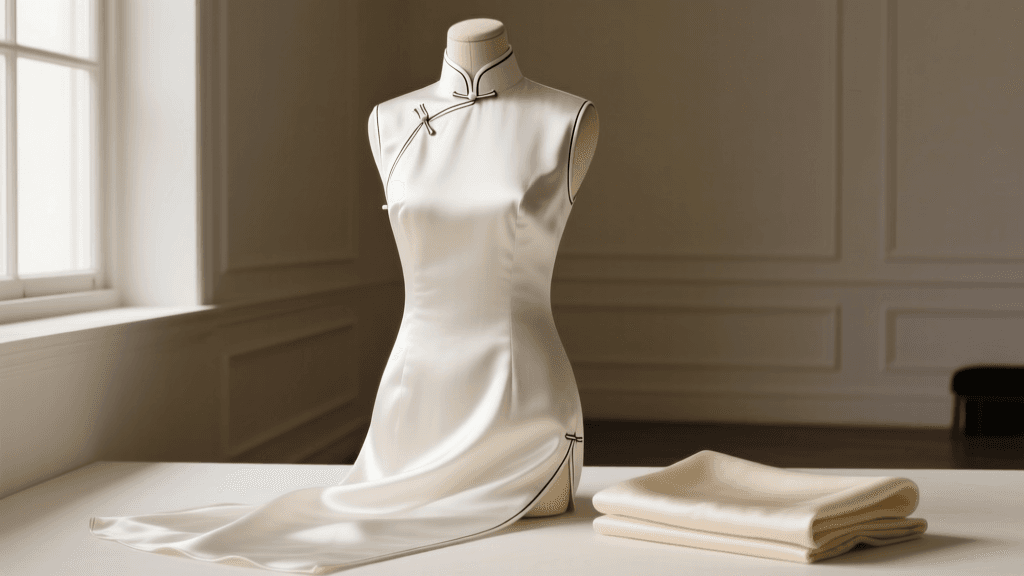
This continuous filament is what gives Mulberry silk its legendary attributes. In 2026, high-grade 22-momme and 30-momme Mulberry silk charmeuse remains the preferred choice for formal evening qipaos, wedding cheongsams, and high-society gala wear. The unbroken fibers reflect light uniformly, creating a brilliant, liquid-like luster that is impossible to replicate with synthetic alternatives. Furthermore, the tensile strength of continuous filament silk allows it to be woven into incredibly fine yet durable fabrics like silk crepe de chine and intricate jacquard brocades.
From a tailoring perspective, Mulberry silk behaves predictably under the iron and needle. Its smooth surface allows for the creation of the cheongsam's signature high collar and form-fitting bodice without adding unnecessary bulk. However, the environmental and ethical costs of traditional sericulture—specifically the termination of the pupa and the high water and energy requirements of mulberry cultivation and silk reeling—have led many eco-conscious consumers to seek alternatives.
Ahimsa Silk: The Ethical Alternative Reshaping Modern Qipaos
Enter Ahimsa silk, often referred to as 'peace silk,' which has seen a massive surge in popularity among avant-garde cheongsam designers and sustainable fashion advocates in 2026. The Ahimsa method, pioneered in India but now adopted by boutique sericulture farms across Asia, prioritizes the life cycle of the moth. Instead of boiling the cocoons, the farmer allows the Eri or Tasar moth to hatch naturally and emerge from the cocoon. Because the moth chews a hole to escape, the continuous silk filament is broken into thousands of shorter staples.
These broken filaments must then be spun together, much like cotton or wool, rather than reeled. This fundamental difference in processing results in a textile that is radically different from traditional Mulberry silk. Ahimsa silk possesses a distinctly matte finish, a slightly slubby texture, and a hand-feel that is often compared to a luxurious blend of raw linen and soft cashmere. It lacks the mirror-like shine of charmeuse, but it makes up for it with a rich, organic depth and exceptional breathability.
For the modern cheongsam, Ahimsa silk offers a more relaxed, understated aesthetic. It is highly favored in 2026 for daywear, creative professional attire, and contemporary interpretations of the qipao that favor structural volume and matte elegance over traditional glossy sensuality. The fabric takes beautifully to natural botanical dyes, such as indigo, madder root, and pomegranate rind, which bond with the spun fibers to create complex, variegated colors that appeal to the modern artisanal market.
Head-to-Head Comparison: Mulberry vs. Ahimsa Silk
To make an informed decision for your next bespoke cheongsam, it is essential to understand how these two textiles perform across key metrics. The following table outlines the primary differences based on 2026 textile market data and master tailor feedback.
| Feature | Mulberry Silk (Traditional) | Ahimsa Silk (Peace Silk) |
|---|---|---|
| Filament Structure | Continuous, unbroken reel | Spun, broken staples |
| Surface Luster | High shine, liquid reflection | Matte, soft organic glow |
| Drape and Hand-feel | Fluid, heavy, smooth | Structured, slightly textured, soft |
| Breathability | Moderate to High | Exceptional (due to spun air pockets) |
| 2026 Avg. Cost (per yard) | $45 - $90 USD (22-30 momme) | $60 - $120 USD (artisanal spun) |
| Tailoring Difficulty | Moderate (requires careful handling) | High (prone to fraying, needs specialized finishing) |
| Best Cheongsam Style | Formal, bridal, traditional evening | Daywear, avant-garde, relaxed fit |
| Ethical Impact | Low (pupa is terminated) | High (cruelty-free, moth survives) |
Tailoring Techniques for Modern Silks
The construction of a cheongsam is an exercise in precision engineering, and the choice of silk dictates the tailor's approach. When working with traditional Mulberry silk, the primary challenge is managing the fabric's fluidity and propensity to slip. Master tailors in Shanghai and Singapore frequently use silk organza as an underlining to provide structure to the mandarin collar and the intricate pankou (frog button) fastenings without compromising the outer fabric's drape. In 2026, the use of laser-cut, water-soluble stabilizers has become standard practice in high-end ateliers to ensure perfectly crisp hems and seam allowances on slippery Mulberry charmeuse.
Ahimsa silk presents an entirely different set of challenges. Because it is a spun fiber, the cut edges are highly susceptible to fraying. Tailors must employ advanced seam finishing techniques, such as French seams or Hong Kong bound seams using lightweight silk bias tape, to ensure the interior of the cheongsam is as beautiful and durable as the exterior. Furthermore, Ahimsa silk does not respond well to heavy steam pressing in the same way Mulberry does; it requires a lower heat setting and a pressing cloth to preserve its natural, slubby texture. The spun nature of the fabric also means it has more mechanical stretch, requiring tailors to let the garment 'rest' on a dress form for 24 to 48 hours before finalizing the hemline to prevent uneven dropping.
Sourcing and Verifying Authentic Silk in 2026
As the demand for both traditional and ethical silks has grown, so too has the sophistication of the global textile supply chain. In 2026, verifying the authenticity and origin of your cheongsam fabric is easier than ever, thanks to the integration of blockchain tracing and rigorous international certifications. When sourcing Ahimsa silk, buyers should look for certifications from organizations like the Global Organic Textile Standard (GOTS) or specific peace-silk accreditations that guarantee the non-violent harvesting of the cocoons.
For traditional silk, understanding its historical and cultural weight is just as important as verifying its material composition. The Metropolitan Museum of Art's Heilbrunn Timeline of Art History provides extensive documentation on the historical trade routes and cultural significance of silk weaving, reminding us that purchasing high-quality Mulberry silk is an investment in a living heritage. Similarly, the Victoria and Albert Museum's textile archives offer invaluable insights into how silk weaving techniques have evolved, helping modern consumers appreciate the complexity of a genuine silk jacquard brocade versus a modern synthetic imitation.
When purchasing fabric for a bespoke cheongsam, always request a burn test if you are buying from an unverified vendor. Genuine silk, whether Mulberry or Ahimsa, will burn slowly, smell like singed hair, and leave a crushable, brittle ash. Synthetic alternatives like polyester will melt, smell like sweet plastic, and form a hard, uncrushable bead. In 2026, reputable textile merchants will also provide a digital passport for the fabric, detailing the farm of origin, the dyeing process, and the water footprint of the specific bolt of silk you are purchasing.
Making the Right Choice for Your Garment
Ultimately, the decision between Mulberry and Ahimsa silk for your cheongsam depends on the intended use of the garment, your personal aesthetic, and your ethical priorities. If you are commissioning a cheongsam for a formal evening event, a wedding, or a high-stakes diplomatic banquet, traditional Mulberry silk remains the unparalleled choice. Its brilliant luster, fluid drape, and historical prestige convey a level of formality and elegance that defines the classic qipao silhouette.
Conversely, if you are seeking a cheongsam for daily wear, artistic expression, or a modern professional environment, Ahimsa silk offers a compelling, cruelty-free alternative. Its matte finish, breathable texture, and incredible affinity for natural dyes make it a favorite among contemporary designers who are pushing the boundaries of what a cheongsam can be in the mid-2020s. By understanding the unique properties of both textiles, you can ensure that your next traditional garment is not only a masterpiece of tailoring but also a true reflection of your personal values and style.