Ceremonial vs Everyday Hanbok: 2026 Buying Guide
The hanbok, Korea’s iconic traditional garment, has experienced a massive renaissance over the last decade. As we navigate the fashion landscape of 2026, the distinction between what you wear to a casual café in Seoul’s Bukchon Hanok Village and what you wear to a formal Chuseok wedding has never been more defined. Understanding the nuances between everyday hanbok (Gaeryang Hanbok) and ceremonial hanbok (Myeongjeol, Hwalot, and Wonsam) is essential for anyone looking to invest in authentic, culturally respectful, and stylish traditional Asian garments.
Whether you are a collector, a fashion student, or someone preparing for a traditional Korean ceremony, this comprehensive 2026 guide will break down the fabrics, silhouettes, pricing, and care requirements for both categories. For a deeper historical foundation, Wikipedia's extensive archive on the Hanbok provides an excellent baseline on the garment's evolution from the Three Kingdoms period to the modern era.
The 2026 Hanbok Renaissance: Tradition Meets Innovation
In 2026, the global fascination with Korean culture has pushed traditional garments into the mainstream wardrobe. However, the market has strictly bifurcated into two distinct categories: hyper-practical everyday wear and opulent, historically accurate ceremonial wear. According to the Korean Culture and Information Service (KOCIS), modern designers are now utilizing sustainable, tech-infused fabrics for daily wear while reserving painstakingly hand-woven silks for ceremonial pieces. This divergence ensures that the hanbok remains a living, breathing part of daily life without compromising the sanctity of its ceremonial roots.
Everyday Hanbok (Gaeryang Hanbok): Practicality Meets Heritage
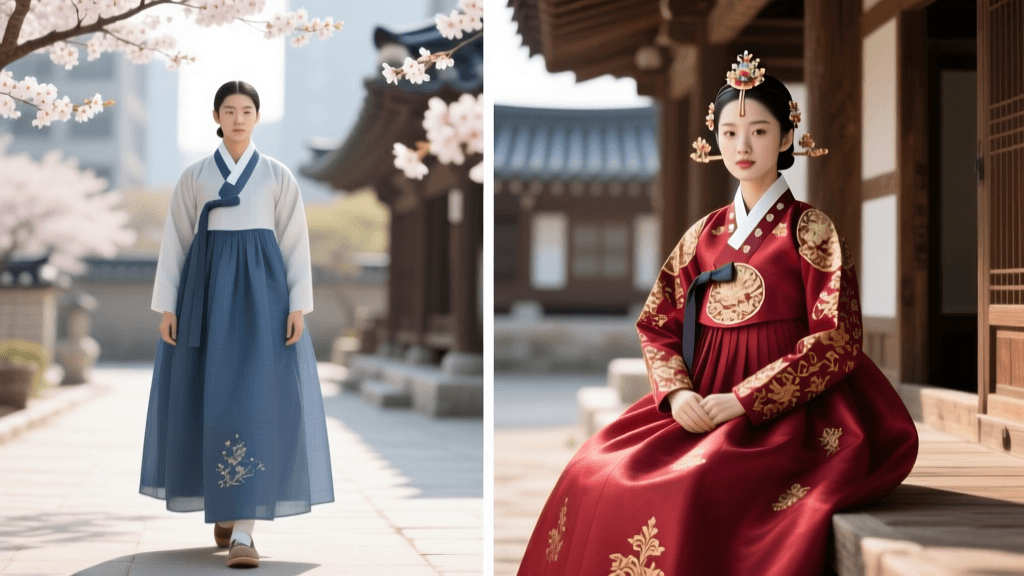
Everyday hanbok, often referred to as Gaeryang Hanbok (improved or modernized hanbok), is designed for the rigors of modern daily life. In 2026, these garments prioritize mobility, easy maintenance, and subtle elegance over historical volume.
Silhouette and Construction
The modern jeogori (jacket) is typically cropped just above the waist or tailored to hit at the hip, avoiding the extreme shortness of the late Joseon era while remaining long enough to tuck in or layer. The chima (skirt) and baji (trousers) feature narrowed hems. A standard everyday chima in 2026 falls at the mid-calf or ankle and frequently includes hidden side-seam pockets and elasticized waistbands with discrete zipper closures.
Fabrics and Dyes
Daily wear relies heavily on breathable, machine-washable textiles. Tencel-linen blends, organic cotton, and washable poly-silk are the industry standards. A major trend in 2026 is the use of galdae (fermented persimmon dye), which provides natural antibacterial properties and a beautiful, earthy gradient that softens with every wash.
2026 Pricing and Accessibility
Everyday hanbok is highly accessible. A complete, high-quality two-piece set (jeogori and chima/baji) from a reputable contemporary brand typically ranges from $60 to $140 USD (approx. 80,000 to 190,000 KRW). Mass-market options can be found for as low as $35 USD, though these often sacrifice structural integrity and ethical manufacturing standards.
Ceremonial Hanbok: Opulence, Volume, and Ritual
Ceremonial garments are reserved for major life events: weddings, first birthdays (doljanchi), ancestral rites (charye), and major holidays like Seollal and Chuseok. These garments are characterized by their vivid colors, luxurious textiles, and voluminous, floor-sweeping silhouettes.
Key Ceremonial Garments
- Myeongjeol Hanbok: The standard holiday and formal visitation hanbok. It features brighter colors than daily wear and often includes subtle geumbak (gold leaf stamping) on the sleeves or chest.
- Hwalot: The traditional bridal robe, characterized by its wide sleeves, vibrant red and blue color blocking, and intricate embroidery of peonies and phoenixes.
- Wonsam: A highly formal, floor-length coat with wide, trailing sleeves, historically reserved for royalty but now adapted for high-end ceremonial wear and stage performances.
Fabrics and Embellishments
Ceremonial hanbok demands luxury. In 2026, authentic pieces are crafted from 100% Myeongju (traditional Korean silk) or high-grade ramie. The silk weight typically ranges from 16 to 19 momme to ensure the garment holds its bell-like shape without collapsing. Gold leaf stamping, hand-embroidered daenggi (ribbons), and elaborate norigae (ornamental pendants) are mandatory for a complete ceremonial look.
2026 Pricing and Investment
Ceremonial hanbok is an investment piece. A custom-tailored Myeongjeol set starts around $400 USD and can easily exceed $2,500 USD for bridal Hwalot with hand-embroidered motifs. Because of the cost, the 2026 rental market in Seoul remains incredibly robust, with premium ceremonial rentals averaging 55,000 KRW ($40 USD) for a 4-hour period.
2026 Comparison Matrix: Everyday vs. Ceremonial
To help you make an informed purchasing decision, refer to the comparison table below outlining the core differences between the two categories.
| Feature | Everyday (Gaeryang) | Ceremonial (Myeongjeol/Hwalot) |
|---|---|---|
| Primary Use | Daily wear, casual outings, office | Weddings, holidays, ancestral rites |
| Silhouette | Narrow, mid-calf, tailored jeogori | Voluminous, floor-length, layered |
| Standard Fabrics | Cotton, Linen, Tencel, Poly-blends | Myeongju Silk, Ramie, Brocade |
| Embellishments | Minimal, subtle embroidery | Geumbak (gold leaf), heavy embroidery |
| Price Range (2026) | $60 - $140 USD | $400 - $2,500+ USD |
| Maintenance | Machine washable (gentle cycle) | Dry clean only, specialized storage |
| Closure Type | Hidden zippers, hooks, elastic | Traditional fabric ties (goreum) |
Actionable Tailoring and Measurement Guide
If you are ordering a custom hanbok in 2026, whether everyday or ceremonial, precise measurements are critical. The structural integrity of the garment relies on the relationship between the wearer's shoulders and the dongjeong (the white collar).
Measuring for the Jeogori (Jacket)
- Chest and Shoulders: Measure the fullest part of your chest. For an everyday jeogori, add exactly 2 inches (5 cm) of ease to allow for modern layering over turtlenecks or blouses. For ceremonial wear, add 4 inches (10 cm) to accommodate the traditional inner garments (sokjeoksam).
- Arm Length: Measure from the base of the neck, over the shoulder, down to the wrist bone. Ceremonial sleeves should extend 1 to 2 inches past the wrist to allow for the elegant folding of the geumbak cuffs.
- The Goreum (Ties): Ensure your tailor crafts the goreum to be at least 22 inches (55 cm) long for everyday wear, and up to 35 inches (90 cm) for ceremonial wear, allowing for the proper looping and knotting technique.
Measuring for the Chima (Skirt)
For a modern everyday chima, the waistband should sit at your natural waist, and the hem should hit 2 inches above the ankle bone to prevent tripping in modern footwear. For a ceremonial chima, the waistband sits slightly higher (empire waist), and the hem must graze the floor when wearing traditional hwa (shoes) or modest heels.
Care, Storage, and Maintenance in 2026
The longevity of your hanbok depends entirely on how you treat the textiles. Modern technology has made everyday care easier, but ceremonial pieces still require traditional preservation methods.
Everyday Garment Care
Most 2026 Gaeryang hanbok can be machine washed. Use a mesh laundry bag, select the delicate cycle with cold water, and use a pH-neutral detergent. Never tumble dry; hang the garments in the shade to prevent UV fading, especially for persimmon-dyed fabrics. Iron on a low setting with a pressing cloth to maintain the crispness of the dongjeong.
Ceremonial Garment Preservation
Silk ceremonial hanbok must never be washed with water. After wearing, hang the garment in a well-ventilated, dark room for 24 hours to allow moisture and odors to dissipate. Store the pieces flat in breathable cotton garment bags with natural camphor or cedar blocks to deter moths. The Korea Tourism Organization frequently updates its cultural guides, noting that specialized hanbok dry cleaners in Seoul's Jongno district now offer ozone-sanitization services that clean silk without degrading the gold leaf stamping.
Where to Source Authentic Pieces in 2026
When building your wardrobe, knowing where to shop is half the battle. For everyday hanbok, online platforms like Musinsa and W Concept host dedicated 'Modern Hanbok' sections featuring verified contemporary designers. These platforms offer global shipping and detailed size-conversion charts for international buyers.
For ceremonial hanbok, it is highly recommended to visit the specialized boutiques in Seoul’s Insadong and Bukchon neighborhoods. Establishments like Jisun Kim Hanbok or Hanbok Nam offer bespoke services where master artisans (jang-in) hand-stitch the garments. If you are outside of Korea, look for certified international stockists that import directly from the Korean Ministry of Culture's endorsed artisan cooperatives to ensure you are receiving genuine, ethically produced silk rather than mass-produced synthetic imitations.
Conclusion
The dichotomy between everyday and ceremonial hanbok in 2026 highlights the beautiful adaptability of Asian traditional garments. By understanding the distinct purposes, fabrics, and care requirements of both categories, you can curate a wardrobe that honors Korean heritage while seamlessly integrating into your modern lifestyle. Whether you are slipping into a breathable linen Gaeryang set for a morning commute or being draped in a heavy silk Hwalot for your wedding day, the hanbok remains a profound, wearable connection to history.