Best Wafuku Sewing Workshops 2026: Learn Kimono Tailoring
The Renaissance of Wafuku Tailoring in 2026
As the global slow fashion movement reaches new heights in 2026, traditional garment making has transitioned from a niche historical pursuit to a highly sought-after, practical skill. Among the most revered of these traditions is wafuku, the art of Japanese traditional clothing, with the kimono standing as its most iconic silhouette. For decades, mastering the intricate, straight-seamed construction of a kimono required relocating to Japan and committing to a multi-year apprenticeship under a master tailor. However, the educational landscape for traditional Asian textiles has evolved dramatically.
Today, aspiring tailors and sustainable fashion enthusiasts can access high-quality wafuku sewing workshops and seminars from anywhere in the world. According to the Metropolitan Museum of Art's Heilbrunn Timeline of Art History, the kimono's T-shaped, straight-seamed construction is deceptively simple, yet it requires a profound understanding of fabric grain, precise folding, and specialized hand-stitching techniques that differ vastly from Western garment construction. In 2026, hybrid learning models have democratized this ancient craft, allowing students to learn authentic kimono tailoring techniques through a blend of high-definition digital seminars and intensive, in-person weekend retreats.
The Shift to Hybrid Seminars and Global Accessibility
The post-pandemic era catalyzed a permanent shift in how traditional Asian arts are taught. By 2026, the most prestigious wafuku academies in Kyoto and Tokyo have established robust hybrid seminar programs. These programs are specifically designed for international students who cannot commit to the traditional three-year deshi (apprenticeship) model. Hybrid seminars typically begin with a six-week online theoretical and basic stitching module, culminating in a two-week immersive residency in Japan or at a certified international satellite campus.
This model not only reduces the financial barrier to entry but also fosters a global community of wafuku practitioners. Students now collaborate across time zones, sharing progress on their tanmono (fabric bolts) and troubleshooting complex sleeve attachments via augmented reality (AR) sewing applications introduced in late 2025. These modern tools overlay digital stitching guides onto the physical fabric through a tablet or smart glasses, ensuring that the precise 2-millimeter seam allowances required in kimono tailoring are maintained.
Top Workshop Formats Available in 2026
1. The Tokyo Wafuku Academy Hybrid Intensive
Regarded as the gold standard for international students, this 8-week seminar blends asynchronous video modules with live, weekly critique sessions. The curriculum focuses on constructing a yukata (summer cotton kimono) and a hitoe (unlined silk kimono). Tuition for the 2026 cohort is approximately $1,250 USD, which includes a starter tool kit and a basic cotton tanmono shipped directly to the student's home.
2. Global Kimono Tailoring Online Summit
For those seeking a shorter, more focused introduction, this 3-day virtual seminar is hosted bi-annually by a consortium of independent Japanese tailors. Priced at $320 USD, it covers the foundational philosophy of wafuku sewing, fabric preparation, and the critical kuke (blind stitching) technique. It is an excellent prerequisite for students planning to attend advanced in-person retreats later in the year.
3. Regional In-Person Weekend Retreats
Major cities with strong Japanese diasporas, such as Honolulu, Los Angeles, London, and Sydney, now host certified 2026 weekend intensives. These $450 workshops focus entirely on hands-on practice, specifically the dreaded sode-tsuke (sleeve attachment) and eri-tsuke (collar attachment), which are notoriously difficult to master without in-person physical correction from a sensei.
Essential Tools for Your First Wafuku Workshop
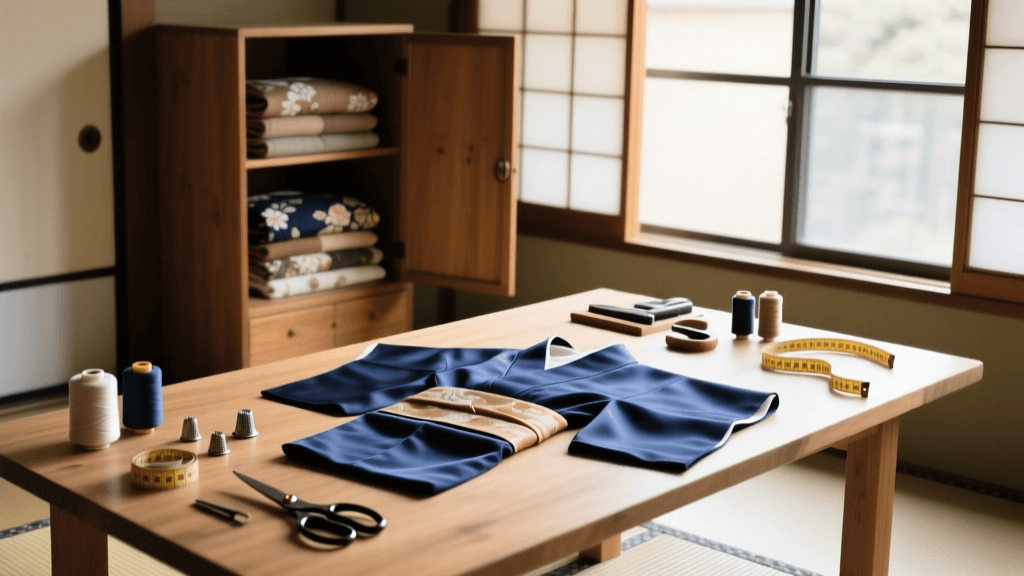
Before enrolling in a 2026 seminar, it is crucial to understand that wafuku tailoring relies on a specialized toolkit. Western sewing notions like curved dressmaker shears, fiberglass measuring tapes, and standard ironing boards are rarely used. Below is the essential toolkit required for modern kimono sewing seminars, along with current 2026 pricing.
| Tool Name | Japanese Term | Purpose in Wafuku Tailoring | 2026 Avg. Cost (USD) |
|---|---|---|---|
| Bamboo Ruler | Shaku | Measuring fabric in traditional increments; essential for reading vintage pattern books. | $45.00 |
| Bamboo Spatula | Hera | Used to mark fabric by creating a temporary crease or applying chalk, avoiding ink stains on silk. | $12.00 |
| Sewing Clips | Machi-bari | Specialized flat clips that hold thick silk layers together without piercing or damaging the delicate fibers. | $18.00 (per set) |
| Sleeve Ironing Board | Kotedai | A narrow, padded wooden board used specifically for pressing the deep, curved seams of kimono sleeves. | $85.00 |
| Silk Thread | Kinu-ito | Hand-spun silk thread used for structural seams; it breaks before the delicate fabric tears under tension. | $22.00 (per spool) |
The 2026 Seminar Curriculum: Core Techniques
Unlike Western tailoring, where fabric is cut to shape and seam allowances are trimmed away, wafuku tailoring is an exercise in preservation. The entire tanmono (bolt of fabric) is cut into straight, rectangular panels. The seam allowances are left intentionally wide and folded inside the garment. This means a kimono can be entirely unpicked, washed, stretched, and resewn decades later—a concept deeply aligned with the 2026 circular fashion economy.
In a standard beginner seminar, you will master the following core techniques:
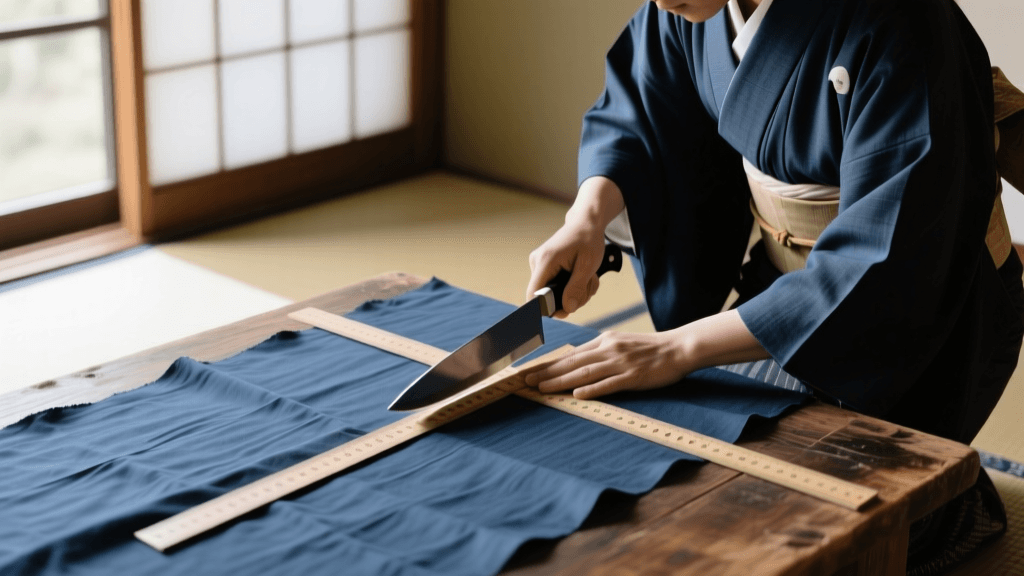
- Hon-biki (True Cutting): Learning to cut the rigid 14-inch wide tanmono without wasting a single millimeter of silk, utilizing the shaku ruler for precise panel division.
- Kuke (Blind Stitching): The hallmark of professional wafuku. Students spend hours mastering this nearly invisible stitch used for hems and collars, ensuring no thread shows on the right side of the garment.
- Chikara-nuno (Reinforcement Cloth): Learning to apply hidden silk reinforcement strips at high-stress areas, such as the underarm and hip vents, to prevent the main fabric from tearing.
- Eri-tsuke (Collar Attachment): The most complex structural element of the kimono. Seminars dedicate entire days to the geometry of the bachi-eri (standard collar), teaching students how to manipulate the grainline so the collar lays perfectly flat against the neck.
Sourcing Authentic Tanmono and Sustainable Practices
A major component of 2026 wafuku seminars is education on textile sourcing. With the rising cost of newly woven silk, many workshops now emphasize the art of shitate-naoshi (remaking and upcycling). Students are taught how to source vintage, unstitched kimono panels from estate sales and online Japanese auctions. Furthermore, seminars frequently partner with regional weaving cooperatives. As highlighted by the Japan National Tourism Organization, supporting traditional crafts like Nishijin-ori weaving and Yuzen dyeing is vital for rural economies. Many 2026 seminars include a module on how to ethically commission custom-dyed tanmono directly from these artisans, bypassing mass-market distributors.
For those interested in the raw materials themselves, the UNESCO Intangible Cultural Heritage registry provides extensive documentation on techniques like Yuki-tsumugi silk weaving. Understanding the provenance and structural integrity of these heritage textiles is now a mandatory theoretical component in advanced tailoring seminars, ensuring students respect the material before they make their first cut.
Traditional Apprenticeships vs. 2026 Modern Seminars
While the traditional apprenticeship model still exists in Kyoto, it is no longer the only viable path to mastery. Here is how the two educational routes compare in the current landscape:
- Time Commitment: Traditional apprenticeships require 3 to 5 years of full-time, unpaid labor. Modern 2026 seminars condense the foundational curriculum into 8 to 12 weeks of part-time, focused study.
- Cost: Apprenticeships often require paying a master for the privilege of learning, alongside living expenses in Japan. Hybrid seminars range from $300 to $1,500 USD, allowing students to maintain their current careers and residences.
- Curriculum Focus: Apprenticeships cover the entirety of the wafuku business, including customer fitting, shop management, and complex formal wear (like the heavily padded uchikake wedding kimono). Seminars focus strictly on the technical construction of everyday and semi-formal garments.
- Language Barrier: Traditional ateliers require fluency in Japanese and an understanding of strict cultural hierarchies. Modern seminars are conducted in English, Mandarin, or Spanish, with translated technical manuals and digital glossaries.
How to Prepare for Your First Class
If you are planning to enroll in a wafuku tailoring seminar this year, preparation is key. First, assess your hand-sewing stamina. Kimono tailoring is done almost entirely by hand; machine sewing is reserved only for specific, hidden structural seams in modern, casual garments. Spend a few weeks practicing basic running stitches and backstitches on scrap cotton to build the calluses and muscle memory required for long sewing sessions.
Second, invest in a proper sewing setup. Wafuku requires a large, flat, clean surface to unroll the 12-yard tanmono. A traditional low table with floor seating is authentic, but many 2026 seminars now teach ergonomic adaptations, allowing students to use standard-height drafting tables while maintaining the precise fabric tension required for traditional stitching.
Conclusion
The year 2026 marks a golden era for the preservation and evolution of traditional Asian garment making. Wafuku sewing workshops and seminars have successfully bridged the gap between ancient Kyoto ateliers and the modern, global slow-fashion community. Whether you are looking to construct your first cotton yukata or delve into the complex world of lined silk kimono tailoring, the resources, tools, and expert instruction available today are more accessible than ever before. By enrolling in a seminar, you are not just learning to sew; you are actively participating in the living history of Asian textile traditions.