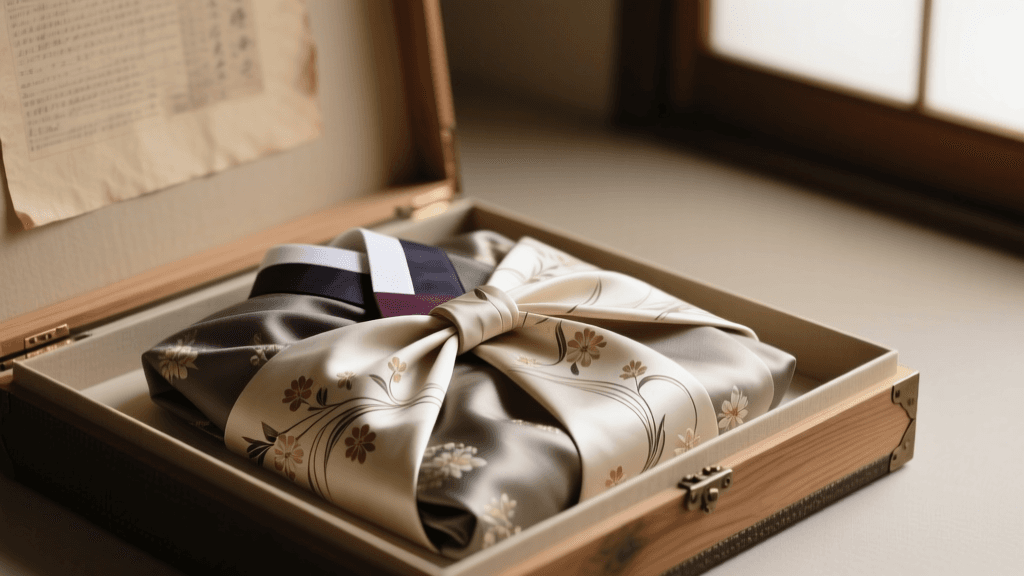
Kimono Tanmono Cutting: Zero-Waste Construction in 2026
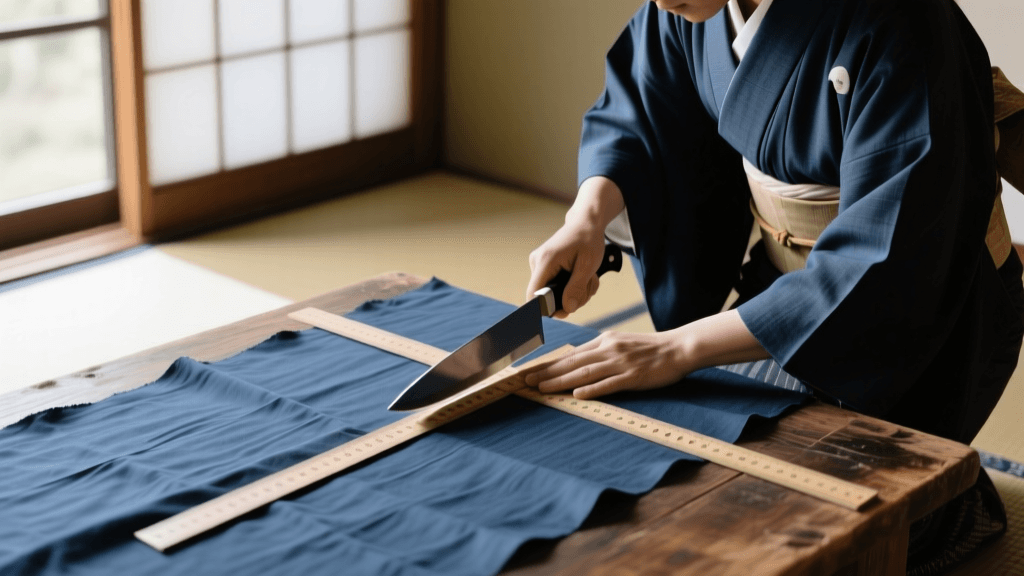
The Philosophy of Tanmono: A Masterclass in Zero-Waste
In an era where the global fashion industry is under intense scrutiny for its environmental impact, the traditional Japanese method of garment construction has emerged as a guiding light for sustainable design in 2026. At the heart of this sartorial engineering is the Tanmono—a narrow, standardized bolt of fabric woven specifically to construct a kimono without generating a single scrap of textile waste. Unlike Western tailoring, which relies on curved pattern pieces that inevitably leave behind 15% to 20% of the fabric as offcuts, the kimono is a triumph of geometric efficiency.
According to the Victoria and Albert Museum, the kimono's iconic T-shape is not merely an aesthetic choice but a direct result of the loom's limitations and a cultural reverence for the integrity of the cloth. By utilizing the Chokusen-dachi (straight-line cutting) method, traditional artisans and modern eco-designers alike are redefining what it means to create clothing that respects both the material and the environment.
Anatomy of the Straight-Line Cut (Chokusen-dachi)
The brilliance of the Tanmono system lies in its rigid dimensional constraints and the mathematical precision required to transform a single, continuous bolt of fabric into a complex, layered garment. A standard Tanmono bolt measures approximately 36 to 40 centimeters in width (historically based on the shaku measurement system, roughly 37.8 cm) and spans 11 to 12 meters in length. This exact yardage is calculated to yield one complete adult kimono.
When unrolled and cut, the bolt is divided into exactly eight primary rectangular panels. Because the fabric is woven to the exact width needed for the body and sleeves, the selvedge edges are preserved and utilized within the seams, eliminating the need for hemming or overlocking the raw edges.
The Eight Essential Panels
- Migoro (Body Panels): Two long rectangles that form the front and back of the torso. They are folded over the shoulders rather than cut with a shoulder seam.
- Sode (Sleeves): Two rectangular panels that are attached to the migoro and folded in half to create the deep, draped sleeves characteristic of the kimono.
- Okumi (Overlap Panels): Two narrower strips cut from the remaining fabric, attached to the front edges of the migoro to create the overlapping front closure.
- Eri (Collar): A long, narrow strip that is folded and attached to the neckline and down the front edges.
- Kake-eri (Under-Collar): A protective backing strip for the main collar, allowing for easy replacement when soiled.
The Metropolitan Museum of Art notes that this straight-line cutting method ensures that the surface of the textile—often featuring intricate, continuous dye patterns like Yuzen or elaborate brocade weaves—remains largely unbroken by darts, princess seams, or curved armholes. The garment becomes a canvas that wraps the body rather than restricting it.
Seam Allowances and the Art of Arai-Hari
One of the most remarkable aspects of Tanmono construction is how the seams are handled. In Western garment construction, seam allowances are typically narrow (1 to 1.5 cm) and finished with sergers or zig-zag stitches to prevent fraying. In contrast, kimono seams utilize wide, uncut seam allowances that are folded inward and secured with a specialized running stitch known as hon-geshi.
This technique serves a vital functional purpose: Arai-Hari. Because the kimono is constructed entirely of straight, basted, and running stitches without permanent locking threads, the garment can be completely unpicked at the end of a season or when it becomes soiled. The eight panels are then separated, stretched on wooden boards, washed or re-dyed, and sewn back together. This cyclical maintenance process means a single Tanmono kimono can be worn, cleaned, and restored for generations, a stark contrast to the planned obsolescence of modern fast fashion.
Tanmono vs. Western Tailoring: A 2026 Comparison
As fashion curriculums in 2026 increasingly mandate zero-waste pattern-making modules, the contrast between traditional Asian flat-pattern cutting and Western draping has become a primary case study for design students.
| Construction Feature | Traditional Tanmono (Kimono) | Standard Western Tailoring |
|---|---|---|
| Fabric Waste | 0% (Zero-waste by design) | 15% - 20% (Curved offcuts) |
| Cutting Method | Straight lines only (Chokusen-dachi) | Curved armholes, darts, princess seams |
| Seam Finishing | Wide allowances folded inward; selvedge used | Serged, overlocked, or bound edges |
| Alteration Method | Unpicked, re-measured, and re-sewn | Letting out limited seam allowances |
| Garment Lifespan | Multi-generational (via Arai-Hari) | Limited by fabric degradation and style |
Sourcing Authentic Tanmono and Modern Eco-Textiles in 2026
For contemporary makers, historians, and sustainable fashion designers looking to practice the Tanmono method in 2026, sourcing the correct materials is the first critical step. The market for traditional textiles has evolved, blending heritage craftsmanship with modern ecological innovations.
Vintage and Deadstock Silk Bolts
Sourcing unused, deadstock silk Tanmono from the mid-Showa era remains highly sought after by collectors and bespoke tailors. In 2026, a pristine, unwoven silk crepe (chirimen) bolt typically ranges from $180 to $350 USD, depending on the complexity of the woven pattern and the presence of metallic threads. These can be sourced through specialized Kyoto-based textile exporters and verified online auction houses that guarantee the bolt's continuous 11-meter length.
Modern Sustainable Alternatives
For designers adapting the straight-line cut for modern, everyday wear, weaving mills in 2026 are producing eco-textiles specifically calibrated to the 36cm Tanmono width. Organic hemp-linen blends, dyed with botanical indigo and madder root, are currently averaging $45 to $60 USD per meter. Furthermore, innovative lab-grown spider silk and recycled PET textiles are now being woven on narrow shuttle looms to replicate the structural integrity of traditional Tanmono, allowing designers to create zero-waste wrap coats and modern haori jackets without relying on animal proteins or virgin plastics.
Practical Guide: Drafting a Modern Zero-Waste Haori
If you wish to apply the Tanmono construction technique to a modern wardrobe, drafting a contemporary haori (a hip- or thigh-length kimono-style jacket) is an excellent starting point. Here is a step-by-step guide to executing the straight-line cut using modern 36cm wide linen.
- Calculate Your Yardage: Measure your desired back length (from the nape of the neck to the hem). Multiply this by 2 for the main body panels. Add the desired sleeve drop length. For a standard modern haori, you will need approximately 6.5 to 7.5 meters of 36cm wide fabric.
- Cut the Migoro: Cut two panels at your calculated body length. Do not cut any curves for the neckline or armholes. The neckline will be formed later by folding and stitching the collar.
- Cut the Sleeves: Cut two rectangular panels for the sleeves. The width should match your shoulder-to-wrist measurement, and the height should be exactly the same as the fabric width (36cm), which will be folded in half horizontally.
- Preserve the Selvedge: When sewing the side seams (waki-nui), align the selvedge edges inward. Use a 2.5 cm seam allowance and a running stitch, leaving the bottom 15 cm of the side seam open to create the traditional underarm vents (miyatsuchi), which allow for ease of movement and airflow.
- Construct the Collar: Cut a long, 10cm wide strip from the remaining fabric. Fold it in half lengthwise and attach it to the center back neck, bringing it down the front edges. The straight cut of the collar naturally forces the garment to drape elegantly over the shoulders without the need for a tailored shoulder slope.
The Enduring Legacy of Asian Garment Engineering
The construction of the kimono via the Tanmono bolt is far more than a historical artifact; it is a living, breathing blueprint for the future of sustainable fashion. As the Encyclopedia Britannica highlights, the kimono represents a profound harmony between the human form and the textile, where the fabric is never forced to conform to the body through aggressive cutting, but rather the body and fabric negotiate a shared space through wrapping and tying.
In 2026, as the fashion industry grapples with the urgent need to reduce textile waste and extend garment lifecycles, the ancient Asian traditions of flat-pattern cutting, zero-waste weaving, and cyclical maintenance offer a masterclass in mindful consumption. By studying and adapting the Tanmono method, modern makers are not just preserving a cultural heritage—they are actively weaving a more sustainable future, one straight, unbroken line at a time.