Decoding Kabuki Noh Bunraku Kimono Costumes in 2026
The Living Textiles of Japan's Classical Stage
When we think of the traditional Japanese kimono, we often envision the elegant garments worn during tea ceremonies, summer festivals, or coming-of-age celebrations. However, the most spectacular, intricate, and symbolically dense kimono in Japanese culture are not found on the streets of Kyoto or Tokyo, but on the classical stage. In the realms of Kabuki, Noh, and Bunraku theater, the kimono transcends everyday clothing to become shozoku—theatrical costumes that serve as vital storytelling devices, character indicators, and masterpieces of textile art.
As of 2026, Japan's classical theater scene is experiencing a massive renaissance, driven by a surge in cultural tourism and the integration of augmented reality (AR) guides that allow international audiences to decode the complex visual language of these garments in real-time. Whether you are a textile enthusiast, a fashion historian, or a traveler planning a 2026 cultural itinerary, understanding the distinct costume traditions of Japan's three major classical theaters is essential. This guide explores the unique kimono traditions of Kabuki, Noh, and Bunraku, revealing how threads, dyes, and silhouettes breathe life into centuries-old narratives.
Shozoku vs. Everyday Kimono: The Theatrical Distinction
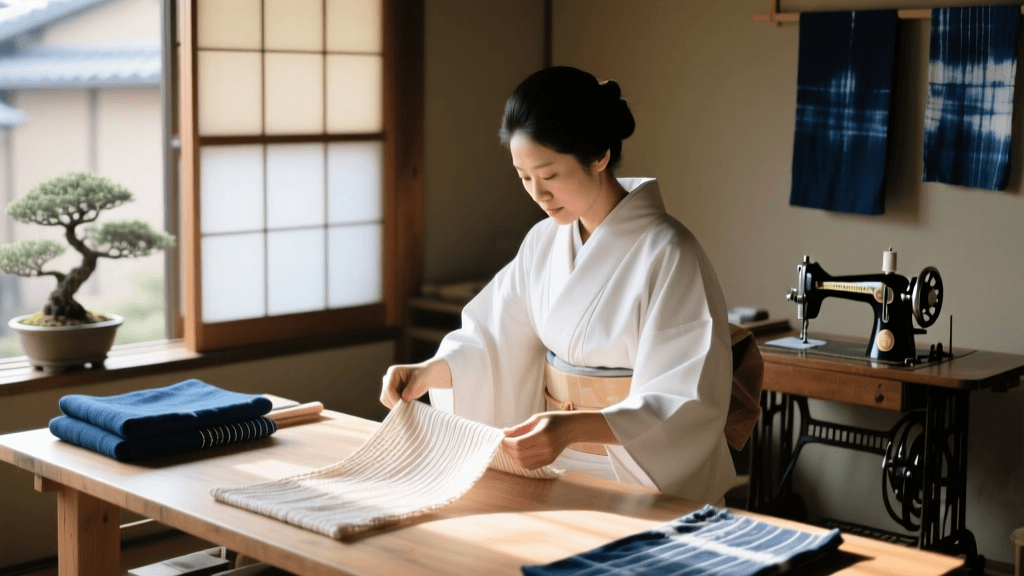
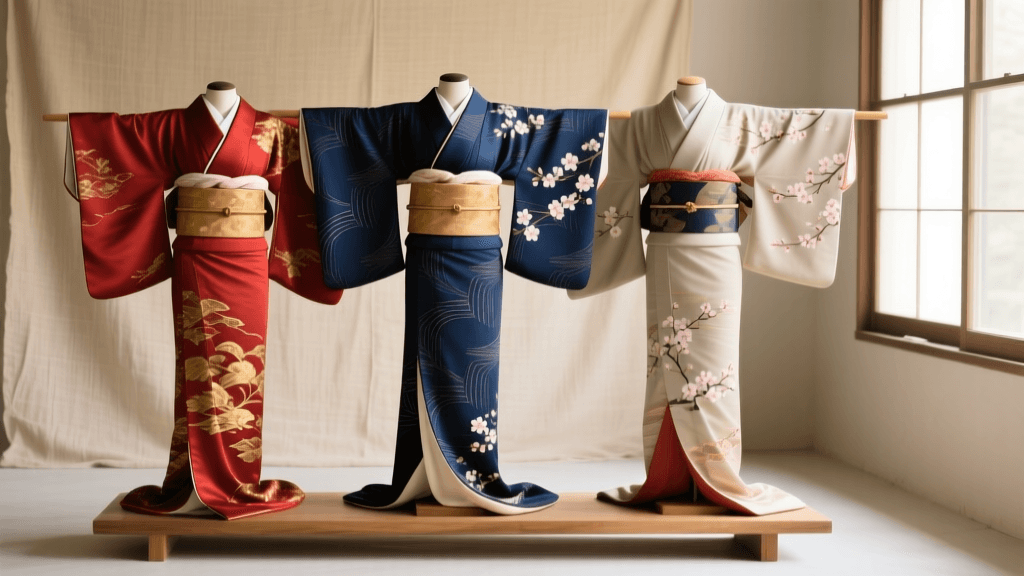
Before diving into the specific theater forms, it is crucial to understand the difference between an everyday kimono and shozoku. While both share the fundamental T-shaped, straight-seamed construction, stage kimono are engineered for dramatic impact and physical performance. Shozoku are typically woven from much heavier, stiffer silks, such as Nishijin-ori (Kyoto brocade), to ensure the garment holds its shape under intense stage lighting and during vigorous choreography.
Furthermore, the sleeves (sode) and hems are often exaggerated. The collars are pulled wider to expose the nape of the neck, and the obi (sash) is tied in massive, sculptural knots that would be entirely impractical for daily life. In 2026, the preservation of these specialized weaving techniques is heavily subsidized by the Japanese government, recognizing that the survival of classical theater is inextricably linked to the survival of traditional artisan guilds.
Noh Theater: The Subtle Elegance of Yugen
Noh is the oldest of the three forms, a highly stylized, slow-paced musical drama rooted in Zen Buddhist philosophy. The aesthetic ideal of Noh is yugen—a profound, mysterious sense of the beauty of the universe, and the sad beauty of human suffering. This philosophy is perfectly mirrored in Noh shozoku.
Karaori and Surihaku: The Pinnacle of Weaving
The most iconic garment in Noh is the karaori, a heavily brocaded jacket worn by actors playing female roles (as all Noh actors are male). The karaori is woven using a technique that creates a floating weft, making the silk look almost like intricate embroidery. The motifs—such as autumn grasses, flowing water, or geometric clouds—are not merely decorative; they indicate the season, the character's emotional state, and their social class.
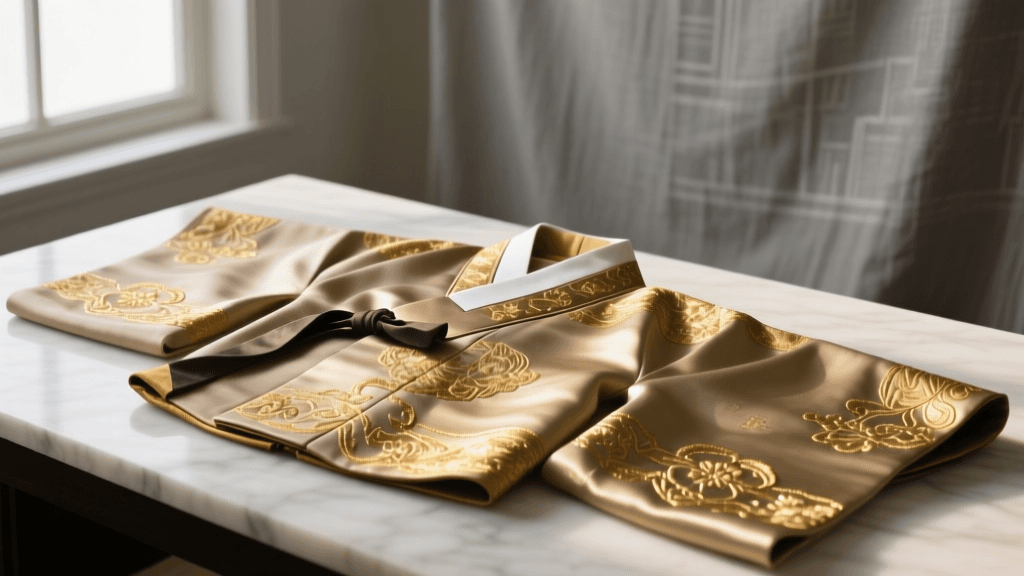
Another breathtaking textile unique to Noh is the surihaku. This garment features designs created by pressing gold or silver leaf directly onto the silk using a rice-paste resist method. When a Noh actor performs a dance, the stage lights catch the surihaku, creating a shimmering, ethereal effect that suggests the character is a deity, a ghost, or a spirit caught between worlds. According to the UNESCO Intangible Cultural Heritage registry, the preservation of Nohgaku relies heavily on the continuous transmission of these specialized costume-making techniques from master artisans to their apprentices.
The Mask and the Kimono
In Noh, the wooden mask (omen) is the soul of the character, but it is the kimono that provides the body. The interplay between the static, carved expression of the mask and the flowing, heavy silk of the choken (a lightweight, unlined dancing robe) creates a mesmerizing visual tension. The actor's subtle tilting of the head, combined with the sweeping motion of the wide sleeves, allows the audience to project deep emotions onto the mask.
Kabuki: Extravagance, Color, and the Mie Pose
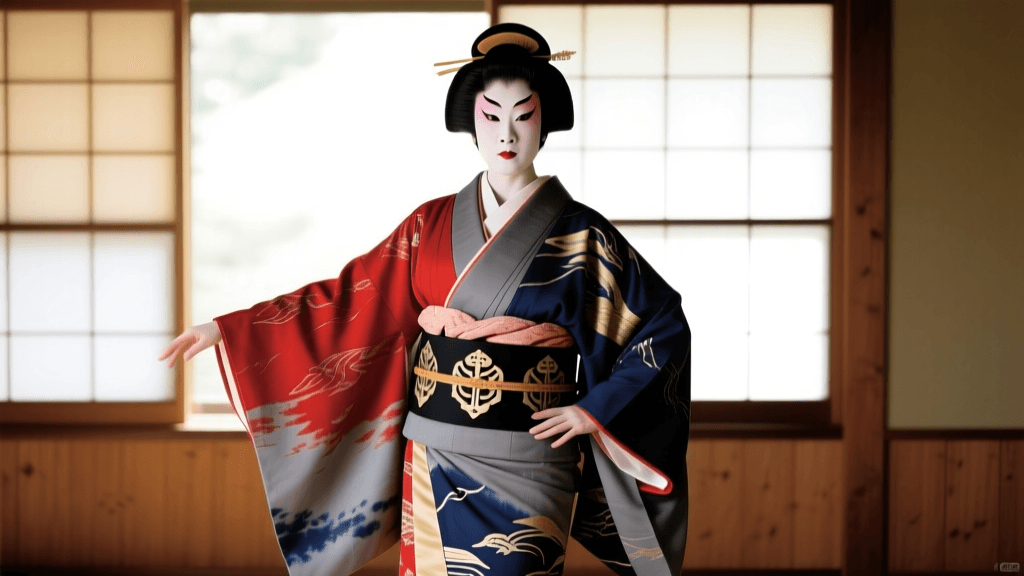
If Noh is a whisper, Kabuki is a shout. Emerging in the Edo period as popular entertainment for the merchant classes, Kabuki is characterized by dramatic plots, exaggerated acting, and spectacular visual effects. Kabuki costumes are designed to be seen from the back of massive, multi-tiered theaters, requiring bold colors, massive silhouettes, and ingenious mechanical tricks.
Hikizuri and the Art of the Trail
For female roles (onnagata), the signature garment is the hikizuri, a kimono with a hem that trails along the floor for several feet. Unlike the geisha's trailing kimono, the hikizuri is heavily padded at the waist and hips to create an exaggerated, voluptuous silhouette. The actor must possess immense physical strength and technical skill to manipulate the heavy, trailing silk gracefully during dances and fight scenes, using a technique called ashi-byoshi to kick the hem out of the way without breaking character.
Aragoto and the Superheroes of the Stage
For male heroes, particularly in the aragoto (rough style) plays, the costumes are built to make the actor look superhuman. Actors wear thick padding on their shoulders, hips, and chest, and their kimono feature massive, boxy sleeves. The colors are strictly codified: brilliant crimson red signifies youth, passion, and justice, while deep indigo or black often denotes villainy or tragedy. The bold, striped patterns (shima) or massive family crests (mon) are designed to match the striking, painted kumadori makeup worn by the actors.
Hikinuki: The Magic Quick-Change
One of the most thrilling aspects of Kabuki is the hikinuki, a rapid on-stage costume change. The actor's kimono is basted together with thick silk threads. At the climax of a scene, as the actor strikes a dramatic pose (mie), stage assistants (kuroko) pull the threads in perfect synchronization with a strike of the wooden tsuke clappers. The outer kimono instantly falls away or flips inside out to reveal a completely different color and pattern underneath, symbolizing a sudden transformation in the character's soul or allegiance.
Bunraku Puppetry: Dressing the Wooden Soul
Bunraku, the classical puppet theater of Japan, presents a unique challenge for costume designers. The puppets are roughly one-half to two-thirds the size of a human, yet their costumes must possess the exact same textile integrity, drape, and visual weight as full-sized Kabuki or Noh garments. As noted by the National Bunraku Theatre, the creation of Bunraku costumes requires a mastery of miniature tailoring that is incredibly rare in 2026.
The Mechanics of Puppet Shozoku
A Bunraku puppet is operated by three puppeteers working in perfect unison. The lead puppeteer (omozukai) operates the head and right hand, the second puppeteer (hidarizukai) operates the left hand, and the third (ashizukai) operates the legs. Because the puppeteers are dressed entirely in black and are visible on stage, the puppet's kimono must be designed to hide the mechanics of the puppet's wooden torso while allowing the puppeteers' hands to manipulate the fabric.
The sleeves of a Bunraku kimono are particularly important. When a female puppet weeps, the lead puppeteer uses the right hand to bring the long, flowing silk sleeve up to the painted wooden face, simulating the wiping of tears. The silk used for Bunraku is specially treated to be slightly heavier than standard silk, ensuring that when the puppeteer releases the sleeve, it falls with a realistic, gravity-driven grace that mimics human movement.
Comparative Analysis of Theatrical Shozoku
To help theater-goers and textile enthusiasts quickly identify the distinct features of each form, refer to the comparison table below:
| Theater Form | Signature Garment | Primary Textile Technique | Visual Philosophy & Impact |
|---|---|---|---|
| Noh | Karaori / Surihaku | Floating weft brocade, Gold leaf application | Subtle, ethereal, representing spirits and the concept of Yugen. |
| Kabuki | Hikizuri / Padded Uchikake | Heavy Nishijin-ori, Yuzen dyeing, Hikinuki rigging | Bold, extravagant, highly saturated colors designed for dramatic reveals. |
| Bunraku | Miniature Kosode | Scaled-down silk weaving, weighted hems | Hyper-realistic drape on a fractional scale, facilitating puppet manipulation. |
2026 Traveler's Guide: Experiencing Shozoku in Person
For those visiting Japan in 2026, the infrastructure for experiencing classical theater has never been more accessible to international audiences. Here is how you can witness these magnificent kimono up close.
Kabukiza Theatre (Tokyo)
The Kabukiza in Ginza remains the premier destination for Kabuki. In 2026, the theater has fully integrated its AR subtitle and costume-guide glasses. By renting these devices, you can look at an actor on stage and see floating text explaining the historical significance of their specific hikizuri pattern or the symbolism of their obi knot. Be sure to book a hitomaku-mi (single-act) ticket if you are short on time, which allows you to catch the most visually spectacular dance sequences.
National Noh Theatre (Tokyo)
Located near Sendagaya Station, the National Noh Theatre offers a more intimate, meditative experience. The theater's adjacent exhibition gallery is a must-visit for textile lovers. In 2026, their rotating exhibition features decommissioned karaori garments displayed flat, allowing you to see the incredible density of the gold and silk threads up close. The English audio guides provided are excellent, breaking down the slow, deliberate movements of the actors and how their costumes enhance the illusion of gliding across the stage.
National Bunraku Theatre (Osaka)
While Kabuki and Noh are centered in Tokyo, Bunraku's spiritual and operational home is in Osaka. The National Bunraku Theatre offers backstage tours on select weekends, which are highly recommended. These tours take you into the wardrobe department, where you can see the massive wooden chests where the miniature kimono are stored, wrapped in traditional tato paper to protect the silk from humidity. According to UNESCO's cultural heritage documentation, the transmission of these performing arts relies on public engagement, making these backstage tours a vital part of the theater's 2026 outreach programs.
Conclusion: The Threads That Bind History
The kimono of Kabuki, Noh, and Bunraku are far more than mere costumes; they are the physical manifestations of Japanese history, philosophy, and artisanal genius. From the shimmering gold leaf of a Noh ghost to the explosive, trailing crimson silk of a Kabuki hero, these garments tell stories that words alone cannot convey. As you plan your 2026 cultural travels, look beyond the stage and focus on the threads. In the weave of the silk and the drape of the sleeve, you will find the true soul of Japan's classical theater.